A long-time Ethereum investor and community figure has pushed back against growing alarm over the string of departures from the Ethereum Foundation (EF), arguing that the organization’s commitment to the network is as firm as ever.
Ryan Berckmans, who has worked full-time in the Ethereum space for eight years, offered one of the more detailed community-level defenses of the EF’s current direction since the exits started mounting this year.
Departures Caused by Differences of Opinion
According to Berckmans, people are misreading the situation.
“The EF departures are not because the people departing feel differently about Ethereum and our trajectory vs. the people staying at EF or vs. community folks like me,” he wrote.
What actually drove them, in his view, was a mix of internal disagreements over sub-strategies rather than any loss of faith in Ethereum itself, plus a deliberate generational shift.
“Some folks disagreed. Some tiny number were asked to leave for Reasons. Some few others left immediately due to Reasonable Net Feelings. Some more are leaving because the Wheel is Turning,” he explained.
Further, Berckmans added that new, younger contributors are ready to step into leadership across teams and departments. He also addressed a persistent piece of community frustration, that the EF and Vitalik Buterin do not care about ETH’s price, calling it a misconception.
According to him, they care deeply, but across a much longer time horizon than most community members track.
“They want to know, ‘How will Ethereum remain dominant after quantum computers?’ and, ‘How will Ethereum be the world’s economic hub for trillions in assets and thousands of L2s across a hundred countries?’”
His conclusion was that these are questions that can only get asked if you believe the outcome is achievable, and the EF’s programs in response to them are “gigabullish.”
Four Prominent Contributors Left in Just Four Weeks
The wave of exits has included Carl Beek, Julian Ma, Barnabé Monnot, Tim Beiko, Trent Van Epps, Josh Stark, and former co-Executive Director Tomasz Stańczak.
Stańczak’s departure, in particular, drew quite a lot of attention, considering that it came just 11 months after he’d taken the role. In addition, the exits have been concentrated, with four of the more prominent ones landing within roughly four weeks of each other in April and May.
Meanwhile, a detailed analysis by crypto researcher Nick Sawinyh pointed to unconfirmed claims circulating online that staff were asked to formally align with the Foundation’s new mandate. However, the EF has not publicly confirmed those claims, and none of the departing contributors cited the mandate as their reason for leaving.
People are also focusing on the coming Glamsterdam upgrade to Ethereum that is still under test. The protocol update includes changes tied to scaling and validator infrastructure, although some anticipated features, including FOCIL and native account abstraction, have already been delayed to a later upgrade cycle.
Despite this, many Ethereum backers believe that the entire ecosystem can now take leadership changes in stride without posing a risk to the network as a whole. One of them, author William Mougayar, described the Foundation’s shrinking role as a deliberate attempt to remove Ethereum’s remaining central point of control rather than a sign of institutional decline.
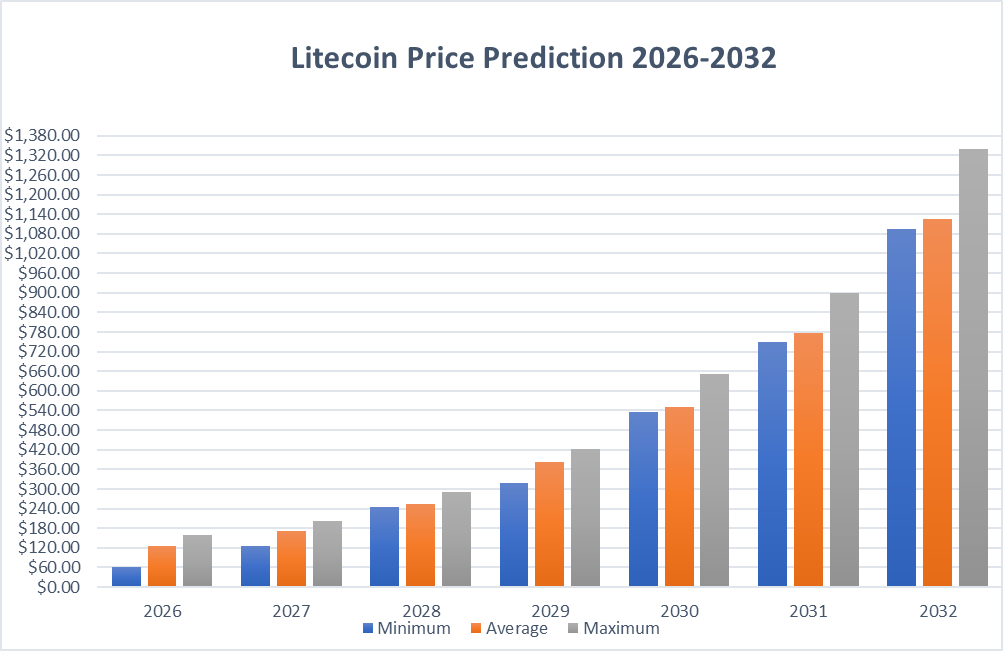
Our Litecoin price prediction for 2026 expects the maximum price of LTC to be $160.
In 2032, we expect Litecoin to attain a maximum of $1,338.47.
Following Bitcoin’s move toward $100K, Litecoin faced increasing buying activity. This surge in activity raises several questions for investors: Is it a good time to invest in Litecoin? Or Will Litecoin (LTC) hold above $200 in 2026? These are common questions that make predicting Litecoin’s price a bit tricky.
We have prepared a detailed analysis and forecast of Litecoin price prediction from 2026 to 2032 to assist you with these questions. This article includes the latest updates, news, and technical analysis to aid in your investment decisions.
Let’s dive into the most recent predictions for Litecoin’s price for 2026, 2027, and beyond!
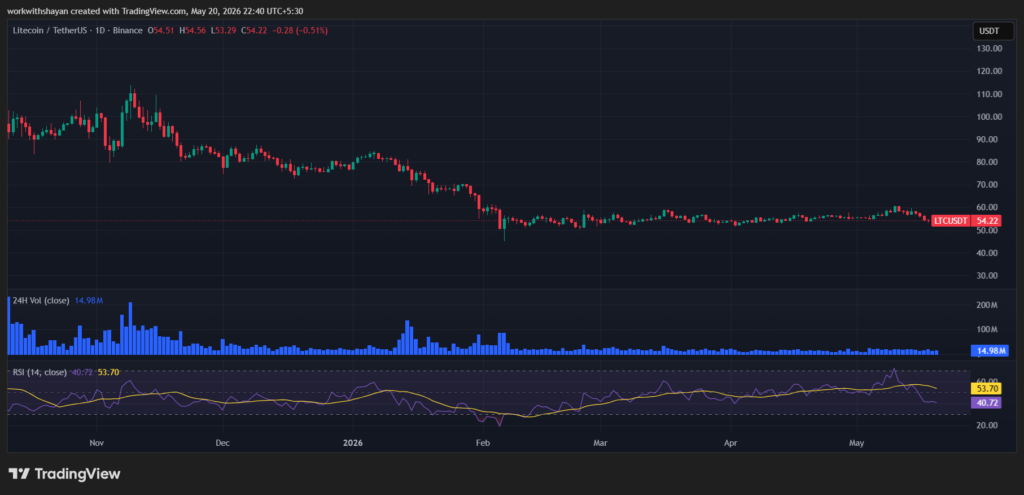
The LTC price analysis for 20 May confirms that the LTC price faced bullish pressure above $54. Currently, buyers are holding the price around key resistance levels.
Analyzing the daily price chart, Litecoin experienced bullish pressure as the overall sentiment turned positive. Buyers are now aiming for a push above immediate Fib levels toward $54. However, it also faces minor bearish retracement. The 24-hour volume increased to $15 million, showing a surge in interest in trading activity. LTC price is currently trading at $54, surging by over 0.2% in the last 24 hours.
The RSI-14 trend line has dropped from its previous level and trades below the midline at 40, suggesting that sellers are controlling the price chart.
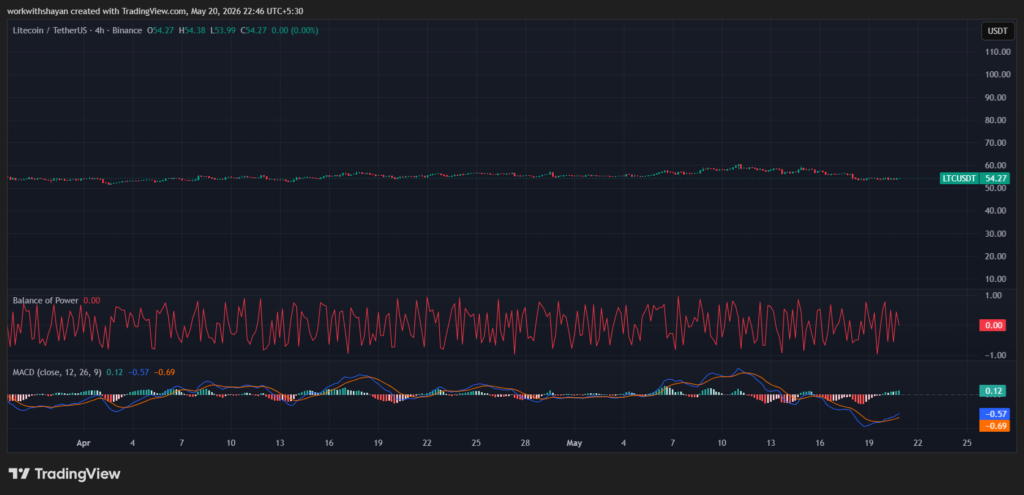
LTC/USD 4-hour price chart: Bulls aim for a hold above EMA trend lines
The 4-hour Litecoin price chart suggests that bullish domination is increasing to keep the altcoin above the EMA trend lines. Currently, buyers are defending a drop below the EMA20 trend line.
The BoP indicator trades in a positive region at 0, signifying that buyers are triggering a minor upward correction.
Additionally, the MACD trend line has formed green candles above the signal line, and the indicator aims for positive momentum, strengthening the chances of a bullish push.
Litecoin technical indicators: Levels and action
Daily simple moving average (SMA)
Period
Value
Action
SMA 3
$57.88
SELL
SMA 5
$58.44
SELL
SMA 10
$57.50
SELL
SMA 21
$56.59
BUY
SMA 50
$55.38
BUY
SMA 100
$55.10
BUY
SMA 200
$68.76
SELL
Daily exponential moving average (EMA)
Period
Value
Action
EMA 3
$57.74
SELL
EMA 5
$57.87
SELL
EMA 10
$57.54
SELL
EMA 21
$56.82
BUY
EMA 50
$56.29
BUY
EMA 100
$58.98
SELL
EMA 200
$66.87
SELL
What to expect from LTC price analysis next?
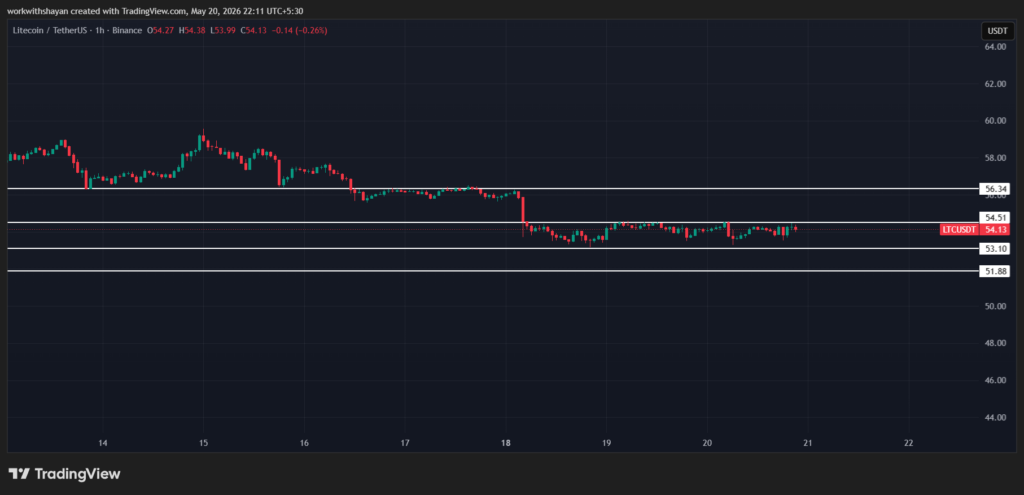
The hourly price chart confirms that bulls induce buying pressure to hold the price; however, sellers may soon return. If the LTC holds momentum above $54.51, it may climb toward $56.34.
If bulls fail to initiate a surge, the LTC price may drop below the immediate support line at $53.1, which may result in a correction to $51.88.
Is Litecoin a good investment?
Litecoin is an alternative to Bitcoin, making it an appealing choice for everyday transactions worldwide. Additionally, with a finite cap of 84 million coins, LTC presents itself as a potential investment for value preservation, akin to Bitcoin’s role as a digital asset.
Why is the LTC price up today?
Buyers are triggering a push above Fib levels at $54 as lower levels saw minor accumulation on the LTC price chart.
Will LTC Recover?
If bulls hold the price above the $60 level, we might see a strong recovery in the coming days.
What is the LTC price prediction for 2026?
The forecasted lowest price for Litecoin is $60. According to our analysis, the highest possible price for LTC could be $160, with an average expected price of $125.
Will Litecoin reach $100?
Litecoin price already touched the $100 mark last year; however, it is now consolidating. By the end of 2026, Litecoin might surge above $150.
Will LTC price reach $500?
According to our Litecoin price prediction, the LTC price might hit the $500 mark in 2030. However, this rally depends on the future buying interest in the altcoin market.
Does LTC have a good long-term future?
Despite the recent adjustments and potential peak formation, Litecoin exhibits a robust long-term price trajectory and outlook, indicating a high potential for future growth. If the network continues to witness robust activities and growth, the price might reach $1000 in no time.
Recent news/opinion on Litecoin
Litecoin underwent a 13-block reorganization on April 25 after a bug in its MWEB privacy layer enabled invalid transactions. Developers quickly released a mandatory patch and coordinated with mining pools to remove the fraudulent blocks.
Litecoin update:
• A zero-day bug caused a DoS attack that disrupted major mining pools. • Non-updated mining nodes allowed an invalid MWEB transaction allowing them to peg out coins to third party DEX’s • A 13-block reorg reversed those invalid transactions — they will not…
Litecoin’s price shows signs of bullish moves as it has been surging toward $60. However, as BTC’s price aims for a hold above the $80K mark in May, Litecoin’s price intends to end this month on a bullish note.
As a result, we might see the LTC price record a low of $50, with a maximum price of $70 and an average price of $60.
Month
Potential Low ($)
Potential Average ($)
Potential High ($)
Litecoin Price Prediction May 2026
$50
$60
$70
Litecoin price prediction 2026
The forecasted lowest price for Litecoin is $50. According to our analysis, the highest possible price for LTC could be $160, with an average expected price of $125.
Year
Potential Low ($)
Potential Average ($)
Potential High ($)
Litecoin Price Prediction 2026
50
125
160
Litecoin Price Predictions 2027-2032
Year
Minimum Price ($)
Average Price ($)
Maximum Price ($)
2027
126.67
172.3
200.87
2028
245.93
252.82
291.04
2029
317.79
381.9
423.14
2030
534.25
549.53
651.74
2031
747.98
775.45
899.15
2032
1,095.74
1,126.76
1,338.47
Litecoin price prediction 2027
Litecoin’s growing popularity is evident in its expanding social media presence, particularly on Reddit, with active users reaching 2021 levels before its all-time high.
Experts predict a significant rally by 2027, with prices ranging between $126.67 and $200.87 and an average of $172.30. Advancements from the Litecoin Foundation are expected to drive a strong rebound, boosting its market cap and valuation.
Litecoin (LTC) price prediction 2028
In 2028, the price of Litecoin is expected to reach a minimum value of $245.93. The maximum price could be as high as $291.04, with the average trading price throughout the year around $252.82.
Litecoin price prediction 2029
In 2029, the lowest forecasted price of Litecoin is $317.79. Based on our analysis, the maximum price could rise to $423.14, with an average price of $381.90 for the year.
Litecoin’s price forecast 2030
Our detailed analysis of past Litecoin price data indicates that in 2030, the minimum price of Litecoin could be approximately $534.25. The price could peak at $651.74, with an average trading value around $549.53.
Litecoin (LTC) price prediction 2031
For 2031, the minimum predicted price of Litecoin is $747.98. The price could reach a maximum of $899.15, with the average trading price expected to be about $775.45 throughout the year.
Litecoin price prediction 2032
Our detailed analysis of past Litecoin price data indicates that in 2032, the minimum price of Litecoin could be approximately $1,095.74. The price could peak at $1,338.47, with an average trading value around $1,126.76.
According to the Litecoin price prediction by Cryptopolitan, it is anticipated that various leading institutions will invest in and start accepting LTC as a form of payment. Additionally, the growing frequency of events likely to influence LTC’s price could enhance its public perception.
The forecasted lowest price for Litecoin is $50 in 2026. According to our analysis, the highest possible price for LTC could be $160, with an average expected price of $125.
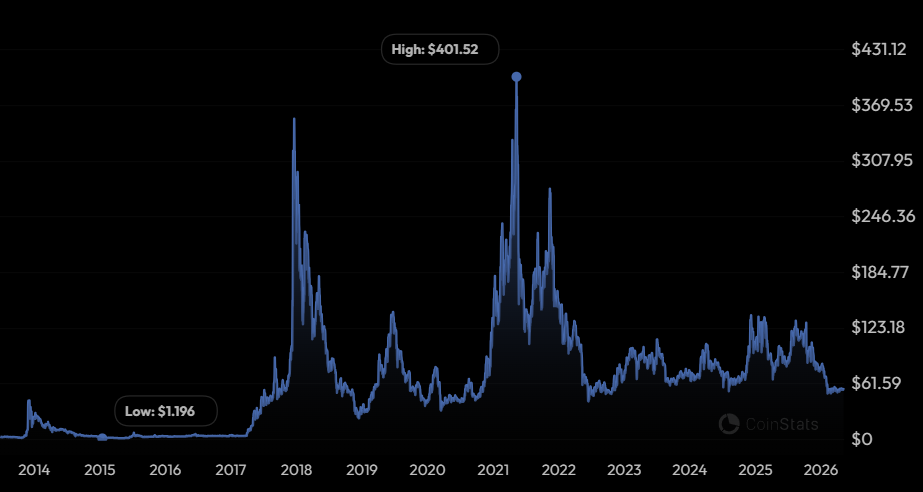
Litecoin traded between $1 and $5 in its early years before surging to over $300 during the crypto bubble of late 2017 to early 2018.
In 2021, Litecoin hit an all-time high of $412.96 early in the year but dropped significantly, closing at $144.56 by the end of the year.
In 2022, Litecoin experienced significant losses, dropping below $45 mid-year. However, it managed to outperform the broader market despite a nearly 55% decline overall.
2023 saw high volatility for Litecoin, peaking at $114.50 in July but declining sharply due to market pressures, ending the year at $72.80 with a modest 7% rise despite underperforming the broader market.
In 2024, Litecoin started the year around $68.20, climbed to $102.40 in April, and then fell below $80. After further declines in May and June, it dropped to $49 in August before rebounding to $70. By November, Litecoin surged past $100 and attempted to hold above $140 in December.
In January 2025, the price of Litecoin surged to $140.
However, the LTC price crashed in February as it dropped toward the low of $80.
In March, the price of LTC consolidated below $90 after failing to break the $100 resistance. By the end of April, LTC price surged toward the $88 but struggled to maintain that level in early May.
By the end of June, LTC price declined below $85. In July, the price surged toward $123 but declined later.
In early August, the price of Litecoin aimed for a move above $125. However, it later declined and dropped below $110 in early September.
In early October, the price of Litecoin surged toward $125 twice but failed to meet buyers’ demand.
In November, the LTC price dropped below the $80 level. By the end of the month, the price of LTC consolidated below $85.
LTC ended 2025 on a bearish note by trading below $80. In January 2026, the price of LTC declined further as it crashed toward $44 in February.
In early April, the price of LTC surged toward $53. By the end of April, LTC surged toward $57.
Tether has applied for seven trademarks in South Korea, including for its company name and logo, in a move that market observers see as a hint of the firm expanding into the South Korean market.
The issuer of the largest stablecoin in the world, USDT, is also expanding its reach into Africa and Asia by partnering with Lemfi. Meanwhile, Tether’s rival Circle (NYSE: CRCL) has already been meeting with major financial institutions in South Korea, setting up a potential showdown between number one and two in the stablecoin issuance business.
Tether and Circle are lining up entry into the South Korean market
Tether, the company behind the world’s largest stablecoin USDT, is making progress in its plans to enter the South Korean market. The Korea Intellectual Property Rights Information Service (KIPRIS) recently received multiple trademark applications from Tether, totaling up to seven.
Tether’s previous filings in the country focused on stablecoin product names, but this batch includes the corporate brand itself and its gold-backed stablecoin Tether Gold (XAUT).
South Korea’s proposed Digital Asset Basic Act is expected to require foreign stablecoin issuers to maintain a domestic branch if they want to distribute their tokens locally, and Tether appears to be positioning itself ahead.
Before Tether’s latest filings, Circle’s CEO Jeremy Allaire visited Seoul in April and met with executives from KB Financial Group, Shinhan Financial Group, and Hana Financial Group to discuss stablecoin payment cooperation and real-world asset tokenization.
Allaire acknowledged the potential in the South Korean market and shared Circle’s plans to establish a Korean subsidiary and obtain a license if the final regulatory framework accepts foreign issuers.
Circle has also signed partnerships with Korean exchanges Dunamu, which operates Upbit, and Bithumb to expand USDC adoption on domestic trading platforms.
Cryptopolitan reported earlier that Hana Card, part of Hana Financial Group, launched a pilot in March allowing foreign visitors to pay at local merchants using USDC through a partnership with Circle and Crypto.com. Other Korean financial firms, including BC Card and KB Kookmin Card, have been testing stablecoin payment infrastructure as well.
Tether has been on an expansion trail
Tether also recently announced an investment in LemFi, a cross-border payments platform that works across communities in the UK, US, Canada, and Europe to recipients in Africa and Asia. The deal will integrate USDT as a settlement layer across LemFi’s payment corridors, replacing multi-day SWIFT-based transfers with blockchain settlement.
Tether’s CEO Paolo Ardoino said in the announcement that the goal of the partnership is to expand financial access for its estimated 585 million users globally.
Cryptopolitan previously reported that Tether recorded $1.04 billion in profit for Q1 2026. The company holds excess reserves of $8.23 billion; enough capital to invest in distribution partners and pursue market entry in jurisdictions like South Korea.
South Korea is home to an estimated 18 million crypto investors. Exchanges in the country recorded over $663 billion in trades through mid-2025, and the country’s retail traders remain a significant part of altcoin markets.
Beyond Tether and Circle, multiple projects are building won-denominated stablecoins. Cryptopolitan reported that the Bank of Korea has been advancing “Project Han River,” its wholesale CBDC initiative, which entered a second phase of real-transaction testing earlier this year.
Regulators are still debating whether or not stablecoin issuance should be restricted to commercial banks or follow a more flexible licensing model. The discussion has been postponed until after South Korea’s June local elections.
Tether and LemFi, two financial juggernauts in different sectors, have announced a partnership. Tether, the issuer of popular stablecoin USDT, announced on Monday that it had invested in the fintech app used to transfer funds from Europe and the Americas to Africa and Asia.
The deal will embed USDT as a system for payments across LemFi’s operating regions, replacing slower bank-to-bank transfer chains with stablecoins and the blockchain.
The Tether-LemFi deal and what it means
Unlike conventional cross-border payment systems, stablecoin-based transfers allow funds to move directly across blockchain networks with fewer delays and lower operation costs. This model will enhance the speed and efficiency of international payments, especially in newly emerging markets.
According to Tether’s statement, the partnership is expected to support the wider adoption of Tether across LemFi’s platform, which could then extend the stablecoin-powered systems into other payment and financial service offerings.
The move reflects a broader trend among fintech firms and stablecoin issuers seeking to position blockchain infrastructure as an alternative to traditional banking rails for global payments, savings, and digital financial services.
The executives have their say
CEO of Tether, Paolo Ardoino, has said the investment aligns with Tether’s strategy of expanding financial access for its estimated 585 million users globally.
Ardoino framed the partnership as part of the company’s effort to strengthen the real-world utility of Tether by integrating blockchain-based settlement into everyday financial services, particularly in regions that rely heavily on cross-border payments and remittances.
“Our investment in LemFi reflects our shared vision on how money moves across borders, prioritizing speed, cost, and transparency,” Ardoino said in Tether’s announcement. “By supporting LemFi’s growth and innovation roadmap, we are helping bring the benefits of a stable digital asset to more people who rely on remittances in their daily lives.”
LemFi CEO and co-founder Ridwan Olalere called the deal “a validation of the direction we are heading.” Olalere added that integrating USDT into LemFi’s infrastructure “brings us closer to that reality” of a financial system that works regardless of where a user lives or sends money, according to Tether’s press release.
Neither company has disclosed the size of the investment.
How does this improve stablecoins’ standing?
For Tether, the LemFi deal extends the company’s push to position USDT as a practical payments infrastructure rather than just a trading instrument. The company reported $1.04 billion in profit for Q1 2026 and holds excess reserves of $8.23 billion, according to Binance Square. This financial position gives Tether capital to invest in distribution partners like LemFi that can help to put the stablecoin in front of non-crypto-native users.
LemFi, on its own part, gains access to Tether’s deep USDT liquidity pool and the technical backing to build a settlement layer on blockchain. The company described its customer base as consisting of “millions of people who live and work across borders,” many of whom, it said, have historically been underserved by traditional financial institutions.
0G Labs Wants to Make AI a Public Good — And It’s Building the Blockchain Stack to Prove It
At Consensus 2026 in Miami, 0G Labs co-founder Michael laid out a sweeping vision for decentralized AI — one where users own their data, agents handle payments on-chain, and a blockchain truth layer holds AI accountable. Here’s everything you need to know.
By Crypto Coin Show · May 18, 2026 · Miami, FL
Exclusive InterviewConsensus 2026Breaking
MIAMI — The air at Consensus 2026 is thick with AI energy, and few projects embody that collision of worlds more than 0G Labs — the self-described “Layer 1 for AI.” We sat down with co-founder Michael on the conference floor to get a full picture of where decentralized AI stands today and what the team is building next.
“Our mission is to make AI a public good — and we’re not stopping anytime soon.”
— Michael, Co-Founder, 0G Labs · Consensus 2026
The Case Against Blackbox AI
The conversation started with a sharp critique of the current AI landscape. Today’s hyperscalers — the OpenAIs and Anthropics of the world — operate what Michael calls “blackbox AI.” Massive GPU clusters, potentially nuclear-powered data centers, and API interfaces that give users zero visibility into what actually happens to their data behind the scenes.
“You may be able to click a button to say don’t use my data for AI training, but how can you verify that?” Michael asked pointedly. “The moment it’s on somebody else’s server, they can technically do whatever they want.” For users with sensitive medical, financial, or personally identifiable data, that’s a trust problem blockchain is uniquely positioned to solve.
How 0G’s Decentralized AI Actually Works
0G’s answer is a full-stack decentralized AI infrastructure — not just a blockchain, but a layered architecture combining a storage network, a distributed compute network, an AI safety layer, and a service marketplace. The core privacy mechanism relies on Trusted Execution Environments (TEEs) — physical hardware on graphics cards that cryptographically enforces data privacy during computation. Once a job is complete, a verifiable entry is written to the blockchain.
Any user — not just enterprises — can contribute GPU resources to the network, earning from it while powering a permissionless AI ecosystem. The modular design also means other blockchains, including Ethereum and Solana-based projects, can plug into 0G’s storage, compute, and safety components independently.
Key Updates From Consensus 2026
New fine-tuned model released showing a 20–30% benchmark improvement over base Qwen 3.6, achieved through targeted retraining.
Two research papers accepted to ICML, covering agent-to-agent interactions, decentralized compute, and AI safety.
Apollo Accelerator launched in partnership with Stanford and the Blockchain Builders Association, funding projects from DeFi liquidity layers to AI applications.
app.0g.ai vibe coding app went live; burned over 4 billion tokens in its first three weeks.
Gas AI browser plugin (running OpenClaw on Chrome) is live with thousands of early users after just a few weeks.
X402 payment protocol integration underway, enabling AI agents to handle on-chain payments autonomously.
The Killer App Question: Onboarding Without the Pain
The elephant in the room for any blockchain-based product remains user experience. Wallets, gas fees, and unfamiliar token currencies create friction that keeps mainstream users on centralized platforms. Michael acknowledged this honestly — but outlined a clear path forward: abstraction via AI agents and seamless payment layers that hide blockchain complexity entirely.
The parallel to ChatGPT’s App Store moment wasn’t lost on him. OpenAI spent seven years building before their inflection point. 0G is only three years in. The gap between open-source models and state-of-the-art proprietary ones — currently roughly three months — is closing, and the team believes it will be narrow enough to matter for most use cases soon.
AI Agents, X402, and the Future of Autonomous Commerce
One of the most forward-looking threads in the conversation was agentic AI commerce. The X402 payment protocol is designed specifically for AI agents to transact on-chain — paying for services, data, and compute autonomously without human sign-off on every transaction. Michael put the current scale in perspective: stablecoin transaction volume last year hit $33 trillion; X402 has processed around $600 million — a fraction of a percent, but a foothold in what the team believes will be the dominant transaction type on blockchains within five years.
The trust problem is front and center here too. “Do you really want your agent to hold your private keys and have access to all your wealth right now?” Michael asked rhetorically. The answer, for most users, is no — which is exactly why the blockchain truth and safety layer isn’t just a nice-to-have, but the foundational prerequisite for the agentic economy to exist at all.
Follow 0G Labs’ updates at hub.0g.ai and on X at @0G_Labs. Try the vibe coding app live at app.0g.ai.
Live Coverage
Watch: Full Interview with Michael, Co-Founder of 0G Labs — Consensus 2026, Miami
Recorded live on the Consensus 2026 floor · Miami, FL · May 2026 · Crypto Coin Show Exclusive
South Korea’s KB Financial Group, the parent company of KB Kookmin, completed a stablecoin pilot project for offline payments, settlements, and cross-border remittances. The company announced on May 17 that it used the Kaia blockchain for the test.
KB conducted a proof-of-concept (PoC) for KRW stablecoin payments and settlements in collaboration with KG Inicis, Kaia Blockchain, and OpenAsset. The initiativeaddressed the entire lifecycle of using digital money, from issuance and payments to settlement, inside an integrated framework, according to a Yonhap News article.
KB Kookmin is the biggest bank in South Korea, with total assets of about 584.9 trillion won ($266.7 billion).
The stablecoin pilot program expands the number of South Korean traditional banking institutions testing with stablecoins. Shinhan Card, one of the country’s largest credit card companies, and the Solana Foundation inked a memorandum of understanding in late April to test stablecoin payments.
KB Financial explores stablecoins for faster remittance
BREAKING: South Korea’s largest bank, KB Kookmin, successfully pilots KRW stablecoin integration for offline payments and global remittances on @KaiaChain. 🇰🇷 pic.twitter.com/fkYNLndVBu
During KB Financial’s experiment, the feature used Kaia’s on-chain liquidity to convert Korean Won stablecoins into Dollar stablecoins for the international remittance verification procedure. The dollar stablecoins were then transferred into a bank account through a local partner in Vietnam.
According to local reports, the test cut prices by 87% and reduced transfer times from days to just 3 minutes. Holly’s, a coffee franchise in Seoul, conducted an offline payment test, allowing customers to pay via QR codes without installing a Bitcoin wallet.
After the project verification, a KB Financial Group official stated, “We will do our utmost to provide lifestyle-oriented digital financial services that customers can experience in their daily lives by combining blockchain technology with financial infrastructure based on verified stability and trust.”
Bank-led stablecoins reshape South Korea’s payments future
Banks are viewing stablecoins as the next step in regulated digital payments. Financial institutions across Asia are exploring stablecoin-based infrastructure that can process transactions in less than an hour, in contrast to traditional banking rails, which frequently take two to five business days for international transfers.
Cross-border remittances remain one of the best use cases because users care more about timeliness, lower fees, and consistent settlement than about the underlying technology. According to Finextra, banks increasingly see stablecoins as a 24/7 settlement rail that enhances liquidity efficiency and lessens reliance on pre-funded accounts, and remittance corridors are where traditional banking systems pose the greatest challenge.
South Korea’s regulatory approach may hasten mainstream adoption, as policymakers increasingly favor bank-led stablecoin issuance over uncontrolled private issuance. According to a June 24, 2025, report by Cryptopolitan, the Bank of Korea supports gradually implementing won-based stablecoins, though only strictly regulated commercial banks first.
Bank of Korea Senior Deputy Governor Ryoo Sang-dai said, “It is desirable to first allow banks, which are under a high level of regulations, to issue won-based stablecoins and gradually expand to the non-bank sector with the experience.” He also affirmed that the government is working on reforming the foreign exchange market.
Ryoo added that the authorities intended to expedite the opening of South Korea’s currency market to more overseas investors as digital finance expands. This came after the 2024 decision to expand FX trading hours and give foreign companies greater access.
KB Financial is reportedly preparing to launch stablecoin services in Korea once digital asset rules are approved. However, disputes among regulators over who should be permitted to issue stablecoins have frequently stalled the nation’s proposed Digital Asset Basic Act.
Cryptopolitan reported on December 30 of last year that the Financial Services Commission cautioned that strict regulation could impede innovation, while the Bank of Korea (BoK) maintained that banks should maintain majority ownership in stablecoin issuers.
Don’t just read crypto news. Understand it. Subscribe to our newsletter. It’s free.
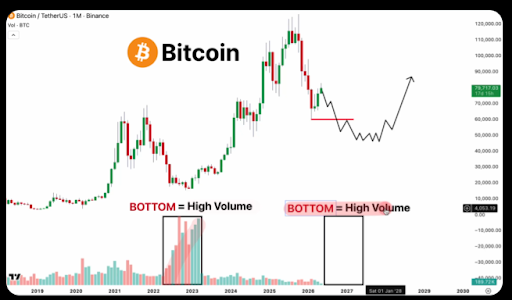
Crypto analyst Gargoyle has advised market participants not to buy Bitcoin until it sees high volume, which could mark the bottom. This comes amid BTC’s recent drop below the psychological $80,000 level, with the leading crypto at risk of another decline.
Analyst Advises Against Buying Bitcoin Until Bottom Is Confirmed
In an X post, Gargoyle advised against buying Bitcoin until the bottom is confirmed. He indicated that the BTC bottom forms when there is massive volume and that this massive volume hasn’t happened yet. The analyst alluded to the 2022/2023 cycle, when the capitulation spike marked the bottom for BTC.
However, at the moment, this capitulation spike hasn’t occurred with Bitcoin’s volume still moderate, suggesting that market participants aren’t truly panicking yet despite the downtrend. Gargoyle further noted that the hardest flush always comes after retail thinks it is over for BTC, which then leads to a spike in volume as investors capitulate.
The analyst’s accompanying chart showed that Bitcoin could still drop to around $45,000 before it bottoms, while this could happen between now and the start of next year. Once that happens, BTC could then see a reversal as it targets a new all-time high (ATH). Notably, BTC had rallied over the past week to as high as $83,000, providing optimism that the bear market may be over.
However, Bitcoin has since dropped below $80,000, raising concerns that the bear market may still be in force, as some analysts, such as Doctor Profit, had warned. The analyst had also mentioned before that BTC will likely bottom between September and October later this year based on its historical cycle patterns.
BTC Bound To Decline If Stock Market Crashes
Crypto analyst Colin warned that the current stock market pump is the only thing keeping Bitcoin afloat. He further noted that, in the short term, the S&P 500 appears bullish following the recent megaphone breakout. However, in the longer term, the economic backdrop doesn’t look good for these stocks and, by extension, for BTC.
Colin alluded to the CPI and PPI, which are both running hot, with inflation rising due to the U.S.-Iran war. The analyst stated that this is not a favorable environment for a Bitcoin “super cycle,” as some bulls are claiming. It is worth noting that the market is also beginning to price in a rate hike this year, which is bearish for the leading crypto. As such, with the macro environment not looking good, Colin suggested that BTC will crash if the stock market sees any significant drop in the future.
At the time of writing, the Bitcoin price is trading at around $79,000, down over 2% in the last 24 hours, according to data from CoinMarketCap.
Bitwise CEO Hunter Horsley wants AI-displaced tech workers to consider crypto. He argues that the industry’s messy problems create the kind of opportunity ambitious engineers should chase.
The pitch arrived inside a broader Silicon Valley conversation about AI-driven job anxiety. Investors and founders are describing a workforce reshaped by automation, widening wealth divides, and questions about future careers.
Horsley Frames Crypto as the Pre-Mainstream OpenAI Bet
Horsley told tech employees their pragmatism is what crypto needs. He pointed to problems around financial freedom, access, and cutting out middle men. He compared the move to joining OpenAI before mainstream adoption was clear.
The Bitwise executive also acknowledged the industry has scams, messy projects, and shallow headlines. He argued those flaws are the opportunity for engineers willing to build.
Crypto roles offer competitive pay across engineering, protocol design, and product talent.
Big tech is moving on from needing you, and will be celebrating laying off talent. Fine. But crypto needs you. We need talented, professional, pragmatic people,” Horsley explained.
It aligns with a recent BeInCrypto report, which highlighted how TradFi giants were offering crypto talent stability and prestige as crypto firms cut staff. This is after JPMorgan, BlackRock, and Citi posted crypto roles recently, with base salaries reaching $300,000.
Banks are also demanding hybrid talent fluent in blockchain and TradFi compliance.
Wall Street’s Crypto Hiring Boom Comes as Layoffs Rock the Industry
“It’s really about domain overlap,” Bloomberg reported, citing Paul Przybylski, JPMorgan Asset Management’s global head of product for digital and tokenized assets.
Justin Sun Echoes the Career Reset
Menlo Ventures partner Deedy Das described San Francisco as frenetic. Roughly 10,000 employees at Anthropic, OpenAI, xAI, and Nvidia have reached wealth above $20 million in five years. Meanwhile, AI-driven layoffs reshape the rest of the workforce.
The vibes in SF feel pretty frenetic right now. The divide in outcomes is the worst I’ve ever seen.
Over the last 5yrs, a group of ~10k people – employees at Anthropic, OpenAI, xAI, Nvidia, Meta TBD, founders – have hit retirement wealth of well above $20M (back of the envelope…
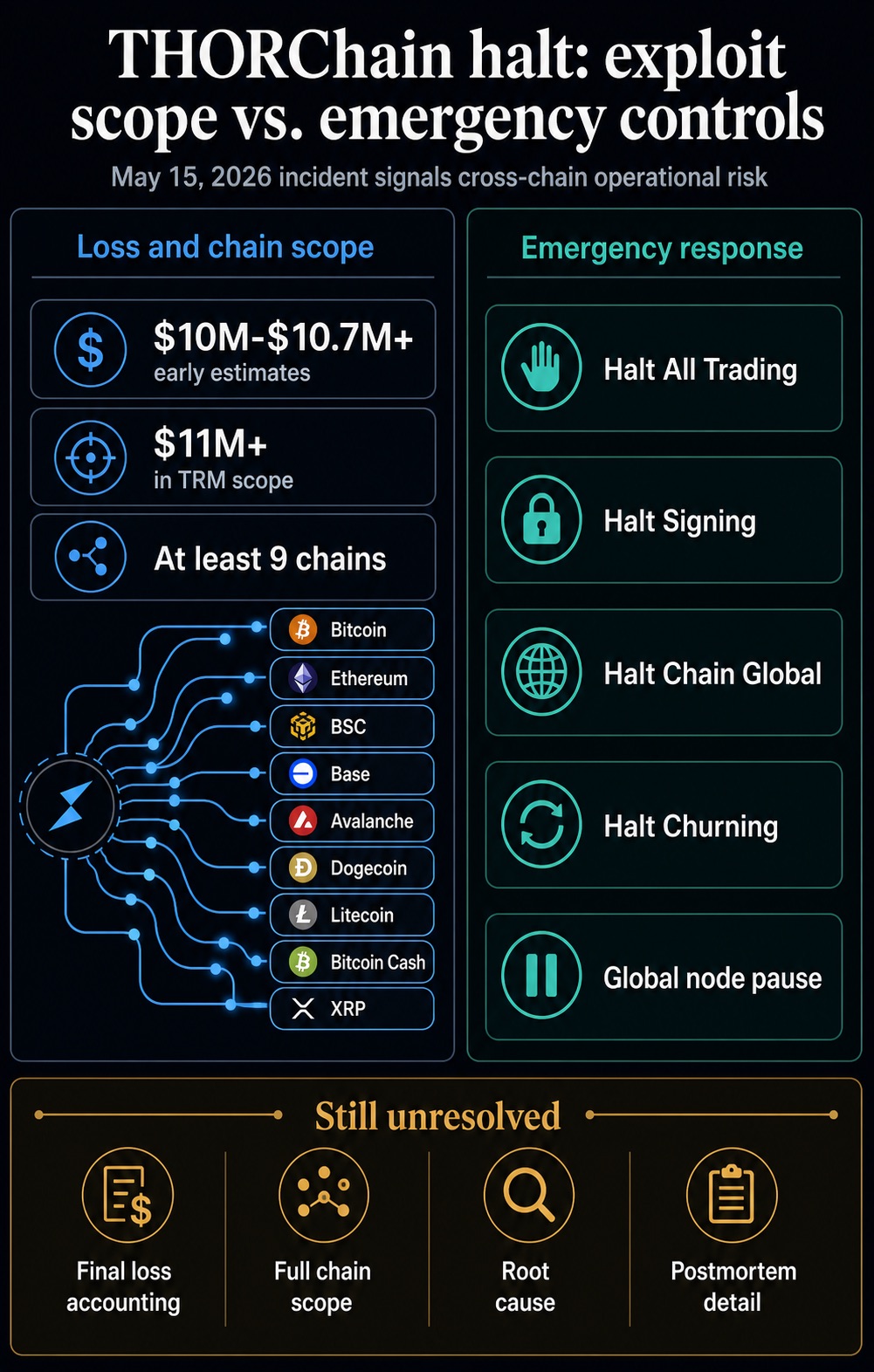
THORChain’s suspected multichain exploit and emergency halt on May 15 has turned into another DeFi security incident, and another test of cross-chain trust.
Emergency controls moved through chain-specific halts, Halt All Trading, Halt Signing, Halt Chain Global, Halt Churning, and repeated global node-pause updates.
One public alert described the likely exploit affecting Bitcoin, Ethereum, BSC, and Base, resulting in more than $10.7 million in losses, revised from an earlier $7.4 million estimate.
Another security estimate put the loss near $10 million, including 36.75 BTC and about $7 million across BNB Chain, Ethereum, and Base.
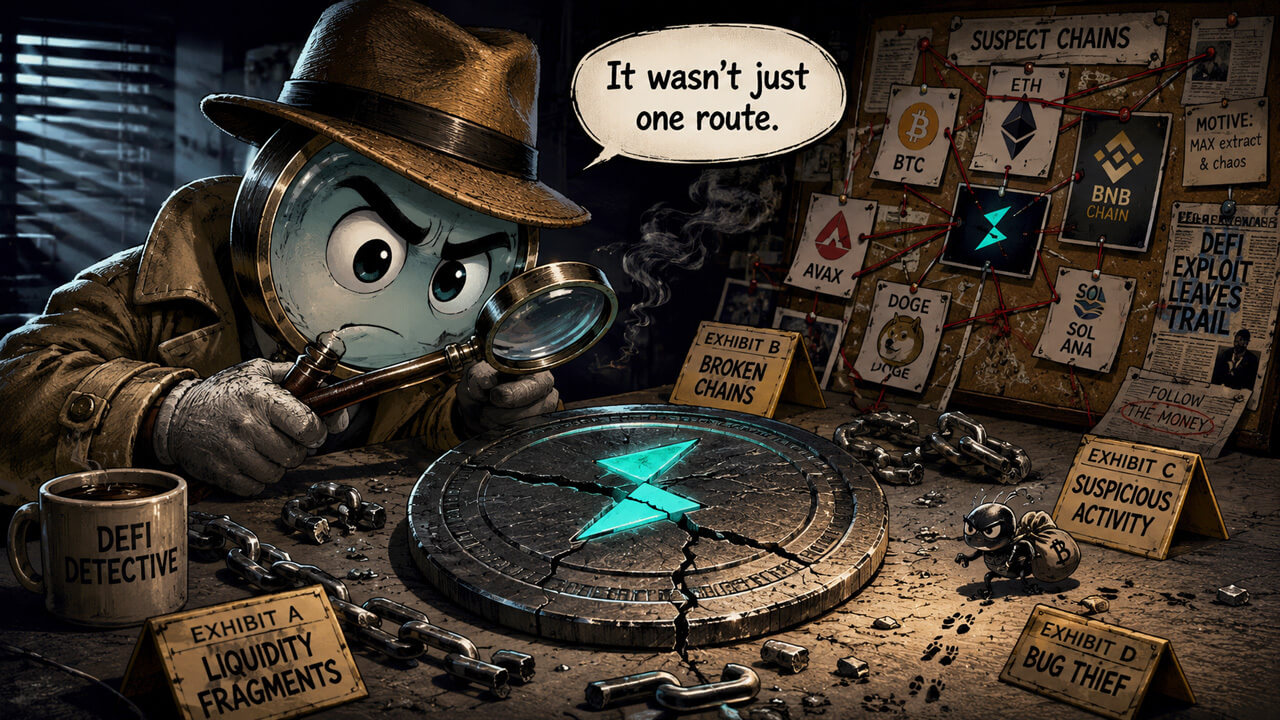
The chain scope was later expanded in a TRM Labs assessment, which reported that the attacker drained more than $11 million across at least nine chains. Those chains included Avalanche, Dogecoin, Litecoin, Bitcoin Cash, and XRP, in addition to the initial four-chain framing. The figures may still move as the accounting is reconciled, but the available record points to a multichain infrastructure event touching several native-asset routes.
The halt, therefore, carried consequences beyond THORChain. Cross-chain liquidity is supposed to make crypto feel more useful, liquid, and connected. Yet the same design that lets assets move between isolated networks can also compress the response window when something breaks.
In this case, DeFi’s promise of seamless routing ran straight into the need for an emergency stop.
The Halt Became The Signal
The operational response is documented in the chain’s emergency framework. THORChain’s procedures describe network and chain halts as tools node operators can use when funds are at risk.
Its architecture relies on Bifrost observation, vaults, and threshold-signature signing to move native assets across chains without wrapping them.
Those controls can protect funds by stopping further activity. They also show that cross-chain infrastructure is a stack of observers, validators, vaults, signing logic, node operations, and emergency procedures.
When that stack is tested, the market asks whether a single bug can be patched and whether the system can remain credible while the response itself disrupts routing.
I think that distinction brings the THORChain incident into the broader DeFi story. Mature financial infrastructure is expected to fail safely, explain quickly, and restore confidence with a documented root cause.
DeFi often moves faster than that standard. It ships integrations, new chains, and liquidity routes before users and institutions have a clear way to price the full operational risk.
One of six Asgard vaults was reportedly compromised for roughly $10.7 million; initial indications said individual swaps were unaffected.
Final root cause, final user-impact accounting, and postmortem detail.
THORChain’s May 15 halt showed how suspected multichain losses, emergency controls, and unresolved postmortem questions converged into a broader DeFi infrastructure test.
The Trust Discount Is Now Measurable
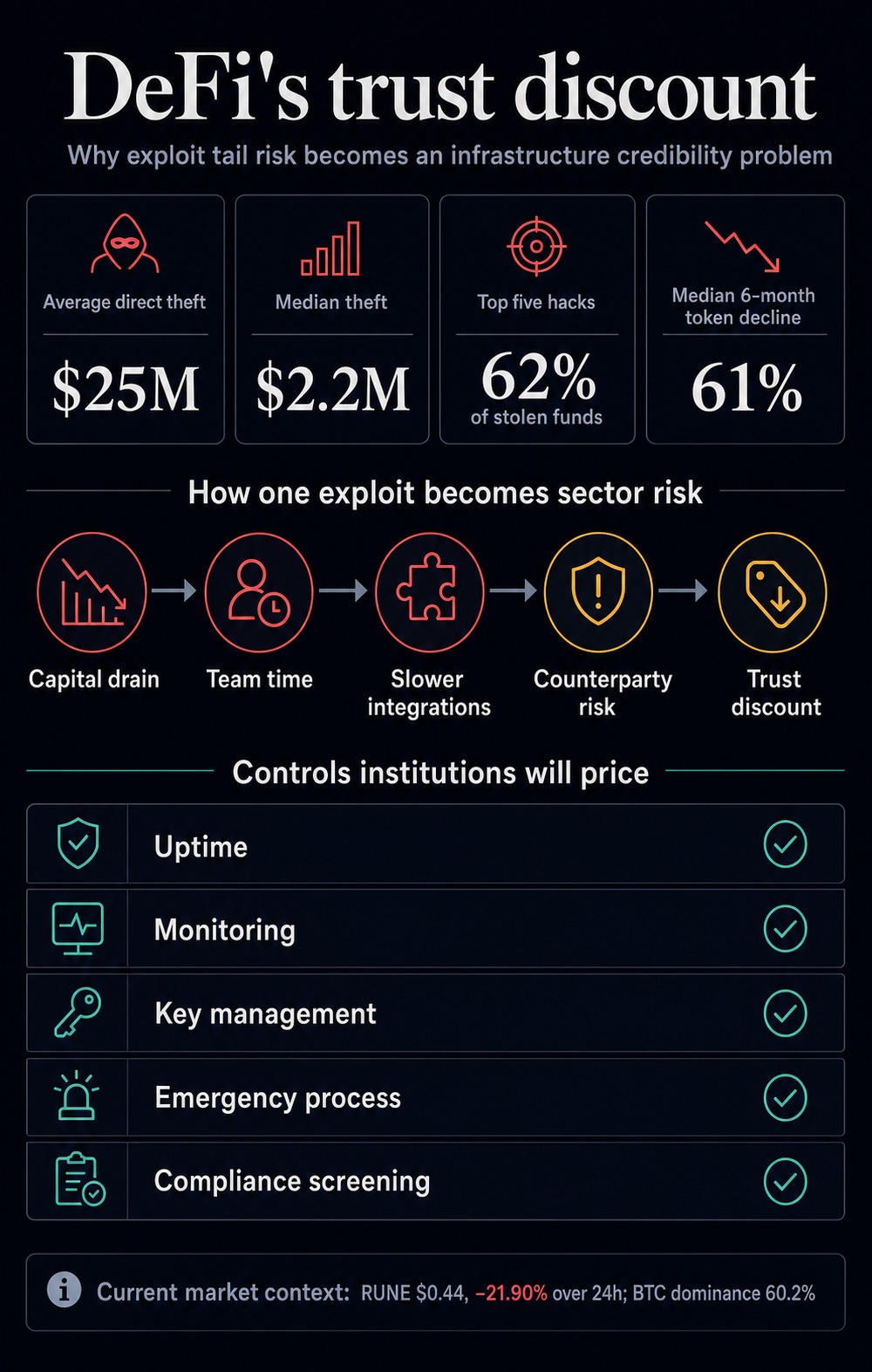
The damage from exploits rarely ends with the drained wallet. Immunefi’s 2026 security findings put the average direct theft at $25 million, while the median loss fell to $2.2 million.
That gap shows a market where routine defenses may improve while the largest incidents still define confidence.
The same report found that the top five hacks in 2024 and 2025 accounted for 62% of stolen funds, and hacked tokens saw a median six-month decline of 61%.
Those token moves cannot be cleanly separated from market conditions or project-specific weakness in every case. Still, the pattern supports the core market reaction: exploits become long-tail business events.
They drain capital, consume team time, slow integrations, and make partners question whether the next failure will hit them indirectly.
The trust discount reflects an extra layer of skepticism toward a sector that wants to be treated as financial infrastructure, yet still produces failures that look like crisis drills.
Users, exchanges, market makers, custodians, and institutions require more evidence to trust a protocol’s uptime, monitoring, key management, and emergency processes.
Recent cross-chain incidents reinforce that point. In the KelpDAO bridge exploit, attackers targeted off-chain verification and source-chain watching infrastructure rather than a conventional smart-contract bug.
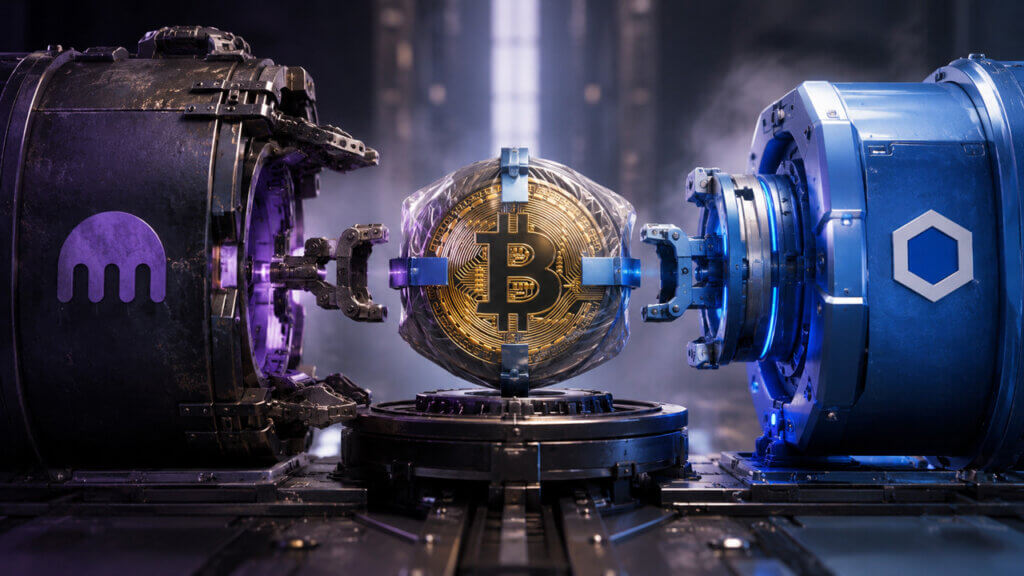
The result was a false view of reality that led to valid-looking transactions releasing funds. Bridge-security fears have already influenced infrastructure decisions, including Kraken’s move to use Chainlink CCIP for kBTC and future wrapped assets following the KelpDAO shock.
That makes the THORChain halt feel less isolated. The sector is being forced to prove that the trust path across chains is observable, redundant, and controllable before billions of dollars of liquidity are routed through it.
For institutional users, the issue becomes operational due diligence. Cross-chain exposure touches custody policy, liquidity commitments, incident response, and counterparty reviews.
A protocol that routes native assets across chains has to prove that the monitoring and emergency process around that routing is as strong as the connectivity itself.
For builders, that changes what counts as progress. New routes and integrations can deepen liquidity, but they also create more surfaces for monitoring, key management, and incident response.
The next credibility gains will come from showing that controls scale with liquidity before a failure forces counterparties to revisit assumptions.
THORChain Carries A Compliance Layer Too
THORChain’s position is especially sensitive because the protocol combines an attack surface with a routing role in major illicit-flow episodes.
As of TRM’s report, the May 15 exploit had no public actor attribution. That caveat keeps the current incident separate from earlier laundering cases unless new evidence changes the record.
The same analysis described THORChain as a recurring rail for moving stolen funds, including flows tied to the Bybit and KelpDAO incidents.
Federal investigators attributed the February 2025 Bybit theft of about $1.5 billion in virtual assets to North Korea’s TraderTraitor activity.
The FBI also urged private-sector crypto entities, including DeFi services and bridges, to block transactions to or from addresses linked to laundering.
That history sharpens the current episode. A protocol can be useful because it makes native cross-chain swaps efficient. The same utility can make it attractive to attackers and difficult for compliance teams to ignore.
Once a protocol is seen as both exploitable infrastructure and a route for illicit funds, counterparties have to price in more than just smart-contract risk.
They have to price operational interruption, screening exposure, and the chance that integrations become reputational liabilities.
RUNE price reaction stays secondary. Market data on May 16 put RUNE at around $0.44, down 21.90% over 24 hours.
The broader crypto market stood near $2.61 trillion with Bitcoin dominance at 60.2%. The market noticed the incident, but the more important question is whether liquidity providers, routing interfaces, wallet integrations, and compliance desks change behavior after the halt.
The important market signal will come from the next set of operational choices rather than from a one-day chart. Liquidity interfaces can route around protocols that introduce uncertainty; custodians and market makers can raise internal risk scores.
Compliance teams can demand better screening and incident records before supporting integrations. Those reactions are slower than a token selloff, but they are the way a security event becomes a durable trust discount.
That is the slower repricing institutions notice. It shows up in due diligence questions, integration queues, and risk limits long after the emergency halt leaves the alert feed.
The Next Test Is The Postmortem
The next test starts with more than a recovery message: THORChain needs to produce a clear postmortem, reconcile the final loss figure and chain count, explain the root cause without speculation, and show what changed in its vault, key-management, node, monitoring, and halt processes.
Recovery details may help contain user harm while leaving the infrastructure question intact.
If THORChain completes compensation, resumes safely, and documents a credible fix, the incident can remain a severe but contained confidence hit.
If the root cause remains unsettled, final accounting keeps changing, or integrations pull back, the event becomes another data point in a broader repricing of cross-chain DeFi.
That is the sector-level consequence. DeFi wants to present itself as a durable, always-on financial infrastructure.
Every major cross-chain exploit makes that claim harder to defend until the industry can show that the bridges, vaults, signing systems, and emergency controls connecting its markets are as mature as the capital they aim to attract.