
Gate AI and XYO Explore AI-Powered Crypto Cards Verified on XYO Layer One
Panama City / San Diego | [PUBLICATION DATE]
Gate AI and XYO Explore AI-Powered Crypto Cards Verified on XYO Layer One
The initial collaboration brings AI capabilities, market intelligence and blockchain verification into a competitive digital asset prediction experience.
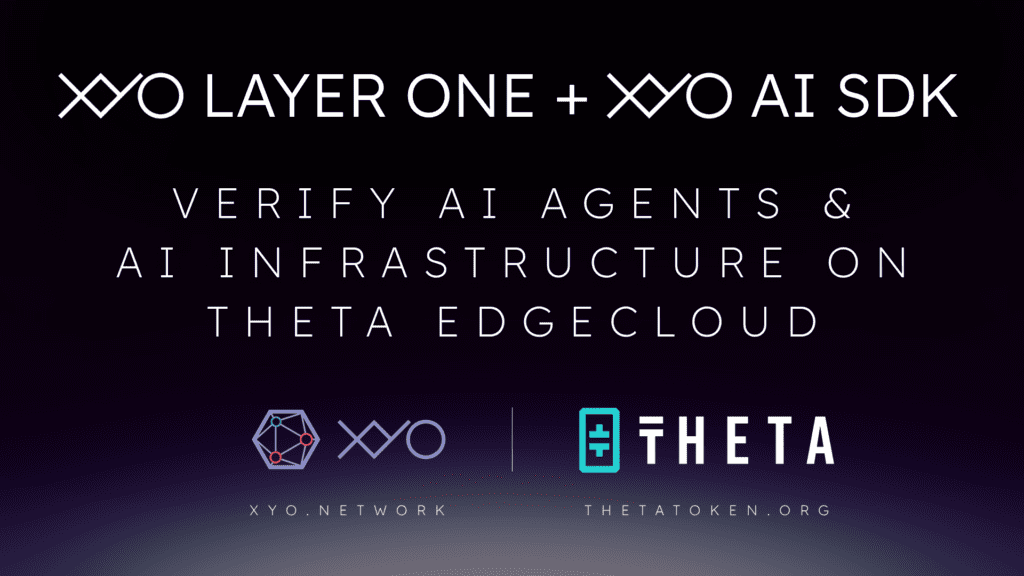
Gate AI and XYO are collaborating on a new experiment at the intersection of artificial intelligence, market intelligence and verifiable digital experiences. The companies plan to explore how selected Gate AI capabilities and data from the broader Gate ecosystem can be incorporated into XYO Crypto Cards, a digital asset prediction experience developed by XYO.
The initial Phase 1 work is deliberately framed as an exploration. Gate AI will contribute selected AI capabilities, while market data from the broader Gate ecosystem may be used within the experience. XYO will continue to lead product development, game mechanics, user experience and integration with XYO Layer One.
That division of responsibilities matters. The collaboration is not simply placing an AI chatbot beside a crypto game. It is testing whether AI-assisted information, live market inputs and blockchain-based verification can work together as distinct layers of one consumer product.
01 | The ExperienceA prediction game built around shared conditions
XYO Crypto Cards turns short-term market prediction into a competitive format. Two players select the same three digital assets, assign each asset to a multiplier slot and take opposing positions on whether those assets will move higher or lower during a defined period.
The shared asset set gives both sides the same starting conditions. Strategy enters through directional calls and multiplier placement. Instead of asking only whether a player can identify a market move, the format also asks how strongly that player is willing to weight each prediction.
Market data can then serve as an input for settlement when the prediction window closes. Before play begins, however, each participant’s selections and predictions are recorded on XYO Layer One. That creates a permanent reference point for what each player chose before the outcome was known.
02 | The Trust LayerWhat blockchain verification adds
Prediction products depend on more than an accurate closing price. Participants also need confidence that the original choices were recorded correctly and were not changed after the match began. XYO’s role is to make that pre-match state verifiable.
XYO describes its network as infrastructure for verifying real-world data, with cryptographic anchors recorded on-chain while underlying data can remain where it already lives. In Crypto Cards, the relevant proof is the match record: the assets, multiplier positions and directional predictions committed before settlement.
This approach separates two questions that digital applications often blur together. Market data helps determine what happened during the prediction window. XYO Layer One helps verify what the players committed to before that outcome. One supplies an input; the other preserves an auditable history.
| Stage | Function | Verifiable result |
|---|---|---|
| Selection | Both players receive the same three assets and assign multiplier positions. | Player choices are fixed before the prediction period begins. |
| Prediction | Players take opposing views on whether each asset will move higher or lower. | Directional calls are recorded as part of the match state. |
| Settlement | Market data may be used to evaluate performance when the window closes. | The outcome can be checked against the original on-chain record. |
03 | The Intelligence LayerGate AI moves from information toward interaction
Gate AI’s public product already focuses on real-time market analysis, contextual recommendations and natural-language access to digital asset information. Gate has also been developing infrastructure that connects AI systems to market data, news, wallets, trading services and on-chain analytics.
The XYO collaboration applies part of that broader capability set to a narrower consumer experience. Rather than treating AI as the final decision-maker, the Phase 1 concept explores how AI can make the environment more informative and engaging while the players remain responsible for their own predictions.
It also fits a wider thesis articulated by Gate US: AI can become an orchestration layer between users, information and financial capabilities. In a recent Gate US discussion of its AI strategy, Laura Ting L., Chief Operating Officer of Gate US, argued that the next phase of the technology is not simply about adding isolated features. It is about connecting capabilities into useful outcomes.
What Phase 1 means
The companies are establishing an initial technical and product foundation. The announcement does not promise a final feature set, launch date or expanded commercial arrangement. It outlines the capabilities being explored and leaves room for the experience to evolve through testing.
04 | Why It MattersAI can suggest; verification can preserve
AI makes it easier to surface information, identify patterns and adapt an interface to a user’s context. Those advantages also introduce a trust problem. If an intelligent system influences a digital experience, participants need a reliable way to separate generated insight from the records used to determine what actually occurred.
This is where the Gate AI and XYO collaboration becomes more interesting than a conventional product integration. The companies are exploring complementary roles. AI can help connect users with relevant market intelligence. Gate ecosystem data can contribute to settlement. XYO Layer One can preserve the pre-match commitments and final record for later verification.
The result is not a claim that blockchain can verify whether an AI-generated idea is good, nor that AI can remove the uncertainty of markets. It is a practical attempt to make the surrounding experience more legible. Participants can see the inputs, understand the game rules and verify that the recorded choices match the state that existed before the market moved.
That same design pattern could extend beyond prediction games. AI-powered applications increasingly need trusted histories for user instructions, model outputs, external data and completed actions. XYO has been developing that verification thesis across AI and machine systems, including the data-provenance and accountability ideas explored in Crypto Coin Show’s recent feature on XYO, vibe coding and AI accountability.
05 | What Comes NextAn initial foundation for broader experimentation
Phase 1 gives Gate AI and XYO a defined environment in which to test how AI capabilities, market intelligence and blockchain verification interact. XYO retains control of the core product experience, while Gate contributes selected intelligence and ecosystem data capabilities.
Future work may expand how intelligence is presented, how market inputs are incorporated and how users interact with verified records. For now, the importance of the collaboration is its architecture: it treats AI, data and verification as separate components that can reinforce one another without pretending they are interchangeable.
Crypto Cards may look like a game on the surface. Underneath, it is becoming a live test of a larger question for digital assets: can AI make an experience more useful while blockchain makes its history easier to trust?
FAQGate AI, XYO and Crypto Cards
What is XYO Crypto Cards?
XYO Crypto Cards is a digital asset prediction experience developed by XYO. In the announced player-versus-player format, two participants make opposing predictions on the same three crypto assets and use multiplier positions to shape their strategy.
How will Gate AI be used in XYO Crypto Cards?
The Phase 1 collaboration will explore the use of selected Gate AI capabilities and market data from the broader Gate ecosystem. The final feature set has not been announced, and XYO will continue to lead product design, game mechanics and blockchain integration.
What does XYO Layer One verify?
Before a match begins, player selections and predictions are recorded on XYO Layer One. This creates a permanent reference that can be checked against the market-data inputs and final settlement after the prediction period closes.
XYO develops decentralized infrastructure for verifying real-world data. Its ecosystem includes XYO Layer One, tools and software designed to create cryptographically verifiable records for applications spanning AI, robotics and connected systems. Learn more at xyo.network.
Gate AI is the conversational AI experience within the broader Gate ecosystem, providing market analysis, contextual information and access to platform capabilities. Gate’s wider AI infrastructure also connects agents and applications with market data, trading, wallet, news and on-chain services. Learn more at gate.com/ai.