Brave Rewards Card Waitlist Tops 131,000 Ahead of BravePay Rollout
San Francisco · 20 September 2026
Brave’s Rewards Card waitlist doubles to 131,000 before an issuer is named
No reward rate, no country list, no card partner. Signups keep climbing anyway, and Brave is counting on that demand to carry BAT from an ad reward to a spending currency.
More than 131,000 people have asked for a payment card that does not exist yet. Brave has not named the company that will issue it, the rate it will pay, or the countries where it will work. The waitlist for the Brave Rewards Card has roughly doubled regardless, in the weeks since Luke Mulks, Vice President of Business Operations at Brave, sat down with Crypto Coin Show and put the count at 66,000 after three weeks.
For a product with no launch date, that is an unusual curve. Waitlists normally spike on announcement day and flatten. This one has kept growing through a quiet stretch with no new details to feed it, which says more about the audience than the marketing. Brave already has 122 million monthly active users and about five million opted into Brave Rewards. The card only has to convert a sliver of them.
ContextA browser that pays, looking for a second act
Brave Software built its name on a privacy browser that blocks ads by default and pays users in Basic Attention Token (BAT) for the ads they choose to see. The model worked well enough to reach 50 million daily users. It also capped what BAT could be. Mulks was blunt about the ceiling, describing ad earnings as a “couple bucks a month” for most users.
The ground under that model is moving too. Mulks pointed to AI answer engines pulling anywhere from 20% to 90% of traffic away from the sites that used to host ads. Brave has said its ad notification unit will sunset by the end of 2026. BAT Roadmap 4.0 is the answer to what comes next, and the Rewards Card is the first piece of it the public can touch.
The CardBuilt for people who never asked for a crypto card
The waitlist page makes four promises: earn on every purchase, earn while you browse, earn from your existing BAT balance, and no hidden fees. Signups pick a virtual card they can use straight away, or a virtual card plus a physical one in the mail. Eligibility depends on country.
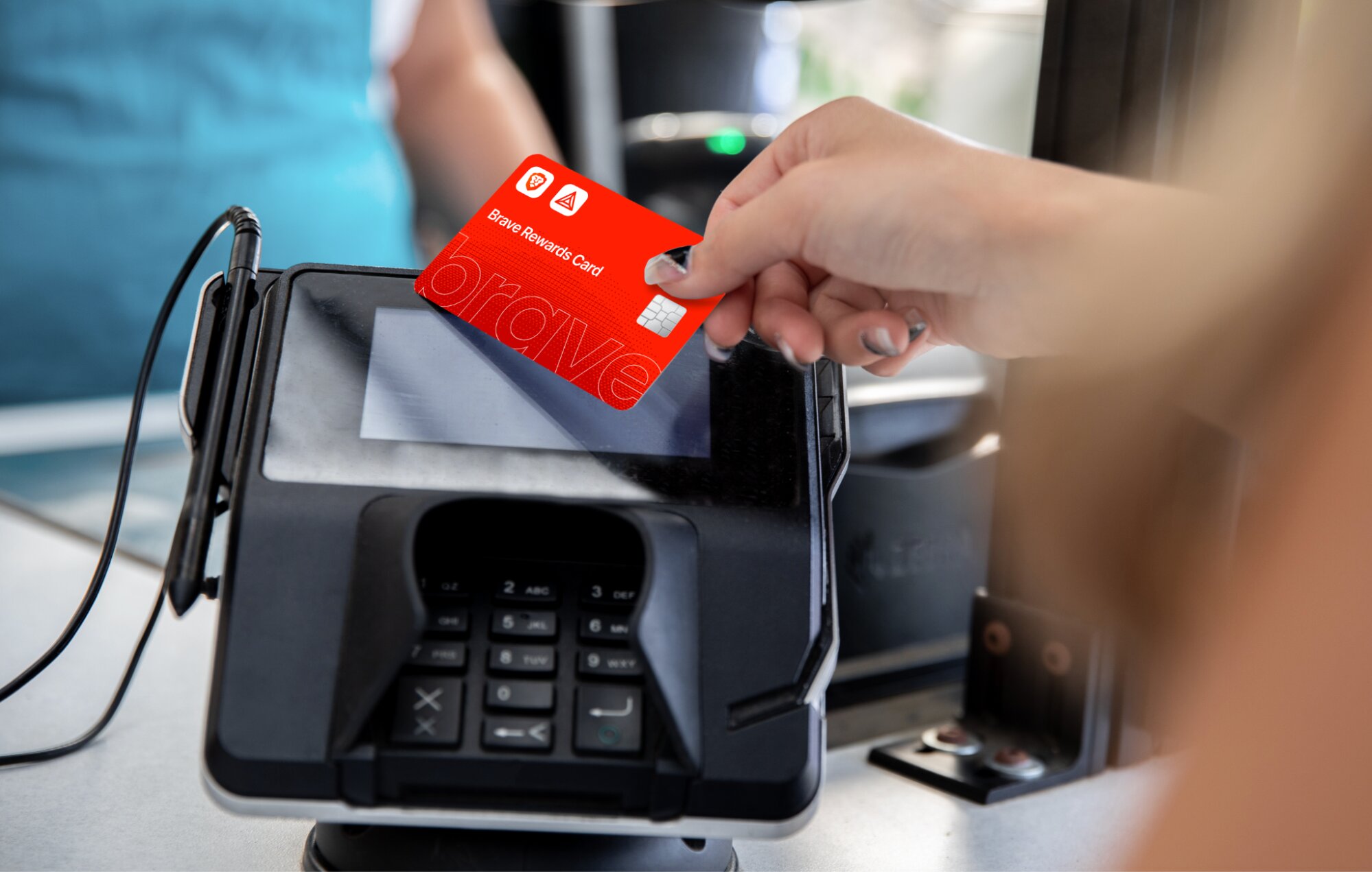
What stands out is who it is aimed at. Mulks compared the mechanic to Starbucks Stars, a loyalty loop most people already understand, wrapped around a self-custody stablecoin balance instead of a bank account. “You can save it in the browser wallet. You can put it in your other payment apps too,” he said. The pitch is familiarity first, crypto second. “We just have to meet them with something that they’re familiar with.”
“The card mechanism is really an awesome thing to use here because it’s kind of like a Trojan horse in a way for bootstrapping all this.”
Luke Mulks, Vice President of Business Operations, Brave
The ProtocolBravePay is the part that matters longer term
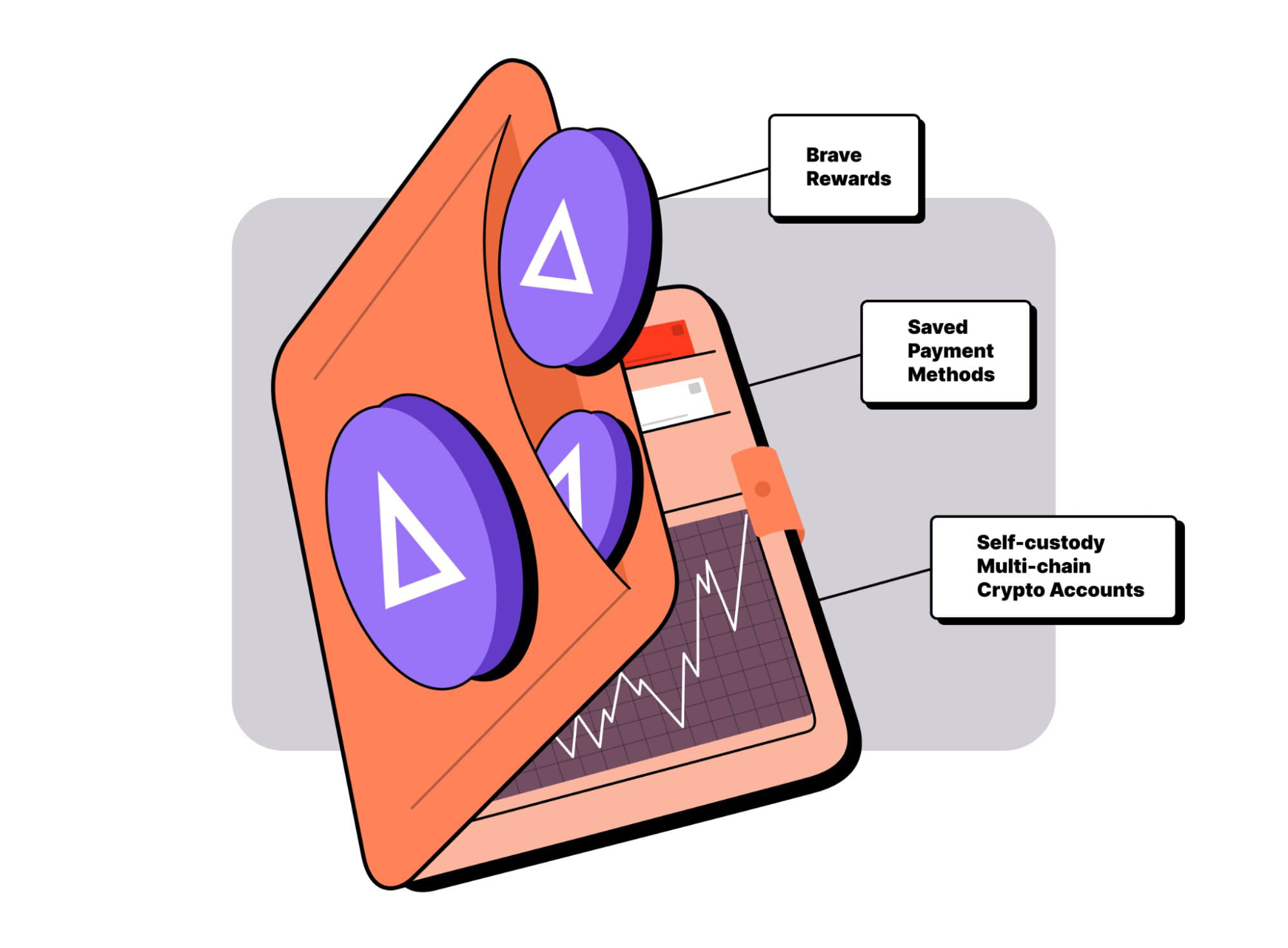
The “all this” in that quote is BravePay, the payment layer the card sits on. Brave describes it as a stablecoin protocol built for self-custody and privacy. Users send and receive funds through .brave addresses using stablecoins that comply with the GENIUS Act, and an SDK is planned so third-party apps can plug in directly. The same rails handle conversion between stablecoins and fiat, with the goal of making a coffee or a water bill settle close to instantly.
The economics loop back to the token. A share of revenue from card spending and BravePay activity is earmarked for BAT buybacks, which Brave says it will disclose on its Transparency and BAT Ecosystem Growth pages. Mulks cited industry data showing crypto card users spend between $1,000 and $2,000 a month across three to five purchases. Set that beside a couple of dollars in ad rewards and the appeal of the pivot is obvious.
Watch: Luke Mulks on the Rewards Card, BravePay and BAT Roadmap 4.0
By the NumbersWhy a waitlist count carries weight right now
Joining a waitlist costs nothing, and 131,000 names are not 131,000 funded cards. The number still does real work. Brave is negotiating with card issuers, and Mulks framed the early signups as proof of demand going into those talks. A list that doubles after the launch headlines fade is a stronger hand than one that peaked on day one.
| Metric | Value |
|---|---|
| Waitlist signups, first three weeks | 66,000 |
| Waitlist signups, 20 September 2026 | 131,000+ |
| Monthly active users | 122M |
| Daily active users | 50M |
| Users opted into Brave Rewards | ~5M |
| Typical crypto card spend per user, monthly | $1,000 to $2,000 |
| Milestone | Target |
|---|---|
| Card waitlist open, no issuer named | Now |
| Public UX testing of the unified Brave Wallet | Fall 2026 |
| Issuer locked in, virtual card signups open | End of 2026 |
| Ad notification unit sunsets | End of 2026 |
| Broader wallet and BravePay rollout | Q1 to Q2 2027 |
Looking AheadThe issuer announcement decides everything else
The next real milestone is the card partner. That single announcement will settle which countries get access first and what the reward rate looks like, the two details every person on the waitlist is waiting for. Brave’s stated goal is to have an issuer locked in and virtual card signups open by the end of 2026. “If sooner, better, great,” Mulks said, “but there’s a lot of things to navigate.”
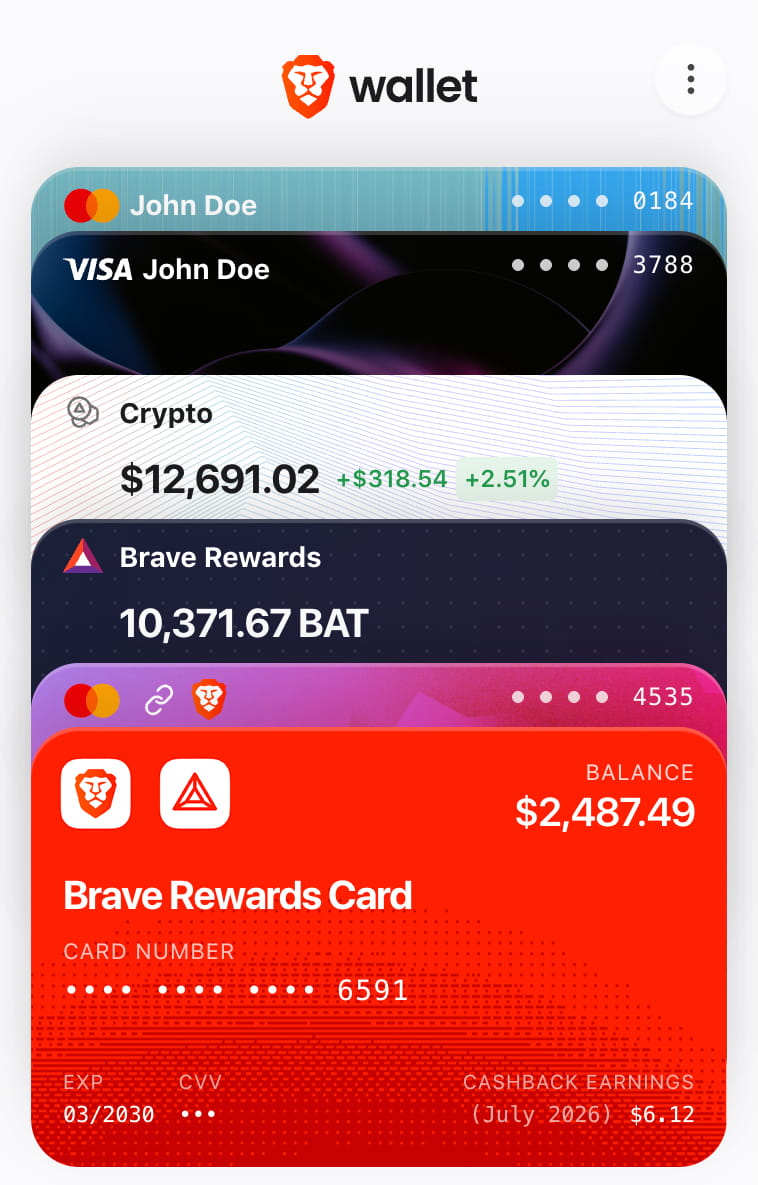
Before that, the unified Brave Wallet enters public testing this fall, folding self-custody crypto, BravePay and traditional debit and credit cards into one interface. The wider protocol rollout is pencilled in for the first half of 2027, part of a roadmap Mulks described as running 16 to 18 months.
I have covered Brave for years, and the browser has always been the easy part to believe in. The harder question was whether BAT could matter outside of it. A six-figure queue for a card nobody has seen is the first sign that it might. Now Brave has to ship one.
This feature is based on an exclusive interview conducted by CCS with Luke Mulks, Vice President of Business Operations, at Brave, in August 2026.
Brave Software makes the Brave browser, a privacy-first browser that blocks ads and trackers by default, alongside Brave Search, Brave Wallet and the Brave Rewards program powered by the Basic Attention Token (BAT). The company reports 122 million monthly active users and 50 million daily active users.