Circle sponsors Chelsea FC shirt to boost USDC brand recognition among mass consumers
Circle’s $73.3 billion USDC stablecoin generates 95% of its quarterly revenue from reserve interest that token holders never see, making brand recognition critical to expanding the reserve base, which is why the firm paid to put its logo on Chelsea FC’s match shirt for the 2026/27 season. The deal signals how crypto infrastructure companies must build consumer familiarity for products too technical to sell emotionally on their own merits.
- Circle reported $668 million in reserve income for Q2 2026, representing 95% of total reported revenue versus $701 million in combined totals.
- $73.3 billion in USDC was outstanding as of June 30, 2026, backed by cash and Treasury-equivalent assets earning interest retained by Circle.
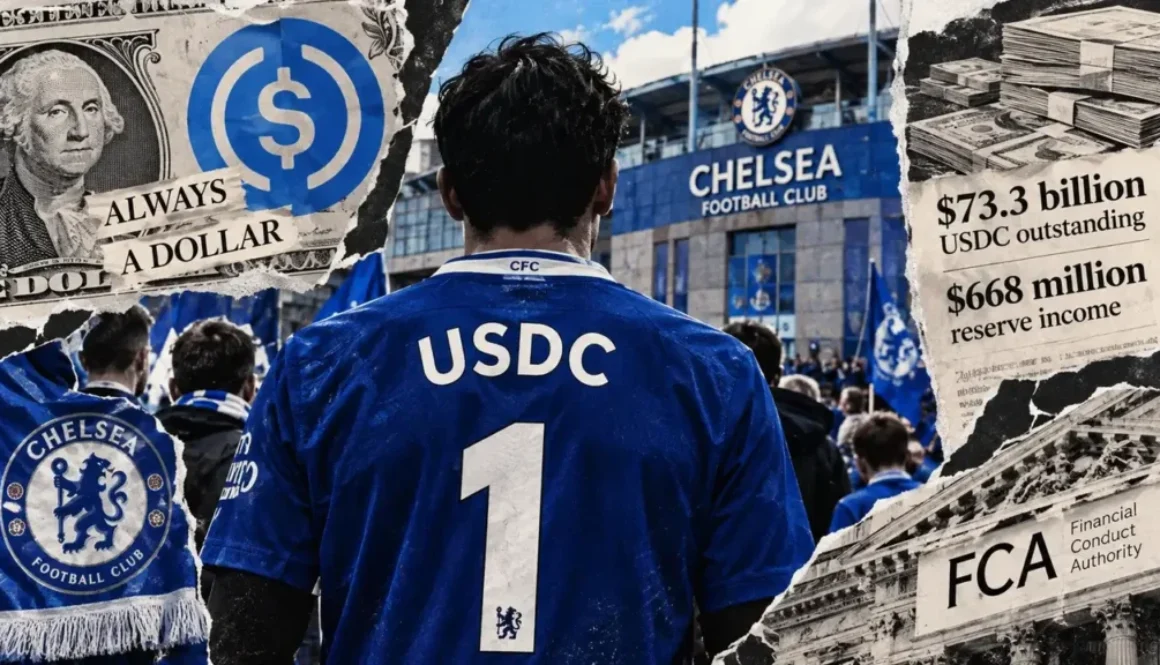
- Circle and USDC branding will appear on Chelsea FC’s men’s, women’s and academy team shirts as principal front-of-shirt sponsor for the 2026/27 season.
- 95% Circle’s reserve income as percentage of total Q2 2026 reported revenue
- $73.3B USDC outstanding as of end of Q2 2026, versus rival stablecoins
- 2026/27 Season Chelsea FC partnership begins, coinciding with gambling ad ban
Circle announced the sponsorship on August 28, positioning USDC branding across Chelsea’s men’s, women’s and academy sides. The timing aligns with a Premier League voluntary agreement to remove gambling companies from match-day shirt fronts beginning this season, vacating the most valuable advertising real estate in professional football at the moment crypto firms are competing for mainstream attention. Unlike traditional stablecoin marketing, the deal targets cultural familiarity rather than financial conversion: Circle’s goal is to make USDC’s name recognizable enough that consumers choosing between dollar stablecoins will default to the familiar option.
Circle keeps reserve interest, not USDC holders, creating incentive to expand the reserve base
USDC is engineered to remain worth precisely one dollar through backing with cash and cash-equivalent assets, with most reserves held in a government money market fund containing short-term US Treasury securities and Treasury-backed lending. The critical economics: those reserves earn interest, but Circle’s USDC terms explicitly state the token pays no interest and gives holders no claim on reserve returns. This structure created Circle’s second-quarter revenue profile: $668 million in reserve income against $701 million in total reported revenue and reserve income, meaning reserve earnings accounted for roughly 95% of reported quarterly numbers.
A larger USDC reserve base directly expands Circle’s interest-bearing asset pool, regardless of interest rate fluctuations or Treasury yield movements.
The mathematics are straightforward: more circulating USDC means more deposits earning yield that Circle captures. Football sponsorship addresses the marketing challenge no blockchain can solve alone, how to build consumer recognition for a product defined by its stability rather than performance or scarcity.
The Chelsea deal puts four letters in front of millions of weekly viewers during matches, highlights and social media posts, none of whom need to understand Treasury-backed reserves to remember the name.
Premier League gambling ban clears premium sponsorship space as financial firms compete for mainstream adoption
The Premier League’s voluntary removal of gambling company front-of-shirt sponsorships beginning the 2026/27 season created the opening Circle capitalized on.
The UK’s Financial Conduct Authority wrote to 21 clubs (including all 20 then in the Premier League) and identified 18 financial-company arrangements involving 13 clubs without FCA authorization. The FCA cautioned that lack of authorization did not automatically indicate illegality; for most arrangements reviewed, it found no evidence of breaches.
However, the broader regulatory picture remains unsettled: football shirts excel at creating name recognition but convey almost nothing about product protections, fee structures, redemption mechanics or custody arrangements, precisely the details financial regulators require consumers to understand.
Circle’s sponsorship announcement itself explicitly disclaims any invitation to buy, hold or trade, framing the partnership as pure branding exercise. Chelsea is not alone in experimenting with crypto sponsors: the club renewed its partnership with BingX for the 2026/27 season as training-kit partner. BingX operates a trading exchange; Circle issues a dollar stablecoin. Both benefit from the same mechanism: attaching their names to something fans already care about rather than convincing them to care about financial products.
Circle’s goal is to make USDC boring and omnipresent, not exciting
The sponsorship succeeds only if USDC becomes as unthinking a choice as Visa, Mastercard or PayPal. Circle doesn’t need Chelsea supporters to feel passionate about Treasury-backed reserves or yield structures; it needs consumers encountering USDC in a financial app two years from now to react with casual recognition rather than suspicion.
A person discovering the name through months of shirt visibility may ask fewer questions when offered a choice between USDC and a competitor stablecoin they’ve never heard of.
The product’s defining feature, absolute price stability, is its greatest marketing weakness.
Bitcoin promises scarcity and upside; crypto exchanges promise the excitement of active trading. USDC promises to remain worth what it is now, forever. That promise is its entire value proposition, but it cannot be sold emotionally the way sports can. Football provides what the blockchain itself cannot: emotional investment and cultural familiarity that make the unfamiliar feel safe.
The CCS read. We see Circle’s reserve arbitrage as the real economics here, not retail adoption fantasy. Every additional dollar in circulating USDC expands the interest-earning reserve base by one dollar, regardless of whether the user ever touches the underlying token. Sponsorship accelerates household recognition, converting fence-sitters into passive holders who never think about redemption mechanics or competitive stablecoins, exactly the behavior that maximizes reserve duration and yield capture.
Watch for whether Circle discloses USDC growth and reserve size in its next earnings report (due alongside Q3 2026 results). If the Chelsea sponsorship measurably accelerates circulation growth relative to competing stablecoins over the coming six months, other crypto infrastructure firms will treat football shirt deals as mandatory, not optional, growth infrastructure. The FCA’s ongoing review of financial-company football sponsorships could also impose disclosure requirements that force Circle to explain reserve mechanics on or near the shirt badge itself, undercutting the entire strategy of cultural familiarity without financial literacy.