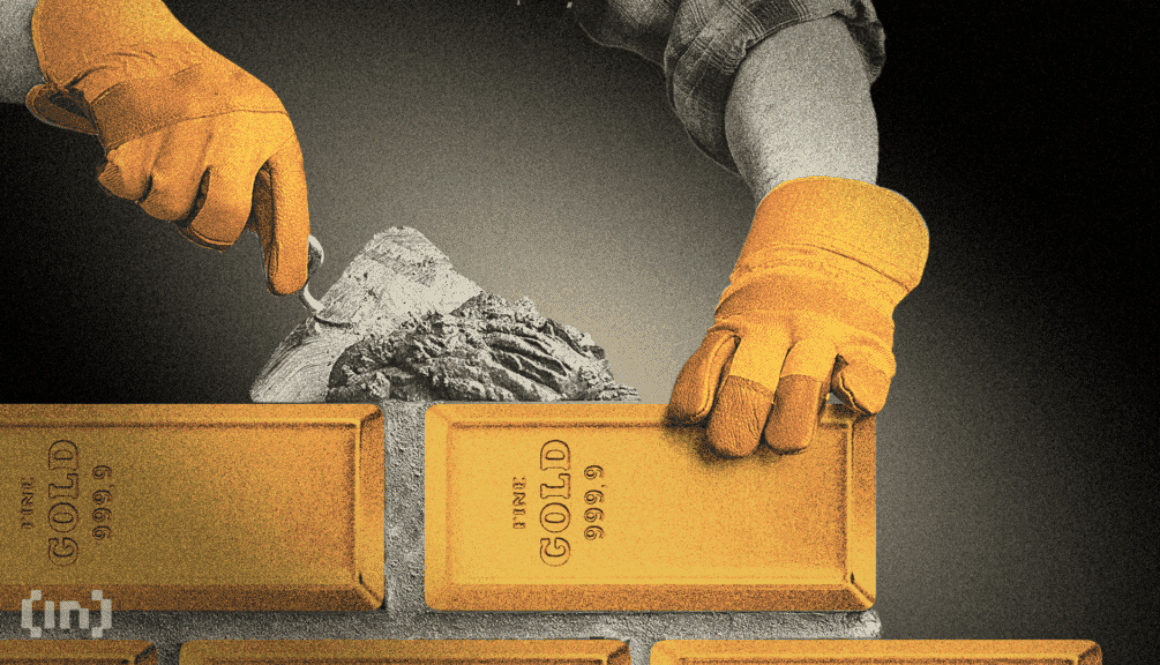
Trump renewed his push for a physical inspection of Fort Knox after a former senior CIA official was charged with stealing more than 300 gold bars worth over $40 million from the federal government.
The charges have intensified scrutiny over how the US tracks and verifies its gold holdings. Fort Knox has not undergone an independent public audit since 1974.
CIA Official Charged With Stealing $40 Million in Gold Bars
David Rush, a former senior executive-level CIA employee with top-secret clearance, was arrested on May 19 and charged with criminal theft of public money, per federal court filings in Virginia.
Between November and March, Rush requested and received a significant quantity of gold bars and foreign currency for work-related expenses, according to an FBI affidavit. What he intended to do with those funds remains unclear.
Federal agents searched his home on May 18 and seized more than 300 gold bars valued at over $40 million, roughly $2 million in US currency, and 35 luxury watches. Authorities arrested him the following day.
The FBI, working with the CIA and the Department of Justice, determined there was probable cause to believe Rush had stolen and converted government property for personal use. His attorney declined to comment.
Investigators also found Rush had allegedly fabricated his professional background, including false claims of being a Navy pilot and holding degrees from two universities.
Trump Calls for Fort Knox Inspection
The arrest drew immediate political attention. Trump posted on Truth Social, linking the case to Fort Knox audit questions he has raised since early 2025.
Countries with the largest gold reserves in the world (Dec 2025), Source: Statista
Trump addressed the Fort Knox question in a May 10 interview, saying he still wants to verify the contents of the depository himself.
“I do want to go to Fort Knox sometime. I want to see if the gold is there, which I’m sure it will be.”
Fort Knox holds approximately 147 million ounces of gold, about 59% of the US official reserves, with an estimated value of around $700 billion. The reserve’s scale has amplified interest in tokenized gold crypto markets, which gained traction during gold’s 2026 rally.
Treasury Secretary Scott Bessent has dismissed the concerns. He said that all gold is present and that the Treasury conducts annual internal audits. He has invited any member of Congress to visit and verify.
No authority has announced a formal inspection timeline. The Department of Government Efficiency, which previously floated the idea of an audit, has not followed up with a concrete plan.
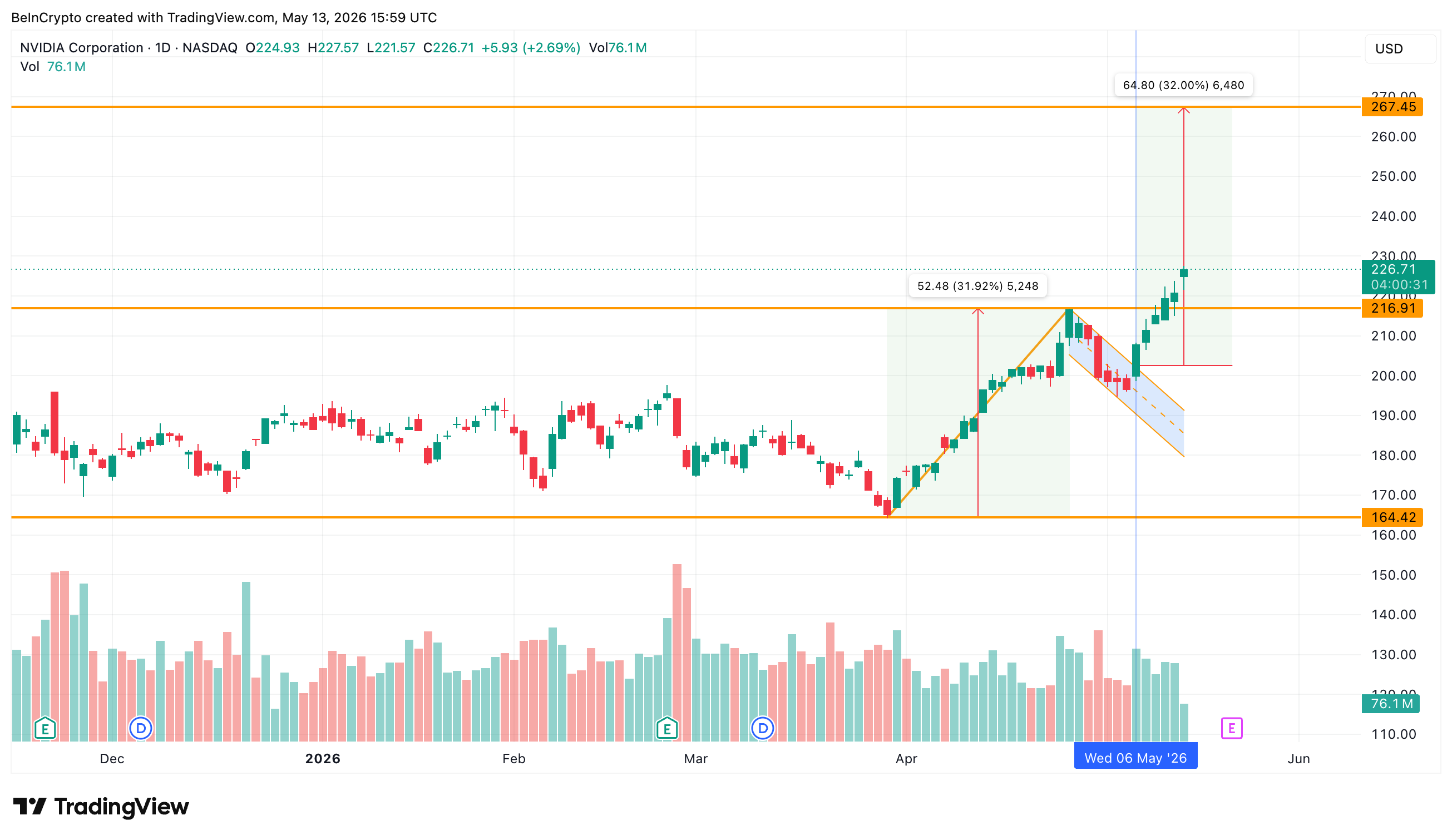
Nvidia (NVDA) stock price has rallied for seven consecutive sessions since the May 6 breakout, climbing to $227 on May 13. The move sits inside a 32% measured move setup, and the fundamental catalysts behind it have just multiplied.
Jensen Huang joined President Trump’s Beijing delegation as a last-minute addition on Tuesday, putting $50 billion in China AI chip opportunities back in play.
At least five Wall Street firms have raised or reiterated their Nvidia price targets in the past 48 hours. Earnings land on May 20. But the Chaikin Money Flow is sending a quieter, more cautious signal underneath the rally.
NVIDIA Stock Hits a New All-Time High. Source: Google Finance
Nvidia Stock Bull Flag Breakout Targets $267
The Nvidia stock chart broke out of a bull flag and pole pattern on May 6, 2026. The pole rallied 31.92% across April and early May, and the flag resolved upward with strong volume on the breakout candle.
Want more insights like this? Sign up for Editor Harsh Notariya’s Daily Newsletter here.
Every daily session since May 6 has closed green. The measured move projects a 32% rally from the breakout zone, with $267 the textbook target.
Trump personally called Huang after the Nvidia CEO was initially absent from the executive list, and Huang flew to Alaska to board Air Force One. Beijing has been pushing for greater access to Nvidia’s H200 AI chips, a market Huang has sized at $50 billion.
Nvidia, $NVDA, took a $4.5B hit in the July quarter after Trump introduced the original license requirement.
Jensen Huang said the ban of Nvidia’s chip sales to China would result in a $50 BILLION hit in 2-3 years.
Wall Street has reinforced the setup. Bank of America’s (BofA) Vivek Arya raised the firm’s Nvidia price target to $320 from $300 on May 13, citing a $1.7 trillion total addressable market for 2030 AI data centers.
Wells Fargo’s Aaron Rakers raised to $315 from $265 on May 12, using a new gigawatt-capacity model. Susquehanna’s Christopher Rolland raised to $275 from $250, aligned with the chart targets discussed earlier. Citi reiterated $300. Oppenheimer reiterated $265.
The Nvidia stock price now sits between the breakout zone and the target, with earnings due May 20. The next signal sits in the institutional flow data.
Money Flow Sends a Quieter Warning
The Chaikin Money Flow (CMF) indicator, which measures the volume-weighted balance of buying and selling pressure as a proxy for large money positioning, sits at 0.24 on the Nvidia daily chart.
The reading is in positive territory. The interesting signal is what has happened underneath it. The CMF peaked in late April and has since trended steadily lower, while Nvidia’s stock price has trended higher. The result is a bearish divergence on the daily chart.
That divergence does not invalidate the breakout. Big-money flow has softened, but it remains net positive. The pattern is consistent with profit-taking into strength or hedging ahead of the May 20 earnings report.
The put-call ratio data adds the second layer. The Nvidia put-call volume ratio sits at 0.32 on May 13, up from 0.29 around the May 6 breakout. The open interest ratio has eased to 0.80 from 0.81 over the same period.
The increase in volume-based puts alongside steady open interest fits the same picture as the CMF divergence.
Some hedging is being added to the rally, but overall positioning remains heavily call-skewed, with put-call ratios well below 1.0. The setup stays bullish with some prudence layered in.
Nvidia Stock Price Levels Show $227 as the Decision Point
Nvidia stock price trades at $226, sitting right next to $227, the 0.618 Fib zone of the recent range.
The 0.618 level is the structural pivot. A daily close above $227 opens $235, $247, and the textbook pattern target at $267. Beyond that, the 1.618 extension at $279 aligns with Susquehanna’s price target.
The 2.618 extension at $332 sits just above Bank of America’s $320 target.
The downside levels matter too. Support stacks at $214 and $207. A daily close below $207 would weaken the breakout structure. The deeper invalidation sits at $194, the 0 Fibonacci anchor. A break under $194 would weaken the entire bullish structure.
A daily close above $227 keeps the path to $267 open and brings the analyst price ladder into view. A close below $207 hands control to the CMF divergence and risks a deeper consolidation toward $194.
Bitcoin, Ripple’s token, Solana’s SOL, and several other altcoins made impressive moves over the past few hours, which was rather unexpected given the Sunday market sentiment and lack of major developments.
Interestingly, these recent gains coincided with Donald Trump’s latest message on Iran.
The statement on Truth Social from the POTUS reads that Iran has been “playing games with the United States, and the rest of the World, for 47 years.” He also placed significant blame on former President Barack Obama, saying the situation hit “pay dirt” during his time in office.
“He was not only good to them, he was great, actually going to their side, jettisoning Israel, and all other Allies, and giving Iran a major and very powerful new lease on life. Hundreds of Billions of Dollars, and 1.7 Billion Dollars in green cash, flown into Tehran, was handed to them on a silver platter. Every Bank in D.C., Virginia, and Maryland was emptied out — It was so much money that when it arrived, the Iranian Thugs had no idea what to do with it. They had never seen money like this, and never will again. It was taken off the plane in suitcases and satchels, and the Iranians couldn’t believe their luck.”
After also blaming Joe Biden, Trump said Iran will be laughing no longer at the USA. This statement comes after reports that Iran had sent their response to the US’s latest peace proposal. However, there’s no further information as of press time regarding the actual decision.
As mentioned above, many crypto assets are in the green now. Bitcoin’s gains are among the most modest, but the asset still tapped $81,600. XRP has stolen the show from the larger-cap alts, surging by over 5% daily to a multi-week peak of just over $1.50.
SOL has risen to almost $100 after a 3.5% daily increase, ETH is well above $2,350, and ADA has gained over 5% to sit close to $0.29.
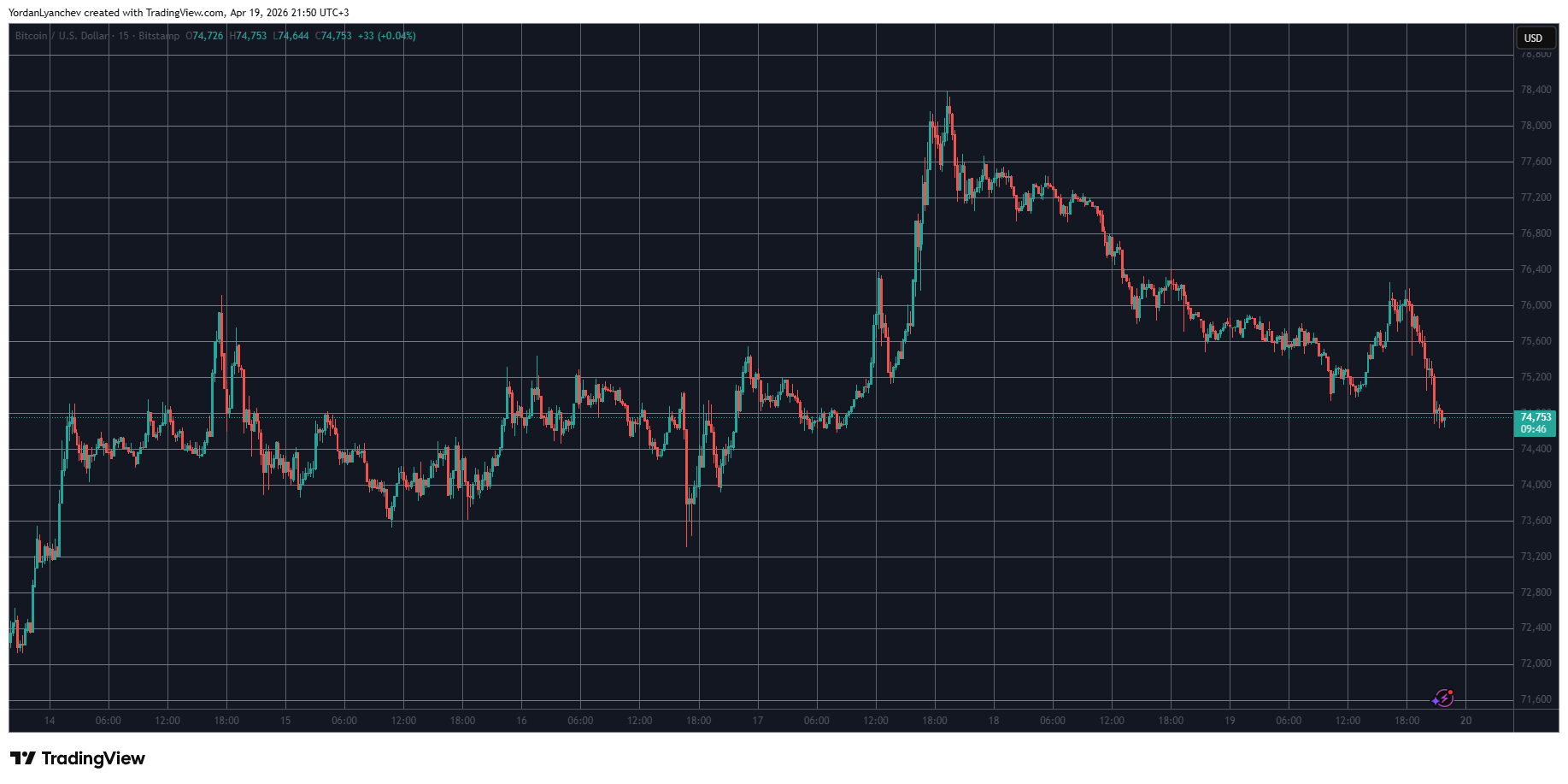
Bitcoin’s price was halted at its multi-month peak at over $78,000 on Friday, and the subsequent conflicting actions and statements from Iran and the US have led to another retracement to under $75,000 as of press time.
The latest set of blame-throwing came minutes ago, as reports emerged that Iran believes they are “facing deception” from US President Donald Trump due to “inconsistency with what is actually happening.”
Moreover, Iranian officials said they believe the two sides are “on the verge of a new round of escalation,” as reported by The Kobeissi Letter.
However, the US blockade remained in place, and Iran decided to close the Strait just a day later. Trump started to threaten once again, while also saying that both nations’ delegations will meet again in Pakistan for another round of peace talks. In contrast, Iran’s Tasnim news agency said there were no such plans.
Trump then alleged that there’s a “divide” in the Iranian government and threatened to “blow up” the entire country if the two nations fail to reach an agreement.
This rather escalating uncertainty, with just a few days left until the ceasefire deal ends, led to a weekend correction for BTC, as the asset just slipped below $75,000. It’s now down by almost $4,000 since the Friday peak.
However, more volatility is to be expected later this evening when the futures legacy markets open and tomorrow morning, as it has happened in previous instances following major weekend developments.
Bitcoin continued to hold near $68,000, a key long-term support level, this morning as traders waited for President Donald Trump’s latest deadline for Iran.
The tension built after Trump said on Truth Social that “a whole civilization will die tonight” as his 8 P.M. Eastern deadline for a deal with Iran approached.
The warning came alongside reports of strikes on Iranian oil infrastructure on Kharg Island, sharpening fears that the confrontation could move from deadline politics to a more disruptive energy shock.
These tensions have left the market suspended between a crypto structure that has so far resisted a deeper breakdown and a macro backdrop growing more difficult by the hour.
Throughout the trading day, Bitcoin has shown some optimism, with prices touching $69,000 before retreating to around $68,500 as traders struggle to decipher Trump’s latest threat that “a whole civilization will die tonight.”
Oil is the transmission engine
Oil has become the main channel through which the US-Iran confrontation is feeding into crypto markets.
Since the US-Iran conflict began, oil prices have soared above $100, thanks in large part to the closure of the Strait of Hormuz, a key oil shipping channel that typically carries about 20% of the world’s oil on a given day.
With Trump’s latest deadline approaching, US crude climbed above $116 a barrel, extending a rally that had already pushed prices toward multi-year highs.
The risks widened further after reports that Iran had threatened to close the Bab al-Mandeb Strait, a route that accounts for roughly 12% of global seaborne trade and has become even more important since the shutdown of Hormuz.
The Kobeissi Letter said that any disruption there could place another major shipping route under pressure and raise the prospect of oil reaching $150 a barrel.
That is where the market threat becomes more serious for Bitcoin.
Once crude moves into that range, the concern extends beyond war headlines or day-to-day swings in risk appetite. Sustained strength in energy prices can reinforce inflation fears, support the dollar, and reduce the room for central banks to ease policy.
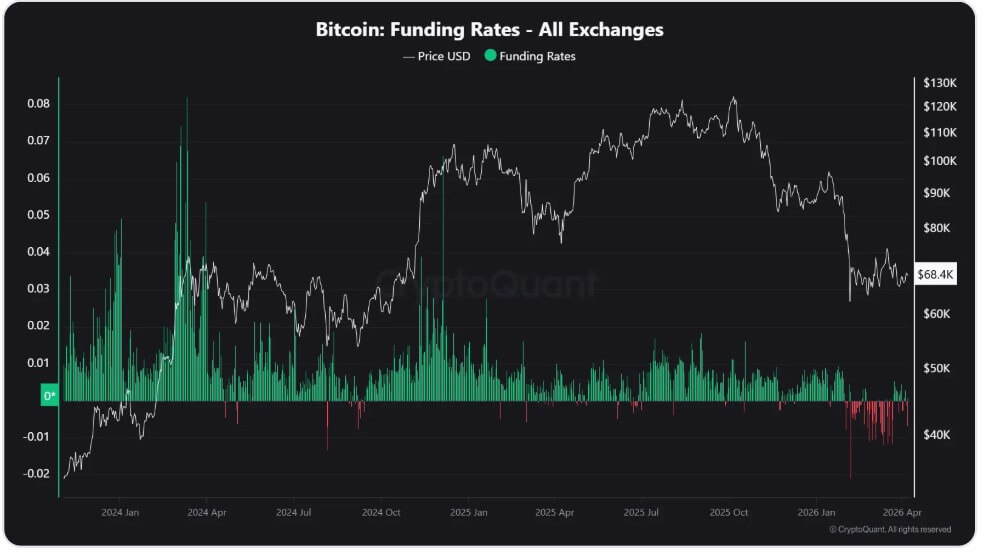
Data from CryptoQuant showed the flagship digital asset’s recent rebound occurred while aggregate funding rates across exchanges remained negative.
Bitcoin Funding Rate (Source: CryptoQuant)
This suggests the move has not been driven by traders piling into leveraged bullish bets. Instead, short sellers are still paying to keep bearish positions open even as the price stabilizes and edges higher.
That is usually a healthier setup than a rally fueled by aggressive leverage.
When Bitcoin rises while funding stays negative, it suggests spot buyers are absorbing selling pressure rather than momentum traders chasing the market higher. A rebound built on leveraged longs can fade quickly when sentiment turns.
However, a rebound supported by real buying can keep moving even while the broader market remains skeptical.
Meanwhile, this leaves short sellers vulnerable. Bearish positions opened below current levels can become fuel for a sharper move higher if Bitcoin continues to recover and forced liquidations begin to build.
That dynamic helps explain why Bitcoin has not followed the geopolitical backdrop lower in a more decisive way. The market is still leaning bearish, but price action has not yet confirmed that view.
Still, that support has limits. If the recovery loses momentum before enough short positions are cleared out, the downside can reopen quickly because the market has less leveraged long support beneath it.
A narrow range is making the next move more fragile
At the same time, BTC is trading inside a structure that leaves little room for error.
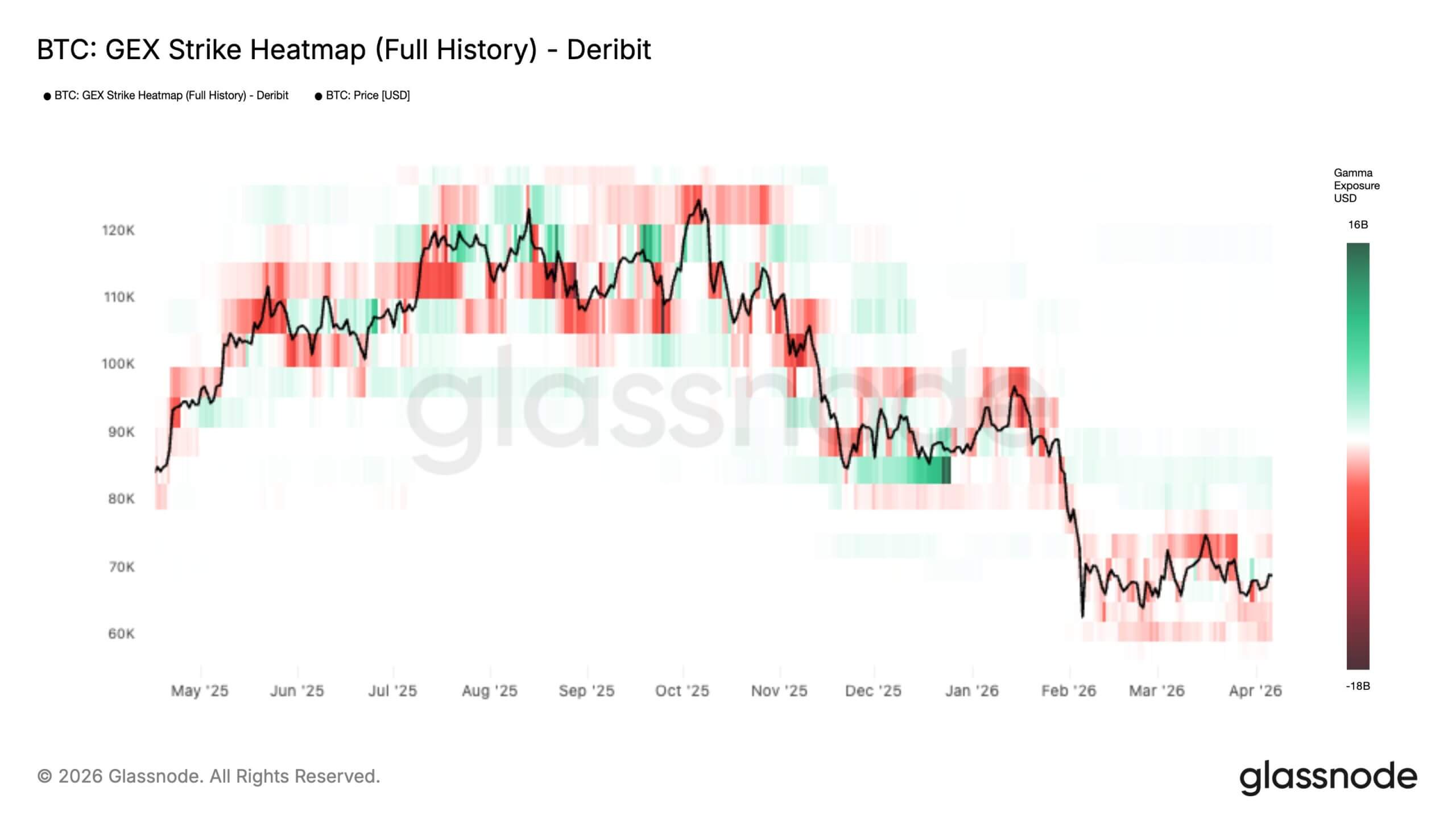
Glassnode data showed the token in a tight negative gamma pocket between roughly $65,000 and $70,000, an area where dealer hedging can intensify short-term moves in either direction.
Bitcoin Market Positioning (Source: Glassnode)
According to the firm, resistance is building near $72,000, while support below current levels is thinner if momentum fades. The result is a market that can appear stable for stretches and then move abruptly once a catalyst arrives.
The trigger here is coming from Washington, not from within crypto. Traders are not positioning around an earnings release, a network upgrade, or ETF flows. Instead, they are positioning around a deadline that could move oil, shift inflation expectations, and reprice risk assets in the same session.
Markets are weighing another delay against a deeper shock
Part of the restraint in price action reflects pattern recognition.
QCP Capital said markets have spent weeks absorbing weekend escalation rhetoric followed by early-week de-escalation signals, leaving stocks broadly stable and crypto more resilient than the headlines alone would suggest.
The pattern has made traders less willing to fully price in each new threat. At the same time, it has not removed the risk. Each new strike, each new warning, and each new threat to energy infrastructure raises the cost of assuming that this episode will also end in another delay.
Trump has left room for the deadline to move again if talks make progress and something tangible emerges. At the same time, Iran appeared to have halted diplomatic discussions amid the latest threats. That has kept conviction low and volatility close to the surface.
For now, Bitcoin is holding its ground without escaping the pressure around it. Buyers have defended a major support area, and negative funding suggests bearish positioning has not produced the breakdown many expected.
But the market remains stuck in a tight range while oil surges and policy risk dominates trading. A softer turn from Washington could force short sellers to cover, lifting Bitcoin back toward $70,000 and then $72,000.
However, a deeper escalation would shift attention immediately back to inflation, financial conditions, and whether crypto can withstand a broader move out of risk.
Until then, Bitcoin remains tied to the next signal from the White House.
Mohammad Bagher Ghalibaf, the speaker of Iran’s parliament, posted a striking piece of market commentary on X before the latest futures swing. Adding fuel to the online propaganda proxy war being fought on social media, the comments lean into accusations of insider trading on Polymarket war bets.
“Pre-market so-called ‘news’ or ‘Truth’ is often just a setup for profit-taking,” he wrote. “If they pump it, short it. If they dump it, go long.”
The market then traded almost exactly as described.
The Kobeissi Letter tracked the move in time order, with S&P 500 futures opening sharply lower on Sunday evening, recovering by late evening, then extending higher after President Trump said on Truth Social that “great progress” had been made on Iran peace talks.
Annotated 30-minute S&P 500 E-mini futures chart showing a sharp overnight rebound after headlines about Trump’s comments on Iran peace talks, with markers highlighting key time-stamped moves from the futures open to the morning recovery.
MarketWatch confirmed the validity of the account that had so publicly offered contrarian trading advice to U.S. investors shortly before the Sunday futures open, and Barron’s described Monday’s rebound as another early-morning market jolt driven by Trump’s social-media messaging on Iran.
Trump’s posts around Iran have repeatedly altered short-term pricing across equities, oil, and crypto.
Bloomberg reported that billions of dollars in oil and stock-index futures changed hands shortly before one of Trump’s Iran posts sent crude lower and equities higher, while The Wall Street Journal described a burst of futures activity ahead of another Trump message that drew scrutiny across trading desks.
The economic climate for the week ahead sits inside that backdrop.
The market faces a geopolitical risk premium in oil, a rising probability of slower growth, and a political communications channel that now functions as an immediate pricing input.
Monday’s cross-asset move makes the interaction plain.
S&P 500 futures added to gains after Trump said the U.S. was in “serious discussions” with a “new, and more reasonable regime” in Iran.
The same message cycle has also included a threat to “completely obliterate” Iran’s energy and water infrastructure if a settlement failed to materialize.
That combination, conciliatory language on one side and escalation risk on the other, shaped the session. The Wall Street Journal reported WTI above $100 a barrel and Brent above $108, while Brent then surged above $116 as the conflict intensified.
Investors are now dealing with diplomacy and disruption at the same time, and the energy channel remains the main route into inflation, rates, and growth.
Bitcoin enters this equation with one structural advantage over every major U.S. risk asset.
It trades through all of it, through weekends, through Asia hours, through the periods when Wall Street’s core cash market is closed.
Bitcoin tracked the same macro shock as equities, then formed its own pattern while Wall Street was offline
Bitcoin’s value in this sequence comes from timing.
It trades continuously, so it acts as a live macro market when U.S. equities are closed.
That gives it two roles at once.
It responds to the same geopolitical inputs that move the S&P 500, and it also offers a real-time view of how those inputs are being absorbed outside the U.S. cash session.
The pattern in the charts around this latest Iran-Trump sequence clearly carries that distinction.
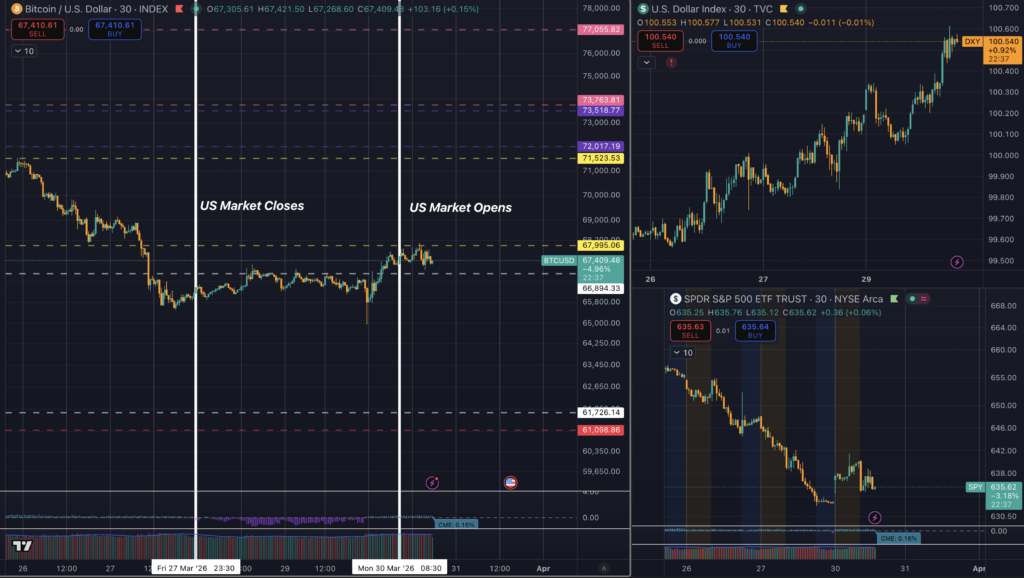
Bitcoin sold off hard into the weekend and into the period around the U.S. close, then moved into a long stabilization band while U.S. equities sat offline.
Bitcoin price fell to the March 27 close, then spent much of the closeout period in a broad range around the mid- to upper $66,000s, before firming into the U.S. open on Monday.
The S&P’s intraday sequence was sharper and more discrete.
Bitcoin’s sequence was earlier, more continuous, and more gradual.
That broad structure lines up with broader market reporting from earlier in the month.
Bitcoin was the first liquid asset to price the Iran war when the initial attack cycle began on a Saturday, dropping 8.5% while traditional markets were closed.
In the days that followed, Bitcoin slid as far as $67,300 before turning higher after Trump said the U.S. had begun talks with Iran. Bitcoin then climbed back above $71,000 when war concerns eased.
Bitcoin also slid below $68,500 last week as another round of mixed messaging from Iran whipsawed markets. There’s a simple interpretation.
Bitcoin has been trading as a macro-sensitive asset throughout this conflict, with oil, rates, and political signals shaping direction.
The latest charts add a more refined point.
Three market charts showing Bitcoin, the U.S. Dollar Index, and the 10-year Treasury yield around the U.S. market open.
Bitcoin mirrored the S&P at the regime level, with both assets weakening under geopolitical stress and firming when Trump’s rhetoric shifted toward talks. Within that regime, the path diverged.
During the hours when the S&P cash market was closed, Bitcoin spent more time absorbing losses and building a base than extending a strong relief move.
The visible lift came closer to the U.S. open.
That timing suggests Bitcoin functioned as a pre-open sentiment gauge for the Monday rebound in equities, with the strongest upside leg appearing from around 00:01 UTC on Monday into the U.S. session.
The U.S. Dollar Index has also climbed steadily into Monday, which gives the move extra texture.
A firmer dollar usually tightens the backdrop for BTC and other risk assets.
Bitcoin’s ability to stabilize and then rise alongside a rising DXY points to a move driven by repricing around Iran and Trump’s messaging, supported by positioning and relief, with less help from the currency side of the macro equation.
Oil, payrolls, retail sales, and Bitcoin’s 24/7 signal define the week ahead
The macro calendar now arrives with crude oil at the center.
The Wall Street Journal said WTI had climbed roughly 50% since the U.S. and Israel began bombing Iran in late February.
Axios wrote that the OECD now sees U.S. inflation reaching 4.2% in 2026, up 1.2 percentage points from expectations in December, because the war and the energy shock have altered the inflation path.
That turns this week’s economic releases into a concentrated stress test.
The Bureau of Labor Statistics says the March Employment Situation arrives Friday, April 3, at 8:30 a.m. ET.
The Census Bureau says the delayed February advance retail sales release lands on April 1.
The Institute for Supply Management says the March Manufacturing PMI will be released at 10:00 a.m. ET on Wednesday, April 1.
Each of those reports now carries a second layer. Investors will judge growth through the lens of oil. That raises the pressure on every risk asset, including bitcoin.
Bitcoin has already outperformed many major assets at points during the stress.
The immediate week-ahead setup is narrower and more practical.
Bitcoin is serving as a high-beta macro instrument during geopolitical repricing, and it is also serving as a 24/7 discovery venue for sentiment shifts that hit outside U.S. cash hours.
That combination makes Bitcoin unusually useful right now.
If Trump posts over a weekend, bitcoin trades first.
If oil surges in Asia hours, bitcoin absorbs that input before New York.
If a diplomatic turn emerges in the early morning, bitcoin can begin revaluing risk before the S&P cash market gets a vote.
The unresolved question for the week sits exactly here.
Trump’s Iran posts have shown enough market impact to count as a working transmission channel, and traders have been watching these moments closely, including bursts of trading activity that arrived shortly before some of the posts.
Markets still need confirmation from events on the ground, from oil, and from the incoming U.S. data.
Bitcoin offers one of the clearest real-time views of how investors are processing that uncertainty.
The recent pattern suggests a sequence with three phases, initial risk repricing, stabilization through the closure, then a firmer advance into the U.S. reopen.
If that sequence repeats during the next round of Iran-related messaging, bitcoin’s weekend and overnight behavior will offer one of the earliest clues about whether traders see another temporary relief move forming, or whether the energy shock is taking control of the week.
Trump just made it clear: Scott Bessent is not going to be the next Federal Reserve chair. This came only hours after Scott himself said he’d be “happy to do it” if asked.
The timing was insane. One moment, the Treasury Secretary was on Bloomberg TV talking like a front-runner. The next, Trump shut it down in front of reporters, saying Scott isn’t at the top of his list. His reason? “Because I like the job he’s doing.”
The blunt rejection also came after Scott had already confirmed that a “formal process” had begun to find a Jerome Powell replacement. Scott even admitted he’s part of that process and said, “It’s President Trump’s decision, and it will move at his speed.” Well, it did.
Scott reacts, but Trump drags Powell instead
Earlier that same day, Scott had taken shots at Powell in that Bloomberg interview. He said Powell should step down from the Fed entirely when his chair term ends in May 2026. Scott argued that keeping Powell around past that date would send the wrong signal.
“There’s been a lot of talk of a shadow Fed chair causing confusion,” Scott said. “And I can tell you, I think it’d be very confusing for the market for a former Fed chair to stay on also.”
Scott was making a clear pitch for a clean break, pushing the idea that the next Fed chair should start fresh, with no Powell hanging around to cloud the waters. It’s worth noting that Powell’s term as a Fed governor doesn’t end until January 2028. That gives him the legal option to stay at the central bank for almost two full years after stepping down as chair, nearly till the end of Trump’s term.
But Trump isn’t even waiting that long. He’s pissed about the whole renovation saga at the Federal Reserve’s headquarters. “I think he’s a total stiff,” Trump told reporters about Powell. “But the one thing I didn’t see him as is the guy that needed a palace to live in.” He also called the cost overruns “pretty disgraceful,” hinting it could be a fireable offense.
Powell’s side of the story says the media reports were inaccurate. This week, he even requested the bank’s Inspector General to investigate the matter. Doesn’t seem to matter. Trump’s already decided Powell doesn’t belong in that seat anymore. He’s said before that Powell keeps rates too high. And he’s made it very clear he wants someone who’s ready to slash them.
Kevin Hassett and Kevin Warsh lead the race
With Scott now pushed to the side, Trump’s pick seems to be leaning toward Kevin Hassett or Kevin Warsh. Reports say the two are front-runners in what one White House insider called an “Apprentice-style” contest. Yes, that’s real.
Apparently, Trump is running this whole thing like a reality show. Scott is advising on the selection, but it’s obvious now that his name’s been scratched off the list unless everyone else fails.
Hassett, who heads the National Economic Council, has been in Trump’s orbit for a while now. He used to be seen as a moderate economist with a neutral political stance, but that’s so over now.
These days, he is a full-blown MAGA mouthpiece. He goes on TV echoing all of Trump’s views, whether it’s on inflation, interest rates, or tariffs.
He also hasn’t been shy about attacking Powell either. Just this month on Fox Business, he slammed the Fed for lowering rates before last year’s election and then holding them steady because of tariff-driven inflation risks. “I think that that raises the specter that they’re not being non-partisan, they’re not being independent,” Hassett said.
Warsh, on the other hand, has kept a lower profile but is still a serious name in the mix. He’s a former Fed governor, and Trump is reportedly impressed with him. He’s not out there doing interviews, but insiders say his name keeps coming up. Still, it’s Hassett who’s making the most noise.
Scott did say that there are “a lot of great candidates,” but now it’s obvious he’s not one of them. That “I’ll do it if asked” moment is now just another quote in the press cycle. Trump slammed the door right after he cracked it open.
Cryptopolitan Academy: Tired of market swings? Learn how DeFi can help you build steady passive income. Register Now
Brazilian President Luiz Inácio Lula da Silva declared that the nation can survive without involvement with the US after Trump threatened to impose a 50% tariff on Brazilian imports. Lula further asserted that they will look for other trade partners.
During a live interview with Record TV, the Brazilian leader highlighted that they must find new partners to sell their products. He then made known the role the US had been playing in their economy. He says Brazil’s trade with the US only makes up 1.7% of their GDP, asserting they can manage this without the US.
He also reiterated remarks made at the recent BRICS summit in Rio de Janeiro, where he called for a global shift away from the US dollar in international trade. Lula urged fellow world leaders to explore alternatives to the greenback to reduce dependency in global commerce.
Lula condemns Trump’s trade strategy
In a letter on Wednesday, July 9, US President Donald Trump threatened Brazil and warned of a 50% tax on all its imports. The maneuver, he said, was retaliation for the continued legal problems of Jair Bolsonaro, a Military officer and former President of Brazil.
Additionally, the US levies — above the 10% first announced in April — came after the BRICS emerging market nations’ summit. The event had seen Lula and other leaders speaking out against tariffs and military actions in Iran, even though they did not directly mention Trump.
Lula had promised to respond by taking his own actions. His government and supporters backed him and accused Trump of meddling in Brazilian business through quick public relations efforts.
Notably, the US is Brazil’s second biggest trading partner after China. Economists believe a 50% tariff could cause a 1% decline in Brazil’s economy.
Trump finds himself in trouble with the new tariff threats on Brazil
President Trump’s tariff threat has subjected the conception of his power to a serious court test. After the US president sent a letter stating that the tariff was largely a response to Brazil’s treatment of its ex-president, he invoked the International Emergency Economic Powers Act (IEEPA) to justify imposing retaliatory tariffs on select foreign threats, a White House official confirmed.
The administration’s invocation of IEEPA in this context has not gone unchallenged, and a case challenging Trump’s reciprocal tariffs is now before a federal appeals court.
Trump’s legal team defended his actions in court, saying that using the IEEPA was legal and meant to fix numerous national emergencies, including America’s increasing trade deficit.
US senators criticize Trump’s tariff policy on Brazil, calling it a “new job-killing tariff”
Some contend that the 50% tariff on Brazilian imports wouldn’t directly affect the ongoing lawsuit for Trump. Still, others caution that his hostile trade maneuvers could hurt the administration’s credibility.
Tim Kaine, a junior United States senator from Virginia, commented on the situation. Kaine stated that Trump’s letter about the tariff on Brazil is an abuse of power on a whole new level.
He then promised to use every option available to stop these new job-killing tariffs.
Ron Wyden, a senior United States senator from Oregon, also criticized Trump’s action. Wyden accused Trump of trying to harm the economy to settle his personal grudges, which, according to him, go beyond his legal power.
Your crypto news deserves attention – KEY Difference Wire puts you on 250+ top sites