
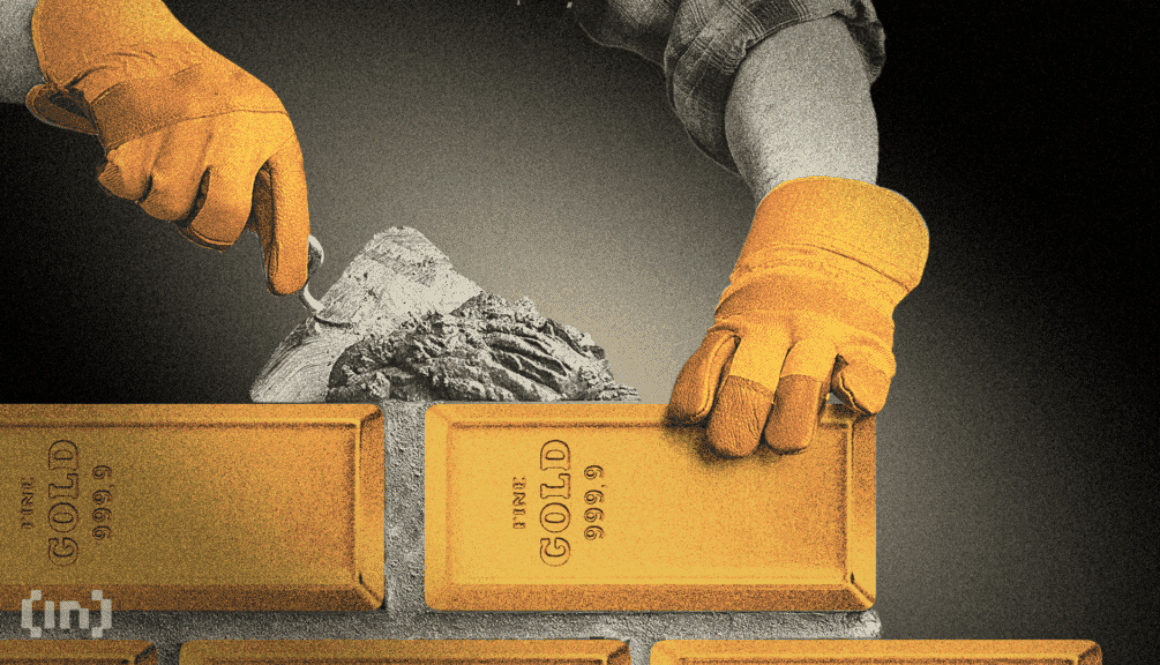
Trump Renews Fort Knox Audit Call After Ex-CIA Official Faces Gold Theft Charges
A former senior CIA official’s arrest on charges of stealing over $40 million in gold bars has reignited political calls for an independent physical audit of Fort Knox, dormant since 1974. For institutional crypto investors, the case underscores systemic vulnerabilities in government asset custody and tracking that could influence regulatory approaches to digital asset custodianship and the appeal of decentralized or tokenized alternatives to centralized reserves.
- Former CIA executive David Rush arrested May 19 after FBI seized 300+ gold bars valued at $40 million from his home
- Fort Knox holds 147 million ounces of gold, approximately 59 percent of US official reserves, worth roughly $700 billion
- No independent public audit of Fort Knox conducted since 1974 despite Treasury’s annual internal audits and Congressional access invitations
- $40M Estimated value of gold bars seized from single official’s residence
- 147M Ounces of gold held at Fort Knox as percentage of US reserves
- 1974 Last year an independent public audit occurred at Fort Knox depository
The arrest of David Rush, a former executive-level CIA employee with top-secret clearance, has exposed a significant vulnerability in how the federal government tracks and verifies custody of its most critical physical assets. Between November and March, Rush obtained and received more than 300 gold bars and foreign currency for purported work-related expenses, according to an FBI affidavit.
Federal agents executing a search warrant on May 18 recovered the gold bars, approximately $2 million in US currency, and 35 luxury watches from his residence. Prosecutors allege Rush converted government property for personal use, with the FBI, CIA, and Department of Justice determining probable cause for criminal theft of public money.
The sheer scale of the theft, spanning hundreds of gold bars and tens of millions of dollars, raises institutional questions about internal controls at one of the world’s most sensitive facilities.
Rush held a position that granted him authorization to request and receive significant quantities of precious metals and currency, suggesting his crimes exploited trust-based rather than technical safeguards. Investigators also discovered Rush had falsified his professional credentials, claiming to be a former Navy pilot and listing degrees from two universities that did not verify his enrollment.
Trump Links Fort Knox Vulnerability to Long-Standing Audit Demand
The timing of Rush’s arrest has accelerated political pressure for transparency around Fort Knox’s contents. Former President Trump, who raised questions about Fort Knox audits as recently as early 2025, posted on Truth Social connecting the theft case to his longstanding call for a physical inspection.
In a May 10 interview conducted before the arrest became public, Trump stated he wanted to visit Fort Knox to verify the gold reserves directly. His statement reflects a broader skepticism about relying solely on internal government accounting.
Fort Knox holds approximately 147 million ounces of gold, representing about 59 percent of the US official gold reserves with an estimated value near $700 billion. The facility’s role as custodian of this vast store has made it a focal point for ongoing debates about asset verification, reserve adequacy, and the credibility of government custody systems.
Treasury Secretary Scott Bessent has dismissed audit concerns, stating that all gold is accounted for and that the Treasury conducts annual internal audits. He has also invited any member of Congress to visit and verify holdings directly.
The gap between internal audits and independent external verification has widened significantly. Fort Knox has not undergone an independent public audit since 1974, a span of over five decades during which global gold markets, geopolitical tensions, and technology have fundamentally changed.
Institutional Custody Models Face Renewed Scrutiny Amid Gold Reserve Questions
For institutional investors in digital assets, the Fort Knox case carries implications beyond government gold policy. The arrest illustrates how centralized custody of high-value reserves remains vulnerable to insider threats, regardless of facility security, vetting procedures, or institutional reputation.
In crypto markets, this dynamic has driven demand for alternative custody models, including self-custody, decentralized protocols, and tokenized representations of physical assets that can be independently verified on-chain.
The lack of an independent Fort Knox audit since 1974 stands in sharp contrast to the transparency mechanisms that blockchain-based systems offer. Tokenized gold markets gained significant traction during the 2024-2026 rally in gold prices, as institutional participants sought custody solutions that provide both asset backing and cryptographic verification.
The Rush case may accelerate institutional interest in auditable, on-chain representations of physical reserves as a hedge against custody uncertainties in traditional systems.
Treasury officials have argued that Congressional access and internal audits provide sufficient oversight. However, the discovery that a high-clearance CIA officer could obtain and retain hundreds of gold bars without detection suggests that existing controls may not meet modern institutional standards for asset verification, particularly for holdings of this magnitude.
No Timeline Set for Fort Knox Inspection Despite Political and Market Pressure
Despite renewed calls from Trump and the policy attention surrounding Rush’s arrest, no formal inspection timeline has been announced by any federal authority. The Department of Government Efficiency, which previously raised the audit question, has not released a concrete plan for how such an inspection would proceed, who would conduct it, or what verification standards it would meet.
The absence of a clear next step leaves a significant gap between political rhetoric and institutional action.
If an independent audit were to occur, it would require coordination across Treasury, the Federal Reserve, Congress, and potentially external auditors with security clearances and access to classified facility details.
The logistics alone, verifying the weight, purity, and serial numbers of 147 million ounces of gold stored across multiple vaults, would represent a major undertaking and likely take months to complete properly. No authority has committed resources or timeline to such an effort, despite the political pressure now present.
The next concrete indicator of movement will be whether Congress formally requests a Fort Knox inspection in response to the Rush charges, or whether Treasury and the Federal Reserve provide additional detail on their internal audit procedures and findings. As of now, no such formal request has been filed, and Treasury has invited Congressional visits on an ad hoc basis rather than committing to a structured, independently verified audit. Institutional investors monitoring custody risk and reserve verification should track whether this political moment translates into statutory changes requiring periodic independent audits of Fort Knox, or whether internal Treasury procedures remain the sole verification mechanism.