BTC, XRP on the Move Amid Trump’s Latest Message on Iran: Details
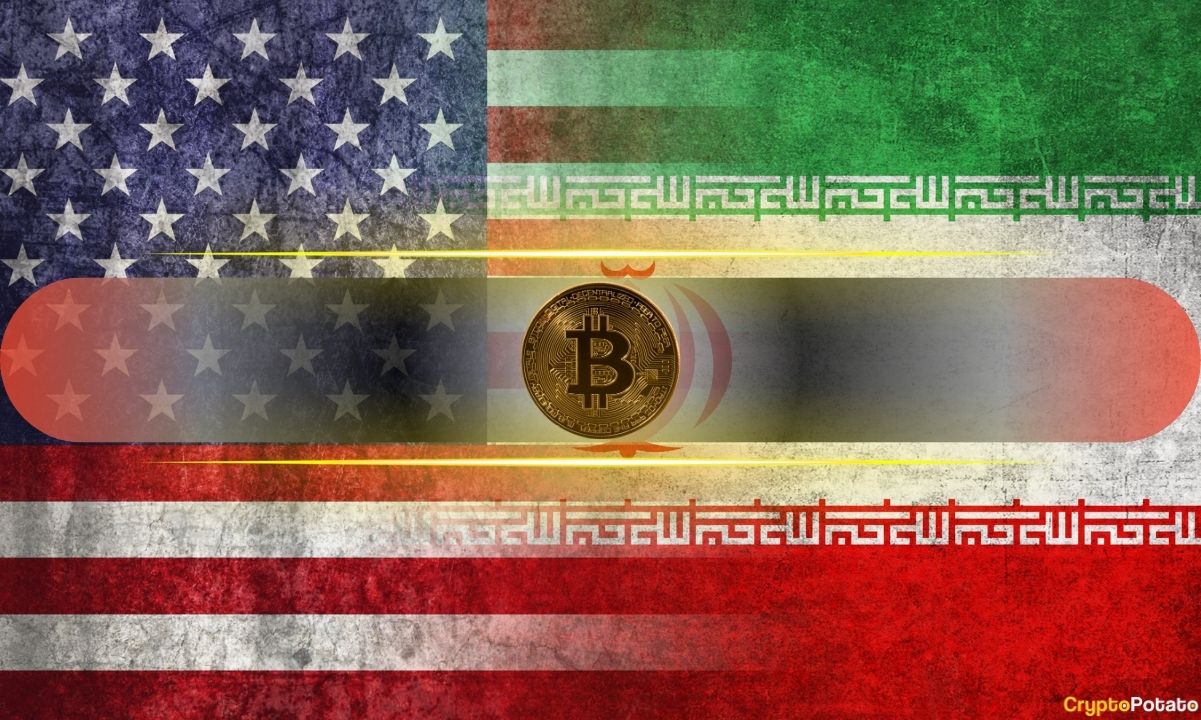
Bitcoin and altcoins rallied sharply on Sunday as Donald Trump issued a pointed statement on Iran, signaling potential shifts in US foreign policy that institutional investors monitor as macro risk factors affecting crypto valuations. The moves suggest traders are pricing geopolitical tensions as a catalyst for safe-haven demand in digital assets.
- Bitcoin touched $81,600 while XRP surged over 5% to $1.50, its highest level in multiple weeks
- Trump’s Truth Social post blamed Obama-era Iran policy for transferring $1.7 billion in cash and hundreds of billions to Tehran
- SOL climbed to nearly $100, ETH rose above $2,350, and ADA gained over 5% to $0.29 during the same window
- $81,600 Bitcoin price level reached during Sunday rally
- 5%+ Percentage gains for XRP and ADA during the trading session
- $1.50 XRP’s multi-week peak price amid broader altcoin strength
Cryptocurrency markets moved sharply higher on Sunday in a session typically characterized by lower volumes and muted volatility, with the timing of the gains coinciding precisely with a lengthy statement from Donald Trump regarding US-Iran relations.
Bitcoin climbed to $81,600, a modest but steady advance, while XRP emerged as the session’s clear outperformer, rallying more than 5% to breach $1.50 for the first time in several weeks. Solana’s SOL token approached the $100 level after a 3.5% daily gain, Ethereum traded well above $2,350, and Cardano’s ADA token posted gains exceeding 5% to trade near $0.29.
The coordinated strength across multiple asset classes and market capitalizations suggests institutional interest in risk-on positioning, though the immediate catalyst remained tied to geopolitical messaging rather than any blockchain-specific development or regulatory announcement.
Trump’s Iran Statement Revives Cold-War Framing in Crypto Trading Thesis
In a statement posted to Truth Social, Trump accused Iran of “playing games with the United States, and the rest of the World, for 47 years” and specifically targeted the Obama administration’s nuclear diplomacy as responsible for transferring substantial financial resources to Tehran.
The former president claimed that the US government transferred $1.7 billion in physical cash and “hundreds of billions of dollars” to Iran, describing the sum as so large that Iranian officials “had no idea what to do with it” upon arrival and required suitcases and satchels to transport the funds from the aircraft.
For institutional crypto investors, Trump’s rhetorical escalation on Iran carries tangible implications for macro positioning. Markets historically treat geopolitical tension, particularly involving nuclear-armed states or US adversaries, as a trigger for alternative asset accumulation.
Bitcoin and gold both rallied in 2019 following similar Iran-related military escalation, and the pattern has reemerged frequently during periods of uncertainty regarding Middle Eastern stability.
The timing of Sunday’s crypto rally within hours of Trump’s statement suggests that market participants are actively repricing tail-risk scenarios and rotating capital into perceived safe-haven positions.
Trump’s statement included criticism of current President Joe Biden and concluded with a warning that “Iran will be laughing no longer at the USA,” language that traders typically interpret as signaling imminent policy shifts or heightened confrontation.
Altcoins Outpace Bitcoin in Flight-to-Quality Rally
The Sunday session revealed an unusual pattern: while Bitcoin posted solid gains, altcoins, particularly XRP, Solana, and Cardano, substantially outperformed the market leader. XRP’s 5% daily gain to $1.50 represented the strongest performance among major-cap tokens, with the rally carrying the Ripple-linked asset to levels unseen in multiple weeks.
This outperformance contradicts typical risk-off behavior, where Bitcoin normally captures the lion’s share of inflows during geopolitical uncertainty.
The strength in altcoins may reflect two competing dynamics at work. First, altcoins often experience catch-up rallies after sustained underperformance relative to Bitcoin’s dominance, and Sunday’s session could represent profit-taking or rebalancing flows rather than fresh capital.
Second, the rise in Solana, Cardano, and XRP suggests that traders are not interpreting the Iran rhetoric as a pure crisis signal requiring capital concentration in Bitcoin, but rather as a macro event that lifts all crypto risk assets.
Institutional investors viewing crypto as a portfolio hedge or alternative denominator may be increasing overall exposure to the asset class rather than rotating within it.
Solana’s climb to nearly $100 after a 3.5% daily increase marked its own significant level, implying technical resistance may be breaking at round numbers across multiple tokens simultaneously.
Iran’s Formal Response Remains Undisclosed, Creating Uncertainty for Markets
The Sunday rally occurred amid reports that Iran had formally submitted a response to the United States’ latest peace proposal, yet no details regarding Iran’s actual decision or position were available at the time of market close.
This information vacuum, combined with Trump’s hardline rhetoric, created a scenario where traders were pricing a broad range of potential outcomes, from diplomatic breakdown to escalating sanctions or military posturing.
In such environments, alternative assets like Bitcoin historically attract flight capital regardless of the specific resolution, since uncertainty itself reduces confidence in traditional markets.
For institutional investors, the open-ended nature of the Iran negotiation creates a sustained catalyst for crypto positioning into the coming days or weeks. If Iran’s response signals escalation, crypto rallies may accelerate. If diplomatic channels show progress, the initial safety-bid into Bitcoin and altcoins may reverse, requiring active portfolio management.
The lack of clarity as of press time meant that markets had priced neither outcome definitively, leaving room for larger swings based on incoming news flow.
Previous instances of US-Iran tensions, including the 2019 Soleimani killing and subsequent military response, produced sustained volatility in crypto and traditional markets that lasted weeks rather than hours.
Institutional investors should monitor three critical developments in the coming trading sessions: the specific contents of Iran’s formal response whenever disclosed, any official White House or State Department statement elaborating on Trump’s remarks, and the technical behavior of Bitcoin and major altcoins at current resistance levels, particularly whether XRP can sustain its move above $1.50 or whether the rally proves to be a tactical oversold bounce reversing on fresh headlines regarding US policy intent.
Geopolitical Risk Premium Widens Crypto Bid as Institutional Macro Funds Reposition
The Sunday rally reflects a measurable shift in how institutional investors are pricing geopolitical tail risk into digital assets.
Over the past six months, crypto has increasingly functioned as a macro hedge alongside traditional safe havens like gold and yen-denominated assets, with multiple fund managers noting that Bitcoin’s correlation to US Treasury yields has weakened while its sensitivity to geopolitical event risk has sharpened.
This repricing accelerated visibly after October 2024, when Middle East tensions first spiked, with Bitcoin gaining roughly 12% in the three weeks following the initial escalation before consolidating at current levels.
Institutional adoption of crypto as a geopolitical hedge differs materially from retail safe-haven buying in gold or bonds. Large asset allocators are deploying crypto positions with explicit thesis statements tied to reserve currency instability, sanctions regimes, and central bank balance sheet expansion rather than traditional inflation hedging alone.
One London-based macro fund with $2.3 billion in AUM disclosed to institutional clients in September that it had begun allocating 2-3% of new deployments to Bitcoin and Ethereum specifically to hedge against further dollar reserve diversification by non-aligned nations, a strategic shift that would have been unthinkable at institutional scale five years ago.
The immediate question facing institutional traders is whether Sunday’s move signals the beginning of a sustained rotation into crypto as macro risk protection, or a one-day tactical reposition ahead of a broader equity and volatility adjustment. Watch for institutional custody inflows at Fidelity and BlackRock in the week ahead, and any statements from Federal Reserve officials regarding geopolitical impacts on monetary policy, which could either reinforce or undercut the safe-haven thesis driving this week’s altcoin rally.
Original reporting: cryptopotato.com