Grayscale launches multimillion-dollar Zcash ETF ad push as fund hemorrhages assets
Grayscale is launching a multimillion-dollar ad campaign for its Zcash ETF even as the fund bleeds assets, signaling aggressive defense against a lower-cost rival filing to launch a competing product. The spending underscores how ETF sponsors now use marketing firepower to compete on distribution and brand rather than fees alone.
- Grayscale’s Zcash ETF lost $10.99 million in a single day on November 5, the largest single-day altcoin ETF withdrawal that session.
- Winklevoss Asset Services filed for a competing spot Zcash ETF charging 0.25% annually, one-tenth of Grayscale’s 2.5% fee.
- Grayscale committed $1 million to Zcash ecosystem nonprofits and pledged all sponsor fees from ZCSH in its first year toward network development and marketing.
- $10.99M Lost in single day by Zcash ETF, largest altcoin ETF outflow that session.
- 0.25% Proposed annual fee from Winklevoss rival, compared to Grayscale’s 2.5% charge.
- $675.7M Zcash ETF assets under management as of early November.
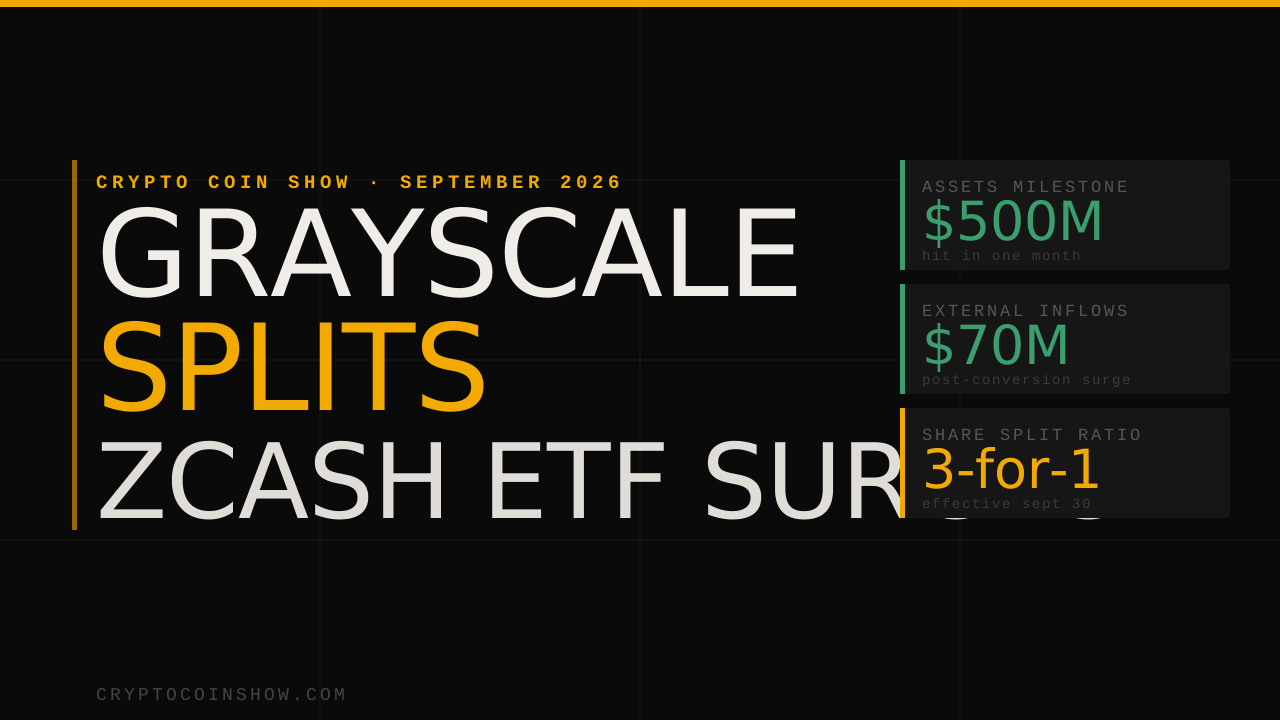
Grayscale launched a national advertising campaign for its Zcash ETF on Tuesday (November 10), even as the fund continues to lose assets to outflows. The campaign, branded “Zcash Invest,” includes a Wall Street Journal print wrap, social media accounts, and ads across print, outdoor, streaming, digital, and social channels featuring a zebra mascot from the Zcash community. Grayscale has announced a national ad campaign pairing the marketing push with a pledge that all sponsor fees collected by ZCSH in its first year as an ETF will flow toward Zcash network development, marketing, and education.
Grayscale pledges $1 million to Zcash nonprofits as ETF burns cash daily
The spending commitment extends beyond marketing. Grayscale also promised $1 million to nonprofits supporting the Zcash ecosystem, with $400,000 already distributed as four $100,000 grants to the Zcash Foundation, Pretty Good Policy for Zcash, Shielded Labs, and Project Tachyon. The timing reveals the pressure Grayscale faces: ZCSH, which converted from a trust and began trading on NYSE Arca on August 25, 2026, has experienced significant redemptions since launch. On November 5 alone, the fund shed $10.99 million, marking the largest single-day withdrawal among all U.S. altcoin ETFs that session.
The fund now manages about $675.7 million, down from $724.2 million before the November 5 outflow.
Winklevoss files lower-fee competitor just as Grayscale ramps spending
Grayscale’s defensive marketing campaign comes as a direct competitor seeks regulatory approval. In early October, Winklevoss Asset Services filed a preliminary S-1 with the Securities and Exchange Commission seeking approval to launch a spot Zcash ETF under the ticker “WINK,” proposing a 0.25% annual sponsor fee, one-tenth of Grayscale’s charge.
The fund would hold ZEC directly with Gemini Trust Company as custodian and plans to list on Nasdaq. Winklevoss Capital Fund has signaled interest in purchasing up to $100 million of the new fund’s shares, though no commitment has been made.
The fee gap mirrors earlier competitive dynamics in spot Bitcoin ETF launches, where lower-cost offerings from rivals including iShares shifted flows away from higher-fee predecessors.
Grayscale deployed a similar playbook in 2019 when it funded “Drop Gold,” a multimillion-dollar campaign positioning Bitcoin against gold as an asset class, a strategy designed to funnel capital toward its Bitcoin trust.
The Zcash campaign follows the same template: invest in brand and narrative while defending against fee-based competition through educational positioning and ecosystem partnerships.
The CCS read. Grayscale is effectively admitting the fee structure alone cannot hold assets as lower-cost alternatives approach approval. Marketing spend and nonprofit commitments serve as substitutes for price competition, betting that brand loyalty and educational positioning can retain enough institutional capital to justify the 2.5% drag. If Winklevoss wins SEC approval and the fee spread widens to ten-to-one in its favor, the Zcash ETF may face the same structural erosion that has plagued other high-fee legacy crypto products.
The next flashpoint is Winklevoss’s S-1 review timeline: the SEC typically issues first comment rounds within 30 days of filing, meaning approvals for competing Zcash products could arrive before year-end 2026. Grayscale has not disclosed how long it will sustain the $1 million annual ecosystem commitment or whether it plans to lower its fee to remain competitive.