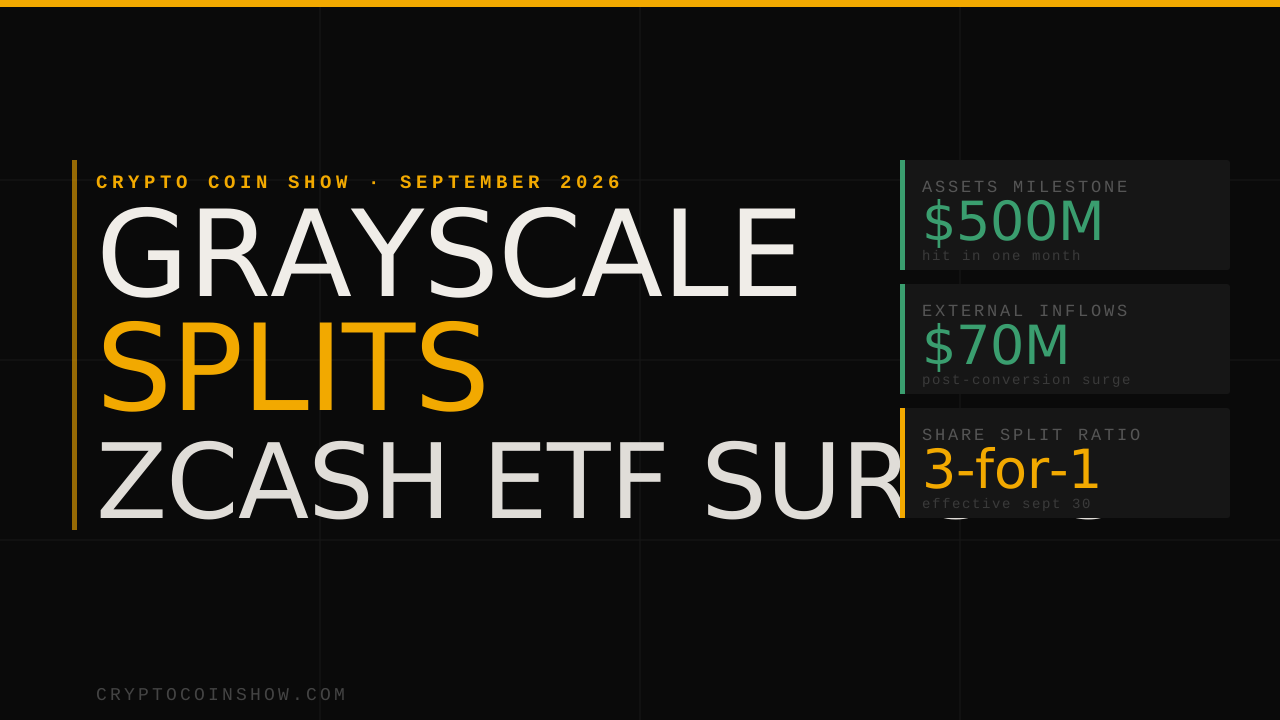
Grayscale files Zcash options-income ETF with biweekly payouts
Grayscale has filed with the SEC for a Zcash options-income ETF that would pay shareholders every two weeks by selling short-dated call options rather than holding ZEC directly. The structure caps investor upside if Zcash rallies while still passing through the full downside, a trade-off institutional allocators evaluating crypto income products will need to weigh before the fund’s earliest possible December debut.
- The filing reached the SEC on Friday, September 25, 2026, and could take effect 75 days later, in early December.
- The fund must hold at least 80% of net assets in options on Zcash ETPs, not ZEC itself.
- Grayscale’s spot ZCSH fund held $914.5 million in assets by September 18, up from about $260 million at its 2017-trust conversion.
- 75 days Waiting period before the fund could launch, set for early December
- $914.5M ZCSH spot fund assets, up from $260M at trust conversion
- 2.50% ZCSH sponsor fee, which the new fund’s trading could indirectly boost
Grayscale asked the SEC on Friday (September 25, 2026) to register the ZCSH High Income ETF, a fund that pays out biweekly distributions built from option premiums rather than from holding Zcash. The filing, first reported by BeInCrypto, sets a standard 75-day review clock under Rule 485(a)(2), meaning the fund could go effective in early December if the SEC does not intervene. Grayscale announced the move in a post on X the same day.
Fund Skips Spot ZEC and Buys Options on Grayscale’s Own ETF
The ZCSH High Income ETF will not custody Zcash. Per the filing, it invests at least 80% of net assets in exchange-listed options that reference The Zcash ETF (ZCSH), Grayscale’s existing spot product, or an index of Zcash ETPs.
Exposure runs entirely through derivatives, meaning the fund’s returns can diverge from ZEC’s actual price.
Synthetic Covered Calls Trade Upside for Premium Income
The strategy is a synthetic covered call. The fund pairs bought call options with sold puts to replicate ZCSH’s price moves, then writes short-dated calls, mostly a month or less to expiration, to collect the premiums that fund distributions.
Selling those calls caps gains: if ZEC rallies past the strike price, the fund forfeits everything above it, while a falling market still hits the portfolio in full.
The filing is explicit that “high income” is a description of strategy, not a promise. It states the term “does not mean that the Fund will achieve any particular distribution rate, yield or level of income,” and warns that “the amount and character of the Fund’s distributions will vary,” with no assurance any payout level is sustained.
Some biweekly cash could simply return an investor’s own capital rather than genuine profit, the same caveat that applies to Grayscale’s existing Bitcoin covered call ETF and to the Bitcoin premium income fund Goldman Sachs filed in April.
Grayscale also discloses a related-party wrinkle: an affiliate of the fund’s adviser sponsors ZCSH and collects its fee, listed at 2.50% on Yahoo Finance’s fund page. The filing acknowledges the new fund’s options trading could lift demand for ZCSH shares and, indirectly, that affiliate’s fee revenue, a structure institutional due-diligence teams typically flag when an adviser’s derivatives product references its own sibling fund.
ZCSH’s Record Weekly Inflow Set Up the Income Trade
The underlying appetite for Zcash exposure is what makes the income wrapper viable. ZCSH converted from Grayscale’s 2017 trust with roughly $260 million in assets, began trading August 25, and saw its options launch September 8.
By the week ending September 18, assets had grown to $914.5 million after $271 million in cumulative inflows, with that week’s $98.2 million haul leading all crypto ETFs, according to BeInCrypto’s tracking.
Several filing details remain blank, including the new fund’s ticker, listing exchange, expense ratio and sub-adviser. Those omissions are standard for a preliminary 485(a) registration but leave open exactly how the fund will be priced and distributed once it clears review.
The CCS read. The real signal here is not the biweekly payout gimmick but how fast Grayscale is willing to spin derivatives products off a single-asset fund barely a month old. If ZCSH’s inflow pace holds, expect competitors to file copycat Zcash and altcoin income wrappers well before this one even reaches the market.
The SEC’s 75-day clock puts a decision point around early December, and Grayscale still needs to fill in the ticker, exchange listing, fee structure and sub-adviser before the fund can trade.