Inside the Room: What Really Happened at Trump’s White House Crypto Summit
President Trump gathered the heads of Coinbase, Robinhood, Ripple, Gemini, Kalshi and Polymarket at the White House this week, alongside the nation’s top financial regulators — a meeting industry insiders are already calling the clearest signal yet of how Washington intends to write crypto’s rulebook.
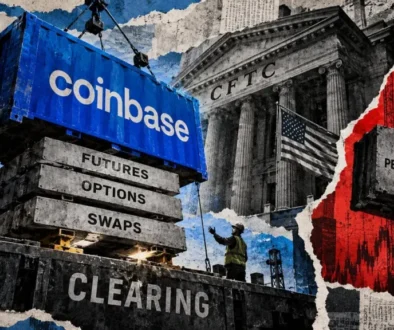
On Wednesday, August 19, the White House played host to one of the most consequential informal gatherings in the crypto industry’s short history. President Donald Trump convened a closed-door meeting with the chief executives of the country’s biggest digital-asset and prediction-market platforms, flanked by Treasury Secretary Scott Bessent, Commerce Secretary Howard Lutnick, CFTC Chairman Michael Selig, and SEC Chairman Paul Atkins. The message from the administration was unambiguous: crypto policy is no longer a talking point, it’s an active build.
Who Was In The Room
- The meeting preceded the first official session of the CFTC’s new Innovation Advisory Committee, a 35-member panel dominated by industry executives — from crypto exchanges to prediction markets like Kalshi and Polymarket to sportsbooks such as FanDuel and DraftKings.
- Notably absent: consumer advocacy groups and public-interest representatives, a gap several observers flagged as conspicuous given the scope of the rules being discussed.
Why This Meeting, Why Now
The timing was no accident. The gathering landed in the middle of a three-week stretch that has seen Washington move faster on digital-asset policy than at almost any point since the 2024 election. Treasury released its GENIUS Act notice of proposed rulemaking on stablecoins on August 17, framing them explicitly as payment infrastructure rather than securities. The SEC followed a day later with a draft “Regulation Crypto Assets” proposal. And Congress’s own centerpiece bill, the Digital Asset Market Clarity Act (CLARITY Act), remains stuck — a procedural vote requiring 60 Senate votes isn’t scheduled until September 15, and prediction markets currently put its odds of passage at roughly 20%, down sharply from an 82% peak earlier this year.
Taken together, the picture is one of an administration choosing not to wait on Capitol Hill. Rather than banking on the CLARITY Act to clear a divided Senate, the White House appears to be advancing its crypto agenda through the agencies it already controls — the SEC and the CFTC — while keeping industry leadership in the room as those rules take shape.
What Was Actually Discussed
According to reporting on the meeting, three tracks dominated the conversation:
- Market structure. How crypto trading, custody, and settlement should be regulated going forward — and by whom, given the long-running turf questions between the SEC and CFTC.
- Tokenization. The convergence of crypto-native infrastructure with traditional finance, with executives discussing how equities and bonds might eventually trade as tokenized assets on platforms spanning both worlds. The presence of Nasdaq, NYSE, CME Group, and DTCC alongside crypto-native firms was widely read as a signal of where the administration wants this to head.
- Prediction markets. With Kalshi and Polymarket now operating in a regulatory gray zone that increasingly overlaps with traditional gambling oversight, their inclusion — alongside sportsbook operators — underscored how much the CFTC’s remit is expanding.
A related CFTC session the following day, titled “Crypto’s Regulatory Evolution: From Uncertainty to Clarity,” was billed as digging into “the remaining challenges to a durable federal market structure” — language that suggests regulators see Wednesday’s meeting as the opening move in a longer process, not a one-off photo opportunity.
Highlight: Trump Name-Drops Hyperliquid, HYPE Jumps 20%
The single biggest market-moving line of the day didn’t come from a press release — it came from Trump himself. Mid-meeting, the president said CFTC Chair Michael Selig was working to bring Hyperliquid, the crypto-native perpetuals exchange, into the U.S. market “legally and with full compliance.” That’s short of an approval — no license was granted and no timeline was given — but traders treated it as a green light anyway.
The rally wasn’t purely sentiment. Hyperliquid already generates real revenue — roughly $41.7 million in fees over a trailing 30-day window — and funnels an estimated 97–99% of that back into open-market HYPE buybacks. With about 955.3 million of the token’s 1 billion max supply already circulating, traders bet that a compliant U.S. on-ramp would mean more volume, more fees, and more buyback pressure against an increasingly scarce float. Hyperliquid-linked ETF products also logged fresh net inflows the same day. The likely structure, per reporting, would route U.S. users through licensed broker partners handling compliance while Hyperliquid itself remains the underlying trading venue — not an immediate lifting of existing U.S. access restrictions.
Highlight: Chainlink’s Sergey Nazarov Has a Seat at the Table
Also in the room: Sergey Nazarov, co-founder of Chainlink, the oracle network that underpins price feeds and cross-chain data for much of DeFi. His presence alongside exchange CEOs and Wall Street infrastructure players (Nasdaq, NYSE, CME Group, DTCC) is notable in its own right — Chainlink isn’t an exchange or a broker, it’s plumbing. Its inclusion signals that the administration’s tokenization push isn’t just about where crypto assets trade, but about the underlying data and settlement rails — exactly the layer Chainlink has spent years positioning itself to own as banks and asset managers explore tokenized stocks, bonds, and funds.
The Ethics Question Hanging Over the Room
Not every reaction to the summit was positive. Several outlets pointed out that a number of the executives in attendance have direct financial ties to Trump-family crypto ventures, and that companies represented at the table have made substantial donations to Trump-aligned political committees — including the Trump-Vance inaugural committee and the MAGA Inc. super PAC. Critics argue that having crypto executives sit down with their own federal regulators, while simultaneously functioning as business partners and major donors to the president’s political operation, raises real questions about regulatory capture. The administration has not directly addressed those concerns, and reporting indicates that a broader debate over whether Trump will accept stricter ethics rules around his personal ties to the digital-asset industry remains unresolved.
Where the Major Pieces Stand
| Policy Track | Lead Agency | Status |
|---|---|---|
| CLARITY Act (market structure bill) | U.S. Senate | Stalled — procedural vote Sept. 15 |
| GENIUS Act stablecoin framework | Treasury | NPRM released Aug. 17 |
| Regulation Crypto Assets proposal | SEC | Draft released Aug. 18 |
| Digital asset exemptions review | SEC | Planned meeting postponed |
| Innovation Advisory Committee | CFTC | First session held Aug. 20 |
What to Watch Next
All eyes now turn to two dates. First, the CFTC’s Innovation Advisory Committee will continue meeting in the weeks ahead, with its industry-heavy roster expected to shape how “market structure” ultimately gets defined at the agency level. Second, the Senate’s September 15 procedural vote on the CLARITY Act will show whether Congress can still assemble 60 votes for comprehensive legislation — or whether, as this week’s meeting suggested, the real rulebook for crypto in America is going to be written agency by agency, with industry CEOs helping hold the pen.