Elon Musk has signaled that he will not unilaterally decide whether Tesla Inc. should invest in his artificial intelligence startup, xAI. Instead, the decision will be left to Tesla’s shareholders.
“Shareholders are welcome to put forward any shareholder proposals they’d like,” Musk said on Wednesday during Tesla’s second-quarter earnings call. His remarks came in response to a query on whether the electric car maker could fund or have a stake in xAI.
Musk had recently posted support for such a purchase on his own social media platform, X. But he was definitive on the question during the earnings call, saying in response to a question, “It’s not up to me.”
Vaibhav Taneja, Tesla’s chief financial officer, also reflected on the matter and said that it was not the platform to talk about it, suggesting that the company’s executives would leave the decision to the formal processes of its shareholders.
Tesla’s next annual general meeting is set for Nov. 6, potentially allowing investors a chance to bring up and vote on the issue. Musk did not say whether the proposal would appear on that agenda meeting, but said a vote was inevitable.
xAI expands further ties with Tesla
xAI, which was established by Musk in 2023, has yet to make significant headway in the incredibly saturated AI field. Unlike competitors like OpenAI, Anthropic, and Google DeepMind, xAI hasn’t signed any big corporate customers or made itself broadly available to developers.
Its main product is a chatbot named Grok, which has generated excitement for its potential as a way to plug into X. Grok is meant to be more cutting and sarcastic than the average chatbot. Musk has claimed that it is more “honest” than ChatGPT.
xAI isn’t a one-off; it already has a partnership with Tesla, despite what made news today. The startup is a Tesla Energy business customer and buys Megapack utility-scale batteries. Tesla has big plans for Grok in its vehicles, where AI will offer services to drivers and passengers.
The momentum behind xAI is also supported by Musk’s other venture-backed companies. Bloomberg reported that SpaceX is committing about $2 billion to xAI in June. There are doubts whether Tesla, Musk’s most valuable and publicly traded company, would invest in the AI venture.
Musk has previously made the point that Tesla shareholders should get in on some of xAI’s likely expansion, since the two companies have some degree of technological overlap and shared leadership. “It’s a good idea for Tesla’s shareholders to have an exposure to AI,” Musk wrote on X earlier this year.
Musk unveils more big plans for Tesla shareholders
This wouldn’t be the first time Tesla shareholders have been asked to vote on a controversial Musk-led proposal. In 2016, Tesla shareholders signed off on a $2.6 billion deal to buy SolarCity, a solar energy company founded by Musk’s cousins that was floundering at the time. That arrangement drew lawsuits and criticism for potential conflicts of interest, but Musk defended it as a long-term strategic decision.
Now, with Musk managing several companies, including Tesla, SpaceX, xAI, X, and Neuralink, among others, concerns about overlap and fair governance are flaring anew. Critics say Tesla, a public company with a fiduciary duty to shareholders, should be prudent in backing other Musk ventures unless there is a clear benefit.
Jumping back to 2023, Musk conducted an impromptu poll on X to see if users thought Tesla should pursue the development of xAI. A majority said yes. Musk later said that the company’s board would consider the possibility. But there has been no formal response — until now.
Should Tesla shareholders formally propose an investment and the motion be included in the upcoming annual meeting agenda, the vote would be an opportunity for a new chapter in Tesla’s strategy and a tighter alliance with Musk’s ever-expanding AI aspirations.
Cryptopolitan Academy: Tired of market swings? Learn how DeFi can help you build steady passive income. Register Now
Federal Reserve Chair Jerome Powell has pushed back against sharp criticism from the White House over the central bank’s $2.5 billion renovation of its historic Washington, D.C., headquarters.
On Thursday, Powell formally responded to a letter from Russell Vought, director of the White House Office of Management and Budget (OMB), who accused Powell of wasteful spending and mismanagement of the project.
Vought had issued Powell a deadline of seven days to answer a series of questions about the renovation, which had exceeded its original budget. The letter was highly unusual and personal, underscoring increasing tensions between the Federal Reserve and allies of President Donald J. Trump.
But instead of piling on in kind, Powell’s response was measured. He also pointed Vought to a new section of the Federal Reserve’s website, which offers an expanded description of the project, its budgets, schedules, and design choices.
“The Board believes it is of the utmost importance to provide transparency for our decisions and to be accountable to the public,” Powell wrote.
He did not respond to Vought’s political jabs, including accusing Powell of “grossly mismanaging the Fed” or having misled Congress in testimony last month.
Fed denies ‘luxury upgrades’ claims
Among the more sensational claims in Vought’s complaint was the accusation that the renovation had decked out the building with such luxury amenities as private elevators, exclusive dining rooms, and a rooftop garden. Powell strongly denied these claims.
A Federal Reserve official stated that the renovation plans do not include private elevators or VIP lunchrooms. The official also clarified that the roof space would not be used as a garden or for outdoor entertainment, but would house essential mechanical equipment.
Powell said the renovation responds to aging infrastructure and bona fide safety issues. Some buildings from the early 20th century need seismic reinforcements, modern electrical and plumbing systems, and augmented cybersecurity defenses.
He added that the renovation is intended to conform to federal environmental standards and enhance accessibility under the Americans with Disabilities Act.
Powell’s necessary and fiscally prudent spending would guarantee that the headquarters will remain safe, functional, and operational for many years.
He also said that the Federal Reserve is not usually beholden to the National Capital Planning Commission (NCPC) – the entity that reviews major public developments in D.C. However, Powell said the Fed willingly worked with the NCPC to ensure the renovation complied with high design and planning standards.
Trump allies question Powell’s leadership
Even with Powell’s modulated response, the blowback from Trump allies will likely escalate. Vought said Thursday that he plans to visit the office in person to review the project. The building is several blocks from the White House.
That same day, Rep. Anna Paulina Luna (R-FL) said she planned to urge the US Department of Justice to investigate whether Powell had provided false or misleading information to a congressional committee regarding the scope and status of the renovation project.
The criticism is part of a larger bid to undercut Powell’s leadership. Trump, who nominated Powell only to lash out at him later, has often hammered the Fed Chair for monetary policy. Trump has criticized Powell for the US central bank’s refusal to cut rates despite inflation having remained tame.
In his letter, Vought stated that the President had grown increasingly concerned that Powell was unwilling to support his public statements with concrete actions. He also accused Powell of moving forward with an expensive renovation project rather than focusing on the nation’s economic challenges.
On the other hand, Powell made it plain that the renovation is not a luxury but a long-deferred investment in infrastructure that underpins the Fed’s core operations, including monetary policy, financial oversight, and payment systems.
Powell’s reply, however, won’t settle the controversy. It could signal the start of a broader effort to pressure him and steer the Fed in a different direction in the coming months.
KEY Difference Wire: the secret tool crypto projects use to get guaranteed media coverage
Amazon’s carbon emissions increased 6 percent in 2024, ending a three-year run lower. The tech and retail titan emitted 68.25 million metric tons of carbon dioxide equivalent over the year, according to its annual sustainability report, which was released Wednesday, well above its 2023 output.
The spike results from an explosion in data center construction to support the growing demand for artificial intelligence technologies. These sites consume vast amounts of energy and raw materials, including enormous amounts of steel and concrete, two of the materials that are also most carbon-intensive to produce.
The new data underscore a growing tightening at Amazon. The company had publicly pledged to achieve net-zero carbon by 2040 as part of its Climate Pledge, a much-heralded effort that set a bar for corporate climate action. But five years later, Amazon’s emissions had grown by a third.
AI’s soaring power demands push Amazon’s emissions higher
The Amazon report also admitted that, considering the company’s electricity purchases, its emissions will increase by 1 percent in 2024.It was the first time it had observed growth in that category since it began tracking it in 2019.
The energy antenna focuses more on the power-greedy aspect of AI workloads, explaining to a large extent the boost in electricity consumption.The large AI models are trained across enormous computing resources, creating extravagant electricity consumption at data centers.
In the report, Amazon acknowledged that it is crucial for collective efforts to reduce energy peaks and expand access to green, carbon-free energy to continue supporting the advanced technologies their customers rely on.
And for all the money Amazon has thrown at renewable energy, including wind and solar projects around the globe, the company is finding it increasingly hard to keep up with the headlong growth of AI.
The rest of big tech, including Amazon, Alphabet (the parent company of Google), Meta, and Microsoft, have increasingly turned to AI to discover their next great leap forward. However, the environmental costs are getting a second look.
The companies’ growing AI data centers require more electricity, and the electricity demand has spiked. In some parts of the country, that need has been filled by power plants that run on natural gas and coal, sources that many companies had largely shunned to gravitate toward greener ones.
AI is revolutionizing the energy sector, but it is not always for the better. In places where clean energy infrastructure has failed to keep pace with surging demand, especially driven by tech-powered growth, progress toward sustainability is beginning to reverse.
Meanwhile, Amazon and other giants are signing contracts to secure carbon-free nuclear power for future operations. Both batches of deals should come online in a couple of years, but the divide between demand for energy and supply of the clean stuff is only growing.
Amazon struggles to balance innovation with sustainability
Amazon says it is still committed to achieving net-zero emissions by 2040, noting its efforts to decarbonize its delivery fleet and grow its purchases of renewable energy and its investments in nascent technologies such as carbon capture.
However, Amazon’s current path, particularly its effort to drive the AI boom, means its climate promises are in jeopardy.
But as the company invests in its AI infrastructure, there are increasing calls from many quarters for more transparency, faster renewable adoption, and clearer accountability for tracking and curbing emissions.
For now, Amazon’s 2024 vision is of a tech superpower pushing the future of AI, and pushing back even farther — at least for now — from the green promises it made just five years ago.
Your crypto news deserves attention – KEY Difference Wire puts you on 250+ top sites
In 2021, Shiba Inu (SHIB) transformed from a meme-based cryptocurrency to a market sensation, skyrocketing over 46,000,000% from $0.0000000001 in January to a peak of $0.00008845 in October. Launched in August 2020 as an Ethereum-based token, SHIB capitalized on Dogecoin’s hype, fueled by retail investor enthusiasm on platforms like Reddit and Twitter. Elon Musk’s tweets and Vitalik Buterin’s donation of 50 trillion SHIB to India’s COVID relief fund amplified its visibility. Trading volume surged, with SHIB briefly ranking among the top 10 cryptocurrencies by market cap, hitting $39 billion.
Its decentralized exchange, ShibaSwap, launched in July 2021, boosting utility with staking and liquidity pools. Despite its meteoric rise, SHIB faced volatility, dropping 50% by year-end. The frenzy highlighted meme coins’ speculative appeal, drawing millions of holders, though its lack of fundamental use cases sparked debate about sustainability.
Dual Lending System: Flexibility and High-Yield at Layer-2 Speed
Shiba Inu (SHIB) made history in 2021 when it skyrocketed from a meme to a market sensation, delivering unbelievable returns in a matter of weeks. But while the hype was real, many investors were left chasing the tail end of its parabolic move. Today’s smarter capital isn’t hunting for viral spikes — it’s focused on real utility, DeFi infrastructure, and long-term growth. That’s where Mutuum Finance (MUTM) enters with powerful fundamentals and presale momentum that’s capturing serious attention.
Currently in Phase 5 of its presale, Mutuum Finance (MUTM) is trading at just $0.03, with over $12.2 million raised, 13,200+ token holders, and 73% of the phase already sold out. A 20% price jump to $0.035 is imminent in the next phase, and listing is set at $0.06 — meaning current buyers are locking in 2x upside before launch, with analyst projections aiming far higher in the years to come.
Unlike meme tokens, Mutuum Finance (MUTM) will be a structured Layer-2 lending ecosystem, enabling real earning mechanisms through two robust models — peer-to-contract (P2C) and peer-to-peer (P2P) lending. In the P2C model, users will deposit assets like DAI, USDT, ETH, AVAX, or MATIC into pooled contracts and will earn passive yield based on real-time pool utilization and dynamic interest rates. With lucrative loan-to-value (LTV) ratios, the system will be optimized to protect deposits while delivering consistent rewards.
Meanwhile, P2P lending on Mutuum Finance (MUTM) will unlock a personalized DeFi experience. This model is being designed to support assets that traditional DeFi protocols often exclude — including meme coins like DOGE, SHIB, and PEPE. Lenders will negotiate one-on-one deals, setting their own interest rates, loan durations, and loan-to-value ratios. This flexibility allows both parties to create custom agreements, making it a powerful option for users holding unconventional or volatile tokens.
Built on Layer-2 infrastructure, Mutuum’s entire lending and borrowing process will benefit from lower gas fees, faster finality, and a seamless user experience. With the upcoming beta launch scheduled around the time of listing, the project will aim to onboard thousands of users into a scalable DeFi network designed to support real-time loan execution and yield tracking.
In parallel, a $100,000 giveaway campaign is building excitement among early participants and social followers — now surpassing 12,000 on X (Twitter) — while also boosting visibility across DeFi communities.
Stablecoin Architecture and Early Investor Gains Signal Strong Long-Term Growth
Mutuum Finance (MUTM) is laying the foundation for a decentralized, overcollateralized stablecoin that will only be minted when users borrow against assets like ETH. This stablecoin will be burned automatically upon loan repayment or liquidation, preventing unnecessary inflation. Its $1 peg will be maintained through governance-adjusted interest rates and arbitrage opportunities, ensuring price stability without relying on market-driven rate changes.
Only approved issuers with set minting caps will be able to create this stablecoin, keeping system risk in check. All loans will remain overcollateralized and subject to automatic liquidation when necessary, helping preserve the integrity of the ecosystem over time.
Mutuum also rewards depositors with mtTokens, which reflect the user’s underlying principal and earned interest. These mtTokens can be staked in the designated smart contracts to earn dividends from the protocol’s revenue — offering a second layer of passive income for long-term holders. This dual-yield setup separates Mutuum from traditional DeFi platforms, where users typically earn yield from only one source.
Consider the investor who rotated $5,000 of capital from Ethereum (ETH) into Mutuum during Phase 1 at just $0.01. Today, that holding is worth $15,000 at the current $0.03 price — a 3X gain before launch. With the token set to list at $0.06, that position will soon reflect a 6x return, and a known analyst — known for spotting Solana (SOL) at $1 in 2020 — is now calling $0.30 targets by 2026, giving MUTM a 10x path forward.
Mutuum’s credibility is also reinforced by a CertiK audit with a 95.00 score, an active $50,000 bug bounty, and a roadmap that includes Layer-2 deployment, multi-chain integration, and governance expansion in later phases.
Shiba Inu (SHIB) may run again — but while retail chases past hype, smart investors are securing real utility. Only 27% of Phase 5 tokens remain at $0.03. Once Phase 6 begins, that price disappears forever. This is the final discounted entry for one of the most utility-packed projects of the cycle.
For more information about Mutuum Finance (MUTM) visit the links below:
Apple Inc. is under growing pressure to consider changing leadership as its artificial intelligence (AI) efforts lag behind rivals.
Analysts at LightShed Partners have openly urged the company to replace CEO Tim Cook, warning that Apple risks falling behind in a rapidly evolving tech landscape.
Apple should “absolutely” replace CEO Tim Cook with a more forward-thinking new leader, one analyst told a news outlet Wednesday. “Apple now needs a product-focused CEO, not one centered on logistics,” wrote the analysts Walter Piecyk and Joe Galone.
The call for changes is occurring in a period of transition. The company said Jeff Williams, Apple’s longtime chief operating officer, would leave the firm this month. Williams was widely considered to be in the running to succeed Cook, and his departure is thought to pave the way to a major shake-up in the brand’s leadership. Sabih Khan, who has been with Apple for 30 years, is the company veteran who will replace William.
With Williams on his way out, the focus is already shifting on John Ternus (Apple’s Senior Vice President of Hardware Engineering), who may emerge as the top internal candidate to replace Cook. Ternus has been leading the development of Apple’s key products, such as the iPhone, iPad, and Mac.
AI failures damage Apple’s market position
Apple’s slow adoption of generative AI has not escaped investors’ notice or the wider tech ecosystem. Unlike Microsoft and Google, which have moved aggressively to push AI-based tools and alliances, Apple has made only slight past forays. But that silence is starting to come at a cost for the company.
In 2025, Apple stock fell 16%, versus increases of 25% in shares of AI-forward companies including Meta Platforms Inc. and Microsoft Corp. And Apple’s stock market performance is a reflection of investors’ jitters that the company is failing to keep up in a sector that is already revolutionizing industries from software to hardware and beyond.
Start-ups are wading in too, releasing hardware and software that is directly competitive with Apple’s once unassailable ecosystem. Consumers are also increasingly drawn to AI-enabled devices, which learn, predict, and adjust. At this rate, if Apple doesn’t have a good comeback ready soon, it’s going to see its market share and cultural influence start to wane.
Apple revealed a handful of features called “Apple Intelligence” at its Worldwide Developers Conference in 2024. Still, analysts say the update was more evolutionary than revolutionary regarding AI features, which could not be said about what rivals offered.
Cook’s legacy faces a new AI reality
The performance of Tim Cook, as CEO, is nothing less than historic. Under Mr. Cook’s watch since 2011, Apple’s stock has risen more than 1,400 percent, far outpacing the broader S&P 500, which has climbed roughly 430 percent over the same period. During his tenure, Apple was the first company to reach a $3 trillion market capitalization and added new devices and services to its product lineup.
Cook has also steered Apple through multiple international crises, including COVID-19 and global supply chain problems. He was able to keep the ship running and growing, which made him a trusted figure on Wall Street and in Silicon Valley.
But for some analysts, that legacy alone doesn’t justify keeping things as they are. Piecyk and Galone acknowledged that Tim Cook was the right CEO when he took over and credited him for doing an exceptional job. However, they argued that the current era demands new leadership—someone who can drive the bold product innovation that originally made Apple a global leader. They noted that with Jeff Williams stepping down, the moment calls for more disruptive change, not less.
The push for Cook to leave hasn’t reached the point where it’s a common demand of investors or among directors, and there’s no sign the CEO intends to abandon the ship himself. However, the note from LightShed is one of an increasing number chastising Apple’s direction in the era of accelerated progress in the field of AI.
Cryptopolitan Academy: Tired of market swings? Learn how DeFi can help you build steady passive income. Register Now
As Dogecoin makes the latest news as bulls defend the $0.15 support level, attention is shifting toward Mutuum Finance (MUTM), which is sweeping across the crypto market. The 5th presale stage of Mutuum Finance is over 60% sold out already. The project has raised more than $11.8 million and acquired 12,700 investors.
Mutuum Finance has an estimated ROI of 17,820% according to early predictions. This means that it may reach a price of up to $10.7 after its launch. With investors going on a search of the best crypto to invest in now, Mutuum Finance is gaining serious grounds as one of the standout cryptos to invest in.
Dogecoin Holds Strong at $0.17 as Bulls Keep Momentum Alive
Dogecoin (DOGE) has already recovered, losing momentum and price action around the support point of $0.15 and now is trading around $0.17. Although the market volatility has hit DOGE recently, the cryptocurrency has not been mired down by it and the current movement is bullish which could lead to an upcoming short-term rally.
Nevertheless, should the price fall below the $0.15 mark then the support can be sought at the price around the $0.13 mark. Mutuum Finance is a newer utility-oriented project that some investors are considering as they seek the next breakout project in that regard, as Dogecoin takes advantage of the community energy.
Mutuum Finance Presale Phase 5 Now Over 60% Filled
Mutuum Finance presale Phase 5 is underway and gaining strong momentum. Already over 12,700 investors have come aboard the project and raised $11.8 million, which is testimony to its growing hype. With Phase 5 having crossed the 60% mark, price increases are imminent. Buying now guarantees investors the lowest possible price for maximum ROI when the token goes live.
Mutuum Finance Launches 50,000 Bug Bounty
Mutuum Finance in its focus on security and transparency has even initiated its official Bug Bounty Program in collaboration with CertiK with a reward value of 50,000 USDT. The reward is given in four categories, critical, major, minor and low where there is coverage and reward for all types of vulnerabilities. This is another aspect that reflects the proactive approach of Mutuum Finance towards establishment of trust in the form of strong infrastructure and beneficial security.
The Mutuum Finance $100,000 Giveaway
The project has already been audited by CertiK and is leading towards the realization of the huge adoption and those who buy right now will benefit most in the future. On top of that, the platform is hosting an amazing $100,000 giveaway, where 10 lucky people will receive $10 000 each.
Dogecoin is maintaining its position above the 0.15 mark and building toward breakout past $0.20. Having exceeded 12,700+ investors with the raise at more than $11.8 million, and Phase 5 now already over 60% sold out, the numbers speak of themselves.
With a CertiK security audit, a massive $50k bug bounty, and a strong dual lending paradigm Mutuum Finance is not only promising, it is delivering.
Early investors will be looking forward to an estimated 17,820% ROI with the price reaching $10.70. With a dynamic $100,000 giveaway now is the moment to join in. Buy MUTM tokens now before the next lift-off and before the end of Phase 5.
For more information about Mutuum Finance (MUTM) visit the links below
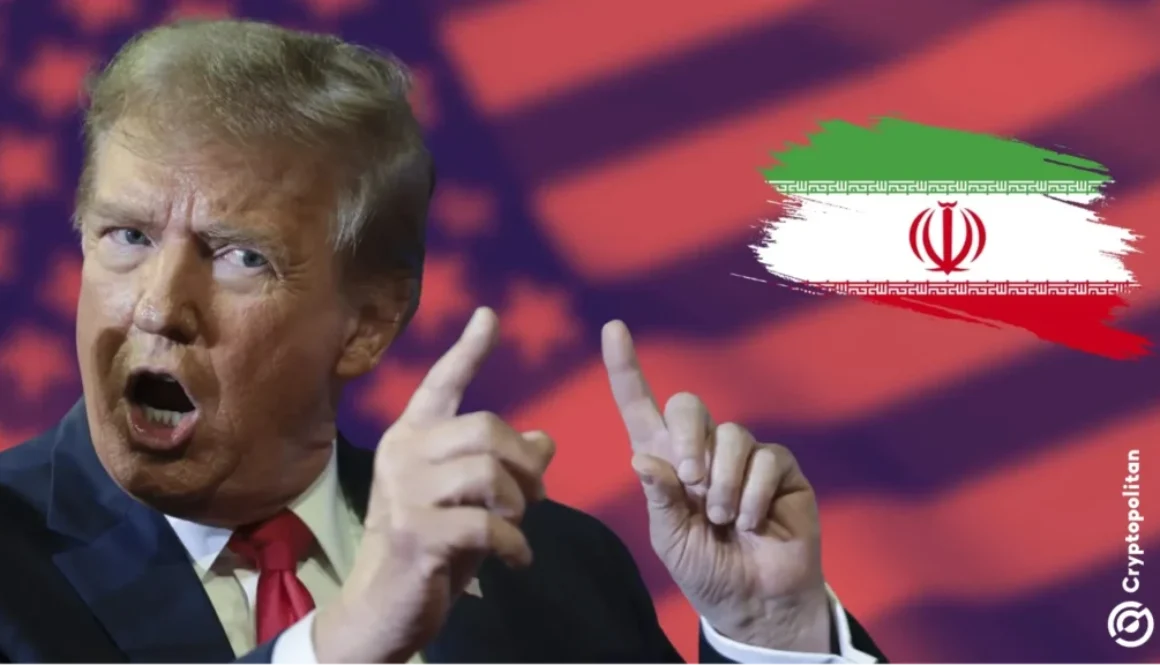
The White House announced new sanctions against Iran’s oil network on Thursday, piling more pressure on Tehran’s economy as President Trump pushes forward with his maximum pressure policy.
The penalties, confirmed by the Treasury and State departments, target dozens of companies and tankers accused of secretly helping Iran sell billions in oil under fake identities.
According to Bloomberg, the Treasury Department sanctioned a group of businesses that allegedly moved large volumes of crude by disguising Iranian oil as Iraqi. These shipments were sold to buyers in the West using falsified paperwork.
One of the names listed is Salim Ahmed Said, a dual Iraqi-British national. Said owns several firms accused of coordinating the transport and sale of Iran’s oil while hiding its true source. The Treasury said some of the proceeds went to Iran’s Islamic Revolutionary Guard Corps-Qods Force, a group the US has labeled a terrorist organization.
Treasury cracks down as Trump signals future relief
The State Department added six companies to its list, including four tankers involved in loading Iranian oil and hiding its origin. Officials say these vessels switched off their tracking systems, took cargo at sea, and masked documents to sneak past restrictions.
Scott Bessent, who now heads the Treasury, said, “Treasury will continue to target Tehran’s revenue sources and intensify economic pressure to disrupt the regime’s access to the financial resources that fuel its destabilizing activities.”
Despite the crackdowns, Iran’s oil still flows. Their output hasn’t dropped, and China remains a major buyer. While Trump hasn’t lifted the sanctions, he hinted at the possibility. After the recent US airstrikes on Iran’s nuclear facilities, attacks he claimed had “totally obliterated” the program, he said China could keep buying oil and left the door open for broader relief “if they can be peaceful.” He also went after Iran’s Supreme Leader in the same breath, showing no clear change in tone but floating a vague offer.
Trump signs law to boost oil and kill solar and wind subsidies
At the same time, Trump signed the One Big Beautiful Bill Act into law, ending decades of federal support for solar and wind energy. The House passed the bill Thursday, just before Trump’s deadline, with the Senate having approved it earlier in the week.
Trump has made it clear he wants fossil fuels front and center. Last weekend, in an interview with Fox News, he said, “I don’t want windmills destroying our place. I don’t want these solar things where they go for miles and they cover up a half a mountain that are ugly as hell.”
The law eliminates the clean electricity investment and production tax credits for wind and solar farms. These credits were key to the industry’s growth, active since 2005 and 1992, respectively.
Trump’s new rules cut off those benefits starting in 2027, unless a project starts construction within 12 months of the law’s passage. A related credit for using US-made parts in solar and wind projects also ends after 2027, unless those projects begin soon.
Meanwhile, oil, gas, coal, and nuclear are the clear winners. Trump’s law opens more federal land and waters for drilling, including 30 lease sales in the Gulf of Mexico over the next 15 years. Another 30 sales per year are mandated across nine US states, plus expanded access to Alaska. The law also lowers the royalties that energy firms pay the government when producing on federal property, encouraging even more output.
The law also boosts carbon capture credits. Oil producers now get more money for injecting carbon emissions into the ground to extract additional crude. The hydrogen tax credit gets extended through 2028, which is great news for Chevron and Exxon, both investing in hydrogen fuel. Sommers welcomed that timeline extension, saying it fulfilled a top request from companies planning long-term projects.
Coal gets a piece of the action too. At least 4 million new acres of federal land are being opened for coal mining, and royalty fees are getting cut there as well. The law allows miners to use advanced manufacturing tax credits if they’re producing metallurgical coal, which is used to make steel.
Cryptopolitan Academy: Tired of market swings? Learn how DeFi can help you build steady passive income. Register Now
Dogwifhat’s price prediction for 2025 suggests a maximum price of $1.78.
WIF could reach a maximum price of $3.54 by the end of 2028.
By 2031, WIF’s price may surge to $5.75.
Remember Dogecoin and Shiba Inu? The popular dog-themed memecoins!
Dogwifhat (WIF) is another dog-inspired memecoin built on the Solana blockchain. Despite being relatively new on the market (launched in November 2023), the “dog wif a hat” project saw remarkable success post-launch.
Following the exchange listing of the token on Binance and the popular “Sphere Wif Hat” campaign that led to the crowdfunding of over 690,000 USDC, the value of WIF surged, temporarily usurping PEPE coin in late March 2024 to rank as the 3rd largest memecoin behind Dogecoin (DOGE) and Shiba Inu (SHIB).
Having no utility, the success of Dogwifhat (WIF) has birthed other spinoffs, Catwifhat, Simbawifhat, Wenwifhat, and Bonkwifhat, with more hat-wearing dog memecoins hitting the market afterwards. Dogwifhat has thus far recorded significant feats in terms of valuation and exchange listing.
The token approached the $5 mark on March 31, 2024 ($4.58B market cap), saw massive price movements after the November U.S. elections, and got listed on Binance US, Coinbase, KuCoin, Robinhood, and more.
However, a massive bear market ensued, and WIF lost momentum. Leaving investors asking: How high can dogwifhat crypto go?
Let’s explore the current market sentiments and the possibilities of WIF reaching new all-time highs (ATHs).
Overview
Cryptocurrency
Dogwifhat
Ticker
WIF
Current price
$0.9258
Market cap
$924.96M
Trading volume
$576.4M
Circulating supply
998.84M WIF
All-time high
$4.85 on (March 31, 2024)
All-time low
$0.000023 (November 2023)
24-hour high
$0.9543
24-hour low
$0.8798
Dogwifhat price prediction: Technical analysis
Metric
Value
Volatility (30-day Variation)
9.25%
50-day SMA
$0.9173
14-Day RSI
54.97
Sentiment
Bullish
Fear & Greed Index
–
Green days
14/30 (47%)
200-Day SMA
$1.168
Dogwifhat (WIF) price analysis
TL;DR Breakdown
WIF is testing resistance at $0.955.
Positive short-term momentum suggests potential for upward movement.
Lack of strong long-term buying pressure might cause a pullback.
As of July 3, WIF hovers near the previous resistance zone at $0.905. There is a noticeable price action pattern of higher lows forming from late June to early July, signaling some upward momentum. Trading volume has also significantly increased in the last 24 hours (up 24%). However, the CMF (Chaikin Money Flow) indicator is slightly negative, indicating a lack of significant buying pressure while the price moves upward. This could signal a potential struggle to break through the $0.955 resistance, especially if the volume doesn’t pick up.
In the meantime, the $0.955 resistance might hold, which would likely result in a price pullback toward the $0.905 and $0.869 support. However, if the price breaks above this level, the next resistance target lies around $1.047.
Dogwifhat price analysis 4-hour chart: WIF sees short-term gains
On the 4-hour chart, WIF has recently been trending upwards and is now testing the $0.933 resistance level. The 20-period simple moving average (SMA) is trending below the current price, further confirming the upward momentum.
The MACD shows a bullish crossover, and the Balance of Power indicator is also positive, further supporting the idea of a sustained buying trend in the short term. Given this, WIF might push higher towards the next resistance zone.
Dogwifhat technical indicators: Levels and action
Daily simple moving average (SMA)
Period
Value
Action
SMA 3
$0.6704
BUY
SMA 5
$0.7539
BUY
SMA 10
$0.7979
BUY
SMA 21
$0.7971
BUY
SMA 50
$0.9173
BUY
SMA 100
$0.7545
BUY
SMA 200
$1.1680
SELL
Daily exponential moving average (EMA)
Period
Value
Action
EMA 3
$0.8377
BUY
EMA 5
$0.8284
BUY
EMA 10
$0.7483
BUY
EMA 21
$0.6424
BUY
EMA 50
$0.6448
BUY
EMA 100
$0.9162
BUY
EMA 200
$1.3415
SELL
What to expect from WIF price analysis?
Traders can expect a potential breakout or rejection at the $0.955 and $0.933 key resistance zones. The coin could also break out to $1.047 if momentum continues to build. If support fails, WIF could see a short-term pullback towards $0.869.
Is Dogwifhat crypto a good investment?
Dogwifhat (WIF) is a highly speculative meme coin fueled by online culture and community enthusiasm rather than fundamental utility or innovation. While it may present short-term opportunities for high-risk traders during bullish market sentiment, its long-term investment value remains questionable.
With no clear roadmap, technical use case, or underlying utility, WIF’s price is largely driven by social media trends and investor speculation. For cautious or long-term investors, it poses significant risk and should only be considered in minimal portfolio allocations. Ultimately, dogwifhat is better suited for speculative play than strategic, utility-based crypto investing grounded in strong fundamentals.
Where to buy WIF?
Currently, traders and investors can buy Dogwifhat (WIF) on these CEXs: Binance, Binance.US, Raydium, Coinbase Exchange, Gate.io, KuCoin, Kraken, Crypto.com Exchange, MEXC, HTX, Bybit, Bitget, LBank, and several others.
Will WIF reach $10?
Having reached a peak price of $4.85 in 2024, the $10 target might not be too far-fetched.
Can Dogwifhat reach $100?
Dogwifhat (WIF) reaching $100 is highly ambitious and could be unlikely. Its market must be at least $99.9 billion – a value that exceeds the highest market cap ever for a meme (Dogecoin) at $88.79 billion.
WIF has the potential for a good long-term future if it continues to gain popularity and adoption. Analysts project a market price of about $1.5-$2 by the end of 2025 and about $3.4 to $4.2 by 2031. However, as with all meme coins, WIF’s future is uncertain and highly dependent on market trends and community support.
Recent news/opinion on WIF
DeFi Dev Corp. and Dogwifhat have launched a validator partnership to strengthen the Solana blockchain’s infrastructure.
1/ The hat stays on! 🧢
Today, we’re announcing our newest validator partnership with the one and only @dogwifcoin.
A dedicated $WIF validator – operated by DFDV, owned by the dogwifhat community. 💪
If the bulls back WIF, the token could reach as high as $1.27 in July. Traders can expect an average trading price of $0.90 and a minimum price of $0.75.
Dogwifhat price prediction
Potential Low ($)
Average Price ($)
Potential High ($)
WIF price prediction July 2025
0.75
0.90
1.27
Dogwifhat price prediction 2025
Impactful updates and community support in the second half of 2025 could see WIF surge to a maximum value of $1.78. On average, the WIF token could trade for around $0.82. Its minimum price is expected to be about $0.3053.
Dogwifhat price prediction
Potential Low ($)
Average Price ($)
Potential High ($)
Dogwifhat price prediction 2025
0.3053
0.82
1.78
Dogwifhat price prediction 2026-2031
Year
Minimum Price ($)
Average Price ($)
Maximum Price ($)
2026
1.62
1.84
2.07
2027
2.36
2.58
2.8
2028
3.1
3.32
3.54
2029
3.84
4.06
4.28
2030
4.57
4.79
5.02
2031
5.31
5.53
5.75
Dogwifhat price forecast 2026
According to the WIF price forecast for 2026, Dogwifhat is anticipated to trade at a minimum price of $1.62, a maximum price of $2.07, and an average price of $1.84.
Dogwifhat price prediction 2027
The WIF price prediction for 2027 indicates a continued rise, with minimum and maximum prices of $2.36 and $2.80, respectively, and an average price of $2.58.
Dogwifhat price prediction 2028
Dogwifhat price is expected to reach a minimum of $3.10 in 2028. The maximum expected WIF price is $3.54, with an average price of $3.32.
Dogwifhat price prediction 2029
The WIF price prediction for 2029 estimates a minimum price of $3.84, a maximum price of $4.28, and an average price of $4.06.
Dogwifhat price prediction 2030
The Dogwifhat price prediction for 2030 suggests a minimum price of $4.57 and an average price of $4.79. The maximum forecasted Dogwifhat price is set at $5.02.
Dogwifhat (WIF) price prediction 2031
The WIF price prediction for 2031 anticipates a surge in price, resulting in a maximum price of $5.75. Based on expert analysis, investors can expect an average price of $5.53 and a minimum price of about $5.31.
Cryptopolitan’s WIF price prediction proposes a bullish outlook for Dogwifhat’s future price should the market recover soon. According to our analysis, if the bulls get back in for the token in 2025, WIF could recover to about $2. By 2028, we expect continuous growth of the overall crypto market and a utility-based approach for WIF, which could see the token trade at an average price of $5 to $6.
Dogwifhat (WIF) launched in November 2023 and traded within the range of $0.1 – $0.3 for the remainder of 2023.
WIF began 2024 at $0.15, surged past $0.5 in January, and hit its ATH of $4.85 by March’s end after strong bullish momentum.
The token fell to $1.95 in April, consolidating between $2 and $4 until May, but dropped to $1.48 in June amidst bearish pressure.
WIF saw mixed performance in the second half, peaking at $4.67 in November before closing the year at $1.86 under renewed bearish pressure.
WIF opened the market at $1.862 in January 2025 and closed the month at $1.1138. Further price drops ensued in February and March, with WIF trading between $0.4186 and $0.4438.
The coin saw gains in April, reaching as high as $0.7177, and in May, it recaptured the $1 mark, reaching a peak price of $1.38. The uptrend faltered in June, only attaining a high of $1.07 and a low of $0.63.
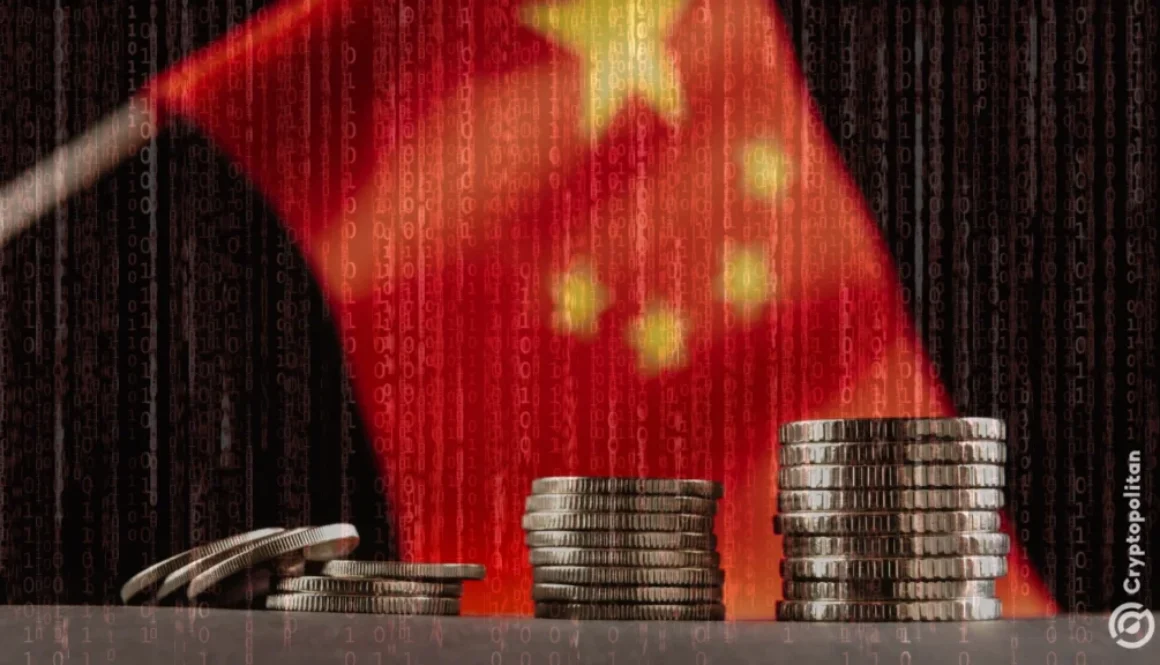
China is under increasing pressure from prominent economists and policy advisers to explore using stablecoins for cross-border payments, as the United States accelerates efforts to entrench the dollar’s global dominance through crypto innovations.
Though China continues to enforce a sweeping ban on cryptocurrency activities, recent comments from senior People’s Bank of China (PBOC) officials have reignited debate over stablecoins — digital assets typically pegged to fiat currencies like the US dollar.
PBOC Governor Pan Gongsheng recently acknowledged that stablecoins could “revolutionize international finance,” especially in a geopolitical climate where traditional payment systems are vulnerable to weaponization through sanctions.
Pan highlighted the strategic importance of building alternative infrastructure to avoid such risks, speaking at the Lujiazui Forum in June,
Former PBOC chief Zhou Xiaochuan also spoke at the event, warning that dollar-linked stablecoins might facilitate dollarization. At the same time, other officials floated the idea of yuan-based stablecoins to boost China’s ambitions of internationalizing its currency.
US crypto push spurs Chinese reassessment
The renewed focus in China comes as the US doubles down on its digital dollar agenda. Just hours before Chinese officials addressed the Lujiazui Forum, the US Senate passed a landmark bill to regulate stablecoins — a major win for the crypto industry and President Donald Trump’s digital asset strategy.
US Treasury Secretary Scott Bessent further amplified support, claiming that stablecoins could strengthen the dollar’s role, not undermine it. He cited greater trust in the US regulatory oversight compared to centralized digital currencies like the e-CNY.
Stablecoins, already gaining ground for their ability to make cross-border payments faster and cheaper, are forecasted to grow to $3.7 trillion in supply by 2030, with most currently backed by US dollars and short-term Treasuries.
Hong Kong emerges as a launchpad for China’s stablecoin ambitions
Beijing has historically viewed crypto as a threat to capital controls and financial stability. Yet experts now see a critical opportunity.
Robin Xing, Chief China Economist at Morgan Stanley, noted that stablecoins are not new currencies, but new distribution channels for existing ones. China must embrace sovereign currency tokenization to stay competitive.
Xing and others suggest that Hong Kong could be a regulatory sandbox for offshore yuan-linked stablecoins. Hong Kong has already introduced a legal framework for fiat-referenced stablecoins, and tech giants like JD.com and Ant Group are reportedly preparing license applications.
JD.com’s Chief Economist Shen Jianguang warned that China risks falling behind without a serious push into stablecoins. Founder Richard Liu has said the firm aims to cut cross-border payment costs by 90% and reduce settlement times to under 10 seconds using stablecoins.
Meanwhile, Zhejiang China Commodities City Group Co., operator of the world’s largest wholesale market, also announced intentions to enter the space via licensing.
China pushes ahead with dual-track digital strategy
China’s current digital currency efforts have struggled to gain traction. The e-CNY, the state-backed digital yuan, has seen limited adoption. At the same time, mBridge, a cross-border project with several central banks, faced uncertainty after the Bank for International Settlements (BIS) withdrew over concerns that it could be used to skirt sanctions.
Despite setbacks, Pan announced plans for an international e-CNY center in Shanghai, signaling Beijing’s continued ambitions in digital finance.
To move forward, experts suggest a dual-track strategy. The National Institution for Finance and Development Chairman Li Yang said China should expand traditional efforts like CIPS and currency swaps while leveraging Hong Kong’s capabilities to pilot yuan stablecoins.
According to Bloomberg Intelligence, Hong Kong’s stablecoin efforts could become Beijing’s alternative to sidestep SWIFT, alongside CIPS and mBridge.
Still, hurdles remain. Stablecoins are currently used more for crypto trading than global commerce. Regulatory uncertainties persist, especially regarding whether they qualify as currencies or financial instruments.
Eswar Prasad, a Cornell professor and author of The Future of Money, cautioned that yuan-linked stablecoins may struggle without deeper reforms. “Without unifying onshore and offshore yuan markets, these stablecoins won’t gain much traction,” he said
Yet he also believes they may catalyze reform, nudging China toward more market-oriented policies. As the US continues to cement its lead in the digital currency race, China is now at a critical crossroads in either cautiously observing or stepping boldly into the future of global finance through stablecoin innovation.
Cryptopolitan Academy: Coming Soon – A New Way to Earn Passive Income with DeFi in 2025. Learn More
Anchorage Digital, a federally chartered crypto bank, is under fire after announcing it will delist several stablecoins, including the widely used USDC.
This week, the firm released a “Stablecoin Safety Matrix” that evaluates digital dollar tokens based on regulatory oversight and reserve quality. USDC, Agora USD (AUSD), and Usual USD (USD0) failed to meet the firm’s internal criteria and will be phased out.
Anchorage urged its institutional clients to switch to Global Dollar (USDG), a rival stablecoin issued by Paxos and supported by a consortium in which Anchorage itself is a founding member.
“Following our Stablecoin Safety Matrix, USDC, AUSD, and USD0 no longer satisfy Anchorage Digital’s internal criteria for long-term resilience,” Rachel Anderika, head of global operations at Anchorage, said in a statement justifying the decision.
She continued to say that they specifically identified elevated concentration risks associated with the issuer structures — something they believe institutions should carefully evaluate.
Stablecoin race heats up as lawmakers act and Circle defends USDC
Anchorage’s move comes amid a flurry of activity in the stablecoin world. Financial giants and crypto firms are vying for dominance in the $250 billion market, which Citi and Standard Chartered analysts predict could grow to the trillions.
Nordic lawmakers are trying to give stablecoin issuers regulatory accommodation as well. Recent developments came from the GENIUS Act, which the US Senate passed. White House crypto policy lead David Sacks has said the bill may become law by next month.
Despite Anchorage’s move, other stablecoin evaluators remain favorable toward USDC. S&P Global recently gave USDC a “strong” stability rating. The crypto-native ratings firm Bluechip gave it a B+ in economic safety.
Circle, which issues USDC, pushed back on Anchorage’s claims, defending its “long-standing compliance record” and full backing by fiat reserves. “We were the first stablecoin issuer to comply fully with the EU’s crypto regulations,” a spokesperson said.
Industry pushes back on Anchorage
Anchorage’s move has drawn sharp criticism from key players in the crypto space. Nick Van Eck, founder of Agora and the issuer of AUSD, accused the firm of spreading misinformation and failing to disclose its financial interest in USDG.
Nick Van Eck said he would have understood if Anchorage had delisted USDC and AUSD to prioritize stablecoins from which it profits. However, he criticized the firm for smearing competitors under the guise of safety, calling the move unserious.
Viktor Bunin of Coinbase, which co-launched USDC, also criticized Anchorage’s report and described it as a poorly executed hit piece.
Jan Van Eck, CEO of asset manager Van Eck and father to Nick, mocked the company’s safety matrix and suggested it was laughable, predicting that the firm might soon take it down.
Circle reiterated that regulated institutions back USDC and maintain robust liquidity and transparency. Other custodians also supported USDC and AUSD.
BitGo’s chief revenue officer, Chen Fang, said the company was not ceasing support for USDC.
Agora and Circle are longtime partners in AUSD, and Joshua Lim, co-head of markets at FalconX, said the firm can accommodate the needs of clients trading AUSD and USDC.
While Anchorage moves forward with its stablecoin revamp, it may face increased scrutiny of its motives and transparency. The stablecoin wars are not over — and trust, it seems, is the true currency at play.
KEY Difference Wire helps crypto brands break through and dominate headlines fast