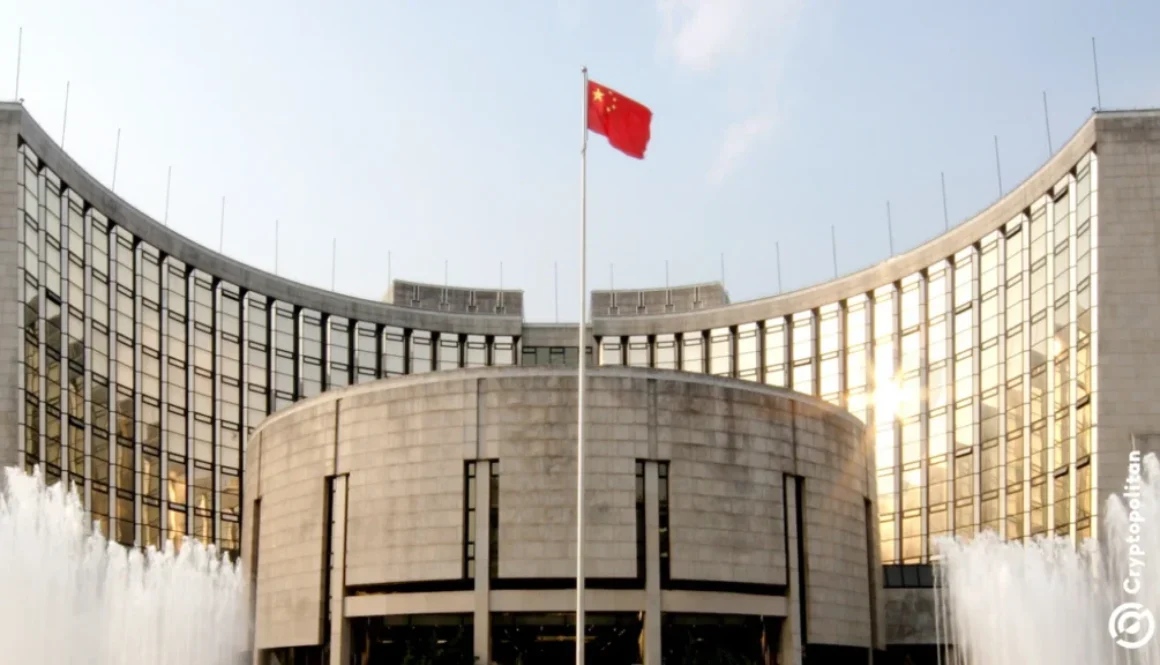
People’s Bank of China halts Solana Shanghai event over illegal crypto marketing campaign
China’s central bank has explicitly attributed the October cancellation of Solana’s Shanghai event to illegal cryptocurrency promotion, marking an escalation in Beijing’s enforcement against domestic crypto marketing by foreign blockchain projects. The ruling exposes a gap between what event organizers claimed publicly and what regulators acted on privately, with implications for how institutional investors assess geopolitical risk in Asia-focused blockchain ventures.
- PBOC disrupted Solana’s mid-October Shanghai event citing SOL token classification as virtual currency and Solana’s aggressive domestic marketing campaign in violation of Chinese law.
- Solana Foundation President Lily Liu attributed cancellation to logistical venue constraints and quadrupled registrations; attendees observed law enforcement presence at the hotel venue.
- February 2026 rulebook issued by PBOC and seven agencies holds Chinese firms and individuals liable for assisting offshore crypto operators, even when projects run abroad.
- 2 Solana events disrupted in mainland China, including a late October 2025 Shenzhen event cut short by police.
- February 2026 rulebook date establishing current enforcement framework banning Bitcoin, Ether, stablecoins as legal tender.
The People’s Bank of China said it stopped Solana’s mid-October event in Shanghai because the blockchain network’s promotional activities constituted illegal virtual currency marketing under Chinese law, according to reporting by Cryptopolitan. A PBOC official, quoted by Financial News (Jinrong Shibao), a news outlet run by the central bank, explained that Solana became a regulatory priority after the project launched an aggressive domestic branding campaign, with SOL token promotions appearing across Shanghai’s skyline and the Foundation touting its Pudong office location. The central bank classified Solana’s SOL token as a virtual currency and flagged that the network enables issuance and trading of tokens including Tether’s USDT, making the entire marketing effort a violation of China’s ban on crypto financial activity.
PBOC cited customer identification gaps and money-laundering risks in the crypto sector
The PBOC official also cited deficiencies in anti-money-laundering controls and customer identification procedures across the cryptocurrency industry, alongside speculative trading risks that tokens invite. The central bank emphasized it did not act unilaterally: local financial regulators, public security, and market supervision authorities all participated in the decision to halt the event. This multi-agency approach reflects the enforcement posture established in the February 2026 notice issued by the PBOC and seven other government departments, which restated the longstanding ban on Bitcoin, Ether, and stablecoins as legal tender and added liability for Chinese firms and individuals who knowingly assist offshore crypto operators providing services inside China.
The February directive made clear that geographic location of the project is irrelevant; what matters is whether a Chinese entity facilitates the service. The PBOC pledged to target both domestic crypto traders and local affiliates of offshore issuance and trading platforms, working in concert with other agencies and local governments to enforce the rulebook.
Solana officials publicly blamed venue logistics while law enforcement was visible at the hotel
The account offered by Solana’s leadership differs markedly from the PBOC’s official rationale.
Attendees received an email on the morning of October 16 informing them of a postponement due to “logistical considerations at the venue.” Solana Foundation President Lily Liu posted on X that event registrations had quadrupled overnight, far exceeding the venue’s capacity, a claim that made no mention of regulatory pressure or enforcement threat.
Yet attendees already present at the Shangri-La hotel venue reported observing law enforcement on-site.
The Shanghai cancellation was not Solana’s first disruption in mainland China. In late October 2025, a Solana Accelerate event in Shenzhen was cut short by local police; organizers cited overcrowding that time as well. The Shanghai event was slated to be the first stop in a four-city Accelerate China developer tour covering Hangzhou, Shenzhen, and Beijing.
No announcement has indicated whether the remaining cities remain scheduled.
China’s crypto rulebook has evolved from 2013 warnings to 2026 enforcement operations
China’s regulatory stance toward cryptocurrency has hardened over more than a decade. The PBOC and four other departments warned of Bitcoin risks in 2013, and a 2021 notice reaffirmed that Bitcoin, Ether, and stablecoins hold no legal tender status.
The current operational framework, however, dates to February 2026, when the PBOC and seven other agencies published updated guidance that broadens enforcement beyond traders to include any Chinese person or firm that knowingly supports offshore crypto service providers.
The directive shifts enforcement from passive warnings to active pursuit of both direct participants and facilitators of crypto activity inside Chinese jurisdiction, regardless of where the underlying project is incorporated.
The CCS read. We see a regulator enforcing its own published rules with precision and multi-agency coordination, but one that draws a distinction between passive regulation and aggressive cross-border marketing. Solana’s Shanghai campaign was not a violation because it offered crypto to Chinese users; it was a violation because it marketed a token that can be used for crypto trading using local advertising and corporate presence. Institutional investors in Asia-focused blockchain projects now face explicit notice that even offshore projects cannot market their tokens domestically without regulatory exposure, and that local employees or partners amplify that risk.
Watch whether Solana or other blockchain projects attempt to resume developer events in the remaining three Chinese cities Solana had planned to visit, and whether the PBOC’s treatment of this case influences how other offshore blockchain foundations approach Asia-Pacific marketing strategy.