
Kraken To Launch First CFTC-Regulated Crypto Perpetual Futures In The US
Kraken is launching CFTC-regulated perpetual futures through its recently acquired Bitnomial platform, bringing one of crypto’s most liquid derivatives products into a formal US regulatory framework for the first time. This move signals a structural shift in how institutional traders can access leveraged crypto exposure domestically while managing collateral and spot positions through a unified interface.
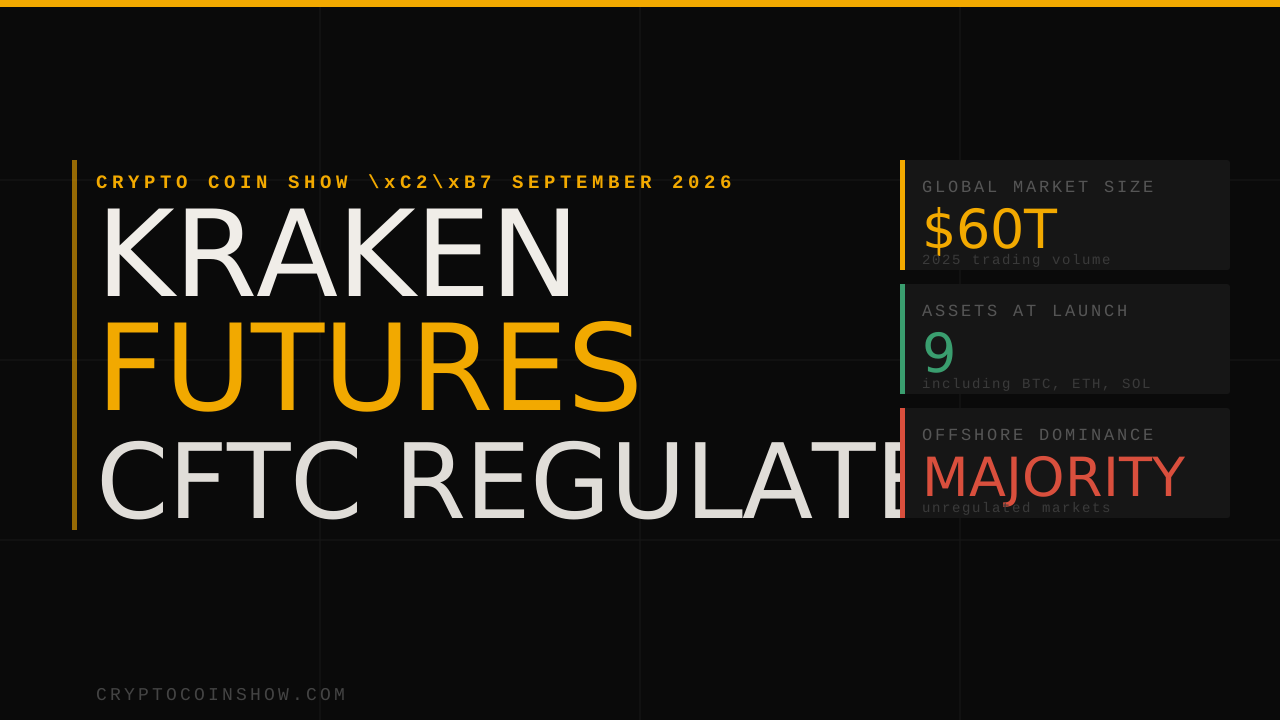
- Kraken expects to launch CFTC-regulated perpetual futures within 30 days through Bitnomial, a Designated Contract Market.
- Initial asset support includes BTC, ETH, SOL, XRP, ADA, LINK, DOGE, LTC and AVAX at launch.
- Products integrate with Kraken Pro’s unified wallet alongside spot margin and CME futures, reducing collateral management friction.
- 30 days Expected timeline for launch of CFTC-regulated perpetual futures product
- 9 assets Initial cryptocurrency support at launch including Bitcoin and Ethereum
- 1 wallet Unified interface combining spot, margin, and derivatives across venues
Kraken’s entry into regulated US perpetual futures represents a watershed moment for institutional crypto market structure. Until now, perpetuals, contracts with continuous pricing, no expiration dates and recurring funding payments, have thrived almost exclusively on offshore exchanges beyond direct US regulatory oversight.
The announcement that eligible US clients will access these products through Bitnomial, a CFTC-regulated Designated Contract Market acquired by Kraken’s parent company Payward, closes a structural gap that has constrained domestic institutional participation for years. The exchange expects the launch within 30 days.
Kraken Brings Offshore’s Most Active Derivatives Product Into CFTC Jurisdiction
Perpetual futures are not a specialized niche in global crypto markets; they are the primary liquidity layer for directional trading and hedging across all major tokens. Daily volume in perpetuals on unregulated offshore exchanges typically dwarfs both spot trading and CME-listed Bitcoin and Ethereum futures combined.
Yet US traders seeking leveraged exposure have faced a binary choice: use offshore venues with no regulatory protection and custody clarity, or accept the constraints and higher costs of CME-listed products that come with fixed expiration dates and lower liquidity than their perpetual counterparts.
Kraken’s move through Bitnomial preserves the core mechanics traders recognize globally, continuous pricing, no fixed expiration and funding payments that tie contract prices to spot indices, while placing them inside formal US regulatory oversight.
The operational design matters as much as the regulatory wrapper. Products will live alongside Kraken’s existing spot margin trading and CME-listed futures within a single Kraken Pro wallet. For active institutional desks, this unified interface reduces the friction of managing collateral across multiple venues and risk types.
As institutional crypto desks have grown more sophisticated, they have become increasingly sensitive to venue risk and custody structure. A single wallet connecting perpetuals, spot positions and CME exposure eliminates the need to move funds between platforms to adjust hedges or rebalance leverage.
US traders have been waiting for a regulated way to trade the product that defines global crypto derivatives markets.
John Palmer, Global Head of Derivatives, Kraken
This framing from Kraken’s derivatives leadership is significant because it acknowledges the scale of unmet demand rather than positioning the product as an innovation.
Nine Assets at Launch Signal Platform Positioning as Derivatives Hub
Kraken’s decision to support BTC, ETH, SOL, XRP, ADA, LINK, DOGE, LTC and AVAX at launch reveals strategic intent beyond simply replicating what offshore venues offer.
The exchange could have launched with Bitcoin only, the most liquid perpetual pair globally and the easiest regulatory pitch, yet instead included eight additional assets spanning different market caps and institutional adoption levels. This breadth indicates Kraken intends to position Bitnomial as a comprehensive crypto derivatives venue rather than a narrow product line anchored to one token.
For institutional traders, the asset mix matters because it enables cross-crypto hedging and directional strategies within a single regulated framework. A fund holding diversified crypto exposure can now adjust leverage on Solana or Ethereum perpetuals without leaving the regulated ecosystem, managing basis risk between spot holdings and derivatives in real time.
The inclusion of lower-cap assets like Dogecoin and Cardano also signals confidence that CFTC oversight can accommodate retail-accessible tokens, potentially lowering the bar for additional assets in later phases.
The caveat is that launch access is limited to eligible US clients rather than broad retail participation, reflecting both CFTC comfort levels and Kraken’s own risk appetite at release.
Bitcoin Market Structure Benefits From Regulated Liquidity Alternatives
For Bitcoin specifically, the broader implication extends beyond this single product launch. More regulated domestic venues deepen institutional participation by removing custody and counterparty risk concerns that have historically pushed sophisticated traders toward offshore platforms.
CME-listed Bitcoin and Ethereum futures already attracted significant institutional capital by offering CFTC oversight and physical settlement optionality, yet their fixed expiration dates and slower execution create inefficiencies for active traders. Perpetuals solve that friction while keeping pricing continuous and funding mechanics transparent.
The near-term impact depends on adoption velocity. If eligible US traders migrate material volume from offshore perpetuals to Bitnomial’s regulated offering, it signals institutional willingness to accept regulatory constraints in exchange for domestic oversight.
More likely is a gradual rebalancing where professional crypto desks allocate a portion of directional exposure to the regulated venue for compliance and risk management clarity while maintaining offshore access for absolute liquidity.
Bitcoin’s spot price discovery will continue to depend primarily on global venues, but US-domiciled institutional use cases, pension funds, endowments, and corporate treasuries entering crypto exposure, now have a clearer on-ramp into leveraged positions.
The bigger picture is that regulated alternatives reduce the gap between offshore liquidity and US-accessible products without closing it overnight.
CFTC Approval Path Sets Precedent for Future Crypto Derivatives
Bitnomial’s status as a CFTC-regulated Designated Contract Market required direct regulatory approval, making this launch a test case for how the agency views perpetuals specifically.
The CFTC has approved CME’s Bitcoin and Ethereum futures under its regulatory framework for commodity derivatives, but perpetuals operate under different structural assumptions about funding mechanics, price discovery and participant types.
The fact that Bitnomial secured approval suggests the CFTC views perpetuals as workable under existing commodity derivatives rules, rather than requiring new regulatory categories or Congressional action.
This precedent could accelerate regulatory clarity for other platforms seeking similar licenses. Coinbase, which has long maintained regulatory ambitions for US crypto derivatives, and other major exchanges now have a proven pathway to CFTC approval rather than relying solely on regulatory interpretation.
However, the approval does not mean other platforms will follow immediately; each DCM application faces individual scrutiny based on risk management, surveillance and custody arrangements.
The concrete question ahead is whether eligible US traders migrate sufficient volume to Bitnomial to justify broader expansion. Kraken stated that additional assets and retail access could follow, but execution depends on initial adoption rates and the exchange’s ability to maintain competitive pricing against entrenched offshore liquidity. Watch for volume announcements in the 60 days following launch, and monitor whether competing US platforms file their own DCM applications in response to Kraken’s move.