
Kraken is preparing to bring one of crypto’s most heavily traded derivatives products into a regulated US framework, with the exchange saying eligible clients will soon be able to access CFTC-regulated perpetual futures through Bitnomial.
TL;DR
Kraken says the products are expected to launch within the next 30 days.
The contracts will be listed on Bitnomial, a CFTC-regulated Designated Contract Market recently acquired by Payward.
Supported assets at launch are expected to include BTC, ETH, SOL, XRP, ADA, LINK, DOGE, LTC and AVAX.
The rollout is aimed at eligible US clients rather than broad retail access at launch.
Kraken Pushes Perps Into A Regulated US Structure
Perpetual futures have long been central to global crypto trading, but US access has remained constrained because the most liquid versions of these products have typically lived on offshore venues. Kraken’s announcement matters because it points to a domestic structure that keeps the core mechanics traders recognize — continuous pricing, no fixed expiration date and recurring funding payments — while placing the contracts inside a CFTC-regulated venue.
The exchange says the products will sit alongside spot margin and CME-listed futures inside a unified Kraken Pro wallet. That is an important operational point, because the appeal is not only regulatory clarity. For active traders, being able to manage collateral, spot positions and derivatives exposure from one interface reduces friction at a time when institutional crypto desks are becoming more sensitive to venue risk and custody structure.
John Palmer, Kraken’s Global Head of Derivatives, framed the launch around domestic access, saying US traders have been waiting for a regulated way to trade the product that defines global crypto derivatives markets. That phrasing is notable because perpetuals are not a niche product globally; they are the core liquidity layer for much of crypto’s directional speculation and hedging.
Why It Matters For Bitcoin And Crypto Traders
The launch could help pull some derivatives activity away from offshore exchanges if eligible US traders decide the regulatory trade-off is worth it. That does not mean global liquidity shifts overnight, but it gives institutional and qualified participants another route to express leveraged views on major assets while staying within a US-regulated framework.
The asset list also matters. By including BTC and ETH alongside SOL, XRP, ADA, LINK, DOGE, LTC and AVAX, Kraken is not limiting the product to the two largest tokens. That wider initial scope suggests the exchange is positioning the venue as a broader crypto derivatives hub rather than a narrow Bitcoin-only product line.
For Bitcoin specifically, the bigger story is market structure. More regulated venues can deepen institutional participation, improve risk management and potentially reduce the gap between offshore liquidity and US-accessible products. The caveat is that access restrictions mean this is not a sudden retail floodgate.
What To Watch Next
Traders will be watching whether the product launches on schedule, how broad the eligibility criteria are, and whether liquidity builds quickly enough to compete with offshore perpetual futures markets. The central risk is access: if participation remains limited to a narrow institutional tier, the market impact may be more structural than immediate.
Satori Finance, a decentralized derivatives platform backed by names including Coinbase Ventures and Polychain Capital, has said it will wind down operations by July 16, putting another spotlight on how difficult crypto perps infrastructure has become outside the largest venues.
TL;DR
Satori Finance said it will shut down operations and terminate services by July 16, 2026.
The team cited prolonged unfavorable market conditions and unsustainable revenues.
The stronger angle is not venture backing, but the pressure smaller perps venues face in a crowded market.
In an announcement on X, Satori said it would begin winding down all operations and services, giving users a defined period to withdraw funds. The team attributed the decision to a combination of market pressure and revenue conditions that no longer supported the platform’s continued operation.
The shutdown is notable because Satori was not a fringe experiment. It had backing from major crypto investors and operated in one of the industry’s most active categories: perpetual futures. Yet the announcement shows that even well-funded teams can struggle when liquidity, user activity and fee capture concentrate around a small number of dominant venues.
A Harder Market For Perps Platforms
Perpetual futures remain one of crypto’s most important trading products, but that does not make every perps platform durable. Traders tend to gravitate toward venues with deep liquidity, reliable execution, broad collateral options and strong incentive programs. For newer or smaller platforms, the cost of competing can become heavy quickly.
Satori’s decision also lands at a time when derivatives venues are facing tighter scrutiny, more product competition and a market where users are less willing to experiment with marginal liquidity. In that environment, venture backing can help a protocol launch, but it cannot guarantee long-term trading volume or recurring revenues.
What Users Need To Watch
The immediate practical point is the withdrawal deadline. Users with funds on Satori should review the platform’s official announcement and follow the instructions from the project directly. Shutdown periods can create confusion around access, support queues and final settlement processes, so relying on copied summaries or third-party posts is risky.
For the wider DeFi market, the Satori closure is another reminder that protocol survival increasingly depends on real fee generation. Token incentives and early investor backing may draw attention, but derivatives platforms need persistent liquidity and a reason for traders to return every day.
The Bigger Signal
The Satori wind-down should not be read as a failure of decentralized derivatives as a category. Instead, it underlines a harsher reality: perps trading is a scale business. The winners can be very valuable, but the middle of the market is difficult. For DeFi builders, the lesson is that clever infrastructure still needs distribution, liquidity and sustainable economics.
Why This Is Not Just A Small Protocol Story
When a derivatives venue shuts down, it also tells the market something about where liquidity is concentrating. Traders may still want decentralized perps, but they increasingly expect the kind of depth, incentives and interface quality that only a small group of platforms can consistently provide. That leaves smaller teams with a difficult choice: spend more to compete, narrow the product, or wind down before user funds and support obligations become harder to manage.
Popular crypto exchange Kraken has on Monday launched perpetual futures trading to eligible US users through Kraken Pro. The exchange will route the contracts through its recently acquired Bitnomial exchange, with full CFTC regulation.
The newly launched product helps to fulfill a deficit that has kept most U.S. traders on the sidelines of the global perpetual futures market. According to the exchange’s announcement, that market exceeded $60 trillion in trading volume in 2025, with the vast majority of activity running through offshore platforms beyond the reach of the U.S. regulatory bodies.
Kraken’s perpetual futures contracts
Perpetual futures allow traders to take leveraged long or short positions on an asset’s price without a specific expiration date. Perp positions continue to remain open as long as margin requirements are met.
Kraken plans to use a funding rate that resets every eight hours, particularly at 7 p.m., 3 a.m., and 11 a.m. CT. The company’s blog post explains that long holders would pay short holders when the price of the perpetual contract trades above spot, with the reverse happening when it trades below. The trading structure is designed to keep contract pricing firmly tethered to the underlying asset.
At launch, the cryptocurrencies covered by the product include Bitcoin (BTC), Ether (ETH), Solana (SOL), Ripple (XRP), Cardano (ADA), Chainlink (LINK), Dogecoin (DOGE), Litecoin (LTC), and Avalanche (AVAX). The exchange also mentioned that it plans to add more assets and a bigger pool of collateral options over time.
Bitnomial and NInjaTrader importance
Payward, Kraken’s parent company, purchased derivatives exchange Bitnomial in May 2026. A year before, the company also bought NinjaTrader, the futures brokerage now revamped as Kraken Derivatives US and registered with the CFTC as a Futures Commission Merchant.
Perpetual contracts will be held in the same futures wallet as the exchange’s existing CME-listed products, so traders can manage both types of positions with the same funds.
“The most useful thing an exchange business can do for a serious trader is to put everything in one place,” Payward and Kraken co-CEO Arjun Sethi said. “Spot, margin, futures, and now perpetuals all live in the same account at Kraken.”
Darius Tabatabai, head of Kraken Pro, said in the company’s announcement that Bitnomial’s regulated infrastructure made a fast rollout possible. “Their work on the regulatory and market structure side, combined with Kraken’s distribution and technology, is what brings this to US traders at scale,” Tabatabai added.
CFTC increasingly open to perpetual futures
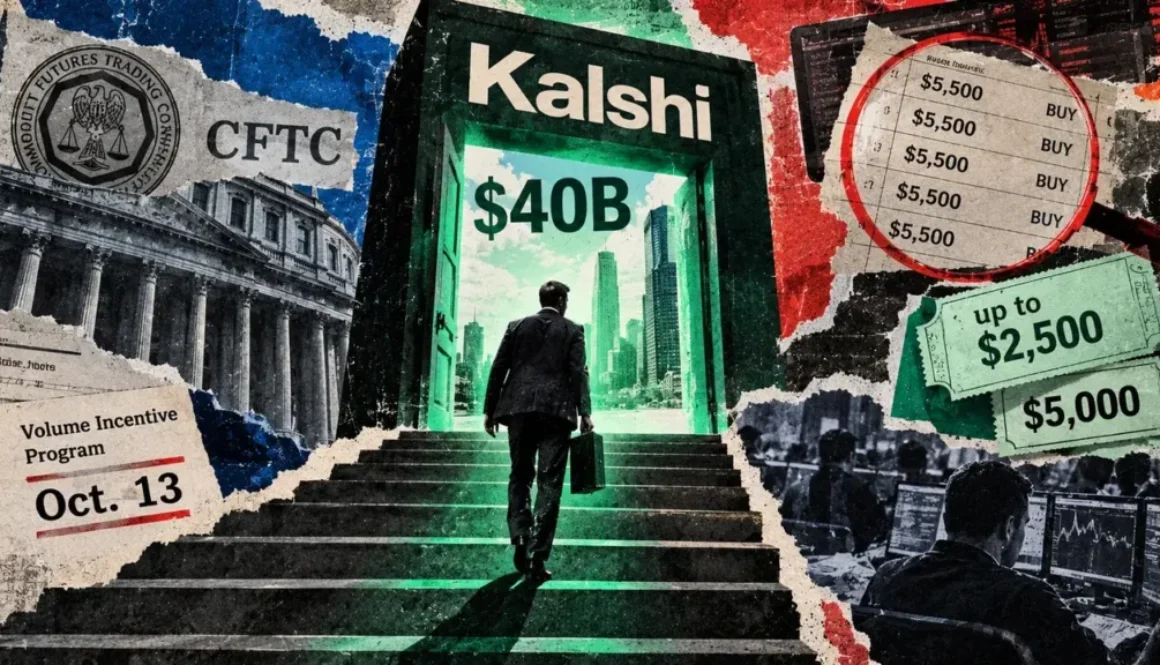
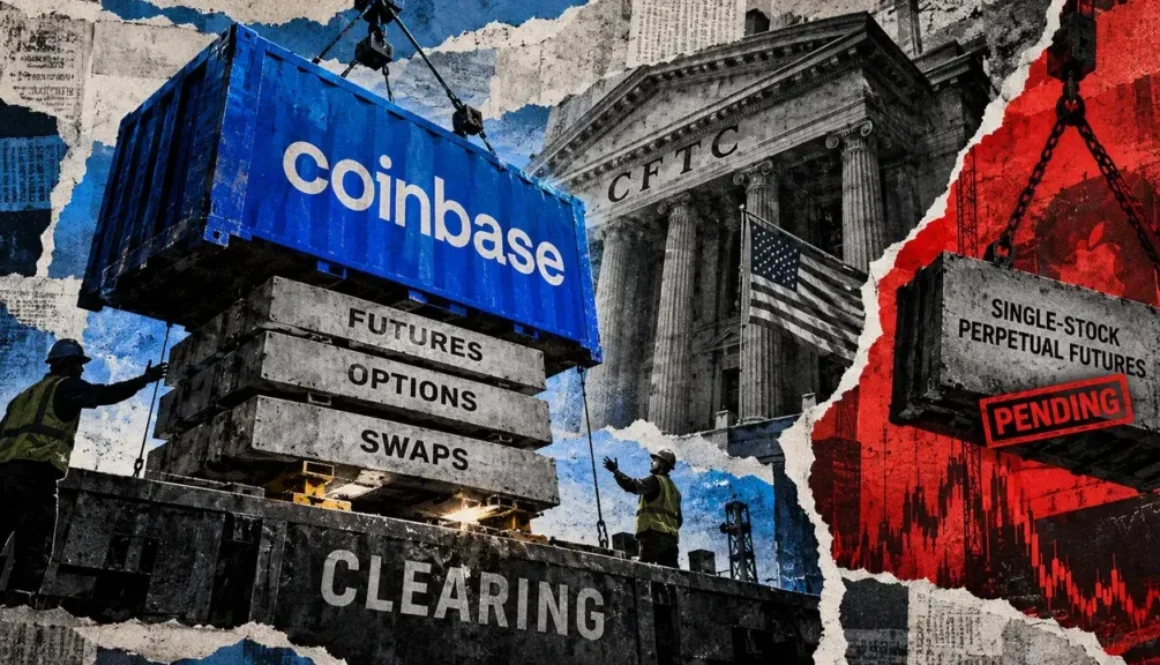
The launch follows signals from the CFTC in May that opened a path for regulated venues to list perpetual futures. The agency approved Bitcoin perpetual contracts from prediction market Kalshi that month, and also allowed for Coinbase to connect US customers to global options and perpetual markets. Kalshi recorded more than $1 billion in perpetual trading volume within its first week.
Kraken’s move is the latest in a string of derivatives releases platformed for its U.S. customers. It launched CME-listed crypto futures in July 2025 and added margin trading for eligible US clients earlier in June 2026.
Kraken’s head of derivatives, John Palmer, told CoinDesk that adoption could follow the pattern set by spot bitcoin exchange-traded funds (ETFs), with sophisticated traders entering first and institutional funds following after internal compliance reviews.
Genius has announced the development of G.OX (Genius Options Exchange), a new crypto derivatives platform designed to bring greater liquidity and efficiency to options trading, an area many believe remains underdeveloped compared to perpetual futures markets.
The launch represents the first stage of the broader Genius Options Protocol and reflects a growing belief among some market participants that crypto may be approaching an “options moment” similar to the evolution seen in traditional financial markets.
For years, perpetual futures have dominated crypto derivatives trading due to their simplicity, liquidity, and widespread availability. However, proponents of options argue that as the market matures and attracts more sophisticated traders, demand will increasingly shift toward products that offer greater capital efficiency and more defined risk profiles.
Genius is positioning G.OX as a platform built to accelerate that transition.
Betting on the Next Evolution Beyond Perpetual Futures
At the center of G.OX are what the company calls “up/down markets” simplified options-based contracts that allow traders to take directional positions on crypto assets through binary-style outcomes.
While the format may appear similar to prediction markets at first glance, Genius argues there are important distinctions.
Unlike event-driven prediction markets, which often rely on subjective outcomes and external resolution mechanisms, G.OX contracts are tied directly to objective market data. Settlement is determined by predefined prices, timestamps, and market feeds, removing ambiguity around outcomes.
“Prediction markets primarily price beliefs about events,” Genius founder Armaan Kalsi told BeInCrypto. “G.OX is intended to price risk and volatility in financial markets.”
The platform’s goal is to make options accessible to everyday traders without requiring them to navigate the complexity often associated with traditional options products.
Why Options Have Struggled in Crypto
Despite their popularity in traditional finance, options have historically remained a niche segment of crypto trading.
According to Genius, one of the biggest obstacles has been liquidity. Crypto’s high volatility makes it difficult for conventional options market-making models to update prices efficiently, often leading to stale quotes and poor execution during periods of market turbulence.
As a result, traders have gravitated toward perpetual futures, which offer continuous liquidity and leverage despite introducing their own complexities, including funding rates, liquidation risks, and collateral requirements.
“Perpetuals became crypto’s default leveraged product because the existing options experience was too complicated and often insufficiently liquid,” Kalsi said.
“That does not mean perpetuals are the optimal financial primitive. It means they were the product that best matched the infrastructure available at the time.”
Can Active Liquidity Solve the Options Problem?
To address these challenges, G.OX is being built around what Genius describes as an actively managed liquidity model.
Rather than relying solely on passive liquidity providers, the platform plans to utilize proprietary liquidity management systems that can adjust pricing and inventory in response to movements in the underlying asset.
The objective is to ensure that contract pricing remains responsive during volatile market conditions while maintaining sufficient depth for traders entering and exiting positions.
“An options venue is only useful when the quoted probability and available size reflect current market conditions,” Kalsi explained.
“Deep nominal liquidity is not enough if the quote is stale or disappears during volatility.”
The company believes this approach could allow options markets to offer a trading experience that more closely resembles the immediacy and execution quality users have come to expect from leading perpetual futures exchanges.
Competing in a Crowded Derivatives Market
The challenge facing G.OX is significant.
Crypto derivatives remain one of the industry’s most competitive sectors, with established centralized and decentralized exchanges commanding billions in daily volume.
To attract traders away from perpetual futures platforms, Genius is emphasizing several structural advantages.
Unlike leveraged futures positions, losses on up/down contracts are capped at entry, eliminating liquidation risk. The contracts also avoid recurring funding payments and allow traders to express a view over a specific time horizon rather than managing an open-ended position.
The company argues these features make options a cleaner instrument for traders seeking to express short-term directional views.
“For a trader who has a discrete view with a known time horizon, an option with a fixed maximum loss can be the cleaner and more capital-efficient expression,” Kalsi said.
Is Crypto Approaching Its “Options Moment”?
The launch comes amid broader discussions about the evolution of crypto market structure.
Institutional participation has increased significantly over the past several years, bringing greater focus to risk management, hedging, volatility trading, and structured financial products.
At the same time, options markets around Bitcoin and Ethereum have become increasingly important indicators for professional traders seeking insight into market sentiment and positioning.
Kalsi believes these developments signal a larger shift already underway.
“The market is becoming more institutional, and the focus naturally moves beyond simple leveraged directionality toward hedging, volatility, yield enhancement, and structured risk,” he said.
He also points to growing demand for short-duration trading products, where traders seek exposure over minutes or hours rather than maintaining positions indefinitely.
According to Genius, this trend could create a natural bridge between traditional options markets and newer forms of crypto-native trading.
Building the Genius Options Protocol
G.OX is intended to serve as the foundation for a broader ecosystem of options-based financial products.
Future iterations of the Genius Options Protocol are expected to introduce additional instrument designs, more advanced trading strategies, and deeper integrations across decentralized finance.
The long-term vision is to make options a core component of on-chain financial infrastructure rather than a niche product reserved for sophisticated traders.
Whether the industry ultimately shifts away from perpetual futures remains to be seen. However, as crypto markets continue to mature, the debate around capital efficiency, risk management, and derivative design is likely to intensify.
With G.OX, Genius is making a clear bet that the next chapter of crypto trading will be defined not by more leverage, but by better ways to express it.
Hyperliquid (HYPE) should be valued against the $600 trillion global asset market, not crypto’s $3 trillion universe. That is the case Bitwise Chief Investment Officer Matt Hougan made for the fast-growing perpetual futures platform.
Hougan said BHYP, Bitwise’s spot Hyperliquid ETF, has pulled in close to $60 million since its mid-May NYSE debut. He called it the strongest single-asset crypto ETP launch since Bitcoin.
Bitwise CIO Says Hyperliquid Is a Gen 2 Token
Hougan said HYPE differs from prior exchange tokens. The platform routes nearly all trading fees into buybacks.
“I think it’s going to take investors a while to realize that this is a Gen 2 token. Like it’s a new version. It’s not like the past,” he noted during a Friday interview with Nate Geraci.
HYPE traded near $68 on Saturday, up 10% in 24 hours. It ranked 11th by market cap, per BeInCrypto data.
Hougan framed Hyperliquid as a fintech application, not a crypto play.
“This is not a crypto app. This is a financial app that uses crypto in the back end to create a new financial experience that in many ways is better than the traditional system.”
Hyperliquid launched a prediction market this week tied directly to the May US CPI year-over-year reading.
Intercontinental Exchange, the owner of the New York Stock Exchange, announced a partnership with OKX to roll out oil futures contracts that never expire, putting ICE’s Brent and WTI benchmarks in a crypto product with 24/7 trading.
Polymarket, whose prediction markets have recorded nearly $39 billion in US volume so far in 2026, launched a suite of private-company contracts tied to valuation milestones at OpenAI, SpaceX, Anthropic, and Anduril.
Collectively, these represent something much more systematic than just individual product launches: crypto exchanges are moving into tradfi. These three launches (and there’s bound to be more soon) are turning the macro calendar into a live retail trading product collateralized in stablecoins and available for trading around the clock.
Macro data as a consumer product
Prediction markets turn binary questions into prices: a contract might ask whether CPI lands above a specific threshold, or whether a private company reaches a set valuation by year-end. When a contract trades at 43 cents, the market’s expressing roughly a 43% probability for that outcome, with the usual caveats around liquidity, participant mix, and settlement rules.
Perpetual futures let traders maintain ongoing synthetic exposure to an asset or benchmark without a fixed expiry date, using funding payments to keep the contract price anchored near the underlying reference. In crypto, perps became the default instrument for leveraged Bitcoin exposure, and we’re now seeing that same design applied to macro assets long confined to institutional terminals and regulated commodity exchanges.
The OKX and ICE partnership shows just how far that application has traveled. ICE’s Brent and WTI benchmark prices will underpin these never-expiring contracts available across territories where OKX is already licensed to offer perpetual futures, giving OKX’s 120 million retail traders access to energy benchmark products that previously required a commodity brokerage account.
The announcement came as Hyperliquid’s oil perps were already generating roughly $1.6 billion in daily trading volume, a figure large enough to push CME and ICE to press US regulators to pay closer attention to these offshore exchanges.
Hyperliquid’s CPI market takes these even further. Inflation prints already move Bitcoin: traders watch the number, compare it with consensus expectations, then reprice the Fed path, the dollar, yields, equities, gold, and crypto in rapid sequence.
Hyperliquid launched the May CPI year-over-year market with contracts pricing roughly a 43% probability for a reading below 4.3%, settling against the BLS release on June 10. Trading volume at launch was modest, around $3,274.
However, the most interesting data point here is the design itself: crypto exchanges are testing whether official data releases can become reusable market templates, the same way Bitcoin perps became the default for nearly every other crypto derivative.
Polymarket’s private-company expansion addresses a different market gap: most of the world’s most valuable companies can’t be traded by retail investors.
The platform launched 23 markets in its first batch, covering contracts on whether OpenAI surpasses a $1 trillion valuation by year-end, whether Anthropic exceeds $500 billion, and whether SpaceX completes an IPO before 2027, all resolved against Nasdaq Private Market data. Traders have priced Anthropic at roughly 90% probability of hitting $1 trillion by December 31, 2026, and OpenAI at 76% odds of reaching $900 billion by the same date.
These are event-based contracts structured around whether an outcome occurs, with Nasdaq Private Market making the underlying valuation data publicly available for free as part of the deal, creating a real-time probability layer on companies that have raised tens of billions without a single public filing.
When the regulatory framework hasn’t caught up with crypto
We’re now seeing product development running laps around the legal architecture, and it’s creating friction across multiple jurisdictions. The CFTC sued Minnesota this month after the state passed the first explicit statutory ban on prediction markets, criminalizing their operation as a felony under state law.
The CFTC called it the most aggressive state-level incursion into federally regulated markets in the agency’s history. CFTC Chair Michael Selig said the law would turn lawful crypto operators into felons overnight, while Minnesota Attorney General Keith Ellison countered that prediction markets prey on young people and low-income communities.
The question everyone is trying to answer is whether these markets are derivative products governed by federal law or consumer-facing gambling products subject to state regulation, and courts are working through it across at least six states simultaneously.
Europe also found itself facing the same question, but it seems to have gotten there by a different route. Spain’s Consumer Rights Ministry temporarily banned Polymarket and Kalshi this week, citing the absence of mandatory gambling licenses and opening a formal investigation expected to run three to four months. The regulator said that identity-verification systems were missing and there were insufficient controls for minors.
Spain, like most European jurisdictions, treats placing bets on uncertain future outcomes as gambling, making the financial-market and gambling-law frameworks equally plausible classification tools, depending on which ministry is looking. The same crypto product is a regulated derivatives instrument in one country and an unlicensed gambling service in the next.
Market integrity is a separate concern that only compounds as these markets get larger. CPI and Fed decisions have fixed release times and official sources, which keep settlement nice and clean, but private-company valuations, geopolitical events, and corporate milestones are considerably harder to adjudicate.
The more markets depend on external data sources, the more consequential it becomes to know who holds the relevant information first.
Bubblemaps analysts identified a cluster of 80 bets on Polymarket tied to US military actions against Iran with a 98% win rate, a figure they called statistically impossible to explain through luck, raising the possibility that prediction markets could become the venue where sensitive information finds a price before it finds itself in a headline.
The weekend-pricing issue is also pretty underappreciated by observers focused on the legal battles.
Crypto exchanges are already the de facto weekend reference price for macro assets, a role they’ve accumulated through circumstance well before any regulator designated them to do it. The same product that offers a faster way to express a view on inflation or oil can look, depending on who’s using it and where, like a retail speculation engine with macro branding.
Crypto turned tokens into 24/7 global assets, and the version forming now is attempting the same for events, data releases, benchmarks, and private-company valuations. Whether the result is better forecasting, a new hedging layer, or a faster route to consumer harm is a question regulators in at least five countries are actively trying to answer, and the products are scaling faster than the answers.
Top prediction market platforms, including Kalshi and Polymarket, are rushing to offer highly leveraged crypto derivatives at the exact moment state and federal authorities are clashing in court over whether the industry’s core products constitute illegal betting or legitimate financial instruments.
Over the past year, these companies have gained national prominence by facilitating wagers on discrete, real-world occurrences, ranging from political races to macroeconomic data releases.
Now, by preparing to list perpetual futures, which are complex contracts that never expire and allow traders to multiply their market exposure using borrowed funds, these platforms are blurring the line between niche forecasting hubs and full-service digital asset exchanges.
Against this backdrop, this shift drastically expands their potential customer base, but it also amplifies the legal risks associated with the platforms.
Historically, platforms like Kalshi operated on a cyclical, event-driven basis, with traffic and trading volume spiking around major catalysts such as a presidential debate or a championship sporting event and then plummeting once the outcome was settled.
In this kind of market, a user purchased a binary “Yes” or “No” share, and the contract expired upon the event’s resolution.
Perpetual futures fundamentally alter that business model. Because these derivatives lack an expiration date, participants can maintain their market positions indefinitely, provided they meet ongoing margin requirements.
The instruments frequently allow users to leverage their bets up to 50 times their initial capital, attracting aggressive speculators seeking rapid returns from minute price fluctuations.
By rolling out these derivatives, Polymarket and Kalshi are abandoning their siloed event-contract operations to compete directly with centralized exchanges and retail brokerages. The underlying strategy for both platforms is to convert occasional political bettors into daily, high-frequency traders.
While Kalshi has explicitly stated its intention to enter the perpetuals arena, Polymarket’s exact roadmap remains guarded, including which specific assets it will cover and whether it will restrict access for US customers.
Why prediction markets are moving into perpetual futures
Why perps, why now?
The motivation to embrace this new feature comes down to basic market structure.
Traditional crypto spot trading, which is the simple buying and holding of digital assets, has decelerated from the frenzied peaks of previous market cycles, logging $18.6 trillion in volume last year.
Meanwhile, perpetual futures generated more than three times that amount. Data from CryptoQuant show that the global trading volume for crypto perpetual futures hit $61.7 trillion last year.
That volume disparity dictates corporate strategy. Platforms recognize that to maintain engagement during periods of low volatility, they must offer instruments that allow users to short the market, hedge portfolios, and employ leverage.
While prediction markets currently command significant capital, with all-time notional volume surpassing $150 billion, the episodic nature of event contracts cannot match the continuous, around-the-clock fee generation of a highly active derivatives order book.
Moreover, the broader financial technology sector is experiencing a rapid collapse of operational boundaries, with centralized platforms like Robinhood, Coinbase, and Gemini all embracing event-based offerings.
Mo Shaikh, co-founder of the Aptos blockchain network, noted that financial applications have historically trended toward consolidation, citing the expansions of legacy platforms like PayPal. However, he warned that forcing disparate user bases into a single application rarely succeeds seamlessly.
“The trader, the bettor, the long-term investor, the payments user, they show up for different reasons,” Shaikh said, adding that true value lies in controlling the underlying infrastructure. “Clearing, liquidity, identity, settlement, data, those layers can unify even if the frontends remain fragmented.”
Meanwhile, the shift among prediction market players is partially defensive.
Offshore decentralized exchange Hyperliquid, a dominant force in perpetual futures, recently encroached on the prediction sector by revealing plans to list its own event contracts.
As a result, the market is split on who holds the strategic advantage in the ensuing turf war.
Jiani Chen, a growth officer with the Solana Foundation, noted the technical disparities, arguing that decentralized derivatives exchanges have a much easier time adding prediction markets to their backend than prediction platforms do spinning up complex futures trading engines.
However, Kyle Samani, chairman of Forward Industries, dismissed the technical hurdles, arguing that customer acquisition is the true bottleneck for digital asset platforms. He said:
“It’s way harder to bootstrap liquidity and acquire normie users for prediction markets. Kalshi perps are going to crush.”
The legal fight is still about who gets to call it gambling
Legal battle over prediction markets
The aggressive product expansion coincides with an existential legal threat as state regulators are launching coordinated efforts to classify the prediction platforms as unlicensed casinos, rejecting the premise that event contracts are sophisticated financial tools.
On April 21, New York Attorney General Letitia James filed sweeping lawsuits against digital asset firms Coinbase and Gemini, demanding $3.4 billion in combined penalties and restitution.
James alleged the companies bypass state taxes and consumer protection laws by offering prediction markets to retail users, including minors.
State officials pointed to research by the National Institutes of Health linking early exposure to mobile betting with heightened risks of anxiety and financial distress, while noting American Psychological Association data showing severe mental health risks associated with gambling disorders.
James said:
“Gambling by another name is still gambling, and it is not exempt from regulation under our state laws and Constitution.”
The industry firmly rejects the gambling label, countering that the contracts are vital instruments for hedging geopolitical and economic risks.
The judiciary is already untangling the overlapping claims. A federal appeals court in Philadelphia ruled against New Jersey gaming regulators earlier this year, determining the CFTC held sole regulatory authority over Kalshi’s election and sports-related contracts.
This sequence of litigation reflects a deeply fractured regulatory perimeter that companies must navigate as they deploy new derivative products.
A bigger market, and a bigger regulatory target
The move into perpetual futures would further position prediction markets as part of mainstream financial infrastructure rather than a niche corner of online speculation.
That shift is already drawing attention from traditional finance. The Intercontinental Exchange, parent of the New York Stock Exchange, recently invested $2 billion in Polymarket, a sign that major market operators see commercial value in platforms built around event-driven pricing.
Supporters of the model argue that prediction markets are proving useful as both forecasting tools and trading venues.
In high-liquidity markets, Brier scores, a standard measure of probabilistic accuracy, have fallen as low as 0.0247 shortly before resolution, suggesting pricing errors narrow sharply as capital and participation deepen. Industry estimates also show that about 10% of proprietary trading firms are already active in event contracts, using them in part to hedge macro and policy risk.
That combination of data value and trading activity helps explain why platforms are racing to broaden their product mix.
Rob Hadick, managing partner at Dragonfly, framed the commercial logic bluntly:
“Owning your customer will be the only way to have longevity in this new world of broad financialization.”
However, not everyone sees perpetual futures as the natural next step.
Alex Momot, chief executive and co-founder of Peanut Trade, told CryptoSlate that the current push looks more like a response to tightening legal pressure than a durable product strategy.
He noted that regulators and some jurisdictions are moving against prediction markets, and as a result, these operators appear to be shifting closer to the crypto-exchange model, where the rules are clearer, and the risk of being classified as gambling is lower.
Momot argued that strategy may offer only limited relief. In his view, the deeper problem is liquidity. Without more depth, many of the sector’s most promising use cases, including hedging and insurance against real-world event risk, remain too small to scale.
He said the stronger long-term path may lie in index-style products, market aggregation, and pooled liquidity across events, structures that could make prediction markets look more like traditional derivatives or synthetic exposures.
That viewpoint points to a broader tension now shaping the industry. One camp sees perpetual futures as the fastest way to capture more trading volume and keep users active between headline-driven events. Another sees them as a tactical detour from the harder task of building deeper, more resilient liquidity.
Either way, the legal risk is rising. Dyma Budorin, founder and chief executive of CORE3, said the merging of prediction and derivatives markets is likely to draw closer scrutiny from regulators already struggling to define the sector.
He said:
“What we’re really seeing is a convergence toward perp-like behavior without the corresponding risk controls. If this trend continues, regulators won’t treat prediction markets as harmless forecasting tools, they’ll treat them as derivatives platforms operating outside the rules. And historically, that doesn’t end quietly.”
The New York litigation has already ensured that the fight over jurisdiction will remain central to the industry’s future. That battle could eventually reach the U.S. Supreme Court or force Congress to step in with a clearer statutory framework.
Until then, prediction-market operators appear willing to keep expanding through the uncertainty, betting that the commercial upside of perpetual futures is worth the legal exposure.
Drift Protocol Drained of $285 Million in One of
2026’s Biggest DeFi Hacks
A coordinated exploit struck the Solana-based perpetual futures exchange on April 1 — no joke — stripping nearly half its treasury in under an hour and sending its token into freefall.
AA
Ashton Addison
Founder & CEO · Crypto Coin Show · Since 2014
cryptocoinshow.com
Refinitiv TV · London Stock Exchange
Live Incident — 1 April 2026, ~18:54 UTC
$285M
Estimated Stolen
~50%
of Protocol TVL
−17%
DRIFT Token Drop
<60m
Duration of Exploit
All figures preliminary as of 18:54 UTC, 1 April 2026. Source: PeckShield · Lookonchain · Arkham Intelligence · CoinGecko.
On the afternoon of 1 April 2026, a single wallet address began quietly draining one of Solana’s most prominent DeFi protocols. Within the hour, nearly $285 million in digital assets had vanished from Drift Protocol’s vaults — transferred, swapped and bridged with the cold precision of a pre-planned heist. The platform’s team scrambled to confirm the obvious: this was not a prank. “This is not an April Fools joke,” they wrote on X, in a line that said everything about the moment.
Drift Protocol is a non-custodial perpetual futures exchange built on Solana. It allows traders to take leveraged positions across crypto assets without a centralised intermediary, using a virtual automated market maker and multi-asset collateral. At the time of the attack, it ranked among the most liquid DeFi venues on Solana, with a total value locked of approximately $309 million. By the time blockchain sleuth accounts had finished counting, that figure had collapsed to an estimated $24 million.
01—
The Attack: How It Unfolded
On-chain data captured by Lookonchain and PeckShield tells a methodical story. The exploit began around 4:00 PM UTC with a transfer of approximately $155 million in JLP tokens — Jupiter’s liquidity pool token — from a Drift vault to a freshly created Solana wallet. The suspected attacker’s address then received a cascade of additional inflows: USDC, cbBTC, Wrapped Ethereum and a range of other tokens, suggesting a coordinated, multi-asset drain of protocol-linked vaults rather than a single opportunistic strike.
Community monitors flagged suspicious outflows as early as 1:30 PM Eastern. Mert Mumtaz, co-founder and CEO of infrastructure firm Helius, posted on X that there was a high likelihood of a major exploit and urged Circle — whose USDC stablecoin is used as collateral on Drift — to respond. His warning, unusually specific and from a credible Solana insider, cut through the noise even as many in the crypto community assumed the alerts were an April 1 prank.
🔴 Suspected Attacker Wallet — Solana
HkGz4KmoZ7Zmk7HN6ndJ31UJ1qZ2qgwQxgVqQwovpZES
Flagged by PeckShield, Lookonchain and Arkham Intelligence. Track live via Solscan and SolanaFM.
Once the initial drain was complete, the attacker moved swiftly to liquidate. Stolen assets were converted into USDC and bridged to Ethereum. By 17:49 UTC, the Ethereum-side wallet held approximately 19,913 ETH — worth around $42.6 million — acquired in minutes. The Solana wallet also deposited SOL to Hyperliquid and Binance, pointing to an attacker comfortable navigating both decentralised and centralised infrastructure simultaneously.
02—
Drift Confirms the Breach
Drift Protocol’s initial public response was characteristically restrained. The team acknowledged “unusual activity” and asked users not to deposit, stopping short of calling it an attack. The hedging was brief. Within hours, the protocol had escalated its language sharply, posting a direct confirmation to its X account.
“Drift Protocol is experiencing an active attack. Deposits and withdrawals have been suspended. We are coordinating with multiple security firms, bridges, and exchanges to contain the incident. This is not an April Fools joke.”
Drift Protocol — Official X Account, 1 April 2026
The team said it was working with multiple security firms, bridge operators and centralised exchanges to contain and trace the movement of funds. No official loss figure was published by the protocol itself, though PeckShield placed the total at approximately $285 million, while other estimates ranged between $270 million and $300 million. As of publication, deposits and withdrawals remain suspended.
03—
Market Reaction and Token Collapse
DRIFT, the protocol’s native token, reacted immediately. CoinGecko data shows the token declined more than 13% over the 24-hour period, with a steep intraday drop occurring within minutes of the suspicious transfers being flagged publicly. At its low, DRIFT traded at approximately $0.05 — down nearly 20% from pre-incident levels — as traders unwound positions under uncertainty about the protocol’s solvency.
The broader Solana ecosystem felt the tremors. Arkham Intelligence’s dashboard for Drift’s vaults confirmed a near-total evacuation of holdings, with the platform’s balance visible collapsing in real time. DeFi Development Corp. (Nasdaq: DFDV), a US-listed public company with a Solana-focused treasury strategy, issued a statement confirming it holds no exposure to Drift and was not impacted by the exploit.
04—
Scale and Context
To understand the magnitude of what happened to Drift, it helps to place it against the backdrop of 2026’s DeFi security landscape. Industry data shows that crypto theft declined more than 69% between January and February 2026, with February losses estimated between $26.5 million and $35.7 million — the lowest monthly figure in nearly a year, and a world away from the $1.5 billion Bybit breach that opened the previous year.
Set against that declining trend, a potential $270–285 million loss at Drift is a dramatic outlier. If confirmed, it ranks as the largest exploit on the Solana network since the Wormhole bridge hack of February 2022 — when approximately $320 million in wrapped Ether was drained — and one of the most significant DeFi incidents globally in 2026.
The breach represents roughly 50% of Drift’s total value locked at the time of the attack. The coordinated drain of multiple vault types, the immediate conversion and bridging of funds, and the use of both decentralised and centralised infrastructure all point to a sophisticated, pre-planned operation — not an opportunistic probe.
05—
What Users Must Do Now
Immediate Actions for Drift Users
Revoke all wallet approvals connected to Drift Protocol. Phantom wallet users can review and revoke connected app permissions directly in the wallet interface under Settings → Connected Apps.
Do not deposit into or interact with the protocol until Drift publishes an official all-clear. The team has explicitly asked users to stand down.
Track the suspect wallet on Solscan, SolanaFM or Arkham Intelligence for further outflows, swaps or bridge activity.
Monitor Drift’s official X account and any post-mortem reports for updates on recovery efforts, compensation plans or protocol restarts.
If you had open leveraged positions at the time of the attack, document your position data now as evidence for any future claims process.
06—
Looking Ahead
The questions that follow an exploit of this scale are always the same, and always hard. Can the stolen funds be traced and frozen at centralised exchanges before the attacker cashes out? Will Drift be able to compensate affected users, and if so, from what source? Does the protocol survive, or does this become one of DeFi’s cautionary tombstones?
The attacker’s decision to route funds through Hyperliquid and Binance — centralised venues with mandatory KYC — is either a mistake that will prove costly, or a calculated use of high-liquidity venues before authorities can respond. The race between the attacker’s exit strategy and the security firms, exchanges and bridges now coordinating with Drift’s team is very much still live.
What is not in doubt is what the Drift exploit says about the state of DeFi in 2026. The industry entered this year pointing to declining hack totals as evidence of a maturing security posture. In less than an hour on April 1, a single sophisticated actor erased months of that narrative. In a space where hundreds of millions can move in minutes, protocol-level security remains — as it has always been — the most consequential unsolved problem in crypto.
— ◆ —
CCS will continue to update this story as new information becomes available. This article is based on verified on-chain data, official statements from Drift Protocol and reports from PeckShield, Lookonchain and Arkham Intelligence as of 1 April 2026, 18:54 UTC. All figures are preliminary and subject to revision.
Perps Are Rewriting Solana Trading | Blockchain Interviews
Solana DeFi · Perpetuals · Copy Trading · Mar 2026
Perps Are Rewriting
Solana Trading
How OdinBot is bringing copy trading to Solana perps — is Hyperliquid next?
As spot meme coin mania cools, perpetual futures on Solana are emerging as a more durable edge — and copy trading infrastructure is catching up fast.
Perpetual futures trading on Solana is quietly maturing — and a new wave of tools is making it accessible to traders who don’t want to spend hours watching charts. As the broader crypto market navigates a period of consolidation, perps are emerging as one of the few instruments that remain genuinely useful whether prices are rising or falling.
Perps vs. Spot: Two Very Different Games
Spot trading on Solana has always been a high-variance game. Meme coins can deliver 10x or 100x returns — but they can also go to zero within hours of launch. Volatility is the product, and for the right trader with the right timing, the rewards are enormous. The problem is that most retail participants lack the time and on-chain sophistication to consistently find the right entry.
Perpetual futures contracts offer a different proposition. Rather than buying an actual token, traders open long or short positions on major assets — Bitcoin, Ethereum, or SOL — with leverage. Jupiter Perp on Solana currently offers up to 200x leverage on those three pairs. The key difference: perps traders can profit in a downturn. A skilled short-seller during a bear market can post consistent wins precisely when meme coin traders are getting wiped out.
This asymmetry is reshaping how serious Solana traders think about portfolio construction. Spot exposure for upside optionality; perps for active directional plays in any market condition.
Copy Trading Enters the Perps Market
The most interesting development in decentralized perps isn’t leverage or liquidity — it’s transparency. Because Solana is a public blockchain, every trade is visible on-chain. Sophisticated tools can now index that data in real time and surface who the most profitable perps traders actually are.
OdinBot, a Solana-native copy trading platform that launched in 2024, has built exactly that infrastructure. After two years focused on spot copy trading, the platform recently extended its toolset to cover perpetuals — letting users automatically replicate the trades of vetted perps traders on Jupiter Perp.
What makes perps copy trading structurally different from spot is that deep-market assets like Bitcoin simply can’t be manipulated by a small group of copy traders piling in. That means skilled perps traders have no incentive to hide — and no ability to front-run their own followers. The dynamic is fundamentally cleaner than spot, where top traders actively obfuscate their wallets to prevent being tracked.
Finding the Right Traders: Data Over Intuition
Jupiter’s own native leaderboard ranks traders by volume — a metric that has almost nothing to do with profitability. High-volume traders often rack up significant losses chasing fees. The platforms building real value on top of perps are those surfacing win rate, average position duration, ROI, and leverage discipline instead.
OdinBot’s approach involves two layers. First, a custom Dune Analytics query that pulls Jupiter Perp trade data and ranks traders by actual profitability in real time. Second, for subscribers to OdinBot Pro, a proprietary wallet screener that indexes every Solana trade on a bare-metal server — delivering filtered results across 20+ metrics in under a second, with continuous updates as the chain moves.
The criteria that matter most for perps: traders who open positions infrequently (high conviction per trade), hold for at least several hours to a couple of days, maintain a strong win rate, and operate in a moderate leverage range — roughly 30x to 50x. At 100x or above, even small market moves trigger liquidation, making consistent win streaks nearly impossible without exceptional entries.
What Could Come Next: Oil, Real-World Assets, and Beyond
Decentralized perps are no longer limited to crypto. Hyperliquid has been expanding its supported markets to include real-world assets — crude oil among them — opening the door to trading instruments that have historically lived only on traditional exchanges. Whether platforms like OdinBot eventually bridge into that ecosystem remains to be seen, but the direction of travel in decentralized derivatives is clear: more assets, more venues, more complexity.
For now OdinBot is Solana-native and focused on Jupiter Perp. But the conversation about what’s possible next is already happening.
Risk Is Still the Variable That Matters
None of this changes the underlying risk calculus. Leverage amplifies losses as reliably as it amplifies gains. Copy trading adds an additional dependency: the skill and consistency of whoever you’re following. A trader on a 12-win streak can still blow up on trade 13 — especially if market conditions shift and their edge no longer applies.
The platforms doing this responsibly build risk controls directly into the product: position size limits, per-wallet trade frequency caps, and manual review before scaling up any single wallet’s allocation. The discipline that separates sustainable copy traders from those who lose accounts quickly is almost always position sizing, not trade selection.
Start Copy Trading on OdinBot
Deposit SOL, find a profitable wallet, set your risk controls, and start small. Perps copy trading is live now on Jupiter — BTC, ETH, and SOL pairs available.
⚠ Not financial advice. This article contains a referral link to OdinBot. Perpetual futures and copy trading involve significant risk including potential loss of your entire investment. Always apply risk controls.
Prediction Markets Now Accessible On-the-Go for Retail and Institutional Users
WalletV, the Web3 mobile wallet incubated by Virgo Group, has launched direct integration with Polymarket, the leading decentralized prediction market platform. This expansion marks a significant milestone in WalletV’s vision to consolidate all major DeFi verticals into a single, seamless mobile experience. Users can now predict, trade, and profit from real-world outcomes—including politics, economics, sports, and emerging market events—directly within the WalletV interface, without navigating between multiple applications. WalletV operates across multiple blockchains including Bitcoin, Solana, Ethereum, Base, Arbitrum, Polygon, Avalanche, and more, ensuring users have maximum flexibility and access.
This integration comes after months of product development to revolutionize decentralized finance. In July 2025, WalletV brought Hyperliquid perpetuals trading (170+ markets, up to 40x leverage) to users for a smoother, faster experience. The platform then launched its Launchpad, which powers projects across HyperEVM, BSC, XLayer, and Base—giving creators and traders new frontiers to explore directly within the app. Today’s Polymarket integration builds on this momentum, complementing perpetual futures with real-time prediction market insights and enabling users to access one of the fastest-growing DeFi projects without switching platforms.
WalletV now offers a comprehensive DeFi platform with perpetual futures trading, prediction markets, cross-chain bridging, Smart Money tracking, MemeScan for emerging tokens, and a VPoints rewards program—all accessible from a single mobile interface. Key benefits include direct access to Polymarket without switching platforms, use of market probabilities to sharpen trading strategies with on-chain data, and participation in a permissionless, transparent ecosystem without intermediaries. WalletV is running promotional incentives including a $10 loss refund for the first 1,000 Polymarket users, plus a VPoints program where every action—swaps, perpetual trades, and referrals—earns rewards. Users can also invite friends and earn 20% commission from their perpetual trading activity.
“Prediction markets are becoming essential infrastructure for how society forecasts and understands real-world outcomes,” said Adam Cai, CEO of Virgo Group. “By integrating Polymarket directly into WalletV, we’re democratizing access to institutional-grade prediction markets and perpetual futures trading. This is a critical milestone in our mission to position Virgo as the leading integrated platform for retail and institutional traders globally.”
About WalletV
WalletV is a non-custodial Web3 wallet providing seamless access to prediction markets, perpetual futures, and multichain DeFi. Available on iOS and Android, WalletV supports Bitcoin, Solana, Ethereum, Base, BNB Chain, Arbitrum, Polygon, Avalanche, and more. The platform features Hyperliquid perpetuals trading (170+ markets, up to 40x leverage), Polymarket prediction markets, Smart Money tracking, MemeScan for emerging tokens, and a VPoints rewards program. Built by Virgo Group, WalletV is designed for both retail traders and institutions seeking efficient, transparent access to multiple DeFi verticals from a single mobile interface.
About Polymarket
Polymarket is the leading decentralized prediction market platform, enabling users to trade on real-world outcomes across politics, economics, sports, and emerging events. With billions in trading volume, Polymarket has become the gold standard for transparent, on-chain prediction markets, offering users the ability to hedge risk, speculate, and profit from their market insights. The platform operates with full transparency, allowing users to view all market activity and liquidity on-chain.
About Virgo Group
Virgo Group is a comprehensive digital asset services provider operating across three continents. The company’s offerings include non-custodial trading platforms (VirgoCX and VirgoAU), institutional OTC trading desks (Virgo Wealth), digital asset management services, and VirgoPAY, a stablecoin settlement and money remittance platform. WalletV, incubated by Virgo, serves as the gateway for all Web3 users to a complete DeFi experience, combining retail accessibility with institutional-grade infrastructure and compliance standards.
For more information about WalletV and the Polymarket integration, visit walletv.io