Binance to address Kenyans’ frustrations over account freezes at the request of Kenyan law enforcement authorities
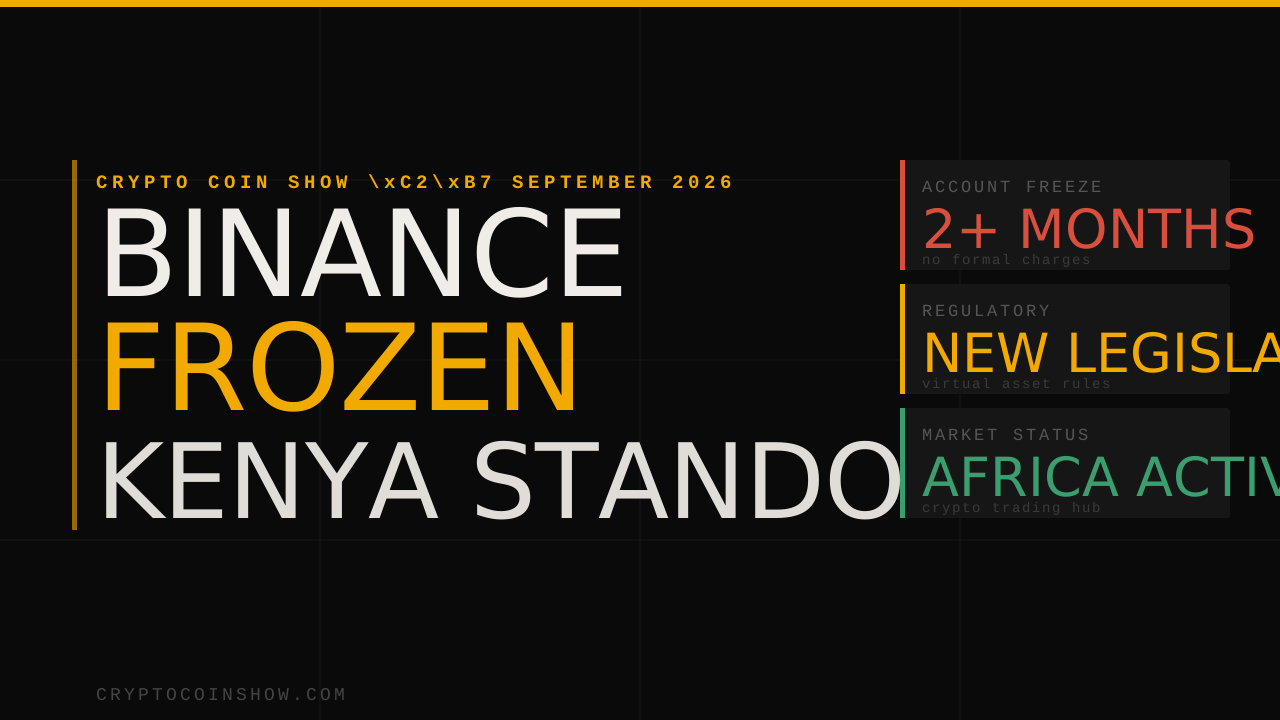
Binance will hold a public forum next week with Kenya’s AML Association to address account freezes that have locked traders out of funds for over two months without formal charges or court orders. The move comes as Kenyan regulators tighten crypto oversight under new virtual asset legislation, creating friction between exchange compliance obligations and user rights in one of Africa’s most active crypto markets.
- Binance accounts frozen for over two months at Kenyan law enforcement request with no formal charges or court timeline provided to affected users
- Exchange scheduled live X Spaces session next week with AML Association of Kenya to address compliance concerns and clarify account restrictions
- Kenya’s new Virtual Assets Service Provider Act and updated anti-money laundering rules classify crypto platforms as reporting entities, heightening regulatory pressure
- 2+ months Duration of account freezes without charges, court order, or resolution timeline for Kenyan traders
- #BinanceUnmasked Boycott hashtag gaining momentum as public frustration grows over account access restrictions
- 2026 Year Kenya’s Virtual Assets Service Provider Act takes effect, establishing new compliance framework for crypto platforms
Binance faces a watershed moment in Kenya as the world’s largest cryptocurrency exchange attempts to repair relations with frustrated traders whose accounts have been frozen at the request of local law enforcement for more than two months.
The company announced it will host a live public discussion on X Spaces next week in partnership with the AML Association of Kenya, signaling both an acknowledgment of the crisis and an effort to rebuild trust in a market where millions use the platform for transactions, remittances, and savings.
The account freezes, reportedly initiated by the Directorate of Criminal Investigations (DCI), have proceeded without formal criminal charges, court orders, or any stated timeline for resolution, according to affected traders.
One trader documented the frustration bluntly: no complainant identified, no formal charges filed, no timetable given, yet funds remain inaccessible while bills accumulate and debt grows. The lack of transparency has fueled a growing boycott movement online under the hashtag #BinanceUnmasked, signaling deep erosion of user confidence in both the exchange and its cooperation with authorities.
Binance’s Compliance Defense Collides With User Rights in Kenya
Binance has defended its actions by stating it operates in compliance with directives from local law enforcement agencies and existing regulations.
The exchange’s position reflects a broader institutional tension: platforms are legally obligated to cooperate with governmental requests, yet such cooperation can leave users without recourse or clarity when accounts are restricted without judicial process.
This friction is not unique to Kenya, but the scale and visibility of the freezes have amplified public anger in a market where crypto adoption runs deep and institutional trust is already fragile.
Kenya ranks among Africa’s most dynamic and active cryptocurrency markets, with millions of users relying on platforms like Binance to conduct cross-border transfers, remit money, and store value outside traditional banking systems.
The current account freezes represent a collision between law enforcement authority and individual financial access, a test case for how platforms navigate compliance obligations versus customer rights in emerging markets with evolving regulatory frameworks.
Binance’s decision to hold a public session suggests the company recognizes that legal compliance alone is insufficient to maintain market credibility when users feel frozen out without due process.
Kenya’s New Virtual Assets Law Tightens Oversight on Crypto Platforms
The account freeze crisis is unfolding against the backdrop of Kenya’s 2025 Virtual Assets Service Provider Act and recent amendments to the Proceeds of Crime and Anti-Money Laundering Act, both of which classify cryptocurrency platforms as official reporting entities subject to stricter supervision.
These regulatory changes formalize Kenya’s shift toward treating crypto exchanges as systemically important financial infrastructure, elevating compliance expectations and enforcement authority.
The National Treasury has confirmed receipt of submissions from all interested parties regarding the Draft VASP Regulations 2026, indicating the regulatory framework is moving toward finalization and formal implementation.
This regulatory tightening explains why Binance is cooperating with law enforcement requests, the exchange faces legal consequences if it fails to comply with directives from authorities empowered under the new framework.
However, the regulatory modernization also exposes a gap: Kenya’s new laws establish reporting obligations for platforms but contain little protective language regarding user notification, judicial oversight, or procedural safeguards when accounts are frozen.
The account freezes thus highlight not just tensions between Binance and its users, but structural gaps in Kenya’s emerging crypto regulatory architecture.
Public Forum Next Week Will Test Binance’s Ability to Restore Market Trust
Binance’s scheduled X Spaces session with the AML Association of Kenya represents a rare moment of direct institutional dialogue on the account freeze controversy. The forum will give the exchange an opportunity to provide details about which accounts were frozen, on what grounds, and what criteria users must meet to regain access.
It also gives Kenyan traders and civil society observers a platform to challenge both the exchange and compliance authorities on whether freezes can occur without judicial oversight.
The comments on social media reflecting on Binance’s announcement have been overwhelmingly negative, indicating that announcement of a forum is not itself sufficient to restore confidence.
What matters now is the substance of what Binance and the AML Association disclose about the legal basis for the freezes, the timeline for resolution, and any reforms to the process that protect user rights while maintaining law enforcement cooperation. The session will also signal whether Binance intends to advocate for stronger procedural protections in the pending VASP Regulations 2026.
The next week’s X Spaces forum will be critical in determining whether Binance can stabilize its position in Kenya’s market or faces accelerating user migration to competitors.
The real test will come in whether the discussion produces concrete commitments: a transparent process for future account freezes, judicial review requirements, user notification timelines, or formal input into the Draft VASP Regulations 2026 to address procedural safeguards that the current legal framework lacks.
Kenya’s Regulatory Framework Shift: Why Binance’s Compliance Headaches Are Structural, Not Temporary
The freeze orders targeting Binance users are not isolated enforcement actions but rather the opening moves under Kenya’s newly enacted Virtual Assets Service Provider Act, which classifies cryptocurrency exchanges as mandatory reporting entities subject to the same anti-money laundering (AML) and know-your-customer (KYC) standards as banks.
The law, which takes full effect in 2026, represents a fundamental recalibration of how Africa’s largest economy treats digital asset platforms, moving them from the regulatory gray zone into formal financial supervision.
Kenya’s Financial Reporting Centre (FRC) and the Central Bank of Kenya have signaled they intend to use these new powers aggressively. In the past 18 months, Kenya has conducted three major crypto exchange audits and issued compliance orders to at least five platforms operating without proper licensing, according to filings reviewed by blockchain compliance firms.
Binance’s current freeze orders reflect pressure from the DCI working in coordination with the FRC, suggesting that law enforcement and financial regulators are now sharing intelligence on crypto transaction patterns in ways they did not before the legislation passed.
The critical question for Binance and other exchanges is whether next week’s forum will produce a formal protocol, agreed in writing with the AML Association and tacitly endorsed by regulators, that establishes a minimum timeline for freeze decisions and requires either charges or account unfreezing within a specified period, or whether the session amounts to public relations without binding commitments.