
Admiral Samuel Paparo, Jr., who leads U.S. forces across the Indo-Pacific, told a Senate panel that Bitcoin matters to national security.
“Bitcoin is a reality,” he said. “It is a valuable computer science tool as a power projection. And outside of the economic formulation of it, it has got really important computer science applications for cybersecurity.”
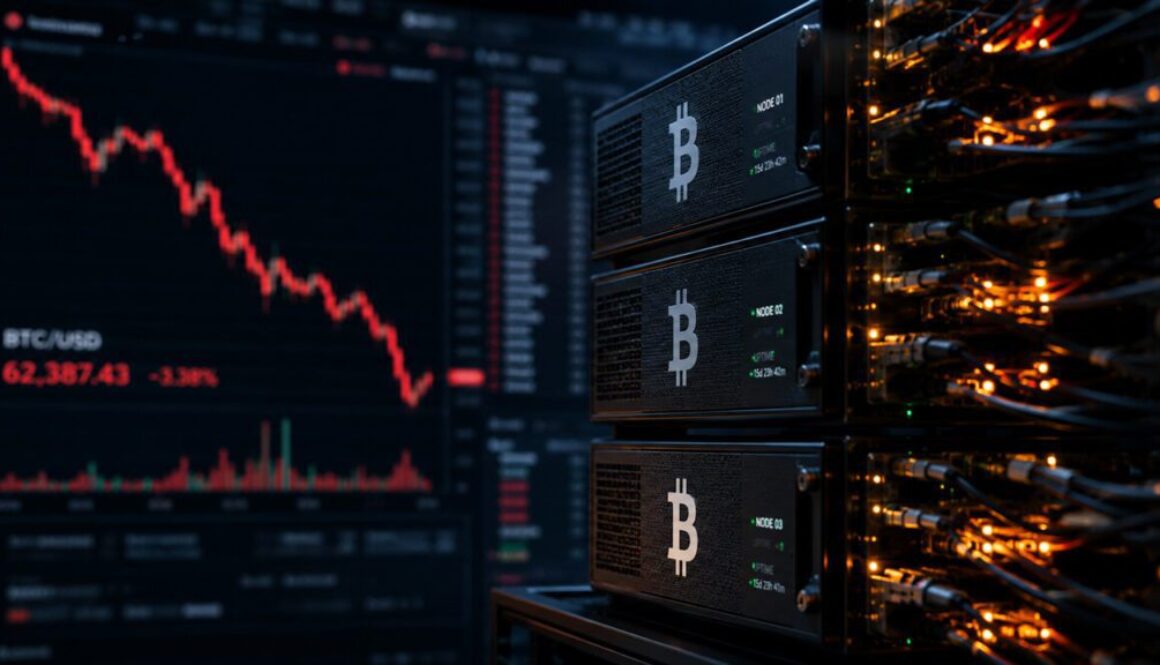
The next day, at a House hearing, Paparo confirmed that the Pentagon is running its own Bitcoin node and carrying out “a number of operational tests to secure and protect networks using the Bitcoin protocol.” It was the first time the military had publicly said so.
The admission did not come in a vacuum. Iran is now taking Bitcoin as payment for ships passing through the Strait of Hormuz. Taiwan is weighing it as a reserve asset in case China moves against its finances.
Russia said last week it will accept Bitcoin for international trade starting in July. What was once a fringe digital currency is increasingly being treated as a tool of statecraft.
China stockpiles Bitcoin while banning it at home
China’s position is the most complicated. Beijing banned Bitcoin and all crypto activity in 2021, citing environmental damage, fraud risks, and illegal money flows. Yet China already holds the second-largest government Bitcoin stockpile in the world.
In May 2025, the International Monetary Institute, China’s top financial think tank, translated and shared a report by former White House economist Matthew Ferranti arguing that Bitcoin could help central banks guard against inflation, sanctions, and financial crises. The institute passed it to Communist Party policymakers with a note saying Bitcoin’s rise as a reserve asset “deserves continued attention.”
The clearest sign of China’s real intentions is a legal fight with Washington. According to Cryptopolitan’s report, the U.S. Department of Justice seized 127,000 Bitcoin, worth roughly $15 billion, from Chen Zhi, a Chinese billionaire accused of running fraud operations across Southeast Asia that drained hundreds of American victims.
Before U.S. authorities could detain him, Chinese officials pulled Chen back to China in January, filing their own charges against the 38-year-old. China has no extradition deal with the United States.
Beijing then accused Washington of stealing the Bitcoin through a hack as far back as 2020, claiming U.S. agents broke into Chen’s mining operation, LuBian, and later dressed it up as a law enforcement seizure.
The stakes are straightforward: if China recovers Chen’s holdings, it would control roughly 321,000 Bitcoin, well ahead of the United States at 198,000.
America’s mining strength runs on Chinese hardware
Two Republicans are pushing to cut China’s advantage on the mining end.
In March, a bill, Mined in America, was introduced by Senators Bill Cassidy of Louisiana and Cynthia Lummis of Wyoming. It addresses the 97% of China’s hardware used in 38% of the US global Bitcoin mining activity. About 82% of the global production that specialized chip miners depend on is controlled by Bitmain. Dennis Porter of the Satoshi Action Fund called this “a liability”.
The bill bans certified miners from buying any new China-made hardware from next year. By 2030, the miners are required to fully transition from the existing hardware.
The bill would create a voluntary certification program through the Department of Commerce. Certified miners can no longer buy new Chinese hardware after January 1, 2027, and would need to completely stop the use of any such hardware by 2030.
It also locks in President Trump’s March 2025 executive order creating a Strategic Bitcoin Reserve and lets certified miners sell freshly mined Bitcoin to the Treasury at a tax advantage. “Digital asset mining is a big part of our economy. We should be doing it here in America,” said Senator Cassidy.
In China, the crypto rules have become stricter. Now it’s illegal to even promote crypto online on any platform. The rule will take effect on September 30th.
Congressman William Timmons put the broader contest simply: “If you can’t control your citizenry as it relates to information and money, what do you have left?” The country banning Bitcoin for its people is racing to stockpile it for itself.
Don’t just read crypto news. Understand it. Subscribe to our newsletter. It’s free.
The cryptocurrency industry has been suppressed by a bear market over the past several months, with numerous leading digital assets, including Bitcoin (BTC), slipping far below their 2025 record highs.
And while some have panicked, others view the current conditions as perfect for increasing their exposure at lower prices before the next bull run begins. It remains uncertain which cryptocurrencies will be the biggest winners when the market starts booming again, but we poked the AI brains of some of the most popular chatbots to check their opinion on the matter.
ETH and Which Ones?
ChatGPT’s top pick is Ethereum, describing the project as the backbone of DeFi, NFTs, and RWAs and claiming that institutional money will flow there.
“Ethereum will explode next cycle because it’s booming the default layer for institutional capital, especially as ETFs evolve and potentially include staking, turning ETH into a yield-generating asset,” it stated.
Moreover, the chatbot noted that, unlike many cryptocurrencies, Ethereum has real demand drivers and doesn’t rely entirely on hype and speculation.
ChatGPT’s second top candidate is Solana (SOL), predicting that its price may skyrocket during the next bull run because it has become “the go-to chain for retail activity, combining speed, low fees, and a smooth user experience that attracts massive liquidity.” It added that the project has become the center of meme coin and high-frequency trading, which tends to drive explosive price moves during peak hype phases.
The chatbot placed Bittensor (TAO) in third place, saying “it sits at the intersection of AI and crypto, the strongest emerging narrative in global markets.” It estimated that this unique positioning gives the asset the opportunity to chart impressive gains when the conditions improve.
What Else?
Google’s Gemini generated a very similar answer to ChatGPT. It named SOL as its best candidate, placed TAO in second position, and rounded up the top 3 with Ondo Finance (ONDO).
“Ondo is the primary bridge for tokenizing Wall Street, allowing trillions in traditional assets like US Treasuries to move onto the blockchain with full regulatory compliance. As institutional giants like BlackRock deepen their on-chain presence in 2026, Ondo captures the lion’s share of this massive capital inflow,” it claimed.
We also sought Perplexity’s take on the matter. The chatbot agreed with ChatGPT that ETH and SOL have the most upside potential, naming Chainlink (LINK) as its third-best candidate.
“LINK could pump because it’s the main oracle for crypto, so more DeFi and tokenization activity can mean more demand for LINK. It also has strong adoption signals, which makes it look like infrastructure, not just a trade,” it concluded.
Admiral Samuel Paparo, commander of US Indo-Pacific Command, told the Senate Armed Services Committee that his command is running a Bitcoin (BTC) node and conducting operational tests with the protocol.
The April 21 testimony marked the first time a sitting US combatant commander publicly framed Bitcoin as a national security asset during congressional proceedings.
Bitcoin as a ‘Power Projection’ Tool
Responding to questions from Senator Tommy Tuberville (R-AL), Paparo described Bitcoin as “a peer-to-peer, zero-trust transfer of value” and said that anything supporting all instruments of national power “is to the good.”
He characterized the research as focused on computer science rather than monetary policy.
Proof-of-work, he said, “has got really important computer science applications for cybersecurity,” including protecting data and raising the real-world cost for adversaries conducting cyber operations.
“We have a node on the Bitcoin network right now. We’re doing a number of operational tests to secure and protect networks using the Bitcoin protocol,” he said.
The admiral offered to provide classified details on the tests if requested.
Meanwhile, Major Jason Lowery’s “Softwar” thesis previously proposed proof-of-work as a form of cyber power projection.
Tuberville framed the exchange around competition with China, noting that Beijing’s top monetary think tank has published its own strategic Bitcoin research.
INDOPACOM oversees approximately 380,000 personnel across the Asia-Pacific theater, the primary front for US-China strategic competition.
No official follow-up from the Department of Defense has clarified the scope of the tests as of April 22.
This week the crypto market got hit from every direction at once and held.
The Strait of Hormuz, through which roughly 20% of the world’s oil flows, flickered open and closed like a light switch over the weekend. Iran opened it Friday, Trump said the blockade stays, Iran closed it Saturday and ships came under fire. Every headline moved Bitcoin. It opened Monday down 2.5%, bounced back toward $75,000 by mid-morning as institutional buyers stepped in, and that has been the pattern all month: macro shock, dip, institutional buy. BlackRock’s IBIT alone pulled $284M in a single day on April 17. The floor is real. But BTC has failed six times to hold above $76K and the Iran ceasefire clock is still ticking. That weekly close above $76K is the signal I’m watching.
On the DeFi side, KelpDAO got exploited on Tuesday. Attackers found a flaw in the way it verified prices before processing large withdrawals and drained $293 million in 46 minutes. The ripple effect hit Aave, essentially a DeFi lending bank, which was left with $196 million in loans it may not fully recover. If you hold, lend, or earn yield on any cross-chain protocol, the full breakdown is worth reading.
Vercel confirmed a breach on April 19. It’s the platform that hosts the frontend of a huge slice of the Web3 ecosystem, the actual websites you interact with when you use a dApp. Compromised via a supply-chain attack through a third-party AI tool. If you connected a wallet to any Web3 dApp this past week, revoke any approvals you don’t recognize. Full CCS breakdown here.
For all the noise, the market didn’t break. Strategy bought 34,164 BTC for $2.55 billion this week. BitMine bought 101,627 ETH for $235 million. Institutions aren’t waiting for the all-clear signal. They’re buying the chaos.
XYO just went 2-5x faster and most people haven’t noticed yet.
Throughput jump. Dual DataLake SDK. Validator stability. All shipped at once.
Arie Trouw, Co-Founder, CEO, and CTO of XYO, breaks down exactly what changed, what was causing the bottleneck before, and why verifiable data provenance is quietly becoming one of the most important infrastructure layers as AI moves into the physical world.
BTC is still trading below its 100-day and 200-day moving averages and has failed six times to hold above $76K. Total spot ETF inflows now exceed $56 billion — that’s what keeps putting a floor under every dip.
Cautiously Bullish
The structure holds as long as $75K holds. A weekly close above $76K opens the path to $85K–$90K. A breakdown here puts $70K–$72K back in play. The macro overhang from Iran is the single biggest variable on the board right now.
What I’m watching: A confirmed daily close above $76,500 with above-average volume. Without it, every rally is a wick until proven otherwise.
ETH opened down 3.7% on the week and is in recovery mode. Bitcoin is leading and ETH is following, which is the healthy version of this setup. The Vercel breach and KelpDAO hack are headwinds for sentiment, not for the price structure itself.
Bullish — Patient
The next level to watch is $2,701, which is the major resistance before $3,519 comes back into view. ETH outperforming BTC on a percentage basis is the signal I want to see before getting more aggressive.
Vercel confirmed a breach via supply-chain attack through a third-party AI tool, exposing API keys and tokens across Web3 frontends. Solana DEX Orca rotated all credentials immediately. If you connected a wallet to any dApp this week, revoke approvals you don’t recognize. Full CCS breakdown
X’s cashtag trading pilot for stocks and crypto generated an estimated $1 billion in volume in its first week
$400 million in crypto shorts were liquidated in a single 4-hour window during the Hormuz chaos
Michael Saylor says it is “impossible to blockade Bitcoin”
$RAVE collapsed 98% in two days, erasing $6.7 billion in market cap following alleged insider manipulation
India is settling Iranian oil payments in Chinese yuan, a notable de-dollarization signal
Qastle Wallet Premium subscribers can claim a free Bitcoin 2026 Pro Pass worth $1,299. Bitcoin 2026 is April 27–29 at The Venetian, Las Vegas. Claim here
Final Word
The ceasefire between the US and Iran expires this week. That single variable has more power over Bitcoin’s price right now than any on-chain metric. If talks break down, expect another dip and another institutional buy. If a deal gets done, $76K becomes the story fast.
Watch the daily close. That’s where this week gets decided.
Ashton Addison
CEO, Crypto Coin Show
What’s moving your thinking more right now — the Iran ceasefire or the DeFi security story?
Users paid $9.7 billion in on-chain fees in the first half of 2025, up 41% year over year and the second-highest total on record.
1kx projects more than $32 billion in on-chain fees for 2026, driven by accelerating application growth. That growth has pushed the word “revenue” into every crypto investor pitch deck, every sector report, and every valuation conversation.
The report added that a Bitcoin drawdown may stress-test protocol fees.
1kx’s April sector analysis finds that nearly every crypto fee category shows a positive correlation with BTC price. There is also wide dispersion across sectors, and the critical variable of downside beta is still unresolved.
The firm says a 0.6 correlation can mean very different things depending on whether sector fees fall at 0.8x Bitcoin’s pace or at 1.5x, and it identifies the decomposed upside versus downside fee sensitivity.
In crypto, a fee line can look like a business in an up market and still trade like amplified BTC beta when macro fear arrives.
A horizontal bar chart ranks crypto fee sectors by BTC correlation, with liquid staking at 0.75 and DePIN at 0.05, the lowest reading shown.
The reflexive fee cluster
The sectors 1kx identifies as most correlated with Bitcoin price share a common economic architecture that improves when prices rise and deteriorates when they fall, often faster than the underlying asset itself.
Liquid staking and restaking sit at the top of that cluster, with their fee streams depending on yields that expand as borrowed capital and risk appetite grow and contract as they retreat.
Vault curators face the same pull, as assets flow in when price momentum is positive and out when sentiment reverses. Launchpads are the most acutely sentiment-driven category in the report, with launch activity accelerating in directional bull markets and stalling when confidence cracks.
Automation and DeFAI protocols, which earn fees tied to transaction activity and strategy deployment, also track the same directional pulse.
1kx says that layer-1 (L1) blockchains’ fee correlation to BTC varies widely, with many inheriting market direction through native token price movements and activity mix, while others show more independence depending on their application base.
That variability makes the directional pull of token prices on on-chain activity mean most L1s still carry meaningful BTC sensitivity in their fee lines.
Reflexivity connects these categories, as their fees are largely an output of the same speculative, position-driven activity that drives Bitcoin itself.
When investors talk about fee growth in these sectors during an up market, they are partly describing business momentum and partly describing the same macro tailwind that lifted every risk asset in the portfolio.
The delivered-services layer
DePIN stands apart in 1kx’s framework as the lowest-correlation category, earning the distinction as the standout for non-directional crypto revenue exposure.
The reason is that DePIN fees track the dollar value of compute, bandwidth, storage, and other delivered services. Demand for those services comes from users with real operational needs, and while token prices affect incentive structures, they do not directly set the fee rate, as asset prices do for yield or launch activity.
1kx projects DePIN fees above $450 million in 2026, sustaining triple-digit growth.
Stablecoin issuers and real-world asset protocols sit in a similar lower-correlation band, with 1kx estimating their BTC correlation at roughly 0.2. Their fee economics depend more on issuance volume, reserve management, and AUM than on speculative trading alone.
A lower correlation indicates a fee structure less tied to BTC price direction. 1kx’s framework supports “more differentiated revenue exposure” and stops well short of claiming immunity to a selloff.
The more precise claim is that DePIN and issuance-linked businesses have a better structural case for defending their fee lines during a BTC-specific drawdown.
Sector group
Main fee driver
Behavior in an up market
Likely stress in a drawdown
Article takeaway
Liquid staking / restaking
Yield, leverage, risk appetite
Fees expand quickly
Yields compress, activity fades
Most reflexive
Vault curators
AUM, momentum, inflows
AUM rises with price
Outflows can hit faster than BTC
High downside sensitivity risk
Launchpads
Sentiment, launch activity
Strong in bull phases
Launch volume can stall fast
Highly cyclical
Automation / DeFAI
Strategy deployment, transaction activity
Benefits from active markets
Usage may fall with risk appetite
Directional fee exposure
DePIN
Compute, bandwidth, storage demand
Growth tied to service usage
More insulated from BTC-specific shocks
Most differentiated
Stablecoin / RWA
Issuance, reserves, AUM
More gradual growth
Less directly tied to BTC moves
Lower-correlation fee exposure
DEX / Lending / Perps
Volume, rates, volatility, leverage
Can benefit from activity
Mixed; volatility helps, unwinds hurt
Contested middle ground
Decentralized exchanges (DEXs), lending protocols, and perpetuals platforms occupy a contested middle ground. 1kx puts DEX median correlation at roughly 0.33 and lending at around 0.3, while derivatives show wide variation, sometimes exceeding 0.4.
Volatility can support trading volume even in down markets, providing these sectors with a partial buffer. Still, fee-rate compression and position unwinds during stress episodes make their revenue lines unstable in ways that simple average correlation fails to capture.
Why valuation is the real payoff
1kx’s broader revenue report shows that price-to-fee ratios across crypto sectors span several orders of magnitude. Blockchains had a median P/F ratio of 3,902x in the third quarter of 2025, with L1s at around 7,300x, compared with 17x for DeFi and finance.
DePIN’s median P/F ratio had fallen to 211x from roughly 1,000x a year earlier. Blockchain valuations still account for more than 90% of the analyzed fee-generating market cap, even though DeFi and finance produce most of the fees.
1kx also says fee changes lead valuations in DeFi and finance, and to a lesser extent in blockchains.
If that directional relationship holds on the downside, with fees dropping first and multiples compressing in the weeks that follow the initial price move, then a BTC drawdown that exposes fee fragility in high-correlation sectors could trigger a second-order valuation adjustment.
Investors who had assigned business-quality valuations to beta-exposed fee streams would face a rapid repricing.
In that environment, fee lines across most sectors would continue to expand, and the downside beta would remain theoretical. 1kx projects application-led fee growth accelerating into 2026, with DeFi and finance expanding above 50% year over year.
The risk in that scenario is that the market continues to treat cyclically strong fee growth as evidence of durable business quality. Launchpad activity stays elevated in a buoyant market, restaking yields look robust when risk appetite is healthy, and vault curators report strong AUM figures.
The audit gets postponed, and capital keeps flowing into sectors whose fee quality has never been tested under real stress. The environment of falling oil, easing inflation fears, and revived Fed-cut bets is exactly the kind of environment where that postponement extends.
February repeats at scale
On Feb. 5, Bitcoin fell 14.1% to an intraday low of $62,254.50 in a single session as risk sentiment weakened, tech stocks sold off, and ETF outflows accelerated.
The crypto market shed roughly $2 trillion from its October peak during that episode. Launchpad activity cooled, borrowed-capital positions unwound, and restaking yields compressed.
Fee lines that had looked impressive through the end of 2025 showed their directional dependence within a matter of weeks.
A repeat of that pattern would move the downside-beta question from 1kx’s stated next step to a live market event.
Sectors with reflexive fee structures would face the hardest examination, with the market looking for launchpads seeing launch volume decline, restaking yields compressing as borrowed capital exits, and vault curators watching AUM decline faster than token prices.
DePIN and issuance-linked businesses would still face headwinds, but their relative fee resilience would become legible in the data for the first time.
If fee changes drive valuations in DeFi and finance higher, the same mechanism works in reverse.
A two-path line chart shows a February-style drawdown triggering fee compression and multiple rerating, while the stress-deferred path keeps the valuation audit postponed.
Protocols that report fee compression in the first quarter of the next down cycle give the market a reason to compress their multiples before the full macro picture has even resolved.
Investors who had assigned business-quality valuations to beta-exposed fee streams would face a rapid repricing.
Bitcoin is currently around $78,000, holding near the top of its recent range from the April geopolitical relief rally, exactly the window in which the fee-quality question sits unresolved.
Bitcoin (BTC) dropped below $75,000 on April 19 as the Strait of Hormuz shut down entirely and Iran rejected a second round of negotiations with the United States.
The developments mark a sharp escalation in the US-Iran standoff, with zero oil tankers passing through the strait and diplomatic channels appearing to collapse.
Strait of Hormuz Shuts Down as Diplomacy Stalls
No oil tankers passed through the Strait of Hormuz, effectively closing the waterway that handles roughly 20% of global seaborne oil trade.
“It appears that the Strait of Hormuz is now completely closed for the first time in history. The US “blockade” and Iran’s closure are in full force,” wrote The Kobeissi Letter.
Reportedly, thirteen tankers had already turned back mid-route the day before, freezing shipping flows through the critical chokepoint.
Iran’s state media confirmed that Tehran rejected participating in a second round of talks with Washington. Iranian officials cited what they called “deception” from President Trump, pointing to “inconsistency with what is actually happening” during negotiations.
President Trump accused Iran of firing on ships in the strait in violation of the ceasefire agreement. He threatened to “knock out every single Power Plant, and every single Bridge, in Iran” if Tehran refuses a deal.
General sentiment is that both countries are on the verge of a new round of escalation, with futures markets set to open within hours.
Bitcoin has faced sustained pressure from the US-Iran conflict since February 28. The pioneer crypto previously fell from above $100,000 when Iran first moved to close the strait earlier this year. Amid Sunday’s risk-off sentiment, the king of crypto fell below $75,000 for yet another time.
Bitcoin’s price was halted at its multi-month peak at over $78,000 on Friday, and the subsequent conflicting actions and statements from Iran and the US have led to another retracement to under $75,000 as of press time.
The latest set of blame-throwing came minutes ago, as reports emerged that Iran believes they are “facing deception” from US President Donald Trump due to “inconsistency with what is actually happening.”
Moreover, Iranian officials said they believe the two sides are “on the verge of a new round of escalation,” as reported by The Kobeissi Letter.
However, the US blockade remained in place, and Iran decided to close the Strait just a day later. Trump started to threaten once again, while also saying that both nations’ delegations will meet again in Pakistan for another round of peace talks. In contrast, Iran’s Tasnim news agency said there were no such plans.
Trump then alleged that there’s a “divide” in the Iranian government and threatened to “blow up” the entire country if the two nations fail to reach an agreement.
This rather escalating uncertainty, with just a few days left until the ceasefire deal ends, led to a weekend correction for BTC, as the asset just slipped below $75,000. It’s now down by almost $4,000 since the Friday peak.
However, more volatility is to be expected later this evening when the futures legacy markets open and tomorrow morning, as it has happened in previous instances following major weekend developments.
Bitcoin seems to have finally broken out of weeks of stagnation with an 11% rally, signaling a notable shift in its market momentum. Expectedly, this move has drawn renewed attention from various market participants who may be eager to re-enter the market.
However, an influential on-chain analyst has come out to explain why Bitcoin traders should be cautious during this phase of the cycle. According to the market pundit, the most optimal entry point might actually not be close to current price levels.
MVRV Ratio, Realized Price Reveal Short-Term Strength, But Not Market Top
In a recent Quicktake post on the CryptoQuant platform, on-chain analyst GugaOnchain delved into the reasons why it might not be time to re-enter the Bitcoin market. The pundit began by highlighting changes in the Market Value to Realized Value (MVRV) Ratio, alongside that from the Realized Price metric.
According to GugaOnchain, the MVRV ratio currently sits above its 30-day moving average of 1.2947, indicating that Bitcoin’s recent upward price movement has gained validity. Supporting this trend, the Bitcoin Taker Buy/Sell Ratio on Binance has also shown increased buying aggression, reinforcing the notion that market participants are actively pushing prices higher.
Meanwhile, the bigger macroeconomic picture shows that the market is yet to enter an overheated phase. This is because the current MVRV reading around 1.3856 is significantly lower than the SMA-365 (known as the macro line), which stands at around 1.8620.
Technical Indicators Signal Overextended Bitcoin Market — Correction Next?
From a price action perspective, though, the Bitcoin price might indeed be due for a retracement. According to the market pundit, Bitcoin recently broke out of an ascending channel resistance on the daily timeframe — a move typical of bullish continuations.
However, the Relative Strength Index (RSI) is now showing signs of strain. This is due to recent RSI readings at 67.85, which stands near the overbought region at 70.
As such, the Bitcoin market has higher chances of a pullback in the near-term. The analyst then concluded that it would be best to buy Bitcoin “not at this resistance breakout,” but at the bottom of the retracement instead.
In the scenario where the Bitcoin price pulls back, the crypto expert explained that this would be towards a “channel support” — specifically at levels between $70,000 and $65,000. As of this writing, the price of BTC stands at around $77,014, reflecting a 2.8% jump since the past day.
The S&P 500 and Bitcoin printed new local highs on the same week. Most people will see that and call it a good week. I want you to understand why it’s more than that.
For two years the story was simple: Bitcoin trades like a risk asset. When equities bleed, crypto follows. A lot of portfolios learned that the hard way in 2022 when BTC dropped 65% alongside a 20% equity selloff. This week was the opposite. Synchronized strength — both markets up, same window, no lag.
The buyers who showed up in March during Extreme Fear are sitting on 20% in three weeks. ETF inflows haven’t dried up. Strategy has added over 500,000 BTC to its balance sheet since 2020 and is still buying. Japan has passed financial asset recognition legislation. The US Treasury now briefs crypto firms the same way they brief Goldman Sachs. These aren’t narratives. They’re structural facts building on top of each other.
$78,000 is not the top. It’s the floor of the next range. $80K is the number the whole market is watching, and Bitcoin 2026 in Las Vegas starts in ten days. Pay attention.
$78KBTC new local high
7,126S&P 500 all-time high
+20%BTC from March lows
10Days to Bitcoin 2026 LV
This Week’s Featured Video
HiGlobeFeatured Interview
Zero fees. Instant dollars. 6 countries. 1.4 billion people.
The global south moves trillions of dollars a year in remittances. Most of it still costs 5 to 6% and takes days to arrive. HiGlobe is built to fix that — operating across 6 countries with zero-fee, instant dollar transfers that reach recipients in under 60 seconds. India is the latest and largest market to come online, adding 1.4 billion people to a platform that already serves over 3 million users. This isn’t a crypto experiment. It’s a financial utility that works right now, in places where the cost of sending money has been a tax on working people for decades.
Bitcoin has broken $78,000 and is holding above it. Today’s high touched $78,333 before pulling back slightly, with price now consolidating above $77,000.
The daily is bullish across every shorter timeframe. RSI sits at 67.9, elevated but not yet overextended. On the weekly chart, MACD has flipped bullish for the first time since September 2025. That is the higher timeframe signal that matters most this week. One caveat: the weekly candle is still reading bearish on the dashboard. All shorter timeframes are bullish. That split tells you the daily trend is recovering while the weekly has not yet confirmed. A strong weekly close fixes that.
My bias: BULLISH, accelerating. Bitcoin is testing a descending trendline for the second time this year. A confirmed daily close above $78,500 with above-average volume breaks that trendline and opens the path to $80,000 and $82,000 before Bitcoin 2026 Las Vegas. If we see a rejection back below $76,000, I will reassess. The structure does not suggest that is the likely outcome.
What I’m watching: That daily close above $78,500. Volume is the confirmation signal. Without it, the move is a wick until proven otherwise. Let the market do the work. Don’t fight the structure.
ETH is trading at $2,427, up 3.37% on the day. Bitcoin is leading this move and ETH is following, which is the healthy version of this setup.
RSI sits at 65.2, neutral with room to expand. Smart Money is balanced. No distribution signals on the 4H. Like Bitcoin, the weekly is still reading bearish while all shorter timeframes are bullish. The key Fibonacci level to watch is the 0.618 retracement at $2,701. That is the next meaningful resistance. A clean daily close above it opens the path toward the 0.382 at $3,519.
My bias: BULLISH, patient setup. ETH needs that close above $2,701 to become the louder story this week. Until then, Bitcoin is the focus and ETH is the opportunity building quietly underneath.
What I’m watching: ETH beginning to outperform BTC on a percentage basis. That is the signal altcoin season is approaching. Historically when Bitcoin leads, alts follow with higher beta. If BMNR continues accumulation toward their stated 5% ETH supply target, the structural demand side of this market has a very different floor than most people are pricing in.
The Original DePIN Protocol, Now with Its Own Layer One. 10M+ nodes. A decade of proof-of-work. XYO’s Layer One is built for high-volume data, AI infrastructure, and real-world asset tokenization, with dual tokens $XYO and $XL1.
The biggest stories this week, filtered for signal. CCS coverage linked where relevant.
⭐⭐⭐
Bitcoin broke $78,000 as the S&P 500 closed at a new all-time high of 7,126 on the same day. Three consecutive all-time highs on the S&P this week (7,022 → 7,050 → 7,126) alongside Bitcoin’s move is the synchronized strength story of the year. This is what institutional co-movement looks like.
⭐⭐⭐
Charles Schwab announces spot Bitcoin and Ethereum trading for retail clients, launching in the coming weeks. Schwab manages $12 trillion in client assets. This is the largest traditional brokerage to offer direct crypto trading and puts BTC and ETH on the same screen as stocks for millions of everyday investors.
⭐⭐⭐
Goldman Sachs files for a Bitcoin Premium Income ETF. The $3.5 trillion bank is moving beyond its existing Bitcoin ETF exposure into yield-generating BTC products. Institutional product development is accelerating.
Kraken confidentially files for a US IPO. The second-largest US crypto exchange going public is a legitimacy milestone for the industry and a signal of how much the regulatory environment has shifted in 12 months.
SEC officially ends the Pattern Day Trader rule, eliminating the $25,000 minimum for day trading. A decades-old barrier to retail participation in active markets is gone. This expands the addressable market for crypto and equities trading platforms simultaneously.
Morgan Stanley says tokenization is the next major step for its $2 trillion business. When the world’s largest wealth manager says this publicly, it’s not a trend piece. It’s a product roadmap announcement.
X’s cashtag trading pilot for stocks and crypto generated an estimated $1 billion in volume in its first week. The social-to-trade pipeline is real and moving faster than most people expected.
Iran reopens the Strait of Hormuz. Bitcoin crossed $77K within hours of the announcement as oil prices crashed 13%, traders rotating out of commodity hedges.
Tesla adds $100 billion in market cap in a single day. Up 7%, reflecting broader risk-on sentiment across the week.
SEC issues guidance that certain crypto interfaces supporting self-custodial wallet transactions may not require broker-dealer registration. A meaningful step toward clearer regulatory boundaries for DeFi and wallet infrastructure.
Bitcoin 2026 · April 27–29 · The Venetian Resort, Las Vegas · Ten days away.
Not because it’s speculative. Because it’s been institutionalized.
This isn’t the asset that bleeds when the S&P sneezes anymore. This week proved it. When both markets print new local highs in the same window, that’s capital allocation behaving normally around a mature asset class. The speculation phase built the infrastructure. The infrastructure attracted the institutions. The institutions are now here.
$80K is the next number. I’ll be on the floor at The Venetian in ten days. If you’re going to be there, hit reply. I’d like to know.
Ashton Addison · CEO, Crypto Coin Show
Get CCS Insider every week
Markets, interviews, and signal — free in your inbox.
Russian bankers are now urging their government to soften upcoming crypto rules and admit more coins to the country’s market for digital assets.
Their call comes after lawmakers warned against the overly strict framework currently under review, suggesting regulation in line with global standards.
Russian banks push for liberal cryptocurrency law
The Association of Russian Banks (ARB) has come up with ideas on how to “liberalize” the pending bill “On Digital Currency and Digital Rights.”
The draft law is part of a legislative package meant to comprehensively regulate crypto operations in Russia which is under consideration in the State Duma.
It legalizes cryptocurrencies and platforms working with them but imposes restrictions and penalties threatening to cut off Russia from the global market.
The proposals have been sent to the Chairman of the Financial Markets Committee at the lower house of Russian parliament, Anatoly Aksakov, local media unveiled.
According to reports by RBC and Bits.media, the ARB lobbies for allowing transfers to non-custodial wallets abroad and whitelisting foreign crypto platforms.
Such transactions would be illegal under the current version of the law, which permits only sending coins to custodial wallets and via licensed domestic intermediaries.
The banks, which will be authorized to work with decentralized money, want to be able to exchange cryptocurrencies for Russian digital financial assets such as tokenized securities.
They also suggest regulating stablecoins pegged to fiat currencies or backed by other assets, which are not mentioned in the legislation right now.
Russian bankers are also pushing the country’s monetary authority to relax the standards for cryptocurrencies approved for trading in the country.
The bill admits only the largest coins by capitalization and liquidity to the Russian market, such as Bitcoin, Ethereum, and Solana, as reported by Cryptopolitan.
The ARB further proposes ditching a requirement for digital depositories to disclose information about clients and their crypto holdings.
It also insists on extending judicial protection to cover crypto assets, including those that have not been disclosed to Russia’s tax authority.
Amendments can be made until the second reading of the bill, which was filed in the Duma earlier in April but has yet to hit the floor of the chamber.
Lawmakers call for easing crypto regulations
Meanwhile, the draft law was recently reviewed by the parliamentary Committee for Protection of Competition, and its members were also unhappy with its “excessive rigidity.”
The Russian deputies called for easing the rules for members of the industry, warning they would otherwise lead to monopolization of the market.
“Excessively stringent regulation compared to global regulatory practices may not achieve the bill’s goals,” the legislators remarked in their conclusion.
One of them is to bring the sector out of the shadows, but many Russians may opt to remain under the radar if the framework is adopted as is. The members of the Duma wrote:
“Instead of creating an effective and sustainable digital currency market in the Russian Federation, this could trigger an outflow of retail investors, who will be forced to choose between foreign platforms with more lenient regulations or remain in the gray zone of the domestic market, unwilling to use monopolists’ services under unfavorable terms.”
The other stated goals include introducing requirements for entities processing crypto transactions, such as exchanges and custodians.
Increasing market transparency and developing standards for provided services and investor protection are among the announced priorities, too.
The committee emphasized it has no objections to the need to achieve all this, but made it clear it’s concerned about other aspects of the legislation.
For example, it criticized the strict licensing requirements for crypto companies, including regarding capital, cybersecurity, and corporate transparency.
These will banish small and medium-sized participants from the market, leaving only large players like banks, depositories, and other financial institutions.
Under the currently proposed rules, only the latter will be able to gain full access to cryptocurrency transactions, which would allow them to monopolize the market.
This level of “centralization often leads to the disappearance of innovative startups and creates the risk of high fees,” the lawmakers warned.
They also fear “reduced quality of services and a lack of incentives for the development of new technological solutions.”
The “Digital Currency” bill must be adopted by July 1, 2026. Other acts, introducing fines and penalties for breaking the law, will be enforced a year later.