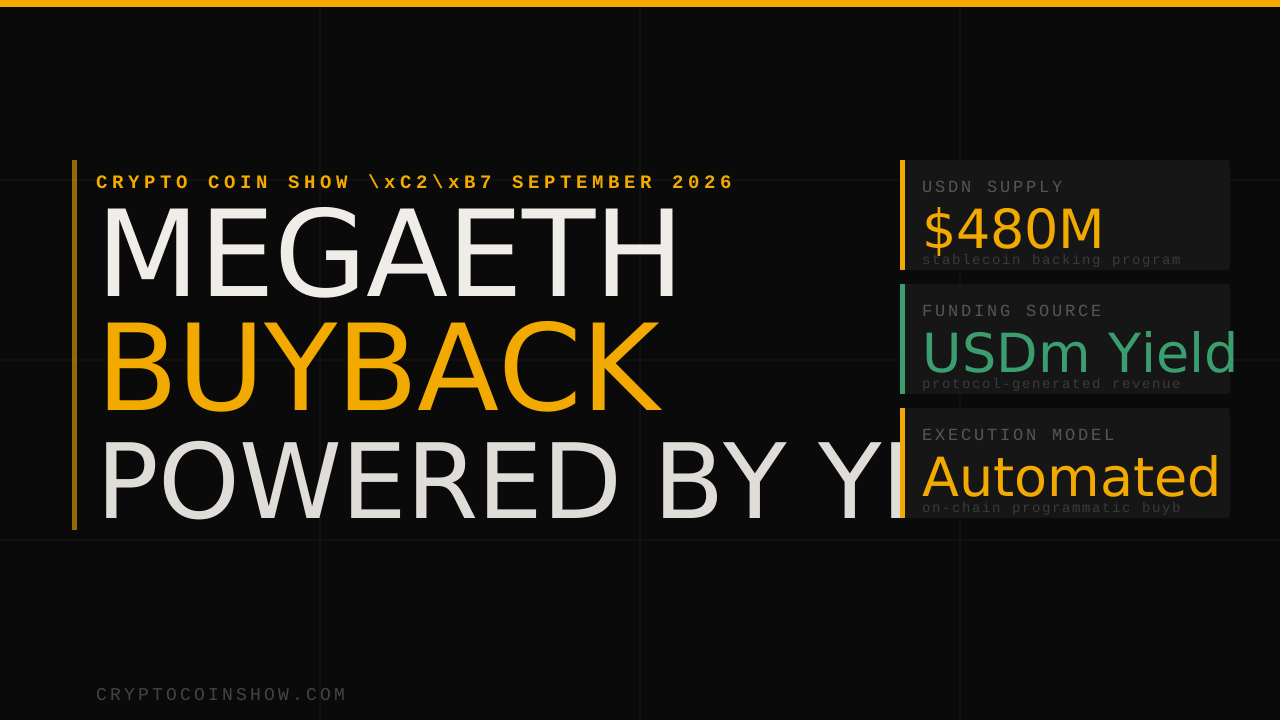
Token buybacks keep growing, but the price floor keeps failing
Major crypto protocols are burning record quantities of tokens through revenue-sharing buyback programs, yet this supply destruction has failed to establish reliable price floors or prevent significant drawdowns. For institutional investors, the disconnect between rising protocol cash flows and token valuations suggests the market has yet to develop a stable pricing mechanism tied to revenue fundamentals.
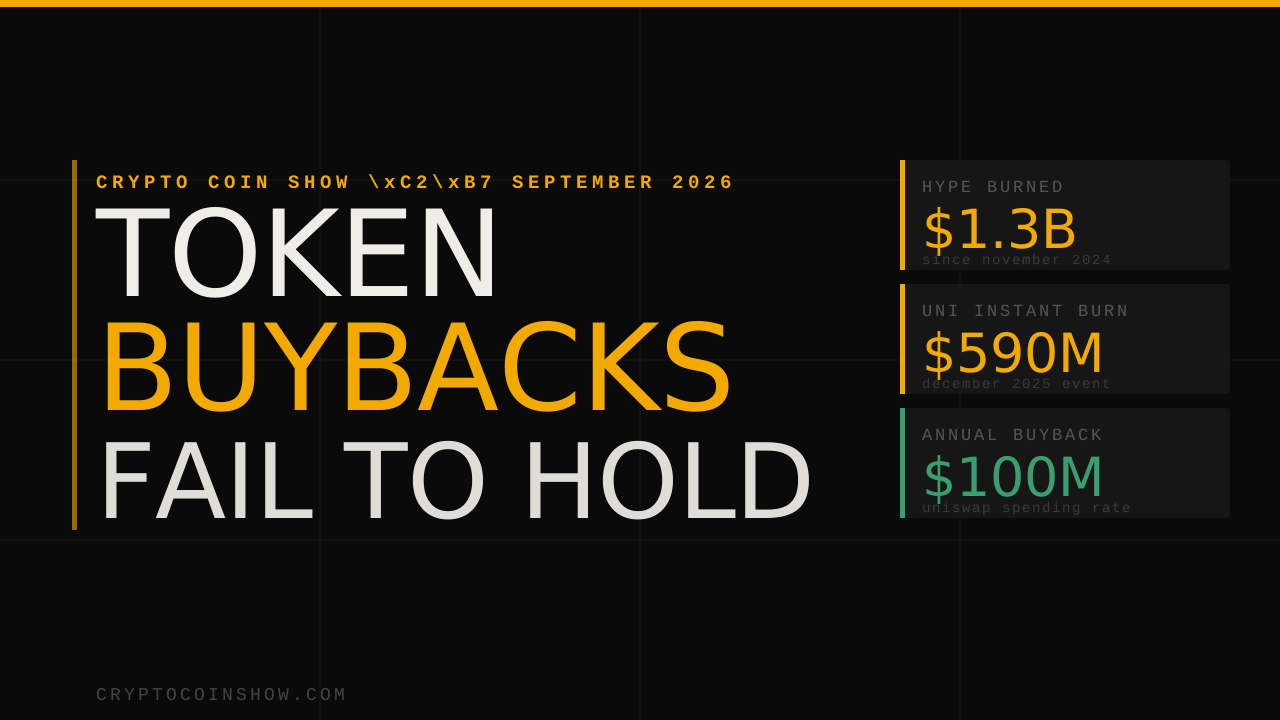
- Hyperliquid burned $1.3 billion of HYPE token since November 2024 launch, with 99% of protocol fees directed to buybacks and burns.
- Uniswap instantly burned 100 million UNI ($590 million) upon enabling protocol fees in December 2025, now spending $100 million annually on buybacks.
- Multiple tokens with aggressive buyback programs, including Pump.fun and even Hyperliquid itself, failed to hold price support despite sustained supply reduction.
- $1.3B Total HYPE tokens retired through buyback and burn since launch
- $800M Hyperliquid annual revenue, up from zero before protocol fee activation
- 800% HYPE token gains from November 2024 to present, versus Bitcoin down one-third
Crypto protocols are executing token buyback and burn programs at unprecedented scale, yet the strategy has not reliably supported token prices or created the valuation uplift that proponents predicted. Hyperliquid, a decentralized exchange, has retired $1.3 billion of its HYPE token through open-market purchases and permanent removal from circulation since the token launched in November 2024.
The protocol generates over $800 million in annual revenue and directs approximately 99% of trading fees directly into HYPE buybacks, making it the most aggressive capital return program in digital asset history.
Other major protocols, including Uniswap, Aave, Solana, and newer venues like Pump.fun and Lighter, have adopted similar revenue-sharing models in the past twelve months, each burning millions of tokens weekly.
Yet despite this coordinated supply reduction across the ecosystem, a growing body of market evidence shows that token buybacks have failed to establish durable price floors or prevent tokens from trading significantly below their breakeven levels.
Bitwise CIO argues protocols now trade on revenue like equities, not speculation
In an August 12 memo, Matt Hougan, chief investment officer at asset manager Bitwise, made an explicit case that crypto tokens have entered a new valuation regime where protocol revenue drives price discovery, similar to how earnings support equity valuations.
Hougan titled the memo “Crypto’s Revenue Revolution” and argued that “that era is over” when networks could scale without capturing value in their tokens. He tied his argument directly to Hyperliquid’s buyback program, stating that if the trend of rising protocol revenue continues across the ecosystem, “the market could see valuations double or more.”
Hougan highlighted that tokens now trade on the same analytical framework as traditional financial assets, with protocol revenue serving as the primary valuation anchor. He credited much of Hyperliquid’s 800% appreciation since launch to market participants correctly predicting that rising trading volume would automatically feed into larger and larger token burns, creating a virtuous cycle.
Hougan noted that HYPE has risen to $57.77, up 2.8% over seven days and 11.1% over the past 30 days according to CoinGecko, despite Bitcoin declining roughly one-third in value over the same period. The divergence, Hougan argued, reflects institutional recognition that protocol cash flows matter and that buyback commitments reduce supply in ways that equity repurchases cannot.
Tokens are beginning to trade on the same yardstick as equities and bonds, which is revenue.
Matt Hougan, Chief Investment Officer, Bitwise
However, Bitwise explicitly stated in the memo that this assessment represents a snapshot only and does not constitute investment advice. The framing suggests even Hougan acknowledges significant uncertainty about whether the revenue-to-valuation link will hold as more protocols implement buybacks and competition for trading volume intensifies.
Uniswap burned $590 million on first day, now commits $100 million yearly to buybacks
Uniswap’s adoption of revenue-sharing governance in December 2025 marked a watershed moment for the buyback trend. The protocol voted to enable protocol fees for the first time in its history through a proposal called “UNIfication,” which immediately triggered the purchase and permanent removal of 100 million UNI tokens worth approximately $590 million at the time of execution.
The exchange now generates roughly $100 million in annual revenue and has committed to spending all of it on token buybacks rather than allocating fees to protocol development or ecosystem incentives.
Aave moved in a similar direction with its Aavenomics 3.0 initiative, implementing an automated buyback program that targets approximately $30 million in annual AAVE token burns, roughly one-fifth of the protocol’s total revenue.
Newer protocols have pushed buyback ratios even higher: Pump.fun, which generated $328 million in annual revenue, had burned $370 million of PUMP tokens by April 2026, and Lighter, a smaller perpetuals exchange, deployed 6% of its circulating LIT supply on just $67 million in annual revenue.
The scale and speed of these programs signal a fundamental shift in how protocols allocate capital, yet the market response has been highly inconsistent across different tokens and time horizons.
Solana and Aptos escalate fee-burn strategies to compete for buyback narrative
Base-layer blockchains have entered the buyback race, signaling that the trend extends beyond individual protocols to entire ecosystems competing for capital and attention. Solana’s community proposed SGP-0003, which would increase the protocol’s fee burn up to 14 times its current rate.
Aptos took more immediate action, hiking gas fees tenfold during the past year, which nearly tripled activity on the network while driving annual token burns from approximately 90,000 to about 1.9 million APT.
These layer-one moves reflect competitive pressure: protocols that visibly return capital to token holders attract trading volume and developer attention, while those that capture fees or allocate them to operational budgets risk being perceived as extractive or outdated.
The result is an arms race in which token supply reduction has become a primary marketing mechanism and a signaling device of protocol health.
Hyperliquid itself breaks the buyback floor, joining tokens that failed to hold support
Despite its record buyback volume and runaway price appreciation, Hyperliquid has already abandoned the “up only” trajectory that justified its initial valuation surge. The token has experienced drawdowns and failed to maintain early gains as a hard price floor, contradicting the core thesis that relentless supply reduction guarantees price support.
Pump.fun presents an even starker case: at one point, the protocol had repurchased more than 18% of its total token supply while PUMP traded near its lows, demonstrating that aggressive buybacks do not mechanically prevent downside moves.
A January report from Cryptopolitan found that shrinking supply has not reliably lifted prices across the broader market. Many tokens with regular and substantial buyback programs underperformed the broader cryptocurrency market and failed to hold price floors during sell-offs.
This pattern suggests that market participants are not yet pricing protocol revenue into token valuations with the consistency or discipline that Hougan and other advocates have predicted.
Hougan himself acknowledged a critical structural difference between crypto token buybacks and equity repurchases: tokens carry no contractual right to profits, assets, or governance power beyond what the current governance structure permits.
Governance can be rewritten, changed, or abandoned entirely by protocol developers or community votes, meaning token buybacks represent a voluntary commitment that lacks the legal enforceability of corporate share repurchases.
Institutional investors face a valuation puzzle with no reliable framework yet established
The disconnect between rising protocol revenues and flat or falling token prices poses a significant analytical problem for institutional asset allocators. If protocol cash flows should support token valuations in the way that earnings support equities, the market should be pricing Hyperliquid, Uniswap, and other high-revenue protocols at substantial premiums relative to their current levels. The fact that it has not suggests one