Bitcoin Dips Below $75,000 as Strait of Hormuz Sees Zero Oil Tankers for First Time in History
Bitcoin fell below $75,000 on April 19 as the Strait of Hormuz experienced a complete shutdown, the first time in history, amid escalating US-Iran tensions and collapsed diplomatic talks. The closure of a waterway handling roughly 20% of global seaborne oil trade signals heightened geopolitical risk that institutional investors typically hedge by rotating away from risk assets like cryptocurrencies and into traditional safe havens.
- Zero oil tankers passed through the Strait of Hormuz on April 19, the first complete closure in history of the chokepoint handling 20% of global seaborne oil.
- Iran rejected a second round of negotiations with the United States, with Tehran citing “deception” and “inconsistency” from President Trump in talks.
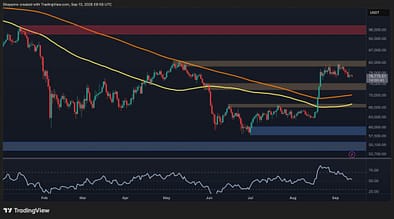
- Bitcoin has declined from above $100,000 in February to below $75,000 as US-Iran tensions escalated, signaling crypto’s sensitivity to geopolitical risk-off episodes.
- $75,000 Bitcoin price level breached on April 19 amid Hormuz closure
- 20% Share of global seaborne oil trade flowing through Strait of Hormuz
- $100,000+ Bitcoin’s February peak before Iran tensions triggered sustained selling
Bitcoin tumbled below $75,000 on April 19 as geopolitical risk spiked following an unprecedented complete shutdown of the Strait of Hormuz and the collapse of US-Iran diplomatic negotiations. The waterway, through which approximately 20% of global seaborne oil trade flows, saw zero oil tankers pass through for the first time in recorded history, according to market observers.
The closure came after thirteen tankers had already turned back mid-route the previous day, signaling the onset of a complete freeze in the critical chokepoint that connects the Persian Gulf to the Gulf of Oman.
Simultaneously, Iran’s state media confirmed Tehran rejected participation in a second round of talks with Washington, citing what officials characterized as “deception” and inconsistency in US proposals.
The convergence of these two events, an unprecedented logistical breakdown and the apparent breakdown of diplomatic channels, triggered a sharp sell-off across risk assets, with crypto bearing the brunt of institutional portfolio rebalancing toward traditional safe havens.
Iran Rejects US Talks as Hormuz Closure Leaves Global Oil Trade Frozen
The rejection of further negotiations marked an abrupt end to diplomatic efforts that had begun the previous week in Islamabad without reaching agreement. Iranian officials specifically accused the Trump administration of “deception,” pointing to what they described as gaps between stated negotiating positions and actions actually taken on the ground.
The timing was critical: markets operate on confidence in the potential for resolution, and once that confidence collapsed, risk-off positioning accelerated.
The Strait of Hormuz handles roughly one-fifth of all seaborne oil trade globally. A complete shutdown, particularly one characterized as the first in history, immediately raises the specter of oil supply disruptions, inflation concerns, and broader economic uncertainty.
Institutional investors typically respond to such scenarios by reducing exposure to risk assets, including cryptocurrencies, which lack the backing of physical reserves or government stabilization mechanisms that characterize traditional hedges like government bonds or precious metals.
Bitcoin has been trading under sustained pressure since late February, when Iran first moved to restrict passage through the strait.
The cryptocurrency had traded above $100,000 earlier that year; by April 19, it had shed more than 25% of that peak value, indicating that prolonged geopolitical risk, particularly risk concentrated in oil-critical regions, tends to trigger persistent rotation out of crypto holdings into assets with lower correlation to tail-risk events.
Trump Threatens Military Action While Futures Markets Prepare to Price Escalation
President Trump escalated the standoff by accusing Iran of firing on ships in the strait in violation of a ceasefire agreement and threatened to conduct large-scale military strikes on Iranian infrastructure. Specifically, Trump threatened to “knock out every single Power Plant, and every single Bridge, in Iran” if Tehran refused to reach a negotiated settlement.
Such rhetoric, whether intended as negotiating leverage or as a genuine threat, typically registers in financial markets as an increase in the probability of military confrontation.
The timing of the announcement, with futures markets set to open within hours, mattered considerably for price discovery. Institutional traders price in new information about conflict risk through equity index futures, energy futures, and volatility indices before the cash market opens.
When oil supply risk spikes, traditional equity markets and cryptocurrencies diverge sharply: oil and energy stocks may spike on supply concerns, while stocks sensitive to economic slowdown decline, and cryptocurrencies tend to follow the broader risk-off trade as liquidity constraints and margin calls force traders to raise cash.
Bitcoin’s performance since late February has demonstrated this dynamic clearly. Rising oil prices and the inflation fears they trigger push institutional allocators away from both equities and cryptocurrencies, both cyclical risk assets, and toward inflation-hedging commodities like crude oil itself, precious metals, and nominal-rate-hedging instruments like long-dated government bonds.
Crypto, which offers no yield and no direct hedge against commodity inflation, becomes an easy position to liquidate when risk-off sentiment hardens.
Diplomatic Breakdown Leaves Markets Waiting for Next Escalation or Resolution Signal
The next critical juncture will come as markets begin to price the implications of both the Hormuz closure and the failed talks. If diplomatic efforts resume and show signs of progress, institutional investors may cautiously redeploy capital into risk assets.
If, conversely, either military action materializes or the closure persists, further liquidation of crypto holdings is likely as inflation expectations climb and safe-haven demand hardens.
For institutional crypto investors, the current environment tests a fundamental thesis: whether cryptocurrencies function as portfolio hedges during tail-risk events. The evidence from this episode suggests the opposite, that crypto behaves as a marginal risk asset, liquidated first when capital becomes scarce and sentiment turns decisively negative.
The 25% decline from February peaks to the April 19 floor, paired with the persistence of that pressure despite nominal price recoveries, indicates that geopolitical risk flows into traditional hedges, not digital assets.
The immediate question facing institutional traders is whether Iran and the United States will resume negotiations or escalate militarily in the coming days. If talks resume and show signs of progress, crypto markets may stabilize and recover as risk-off positioning unwinds. If military action occurs or the Hormuz closure persists beyond the next 48 to 72 hours, Bitcoin could face further selling pressure as oil prices rise and institutions lock in hedges against stagflation scenarios. Watch for any statement from Iranian officials or the Trump administration signaling either a resumption of talks or military readiness, such clarity will likely drive the next major institutional repositioning across risk assets.