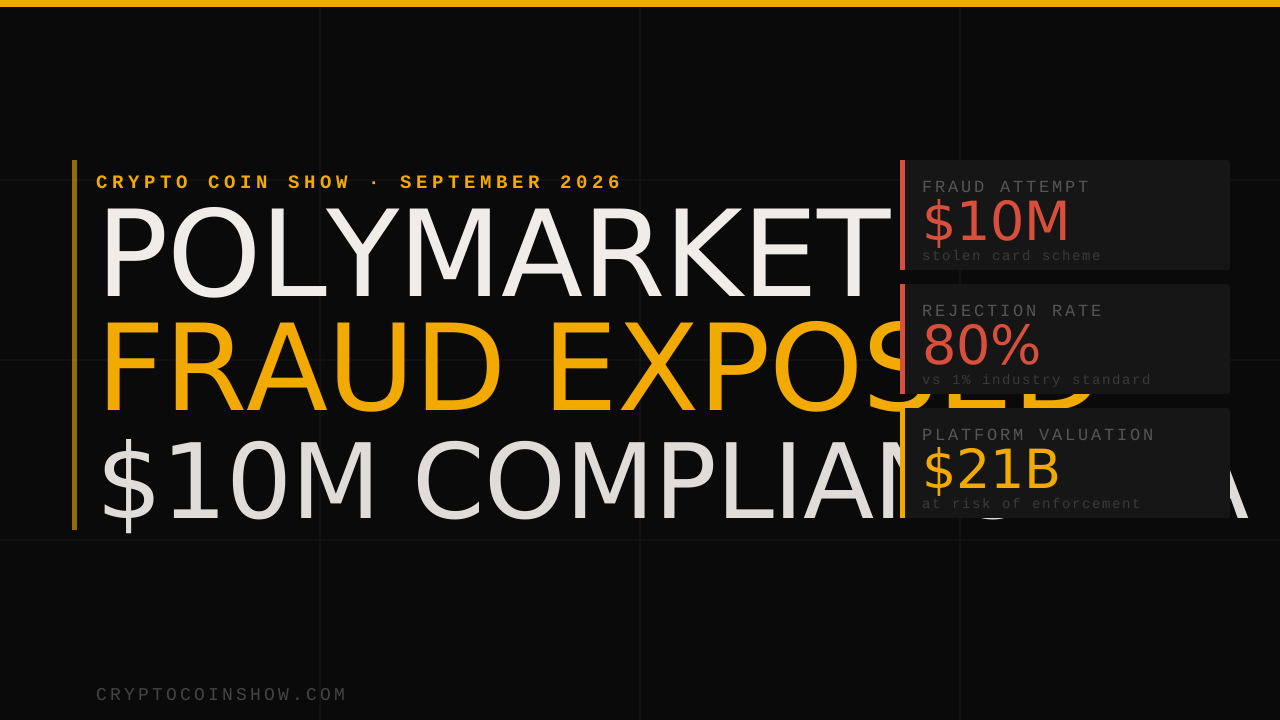
Prediction markets processed more than $44 billion in wagers last year, but regulators say many of the top-performing participants are now automated trading bots rather than humans.
On Polymarket, automated bots now run more than 30% of active accounts. Data from the platform’s top earners shows that 14 of the top 20 accounts are controlled by bots.
More than 37% of these automated accounts consistently.
Lawmakers target insider trading risks
Polymarket trading activity fell 8.9% in April for the first time since August, as competitors gained market share.
According to Dune Analytics, the platform and its US operation registered $10.2 billion in bets in April, a decrease from $11.2 billion the previous month.
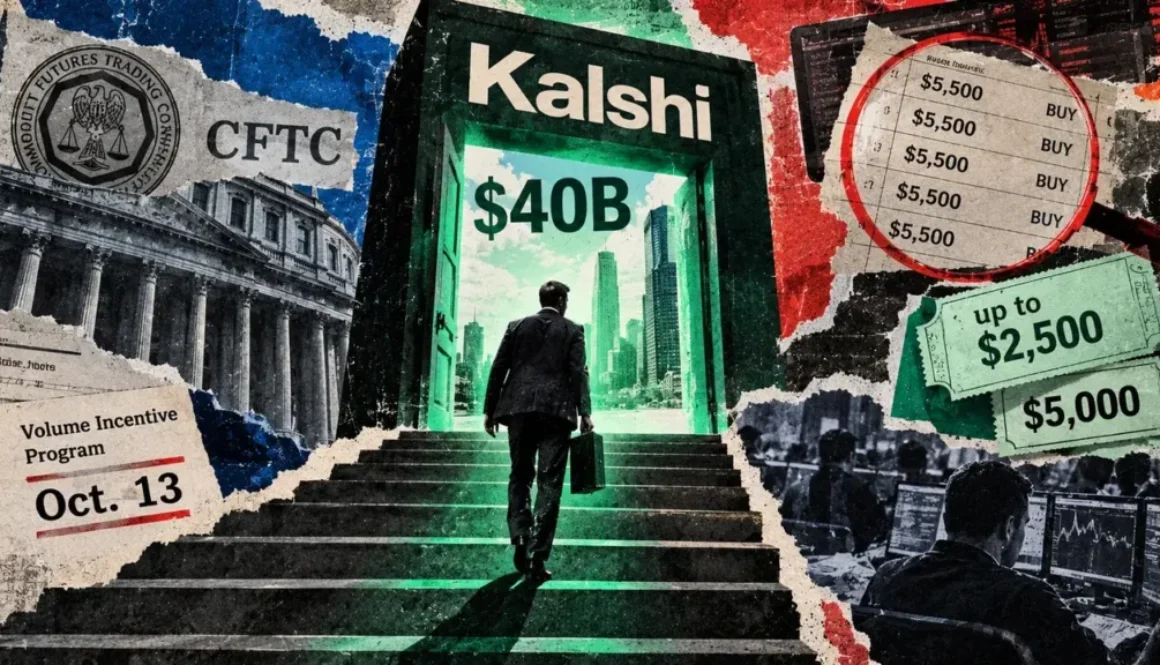
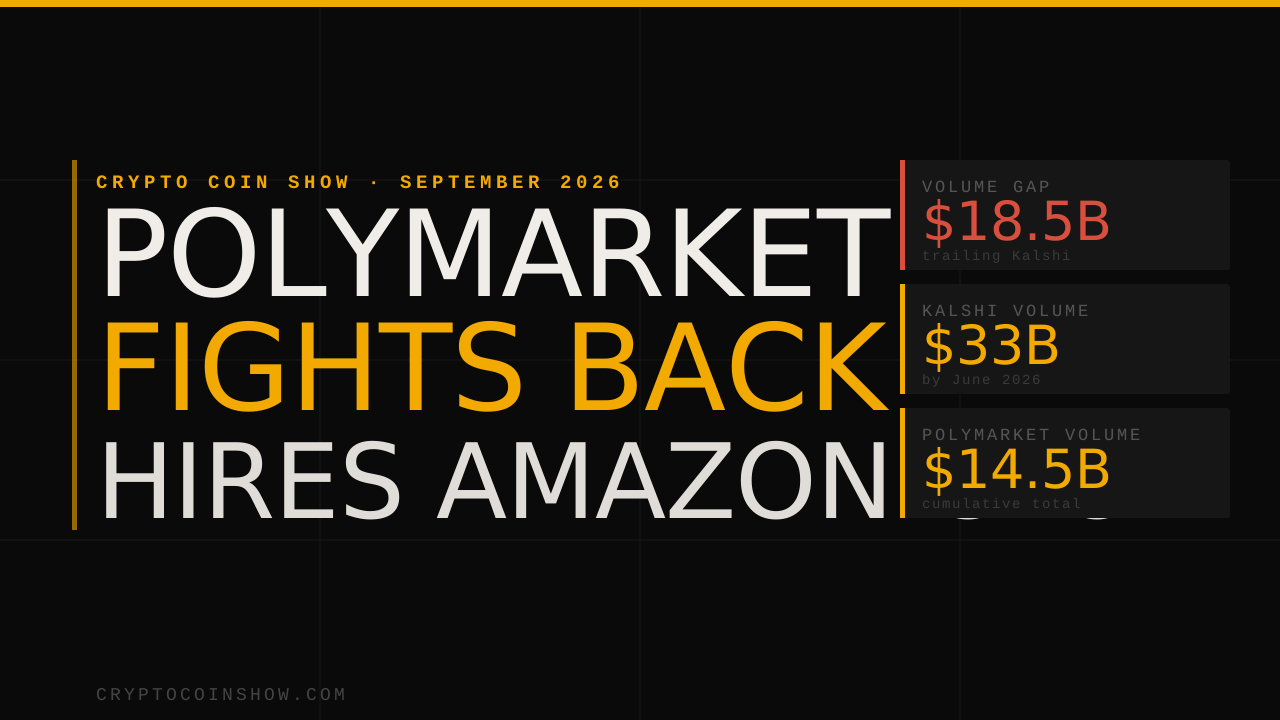
Meanwhile, rival platform Kalshi saw volume jump 13% to reach $14.8 billion in April.
The decrease occurred as Polymarket tried to rebuild its US footprint while under increased scrutiny from politicians concerned about insider trading.
Senator Elizabeth Warren wrote to the Commodity Futures Trading Commission in March, along with more than 40 other members of Congress.
They wanted laws that would ban government officials from profiting from secret material on these platforms.
“The CFTC maintains that event contracts are a type of swap subject to its jurisdiction, and, therefore, it should ensure that federal employees understand existing restrictions on prediction market insider trading,” the lawmakers said.
Several Polymarket users have drawn suspicion for placing winning bets on sensitive world events, including military actions in Venezuela and potential conflict with Iran.
CFTC Chairman Michael Selig told reporters that the agency utilizes AI tools to examine trade patterns, detect anomalous conduct, and collaborates with blockchain tracking businesses like Chainalysis to monitor offshore platforms such as Polymarket.
According to an AIMPACT update dated May 15, the CFTC uses AI to scan vast volumes of trading data, assisting staff in identifying suspect accounts and deciding whether to initiate investigations or issue subpoenas.
The business is combining blockchain analytics tools with market anomaly detection technologies to monitor both cryptocurrency and traditional financial markets.
The CFTC has received many allegations of odd trading and is actively looking into “hundreds to thousands” of potential cases. Future enforcement efforts are likely to broaden.
Selig stated that the agency will take action against U.S. users who attempt to mask their location by utilizing VPNs to access prohibited services.
That enforcement applies to worldwide marketplaces.
Even while platforms like Polymarket operate outside of the United States and lack U.S. licenses, the CFTC said it will seek enforcement against cross-border trades involving Americans and may utilize extraterritorial authority if necessary.
Platforms are reacting to the demand.
Polymarket and Kalshi have improved their checks for insider trading and market manipulation, bringing in external blockchain data providers to meet regulatory requirements.
The CFTC offered prediction market platforms some regulatory relief on Wednesday, issuing a no-action letter that exempts them from certain swap reporting requirements.
The exemption applies to exchanges and clearinghouses that handle event contracts.
Agency staff said they would not pursue enforcement against platforms that skip those reporting rules, following requests from companies seeking clarity on how event contracts should be regulated.
Although event contracts are officially classed as swaps since they have yes-or-no outcomes, the CFTC believes they work more like futures and options due to their uniform terms and exchange trading.
According to the new guidance, firms can report these transactions directly to the Commission in a manner similar to futures and options markets.
The relief now applies to 19 firms, including Polymarket US, Kalshi, Gemini Titan, and Bitnomial. Other companies listing event contracts may request coverage on the same terms.
Top prediction market platforms, including Kalshi and Polymarket, are rushing to offer highly leveraged crypto derivatives at the exact moment state and federal authorities are clashing in court over whether the industry’s core products constitute illegal betting or legitimate financial instruments.
Over the past year, these companies have gained national prominence by facilitating wagers on discrete, real-world occurrences, ranging from political races to macroeconomic data releases.
Now, by preparing to list perpetual futures, which are complex contracts that never expire and allow traders to multiply their market exposure using borrowed funds, these platforms are blurring the line between niche forecasting hubs and full-service digital asset exchanges.
Against this backdrop, this shift drastically expands their potential customer base, but it also amplifies the legal risks associated with the platforms.
Historically, platforms like Kalshi operated on a cyclical, event-driven basis, with traffic and trading volume spiking around major catalysts such as a presidential debate or a championship sporting event and then plummeting once the outcome was settled.
In this kind of market, a user purchased a binary “Yes” or “No” share, and the contract expired upon the event’s resolution.
Perpetual futures fundamentally alter that business model. Because these derivatives lack an expiration date, participants can maintain their market positions indefinitely, provided they meet ongoing margin requirements.
The instruments frequently allow users to leverage their bets up to 50 times their initial capital, attracting aggressive speculators seeking rapid returns from minute price fluctuations.
By rolling out these derivatives, Polymarket and Kalshi are abandoning their siloed event-contract operations to compete directly with centralized exchanges and retail brokerages. The underlying strategy for both platforms is to convert occasional political bettors into daily, high-frequency traders.
While Kalshi has explicitly stated its intention to enter the perpetuals arena, Polymarket’s exact roadmap remains guarded, including which specific assets it will cover and whether it will restrict access for US customers.
Why prediction markets are moving into perpetual futures
Why perps, why now?
The motivation to embrace this new feature comes down to basic market structure.
Traditional crypto spot trading, which is the simple buying and holding of digital assets, has decelerated from the frenzied peaks of previous market cycles, logging $18.6 trillion in volume last year.
Meanwhile, perpetual futures generated more than three times that amount. Data from CryptoQuant show that the global trading volume for crypto perpetual futures hit $61.7 trillion last year.
That volume disparity dictates corporate strategy. Platforms recognize that to maintain engagement during periods of low volatility, they must offer instruments that allow users to short the market, hedge portfolios, and employ leverage.
While prediction markets currently command significant capital, with all-time notional volume surpassing $150 billion, the episodic nature of event contracts cannot match the continuous, around-the-clock fee generation of a highly active derivatives order book.
Moreover, the broader financial technology sector is experiencing a rapid collapse of operational boundaries, with centralized platforms like Robinhood, Coinbase, and Gemini all embracing event-based offerings.
Mo Shaikh, co-founder of the Aptos blockchain network, noted that financial applications have historically trended toward consolidation, citing the expansions of legacy platforms like PayPal. However, he warned that forcing disparate user bases into a single application rarely succeeds seamlessly.
“The trader, the bettor, the long-term investor, the payments user, they show up for different reasons,” Shaikh said, adding that true value lies in controlling the underlying infrastructure. “Clearing, liquidity, identity, settlement, data, those layers can unify even if the frontends remain fragmented.”
Meanwhile, the shift among prediction market players is partially defensive.
Offshore decentralized exchange Hyperliquid, a dominant force in perpetual futures, recently encroached on the prediction sector by revealing plans to list its own event contracts.
As a result, the market is split on who holds the strategic advantage in the ensuing turf war.
Jiani Chen, a growth officer with the Solana Foundation, noted the technical disparities, arguing that decentralized derivatives exchanges have a much easier time adding prediction markets to their backend than prediction platforms do spinning up complex futures trading engines.
However, Kyle Samani, chairman of Forward Industries, dismissed the technical hurdles, arguing that customer acquisition is the true bottleneck for digital asset platforms. He said:
“It’s way harder to bootstrap liquidity and acquire normie users for prediction markets. Kalshi perps are going to crush.”
The legal fight is still about who gets to call it gambling
Legal battle over prediction markets
The aggressive product expansion coincides with an existential legal threat as state regulators are launching coordinated efforts to classify the prediction platforms as unlicensed casinos, rejecting the premise that event contracts are sophisticated financial tools.
On April 21, New York Attorney General Letitia James filed sweeping lawsuits against digital asset firms Coinbase and Gemini, demanding $3.4 billion in combined penalties and restitution.
James alleged the companies bypass state taxes and consumer protection laws by offering prediction markets to retail users, including minors.
State officials pointed to research by the National Institutes of Health linking early exposure to mobile betting with heightened risks of anxiety and financial distress, while noting American Psychological Association data showing severe mental health risks associated with gambling disorders.
James said:
“Gambling by another name is still gambling, and it is not exempt from regulation under our state laws and Constitution.”
The industry firmly rejects the gambling label, countering that the contracts are vital instruments for hedging geopolitical and economic risks.
The judiciary is already untangling the overlapping claims. A federal appeals court in Philadelphia ruled against New Jersey gaming regulators earlier this year, determining the CFTC held sole regulatory authority over Kalshi’s election and sports-related contracts.
This sequence of litigation reflects a deeply fractured regulatory perimeter that companies must navigate as they deploy new derivative products.
A bigger market, and a bigger regulatory target
The move into perpetual futures would further position prediction markets as part of mainstream financial infrastructure rather than a niche corner of online speculation.
That shift is already drawing attention from traditional finance. The Intercontinental Exchange, parent of the New York Stock Exchange, recently invested $2 billion in Polymarket, a sign that major market operators see commercial value in platforms built around event-driven pricing.
Supporters of the model argue that prediction markets are proving useful as both forecasting tools and trading venues.
In high-liquidity markets, Brier scores, a standard measure of probabilistic accuracy, have fallen as low as 0.0247 shortly before resolution, suggesting pricing errors narrow sharply as capital and participation deepen. Industry estimates also show that about 10% of proprietary trading firms are already active in event contracts, using them in part to hedge macro and policy risk.
That combination of data value and trading activity helps explain why platforms are racing to broaden their product mix.
Rob Hadick, managing partner at Dragonfly, framed the commercial logic bluntly:
“Owning your customer will be the only way to have longevity in this new world of broad financialization.”
However, not everyone sees perpetual futures as the natural next step.
Alex Momot, chief executive and co-founder of Peanut Trade, told CryptoSlate that the current push looks more like a response to tightening legal pressure than a durable product strategy.
He noted that regulators and some jurisdictions are moving against prediction markets, and as a result, these operators appear to be shifting closer to the crypto-exchange model, where the rules are clearer, and the risk of being classified as gambling is lower.
Momot argued that strategy may offer only limited relief. In his view, the deeper problem is liquidity. Without more depth, many of the sector’s most promising use cases, including hedging and insurance against real-world event risk, remain too small to scale.
He said the stronger long-term path may lie in index-style products, market aggregation, and pooled liquidity across events, structures that could make prediction markets look more like traditional derivatives or synthetic exposures.
That viewpoint points to a broader tension now shaping the industry. One camp sees perpetual futures as the fastest way to capture more trading volume and keep users active between headline-driven events. Another sees them as a tactical detour from the harder task of building deeper, more resilient liquidity.
Either way, the legal risk is rising. Dyma Budorin, founder and chief executive of CORE3, said the merging of prediction and derivatives markets is likely to draw closer scrutiny from regulators already struggling to define the sector.
He said:
“What we’re really seeing is a convergence toward perp-like behavior without the corresponding risk controls. If this trend continues, regulators won’t treat prediction markets as harmless forecasting tools, they’ll treat them as derivatives platforms operating outside the rules. And historically, that doesn’t end quietly.”
The New York litigation has already ensured that the fight over jurisdiction will remain central to the industry’s future. That battle could eventually reach the U.S. Supreme Court or force Congress to step in with a clearer statutory framework.
Until then, prediction-market operators appear willing to keep expanding through the uncertainty, betting that the commercial upside of perpetual futures is worth the legal exposure.
Inside Kuvi.ai: The OS That Wants to Decentralize Financial Strategy | CCS
CCS FeatureAgentic Finance$KUVI · TGE Coming
Company Profile · Kuvi.ai
Inside Kuvi.ai: The OS That Wants to Decentralize Financial Strategy
Kuvi.ai is building the infrastructure layer that lets anyone automate complex financial strategies — wiring prediction markets, real-time narratives, and conditional execution into a single platform. Welcome to Agentic Finance.
For decades, the ability to react fastest, automate decisions, and execute without friction has been the exclusive domain of hedge funds. Kuvi.ai is the platform built to change that — giving anyone with capital the infrastructure to manage wealth with institutional-grade sophistication.
The core thesis: financial strategy itself should be programmable. Not just assets, not just smart contracts — the decisions. Kuvi’s Agentic Finance Operating System (AF-OS) lets users define what they want in plain language, then executes it autonomously across markets and chains, responding to prediction markets, on-chain data, social narratives from X, and volatility signals in real time.
This isn’t social trading. It isn’t copy trading. It’s programmable wealth management — the same conditional logic, automated execution, and data-driven triggers that once required a quant desk, now accessible to any user with capital and a strategy.
$700KSeed round, Moon Pursuit Capital
$30MValuation post-seed (doubled from $15M)
$KUVI$KUVI token · TGE upcoming
4 daysTo close the pre-seed angel round
Core Capabilities
The AF-OS is built on a modular agentic framework. The key mechanism is Executables — condition-based automations that fire across chains and data sources simultaneously when user-defined triggers are met.
Example — User intent → AF-OS Executable
“Buy $1K in memecoins when sentiment spikes and gas is low — exit when BTC dominance increases“
Prediction market automation
Conditional portfolio daemons
Narrative-driven triggers from X & social feeds
Strategy simulation & backtesting
Cross-venue execution routing
Risk & policy constraints
On-chain + off-chain data fusion
Natural language text-to-trade interface
Planned integrations include X, Polymarket, Reddit, Blockworks, and Messari — each new data source expanding the signals users can wire into their strategies. Early live integrations are with Solana-native protocols Raydium and Jupiter, with Ethereum and Bitcoin support following.
Business Model
Kuvi runs on two revenue streams: transaction fees on executed trades, and premium subscriptions for advanced automation, higher execution limits, and exclusive data integrations. The $KUVI token adds a BNB-parallel utility layer — stake dynamically to unlock free usage, fee discounts, and execution privileges, aligning token value directly with platform activity.
Token holdersGovernance rights over protocol parameters & ecosystem development
The Team
DD
Dylan Dewdney
Co-Founder & CEO · Toronto, Canada
Crypto-native entrepreneur active since 2011 — early Bitcoin miner, Ethereum genesis participant, $20M+ raised across Web3 and DeFi ventures. Published Agentic Finance thesis in Cointelegraph. Spoke at Skynet vs. Bitcoin Conference and Canada’s Futurist Conference on AI agents in crypto.
JN
Jay Nasr
Co-Founder & CTO
Built a DeFi protocol from scratch in 2016 and was among the first developers to integrate GPT-2 into Telegram. Brings rare depth across both early DeFi architecture and applied AI engineering — the technical core behind the AFOS daemon and strategy graph system.
COO Maxim Sindall brings experience scaling Web3 gaming startups. The team is distributed across Toronto and Germany, with women representing two of five core team roles.
Investors & Advisors
Moon Pursuit Capital
Lead seed investor · Managing Partner Utkarsh Ahuja, MIT Sloan MBA
Michael Terpin
Transform Ventures · Early advisor to Ethereum, TRON, Shiba Inu, Tether
Dennis Liu (VirtualBacon)
1.3M+ followers · retail ecosystem & community growth advisor
Peter Vincer
Government Relations Advisor · U.S. policy & institutional access
“By aligning incentives and democratizing access to advanced financial tooling, $KUVI ensures that algorithmic trading and wealth automation are no longer the exclusive domain of hedge funds and elites. We’re building the rails for the next era of value.”
Dylan DewdneyCo-Founder & CEO, Kuvi.ai
Ecosystem & Collaborators
Beyond the core investor table, Kuvi has built relationships across an unusually wide network — from privacy advocates and Ethereum founders to major crypto funds, exchange partners, and academic institutions.
Angel round closes in just 4 days at $15M valuation
August 2025
$700K seed round closes led by Moon Pursuit Capital · valuation doubles to $30M · AF-OS private beta launches with Solana integrations (Raydium, Jupiter)
August 2025
Acquisition of Altura (Web3 gaming infrastructure) · forensic report on prior exploit published · criminal report filed with Canadian authorities
2026
Whitepaper v2.0 published — the “Strategy Layer of Finance” · $KUVI TGE upcoming · continued multi-chain expansion toward Ethereum and Bitcoin protocol integrations
This article is for informational purposes only and does not constitute financial or investment advice. The $KUVI token and all digital assets carry risk, including potential loss of capital. Crypto Coin Show does not endorse any specific investment. Always conduct your own due diligence. Crypto Coin Show is listed as an ecosystem partner of Kuvi.ai.
The numbers are in, and they are not pretty for everyday traders who bet on prediction markets.
Despite handling tens of billions of dollars in trades, these platforms appear to be leaving the overwhelming majority of users worse off financially.
Prediction markets have grown fast. By 2025, platforms like Polymarket and Kalshi were processing $28 billion in trading volume.
The idea behind them is simple: people bet on future events, and the odds that form are supposed to reflect what the public genuinely believes will happen.
Arizona Democrat Yassamin Ansari recently targeted both Polymarket and Kalshi, calling them “casinos where the rich and powerful are the house and everyone else is the chips.”
She posted on X that 99.96% of users lose everything while the top 0.04% walk away with billions.
Ansari slams the prediction market as a rigged casino Source: @RepYassAnsari
Her claim comes from a December 2025 on-chain analysis by a blockchain researcher known as DeFi Oasis.
That study found that less than 0.04% of Polymarket wallet addresses captured more than 70% of all realized profits, totaling $3.7 billion.
Analysts, however, pointed out that Ansari’s wording mixes up two separate figures. The 0.04% refers to who captured most of the winnings, not simply who won anything at all.
Ansari is co-sponsoring a bill called the BETS OFF Act alongside Sen. Chris Murphy of Connecticut and Reps. Greg Casar and Rashida Tlaib of Texas and Michigan, respectively. The bill would ban betting on events like war, terrorism, assassination, and government decisions.
Whatever the exact interpretation of the 0.04% figure, more recent data puts the problem in sharper focus.
The sharp drop, according to Sergeenkov, is tied to a flood of new and inexperienced users drawn in by the buzz around the November 2024 U.S. presidential election. “Less experienced users tend to trade less successfully,” he noted.
The 84.1% figure is also higher than what a 2025 study from researchers Felix Reichenbach and Martin Walther found.
Their paper put the losing share at around 70%. The difference, Sergeenkov explains, comes down to how the math is done.
His method accounts for wallet splits and merges, which earlier analyses left out. “When splits are left out, an address looks more profitable because one category of expenses is simply invisible,” he said.
The numbers behind the losses
A deeper look at the data shows just how rare meaningful earnings are on these platforms. Of 2.5 million wallets studied, only 2% had ever made more than $1,000 in total. Just 0.32% had cleared $10,000, and only 840 wallets, that is 0.033%, had earned more than $100,000.
The average trade on Polymarket is $89, and 80% of traders never place a bet larger than $500 on average.
The idea of replacing a regular paycheck through trading appears almost out of reach. The average monthly salary in the United States is roughly $5,000. Only 0.98% of traders ever hit that mark in a single month.
The number who managed it for 12 months straight: just 35 out of 2.5 million people.
The findings carry weight at a time when major financial institutions have moved in.
The Intercontinental Exchange, which owns the New York Stock Exchange, completed a $2 billion deal with Polymarket in March. Kalshi recently raised $1 billion, pushing its valuation to $22 billion.
The BETS OFF Act and a separate bill called the Death Bets Act, introduced by Rep. Mike Levin, are not widely expected to pass in the current Congress. Still, observers say the push for stronger protections for everyday users is not going away.
A Las Vegas online casino company has struck a deal with Crypto.com to offer prediction market contracts in the U.S., entering what could become a trillion-dollar industry.
High Roller Technologies (NYSE: ROLR) is the company behind the High Roller and Fruta casino brands. It has signed an agreement with Crypto.com’s derivatives arm, known as CDNA. U.S. customers will be able to trade event-based contracts across finance, sports, and entertainment.
It’s the company’s first move into prediction markets, a space that’s been attracting serious money. Analysts have floated projections of $1 trillion or more in annual U.S. trading volume if the market matures, with global figures potentially higher.
Crypto.com co-founder and CEO Kris Marszalek cited High Roller’s existing platform as the draw. “Together, we believe we can expand access to regulated event contracts in the United States through a differentiated and highly scalable offering,” he said. High Roller CEO Seth Young said the company has spent months preparing for the launch.
Partnership creates new revenue channels
The arrangement designates Crypto.com and its affiliates as prediction contract suppliers across High Roller’s U.S. distribution network. High Roller (NYSE: ROLR) plans to operate through the structure, which is expected to generate additional revenue streams for the company.
CDNA is already registered with the CFTC as both a designated contract market and a derivatives clearing organization. High Roller plans to register as a CFTC Introducing Broker and connect with Crypto.com’s CFTC-registered Futures Commission Merchant.
Rivals attracting billions in investment
The news comes during a frenzy of investment in the prediction market space. Rival platform Kalshi just hit a $22 billion valuation after raising roughly $1 billion, led by Coatue Management, double its December valuation, which drew backing from Andreessen Horowitz, Sequoia, Ark Invest, and Paradigm.
The company’s rise accelerated after winning a court fight with the CFTC in May 2025 that cleared it to offer election contracts, taking it from $2 billion to $22 billion in under a year.
Polymarket closed a $1.6 billion investment from Intercontinental Exchange, the NYSE’s parent company, fulfilling a commitment ICE first made in October 2025 when it valued Polymarket at $9 billion. ICE also plans to buy up to $40 million in Polymarket securities from existing holders.
The initial ICE commitment reached as high as $2 billion, with $1 billion deployed upfront. The additional $600 million brings ICE’s total obligation to completion.
High Roller (NYSE: ROLR) raised about $25 million in January through a direct share offering, selling roughly 1.9 million shares at $13.21 apiece. The placement, handled by ThinkEquity, closed on January 21. Proceeds are going toward marketing, expansion, product development, and operations.
On April 1, the NYSE American confirmed the company had resolved a prior stockholders’ equity deficiency, having demonstrated compliance for two consecutive quarters. The compliance indicator on its ticker was removed that morning. The company remains under standard listing oversight going forward.
High Roller’s platform hosts more than 6,000 games from over 90 providers.
If you want a calmer entry point into DeFi crypto without the usual hype, start with this free video.
Token Metrics Reinvents Itself as an AI Market Desk — Crypto Coin Show
Exclusive Interview · Blockchain Interviews
Token Metrics Reinvents Itself as an AI Market Desk
Ian Balina’s platform drops the analytics dashboard model in favour of a fully automated intelligence engine — one that reads 50+ data feeds, cross-references prediction markets in real time, and delivers its findings before most investors wake up.
Ashton AddisonCrypto Coin ShowApril 3, 2026
There is a quiet but significant shift happening in how serious crypto investors consume information. The old model — charting platforms, raw on-chain dashboards, and the chaotic scroll of Crypto Twitter — is giving way to something more curated, more contextualised, and increasingly powered by artificial intelligence. Token Metrics, one of the longer-standing names in crypto analytics, has just made that transition official.
In a recent Blockchain Interviews conversation, Token Metrics founder and CEO Ian Balina laid out what amounts to a full company reinvention — one that reflects broader forces reshaping how information moves through financial markets in 2026.
The Pivot
From Analytics Platform to AI Market Desk
Token Metrics launched in 2019 at the bottom of a bear market, positioning itself as a research and analytics tool for crypto traders and investors. Over the years it helped its community identify early positions in projects like Polygon, Chainlink, and Helium Network — a track record that built a loyal subscriber base and, eventually, over 100,000 newsletter readers.
But late last year, Balina and his team made a strategic call that sets Token Metrics apart from most of its peers: they stopped trying to be a data API and started building what Balina describes as an “AI market desk.” The distinction is more than semantic. A data platform gives you access to information. A market desk synthesises it, weighs it, and tells you what it means for your portfolio.
We were building an API to give people that data. But what we realised is that’s not really our niche. Our niche is providing research, alpha, and insights to help people build portfolios in crypto.
Ian Balina, Founder & CEO, Token Metrics
The pivot was accelerated by a market-wide behavioural shift: more and more crypto users are now pulling their information through large language models — ChatGPT, Gemini, Claude — rather than visiting data platforms directly. Rather than compete for that position or try to become the underlying data layer feeding those models, Token Metrics chose to go further up the stack, into judgment and synthesis.
Under the Hood
What the Engine Actually Does
The architecture behind Token Metrics’ new model is worth understanding in detail, because it addresses problems that have frustrated crypto investors for years. At the ingestion layer, the platform pulls from more than 50 data sources simultaneously — traditional crypto media like CoinDesk, on-chain analytics from Nansen and DeFi Llama, centralised and decentralised exchange data, and prediction markets led by Polymarket.
That data passes through a multi-stage AI pipeline staffed by specialised agents, each responsible for a different layer of quality control. The output is not a raw feed. It is a curated, editorially structured daily brief that identifies the five things most worth following on any given day, explains why they matter, and models the second-order portfolio effects of each.
How the Daily Brief Reaches You
Free daily newsletter delivered before most subscribers wake up
AI-generated podcast available on Spotify and Apple Podcasts
Morning posts distributed to X and Discord simultaneously
Real-time premium signals inside a private Discord community
All outputs generated from one automated pipeline — no editorial lag between channels
Balina himself has switched from reading the newsletter to listening to the podcast each morning — a telling signal about how the platform’s own creator actually uses it. The system’s self-improving architecture means any errors are logged, learned from, and corrected in subsequent runs, closing a feedback loop that would take a human editorial team days to address.
Prediction Markets
The Polymarket Integration: Second-Order Thinking Built In
One of the most operationally interesting decisions Token Metrics has made is building Polymarket data directly into its daily intelligence layer — not as an optional add-on, but as a primary signal source alongside traditional news and on-chain data.
The use case Balina walked through was concrete: when a Federal Reserve rate decision is approaching, most news outlets report the outcome. Token Metrics’ AI goes further — querying Polymarket for the current probability-weighted odds, incorporating those into the analysis, and modelling two scenarios for subscribers: what happens to their portfolio if rates are cut, and what happens if they aren’t. This kind of second-order contextualisation was previously only available to institutional research desks or investors willing to manually work across multiple tools.
It’s able to add more colour to the news using verifiable data — you’re getting the whole picture, and then it tells you how each outcome will affect your portfolio.
Ian Balina, Founder & CEO, Token Metrics
The platform applies a hard liquidity filter to all Polymarket data: any prediction market with less than $100,000 in liquidity is excluded from the analysis entirely. This prevents low-volume or easily manipulated markets from distorting the signal. “Any markets that are illiquid, it will toss out,” Balina confirmed. “We built in that QA control.” The integration extends to premium signals too — non-crypto prediction markets are cross-referenced against traditional bookmaker odds APIs, with divergences surfaced as opportunities where the spread justifies it.
Filtering the Noise
Signal Verification and the Smart Money Score
For premium subscribers, Token Metrics goes well beyond headline filtering. When evaluating new token launches — the area of the market most susceptible to manufactured hype and coordinated promotion campaigns — the platform runs a layered verification process designed to separate genuine momentum from engineered noise.
What the Alpha Score Checks
Liquidity depth — tokens that can dry up rapidly are filtered first
Honeypot and scam checks on every DEX-listed token before flagging
Whale concentration — is the token heavily held by insiders positioned to exit?
Smart money wallets — do early holders have a track record of winning calls?
Polymarket cross-reference — is there a meaningful spread versus bookmaker consensus?
The core question the alpha score is designed to answer: is there genuine smart money in this token, or is it primarily held by insiders positioned to exit on retail buyers? Wallet-level analysis checks whether early holders have a track record of being positioned in successful projects before they broke out — a methodology that proved predictive in previous cycles and remains one of the most useful signals in a market full of coordinated promotion.
The Product Stack
Three Tiers, One Community Model
Token Metrics offers three plan structures built around different investor profiles. Each tier is additive — the deeper you go, the more research, community access, and multi-asset coverage you unlock.
Plan
Core Offering
Best For
Signal
Real-time alerts for tokens and Polymarket opportunities that clear all filtering thresholds
Active traders who want a processed, qualified feed — not raw data
Multi-asset investors who want macro context alongside crypto alpha
Round Table
Virtual community modelled on Tiger 21 — monthly sessions, portfolio stress-testing, conference coordination
Family offices, professional traders, and DeFi builders wanting peer-level intelligence sharing
The Round Table tier is the most distinctive — modelled explicitly on Tiger 21, the well-known high-net-worth investor network where members stress-test portfolios in front of peers. Token Metrics’ version is primarily virtual, with in-person coordination available at major crypto conferences. The emphasis is on qualified participants: family office managers, active DeFi builders, professional traders — people who want structured peer feedback rather than another Discord server.
The Token Model
$TMAI: Access as Ownership
Token Metrics also operates a native token — $TMAI — tradable on decentralised exchanges and centralised platforms including Gate, MEXC, and Bitpanda. Holding $TMAI unlocks access to the platform’s premium Discord server and full content layer, functioning as an alternative to a monthly subscription.
The model is a clean expression of token-as-access design: demand for the platform translates directly into demand for the token, without requiring active governance participation or complex mechanics. It also creates alignment between community members and the platform’s long-term success that a pure subscription model cannot — hold the token and you benefit when the platform grows, not just when you use it.
The Bigger Picture
Why This Matters Now
The timing of Token Metrics’ pivot is not coincidental. The crypto intelligence market is at an inflection point driven by two converging forces. The first is the maturation of large language models. General-purpose AI assistants can now answer basic crypto questions — but they cannot source real-time on-chain data, cross-reference live prediction markets, or apply domain-specific scoring models to new token launches. There is a clear gap between what general AI can do and what a specialist platform with live data infrastructure can do. Token Metrics is positioning itself squarely in that gap.
The second force is the acceleration of the crypto market itself. Institutional adoption is increasing, on-chain activity is growing, and the number of active tokens, chains, and prediction markets has expanded to a point where manual tracking is genuinely impractical for most investors. Staying on top of the market without AI is no longer a choice — it is a necessity.
Humans could do it, but it would take a lot of time. Being able to create something fully automated — constantly watching 50+ data feeds and telling you only the things that actually matter — that’s the whole point.
Ian Balina, Founder & CEO, Token Metrics
Whether Token Metrics executes on this at scale is a question only time will answer. But the architecture Balina described is meaningfully differentiated from both traditional analytics platforms and the general-purpose AI tools investors might otherwise default to. For a platform that has survived since the 2019 bear market bottom, that staying power alone is worth noting.
Ian Balina published a companion piece on the Token Metrics site this week covering where the platform is heading next. Read it on the Token Metrics site →
The free Token Metrics daily brief is available at tokenmetrics.com — no credit card required. The AI-generated podcast runs on Spotify and Apple Podcasts under Token Metrics Daily Pulse.
This feature is based on an exclusive interview conducted by CCS with Ian Balina, Founder & CEO at Token Metrics, on 17 March 2026.
Polymarket, a leading decentralized prediction market platform, has rolled out a comprehensive set of market integrity rules designed to combat insider trading and manipulation. The new framework applies across both the platform’s decentralized infrastructure and its newly authorized U.S. exchange operating under Commodity Futures Trading Commission oversight. The move reflects growing regulatory pressure on prediction markets to implement safeguards comparable to traditional financial exchanges, following a series of high-profile suspicious trading incidents that caught the attention of lawmakers and regulators.
A Three-Layer Compliance Architecture
Polymarket’s updated rulebook establishes three distinct prohibitions targeting different forms of market abuse. The framework represents an effort to address vulnerabilities that have persisted in relatively unregulated prediction markets while maintaining the decentralized ethos of blockchain-based platforms.
The first prohibition targets classical insider trading. Participants are barred from trading on material non-public information when doing so would violate a fiduciary duty or confidentiality obligation owed to another party. While this principle mirrors securities law standards, its practical application in decentralized markets presents significant enforcement challenges. Identifying breach of duty in pseudonymous trading environments and proving the information’s materiality requires new compliance methodologies.
The second pillar addresses information tipping—specifically, trading on non-public intelligence received from individuals bound by confidentiality obligations. This provision targets the secondary transmission of sensitive information and aims to disrupt the information chains that previously operated with minimal oversight on unregulated platforms. By penalizing downstream recipients of tipped information, not just original sources, the rule creates broader deterrence.
The third prohibition focuses on conflicts of interest involving decision-makers. Individuals with sufficient influence over event outcomes—such as political candidates betting on their own elections or government officials trading on policy announcements—are explicitly barred from participating in related markets. This addresses a particularly acute problem in prediction markets, where those with direct or indirect control over outcomes have engaged in what amounts to trading against uninformed counterparties.
Markets thrive on clarity. These rule enhancements make our expectations abundantly clear for every participant.
— Polymarket Legal Department Statement
Catalysts: High-Profile Trading Anomalies
Polymarket’s compliance overhaul was accelerated by several suspicious trading episodes that generated regulatory concern. In 2024, unusually large bets predicting the removal of Venezuelan President Nicolás Maduro preceded geopolitical developments, raising questions about whether traders possessed advance knowledge of U.S. policy actions. Similarly, wagers on Iranian military strikes appeared to anticipate government decisions before public announcement. These incidents suggested that prediction markets were functioning as front-running mechanisms for informed traders with access to non-public information.
Such trading patterns prompted congressional inquiries and heightened scrutiny from financial regulators. The CFTC, responsible for oversight of U.S. derivatives and futures markets, began examining whether prediction markets required tighter supervision. Meanwhile, competing platforms including Manifold Markets and Kalshi announced their own compliance measures, signaling that regulatory pressure was industry-wide rather than platform-specific.
Regulatory Context
Prediction markets operate in a regulatory gray zone between securities, derivatives, and gambling. The CFTC has gradually asserted jurisdiction over certain platforms, while state regulators maintain separate authority. Recent congressional attention and proposed legislation suggest this ambiguity will be resolved through clearer federal and state frameworks.
Industry Growth and Market Maturation
The prediction market industry has experienced explosive growth over the past three years, with total volume on major platforms exceeding billions of dollars annually. Events markets—covering elections, geopolitical outcomes, and economic indicators—have attracted both retail participants seeking entertainment and sophisticated traders viewing them as legitimate information aggregation mechanisms. The emergence of institutional interest has coincided with demands for market integrity safeguards.
Polymarket itself has grown to dominate the U.S. prediction market landscape, capturing approximately 60-70% of market share among decentralized platforms. The platform’s decision to obtain explicit CFTC authorization for a regulated exchange entity represents a deliberate pivot toward mainstream financial infrastructure status, departing from the purely decentralized models that characterized earlier cryptocurrency platforms. This evolution reflects broader maturation in the crypto and blockchain sectors, where profitability and sustainability increasingly depend on regulatory alignment rather than regulatory avoidance.
The broader prediction market ecosystem encompasses platforms operating across multiple regulatory jurisdictions and technical architectures. While Polymarket emphasizes its U.S. exchange authorization, international platforms continue expanding with varying levels of regulatory compliance. This jurisdictional arbitrage creates incentives for regulatory alignment—platforms seeking access to U.S. markets and institutional capital must demonstrate equivalent compliance standards to maintain competitive legitimacy.
Enforcement Mechanisms and Real-World Challenges
The true test of Polymarket’s new rules lies in enforcement. The platform has established a compliance team responsible for investigating suspicious trading patterns and monitoring for violations. Market surveillance tools analyze transaction data for anomalies suggesting insider trading or manipulation. When violations are detected, penalties range from trading suspensions to account termination and, in cases involving U.S. CFTC-regulated activity, potential referral to law enforcement.
However, meaningful enforcement in decentralized environments faces inherent obstacles. The blockchain’s pseudonymous nature complicates identity verification and relationship tracing. Determining whether a trader possessed material non-public information requires investigative work beyond what on-chain data alone can provide. Proving breach of duty or confidentiality obligations may require cooperation from external parties—employers, government agencies, or business associates—who may not voluntarily participate in platform-initiated inquiries.
Polymarket’s hybrid model, combining decentralized smart contracts with a regulated U.S. exchange entity, offers some structural advantages for enforcement. The regulated exchange component provides Polymarket with a direct compliance obligation and subjects the platform to CFTC oversight and potential enforcement actions. This regulatory nexus creates stronger incentives for genuine enforcement than purely decentralized platforms possess. The platform has already begun implementing enhanced KYC (know-your-customer) procedures and position monitoring that align with traditional exchange standards.
The effectiveness of these rules depends not just on their clarity, but on consistent, visible enforcement that demonstrates real consequences for violations.
— Industry Compliance Expert
Broader Industry and Regulatory Implications
Polymarket’s framework reflects lessons drawn from decades of derivatives market regulation. The CFTC’s oversight of futures markets, the SEC’s policing of securities violations, and international financial regulators’ experience with market manipulation provide important precedents. Prediction markets, while novel in their decentralized structure and blockchain foundation, ultimately face similar risks of insider trading and front-running that plagued traditional exchanges before comprehensive surveillance and enforcement systems were established.
Congressional attention to crypto regulation has extended to prediction markets specifically. Lawmakers have expressed concern that unregulated markets could become vehicles for illegal information trading or could be exploited by government insiders. Several proposals would explicitly authorize prediction markets under CFTC supervision while imposing strict compliance requirements. The regulatory direction appears clear: prediction markets will operate under significantly tighter oversight than they have historically.
For investors and traders using prediction market platforms, the tightening regulatory environment carries both costs and benefits. Enhanced compliance creates friction—more identity verification, position limits, and transaction monitoring. However, it also reduces the risk that markets are systematically rigged by informed traders exploiting non-public information. For serious participants, transparent, enforced rules ultimately enhance market integrity and fair pricing. Market depth and liquidity tend to expand when participants gain confidence that prices reflect genuine uncertainty rather than information asymmetries.
Polymarket’s approach of implementing rules across both decentralized and regulated infrastructure may become a template for other platforms seeking to operate legally in the United States while maintaining decentralized features. The model acknowledges regulatory reality while preserving some elements of the open-access vision that attracted users to prediction markets initially. This dual-layer structure may prove particularly valuable as regulatory frameworks crystallize around prediction markets globally.
Key Takeaway
Polymarket’s compliance framework signals that prediction markets are transitioning from regulatory gray zones to supervised financial infrastructure. Whether these rules effectively deter misconduct or function largely as symbolic compliance gestures will become apparent through enforcement patterns over the next 12-18 months.
The prediction markets industry stands at an inflection point. Platforms that establish credible, enforced compliance systems may gain regulatory legitimacy and institutional participation. Those perceived as inadequate in enforcement risk regulatory action or restrictions on U.S. operations. For crypto market participants, the evolution of prediction market governance offers insights into how blockchain-based financial infrastructure will be regulated as it matures and attracts regulatory attention. The willingness of decentralized platforms to adopt compliance frameworks comparable to traditional finance suggests that the next generation of crypto infrastructure will be built with regulatory alignment as a foundational design principle rather than an afterthought.
Get weekly blockchain insights via the CCS Insider newsletter.
Charles Schwab’s leadership is drawing a clear distinction in the prediction markets landscape, separating investment-grade forecasting tools from speculative gambling products. CEO Rick Wurster recently outlined how prediction markets can serve legitimate investor needs while reinforcing the company’s decision to avoid sports betting and gamified trading platforms that other competitors are increasingly adopting to capture user attention.
Three Functions of Prediction Markets
Wurster identified three core functions that prediction markets perform in financial ecosystems. The first involves gathering probability signals about future events—data that can genuinely inform investment decisions and portfolio strategy.
The second function centers on markets tied directly to economic outcomes. Employment reports, inflation readings, and similar macroeconomic releases create opportunities for investors to hedge positions or rebalance holdings before major economic news hits the market.
Sports betting represents the third category. Unlike the first two, Schwab views this segment as misaligned with the firm’s mission to help clients build lasting wealth.
People generally don’t get better off in their financial life via gambling.
— Rick Wurster, President and CEO, Charles Schwab Corporation
Investment Applications vs. Speculative Betting
Wurster explained that probability data from prediction markets provides genuine utility for institutional and retail investors alike. When inflation data comes in worse than expected, investors armed with market-based probability estimates can make informed decisions about portfolio adjustments—shifting allocations, adjusting hedges, or repositioning risk exposure.
Schwab is exploring ways to deliver these probability insights directly to clients, even if those clients don’t participate in the underlying prediction markets themselves. This distribution model treats market data as a service product rather than a betting venue.
Key Point
Schwab recognizes two of the three prediction market functions as aligned with investor needs: event probability signaling and economic outcome forecasting. Sports betting falls outside this scope.
The distinction matters because it reflects a philosophical difference about financial tools. Markets designed around economic indicators and real-world events produce information density that strengthens decision-making. Prediction markets centered on sports outcomes, by contrast, operate as entertainment with financial stakes—closer to gambling than wealth-building infrastructure.
Competitive Positioning and Market Trends
Wurster’s comments arrive as competitors like Robinhood and FanDuel aggressively market prediction and sports betting products to younger, more digitally native audiences. These platforms gamify the trading experience, often combining financial products with entertainment-oriented features to drive engagement and user acquisition.
Schwab’s approach represents a deliberate rejection of this playbook. Rather than chasing trend-driven user growth through gamified interfaces, the firm is positioning itself as a serious institutional tool for informed decision-making in prediction markets tied to real economic outcomes.
We’ll let firms like FanDuel and Robinhood handle those gambling services.
— Rick Wurster, President and CEO, Charles Schwab Corporation
This positioning carries implications for how traditional brokerages compete in crypto and digital asset markets, where user engagement and retail participation often drive platform economics. Schwab’s model suggests that at-scale financial infrastructure firms can differentiate through utility rather than entertainment value.
Market Context
Prediction markets have attracted significant retail and institutional interest, though they face ongoing regulatory scrutiny in the United States. The CFTC recently withdrew a Biden-era proposal aimed at restricting political event prediction markets.
Regulatory Environment and Strategic Implications
Wurster’s remarks come amid heightened regulatory attention to prediction markets in the United States. The Commodity Futures Trading Commission has been evaluating how prediction markets should be classified, what activities they should permit, and which use cases merit protection versus restriction.
By publicly distinguishing between economic forecasting tools and sports betting, Schwab appears to be positioning itself favorably within emerging regulatory frameworks. Prediction markets that provide genuine macroeconomic intelligence likely face lighter regulatory scrutiny than those centered on entertainment.
This strategy also provides Schwab with flexibility. Should regulators ultimately endorse economic prediction markets while restricting sports betting variants, the company can scale its data distribution and market participation without regulatory friction.
Charles Schwab’s Market Position and Industry Context
Charles Schwab stands as one of the largest financial services firms in North America, with over $7 trillion in client assets and a client base exceeding 34 million accounts. Founded in 1971, the company has historically positioned itself as a democratizer of financial markets, driving down transaction costs and expanding access to investment tools for retail audiences. This mission shapes every strategic decision the firm makes today, including its approach to emerging market categories like prediction markets.
The prediction markets industry itself has experienced significant growth in recent years. Platforms like Polymarket, PredictIt, and Kalshi have grown in both user participation and transaction volume, attracting attention from both retail speculators and institutional investors seeking novel data sources. Global prediction market volumes have exceeded hundreds of millions of dollars annually, with projections suggesting continued expansion as regulatory clarity improves and institutional adoption increases.
However, the market’s rapid expansion has also created tension between legitimate forecasting infrastructure and entertainment-oriented speculation. Regulators worldwide are grappling with how to distinguish between the two. The European Union, for instance, has begun exploring frameworks that would encourage economic and political prediction markets while restricting pure-speculation variants. Similar discussions are underway in multiple U.S. agencies.
Schwab’s strategic positioning directly addresses this regulatory divergence. By maintaining a clear separation between economic forecasting markets and sports betting, the company is hedging against potential regulatory restrictions that could target gamified platforms while protecting legitimate financial infrastructure.
Data Products and Market Expansion
Schwab’s plan to distribute prediction market data directly to its client base represents a significant market opportunity. Rather than forcing clients to engage in prediction markets as traders, the company can monetize aggregated probability estimates as a premium data product. This model mirrors how Bloomberg terminals and other financial data providers generate revenue—by selling intelligence rather than facilitating direct speculation.
The broader implication is that prediction markets, much like cryptocurrency and blockchain markets generally, are evolving toward legitimate financial infrastructure rather than pure speculation. Wurster’s comments reflect leadership from an institution with 34 million retail clients taking that evolution seriously.
Institutional investors increasingly recognize that prediction markets can serve as leading indicators for macroeconomic outcomes. When large numbers of sophisticated traders assess the probability of specific economic events, their aggregate forecasts often contain predictive power superior to traditional surveys or econometric models. Schwab’s data distribution strategy positions the firm to capture value from this information asymmetry, offering clients probability estimates that could inform everything from tactical asset allocation to risk management decisions.
Implications for Market Structure and Consumer Protection
Schwab’s framework also reflects evolving thinking about consumer protection in financial markets. The firm implicitly argues that markets serving information discovery about real-world events deserve a different regulatory and operational framework than those primarily serving entertainment purposes. This distinction has profound implications for how financial regulators approach emerging market categories.
For investors evaluating prediction market platforms and data providers, Schwab’s framework offers a useful lens: ask whether a platform generates actionable intelligence about economic outcomes, or whether it primarily offers entertainment with financial stakes. That distinction increasingly defines how traditional finance and emerging market structures will coexist. As prediction markets mature and regulatory frameworks solidify, firms that positioned themselves early within legitimate forecasting infrastructure will likely emerge as dominant market participants, while purely entertainment-focused platforms face greater regulatory headwinds and consumer adoption challenges.
Schwab’s approach signals confidence that prediction markets represent a permanent fixture in financial infrastructure—not a temporary trend. By committing resources to data distribution and legitimate economic forecasting, the company is betting that macroeconomic prediction markets will eventually command the same institutional respect as derivatives markets or other sophisticated forecasting tools.
Get weekly blockchain insights via the CCS Insider newsletter.
Vitalik Buterin, Ethereum’s co-founder, has turned heads in the prediction market space by disclosing a profitable contrarian betting strategy on Polymarket that netted him approximately $70,000 in gains. In a recent interview, Buterin revealed how he identifies and bets against what he calls “crazy mode” markets—those driven by extreme, irrational sentiment where unlikely scenarios command inflated odds.
The Contrarian Approach
Buterin’s methodology centers on spotting prediction markets where emotion has clearly overwhelmed rational analysis. Rather than chasing speculative fervor, he positions himself on the opposing side of exaggerated claims.
His recent example illustrates the point: a Polymarket proposition on whether U.S. President Donald Trump will win the Nobel Peace Prize. He also highlighted a market betting the U.S. dollar could collapse to zero by 2027—the kind of doomsday scenario that attracts anxious traders willing to accept unfavorable odds.
After investing approximately $440,000 across various Polymarket positions in 2025, Buterin realized a 16% return. This outcome underscores a broader principle: when markets detach from reasonable expectations, there exists genuine profit potential for disciplined contrarians.
When emotional extremes and irrational feelings affect markets, rational players not only make money but also help bring prices back to reality. This is exactly what prediction markets are meant to do: provide clear signals amid all the noise.
— Industry commentary on prediction market dynamics
The Value of Prediction Markets
Buterin’s success highlights a crucial function that prediction markets serve in the broader financial ecosystem. By allowing rational participants to profit from irrationality, these platforms inadvertently correct themselves over time.
Web3 entrepreneurs and market analysts have noted that Buterin’s strategy demonstrates something fundamental: identifying obviously flawed assumptions in speculative environments can be highly lucrative. Price discovery mechanisms work most effectively when participants with sound judgment have incentives to trade against consensus delusions.
Key Insight
Buterin’s $70,000 profit from $440,000 invested represents a 16% return generated specifically by betting against exaggerated market expectations rather than following trend-driven sentiment.
This dynamic creates a self-correcting market where extremes naturally attract the skeptics best positioned to profit from reversion to rational baselines. In theory, this makes prediction markets invaluable tools for understanding genuine probability versus collective wishful thinking or panic.
Industry Context and Market Growth
Prediction markets have experienced substantial growth over the past two years, with platforms like Polymarket emerging as leading venues for event-based wagering on everything from electoral outcomes to geopolitical developments. The global prediction market industry is projected to reach several billion dollars in total value locked, driven by increased mainstream adoption and regulatory clarity in certain jurisdictions.
Buterin’s public disclosure of his contrarian strategy carries additional weight given his prominent position in the cryptocurrency ecosystem. As Ethereum’s creator and ongoing thought leader, his validation of prediction market utility helps legitimize these platforms beyond pure speculation to serious price discovery mechanisms. This endorsement from a respected technologist matters significantly in an industry often viewed with skepticism by traditional finance and regulatory bodies.
The timing of Buterin’s revelation also reflects broader market maturation. Early prediction markets faced liquidity challenges and limited participation. The infrastructure has improved substantially, with faster settlement times, reduced transaction costs through Ethereum layer-two solutions, and user interfaces designed for mainstream accessibility rather than technical specialists.
Major institutional players and research firms have begun treating prediction markets as serious data sources for understanding tail-risk scenarios and market sentiment. News organizations, policy institutions, and even government agencies monitor prediction market movements as indicators of informed opinion on significant events. This institutional attention creates both legitimacy and liquidity that attracts more sophisticated traders like Buterin.
Oracle Vulnerabilities and Structural Risks
Despite their promise, Buterin emphasized that prediction markets face significant technical and operational challenges. The core vulnerability centers on oracles—decentralized systems responsible for confirming real-world outcomes and automatically settling market positions on-chain.
Buterin illustrated the risk using a Russia-Ukraine conflict market where traders wagered on whether Russian forces would control Myrnohrad. The market’s oracle relied on maps sourced from the Institute for the Study of War (ISW), a respected Washington-based think tank.
The resolution mechanism itself proved problematic: market designers defined “control” narrowly—whoever held the city’s train station. This specificity created both clarity and vulnerability. When the ISW’s X account was compromised, the compromised maps could theoretically have influenced the market’s outcome determination.
Oracle security remains the critical weak point in prediction market infrastructure, where even reputable third-party sources can become vectors for manipulation.
— Analysis from CCS reporting on blockchain infrastructure
Structural Challenge
Prediction markets require trusted sources to confirm outcomes. When those sources—whether news organizations, government databases, or research institutions—face security breaches, the integrity of entire market settlements becomes questionable.
This case illustrates a fundamental tension: prediction markets need objective truth inputs to function, yet the entities providing those inputs operate in conventional systems vulnerable to hacking and manipulation. Ethereum-based systems cannot guarantee oracle accuracy any better than their upstream data sources.
Emerging Solutions and Industry Response
The oracle problem has not gone unnoticed by developers and platform operators. Several emerging solutions attempt to mitigate these risks through multiple corroborating data sources, cryptographic proof mechanisms, and decentralized consensus among oracle providers. Some platforms employ delayed settlement periods that allow for dispute resolution before final market closure, creating opportunities for corrections if data integrity issues emerge.
Polymarket and competing platforms have invested in improving their oracle infrastructure, though no perfect solution currently exists. The industry recognizes that prediction market credibility depends entirely on settlement integrity. Traders will only commit significant capital to markets they trust to resolve accurately, which means oracle robustness directly impacts market liquidity and usefulness.
Buterin’s willingness to invest substantial capital despite acknowledging these vulnerabilities suggests confidence in current industry trajectory. His public articulation of the risks also serves an important function: educating market participants about dangers they might otherwise overlook while maintaining participation in platforms showing genuine commitment to improvement.
Implications for Market Participants
Buterin’s experience carries lessons for both casual and sophisticated participants in cryptocurrency and blockchain markets. First, identifying mispriced outcomes remains viable in speculative environments. Second, platform infrastructure—particularly oracle design—introduces real risks independent of market sentiment.
For serious traders, this means scrutinizing not just the bet itself but the entire settlement infrastructure. How does the market define the outcome? What sources confirm the truth? Who controls those sources, and how secure are they?
Buterin’s willingness to deploy substantial capital—$440,000—against consensus expectations reflects confidence in both his analytical judgment and the platform’s integrity. Yet his disclosure of oracle vulnerabilities suggests that confidence should remain conditional on continuous infrastructure improvement.
Individual traders should approach prediction markets with clear-eyed assessment of both opportunity and risk. The contrarian strategy Buterin employed—identifying mispriced tail risks and betting accordingly—requires both deep subject matter expertise and willingness to accept execution risk tied to oracle security. Not all traders possess the analytical capability or risk tolerance for such strategies, even when underlying logic appears sound.
Forward-Looking Considerations
The prediction market space continues evolving rapidly. As these platforms mature and attract larger stakes, the stakes for getting oracle design right increase proportionally. The industry transition from niche speculative venue to serious price discovery mechanism depends on solving infrastructure challenges that currently limit capital deployment.
Regulatory clarity will also shape market development. Several jurisdictions are developing frameworks for prediction market operation, distinguishing legitimate price discovery from gambling. Buterin’s involvement and public support for these platforms lends credibility to regulatory discussions, potentially accelerating approval timelines in skeptical jurisdictions.
Buterin’s contrarian profits prove prediction markets work as intended when sentiment detaches from reality. His oracle concerns prove they remain fragile systems dependent on external information sources that themselves require protection. The path forward requires the industry to address these vulnerabilities while maintaining the incentive structures that attract skilled traders like Buterin—traders whose participation improves market accuracy and efficiency.
As prediction markets mature into mainstream financial infrastructure, lessons from Buterin’s experience will remain foundational: identify mispricings through rigorous analysis, understand your infrastructure risks completely, and maintain disciplined capital allocation even when conviction runs high. The $70,000 profit represents not just successful trading but validation of prediction market principles when executed thoughtfully.
Get weekly blockchain insights via the CCS Insider newsletter.
Financial markets are pricing in former Federal Reserve Governor Kevin Warsh as the leading candidate for the next Fed chairmanship after Donald Trump signaled he has already selected a successor to Jerome Powell. Prediction markets have become an increasingly influential barometer of how investors expect major monetary policy decisions to unfold, with Warsh’s odds surging on platforms like Polymarket as traders bet on his nomination.
Market Signals Point to Warsh as Frontrunner
Polymarket betting odds currently favor Warsh ahead of competing candidates, reflecting what market participants view as a likely outcome rather than mere speculation. His positioning atop the prediction market hierarchy suggests traders have genuine conviction about both his selection and the policy implications that would follow.
Kevin Hassett, who heads the National Economic Council, ranks second in current odds. Christopher Waller and Rick Rieder occupy lower positions, though Rieder’s recent White House interview with Trump has introduced fresh uncertainty into what many viewed as a settled decision.
Market reactions to signals surrounding the Federal Reserve chair position have proven significantly more volatile than responses to traditional announcements, highlighting how consequential this appointment is perceived to be.
KEY FACT
This represents the latest instance of crypto traders and institutional investors using prediction markets to handicap Trump’s high-stakes personnel decisions, a pattern that emerged during his first term as well.
Warsh’s Credentials and Policy Background
Warsh brings direct Federal Reserve experience to the discussion, having served as a member of the Board of Governors from 2006 to 2011. His prior proximity to the Fed chairmanship during Trump’s first administration signals he remains seriously considered for the role this time around. During his previous tenure, Warsh participated in critical monetary policy decisions during and after the 2008 financial crisis, providing him with deep institutional knowledge of how the Fed operates during periods of extreme market stress.
Policy analysts frequently highlight Warsh’s advocacy for accommodative monetary approaches, particularly his preference for lower interest rates and increased market liquidity. This stance resonates with market participants who favor financial conditions that support risk-taking and asset appreciation across equities, commodities, and other risk assets. His public statements and writings have consistently emphasized the importance of flexible monetary policy frameworks that can respond dynamically to changing economic conditions.
His substantial background in economic policy positions him as a credible alternative to the incumbent Powell, giving investors confidence that his selection would represent a meaningful shift in Federal Reserve priorities rather than mere continuity. Beyond his Fed experience, Warsh has held prominent roles in investment management and served as an economic advisor during critical policy moments, establishing him as a figure with genuine influence across both public and private financial sectors.
Market Implications and Industry Context
What This Decision Means for Financial Markets
The Federal Reserve chair position carries enormous weight for all asset classes. Interest rate policy, inflation expectations, and credit conditions flow directly from decisions made at the institution’s highest levels. The Fed chair essentially sets the tone for global financial conditions, influencing everything from mortgage rates to employment levels to asset valuations worldwide.
Different candidates signal different policy directions to markets. A Warsh appointment would likely be interpreted as a tilting toward more market-friendly monetary conditions compared to Powell’s tenure, which featured multiple aggressive rate increases to combat inflation. Powell’s rate-hiking cycle, which began in 2022 and continued through 2023, significantly impacted risk assets across all markets and created headwinds for speculative investments that had flourished during the pandemic’s low-rate environment.
Investors betting on Polymarket have consistently demonstrated strong conviction around Warsh’s appointment, signaling their confidence in both his selection and the market implications that would follow.
For crypto market participants specifically, Fed chair decisions matter enormously. Lower interest rates and looser monetary conditions typically correlate with increased appetite for risk assets, including digital currencies. Conversely, rate hikes and credit tightening reduce liquidity flowing into alternative asset classes. The cryptocurrency industry has experienced significant volatility directly tied to Federal Reserve monetary policy shifts, with Bitcoin and Ethereum valuations showing marked sensitivity to interest rate expectations.
Prediction Markets as Policy Indicators
Polymarket and similar platforms have evolved into genuine price discovery mechanisms for political and policy outcomes. Traders who accurately forecast major decisions accumulate wealth, creating financial incentives for sophisticated analysis. These markets aggregate information from thousands of participants with varying levels of expertise, producing probabilistic estimates that often prove more accurate than traditional polling or analyst surveys for specific high-stakes outcomes.
This represents a structural shift in how markets process political information. Rather than waiting for official announcements, investors can access real-time probability estimates from thousands of traders making capital commitments based on their beliefs. The transparency and speed of prediction markets provide advantages over traditional information channels, allowing institutional investors to make allocation decisions faster and with greater confidence about likely policy directions.
Prediction markets have become particularly influential in the crypto ecosystem, where traders tend to be more technologically sophisticated and comfortable using decentralized platforms. This demographic has demonstrated strong ability to aggregate information and identify likely outcomes across political and policy domains, contributing to the growing acceptance of prediction market data among mainstream financial institutions.
Industry Context and Broader Implications
The Federal Reserve’s leadership decisions occur within the context of ongoing debates about monetary policy frameworks, inflation targeting, and the central bank’s proper role in financial stability. The crypto and digital asset industry has particular stakes in Fed chair decisions because different monetary policy approaches have dramatically different implications for blockchain technology adoption and cryptocurrency valuations.
A more accommodative Fed chair could accelerate traditional finance’s adoption of digital asset infrastructure, as lower opportunity costs for capital encourage exploration of new financial technologies. Conversely, a more hawkish chair focused on inflation control might deprioritize innovation initiatives in favor of stability-focused policies.
The selection of a new Federal Reserve chair occurs during a period of heightened debate about the sustainability of current fiscal and monetary policies, geopolitical tensions affecting capital flows, and technological disruption of traditional financial infrastructure. Warsh’s likely appointment suggests markets expect a policy approach that balances these competing priorities while maintaining flexibility for rapid policy adjustments as conditions change.
Warsh leads current prediction market odds for next Fed chair
Trump’s recent Rieder interview introduced new uncertainty
Fed chair decision carries direct implications for monetary policy direction
Prediction markets have become integrated into financial decision-making
Warsh’s background suggests emphasis on accommodative monetary conditions
Fed chair selection affects cryptocurrency valuations and digital asset adoption
The volatility observed in market reactions to Fed chair signals underscores how critically investors view this specific appointment. Few political personnel decisions carry comparable weight for asset valuations across such a broad range of markets.
CONTEXT
During Trump’s first term, prediction market activity preceded major Fed chair decisions, establishing a pattern that appears to be repeating. This suggests crypto traders and institutional investors now view betting markets as essential tools for handicapping consequential policy appointments. The integration of prediction market data into investment decision-making processes represents a meaningful evolution in how financial markets incorporate political and policy information.
The selection of a new Federal Reserve chair will ripple through global financial markets. Currency values, bond yields, equity multiples, and cryptocurrency prices all respond to shifts in monetary policy direction. Warsh’s current market positioning reflects trader expectations that his appointment would meaningfully alter the Fed’s trajectory relative to Powell’s legacy.
As Trump moves closer to announcing his decision, prediction market odds will continue updating in real time. Each new signal—whether a candidate’s White House interview or public statement—will trigger rapid repricing across betting platforms. This dynamic process allows institutional investors to refine their expectations continuously rather than waiting for formal announcements.
Conclusion: Markets Position for Policy Shift
For investors and market observers tracking monetary policy developments, following prediction market movements provides a window into how sophisticated traders are pricing major outcomes. Warsh’s current dominance in these odds suggests markets have already begun positioning for what many view as his likely appointment.
The implications of a Warsh-led Federal Reserve extend beyond immediate policy adjustments. Such an appointment would signal a strategic shift in how the institution approaches its mandate, potentially accelerating adoption of technologies like digital assets while maintaining institutional credibility around inflation control. The crypto industry, in particular, stands to benefit from Fed leadership more aligned with financial innovation and accommodative monetary conditions that historically correlate with increased risk asset valuations.
Whether Warsh ultimately receives the nomination or not, the current betting market dynamics demonstrate how thoroughly the cryptocurrency and financial technology sectors have become integrated into mainstream market price discovery. Prediction markets now function as essential infrastructure for understanding likely policy outcomes, cementing the role of decentralized platforms in shaping expectations around the highest levels of financial governance.
Get weekly blockchain insights via the CCS Insider newsletter.