Dutch Blockchain Week 2026 strengthens position as Europe’s leading B2B blockchain event week
LocationAmsterdam, Netherlands
Event DatesJune 22–28, 2026
SummitJune 24–25 · Johan Cruijff ArenA
Release DateApril 2026
Amsterdam, April 2026 —
Dutch Blockchain Week 2026 is rapidly evolving into one of Europe’s most business-driven blockchain event weeks, bringing together the international digital asset ecosystem for a full week of conferences, networking and high-level industry collaboration.
At the core of the week is the Dutch Blockchain Week Summit, hosted on June 24–25 at the Johan Cruijff ArenA, where more than a thousand professionals per day are expected to attend.
7Days of programming
40+Side events across Amsterdam
1,000+Daily summit attendees
2Summit days at Johan Cruijff ArenA
Strong early momentum with leading partners onboard
Within just a few months of active conversations, Dutch Blockchain Week 2026 has secured a strong and diverse group of partners, highlighting the growing relevance of the event within the European digital asset landscape.
In addition, a growing group of ecosystem and media partners is contributing to the expansion of the event’s international reach. With several months to go until June, many more partners are expected to join.
From community to business: a clear B2B focus
Dutch Blockchain Week has grown from a community-driven initiative into a fully B2B-focused event week, designed to connect key players across the digital asset industry:
Exchanges
Banks & payment providers
Asset managers & funds
Infrastructure providers
Legal & compliance firms
Regulators & policymakers
The event reflects the broader shift within the industry, where institutional adoption continues to accelerate and traditional finance increasingly converges with digital assets.
Amsterdam as a gateway to the European market
The Netherlands continues to play a leading role in Europe’s digital asset landscape, particularly with regard to MiCA licensing and regulatory developments. This position is driving increasing interest from international companies looking to establish or expand their presence in Europe, making Dutch Blockchain Week a strategic entry point into the European market.
A full week of events across the city
Dutch Blockchain Week 2026 will feature more than 40 side events across Amsterdam, organized by partners from the Netherlands and abroad.
D
Private dinners and roundtables
M
Community and developer meetups
I
Investor-focused gatherings
N
Exclusive networking events
VIP
VIP Night — invite-only pre-summit gathering for speakers, partners & selected attendees
Focused on meaningful connections
Rather than focusing solely on visibility, Dutch Blockchain Week is built around creating real business opportunities. Through curated networking, a dedicated networking app and facilitated introductions, the event enables participants to connect with the right people.
With strong early traction, a growing international partner base and a clear positioning as a business-focused platform, Dutch Blockchain Week 2026 is set to become its most impactful edition to date. For one week, Amsterdam will once again serve as the meeting point for the European Web3 and digital asset ecosystem.
Tickets now available
Secure your place at Europe’s leading B2B blockchain event week
Dutch Blockchain Week is the largest Web3 and digital assets event in the Netherlands and one of the fastest-growing blockchain event weeks in Europe. Since its launch, DBW has brought together thousands of professionals, dozens of side events and leading companies from across blockchain, fintech and digital assets.
The Bitcoin Conference Announces 6-Year Partnership with Qastle Wallet | Crypto Coin Show
Partnership · Bitcoin Security
The Bitcoin Conference Announces 6-Year Partnership with Qastle Wallet
BTC Inc. designates Qastle Wallet as the “Official Quantum Wallet of the Bitcoin Conference,” kicking off a multi-year collaboration focused on quantum-resilient Bitcoin infrastructure.
CCS
Crypto Coin Show
Press Release
April 14, 2026
Nashville, TN · United States
🤝
Official Quantum Wallet of the Bitcoin Conference
BTC Inc. (Nakamoto Inc. NASDAQ: NAKA) × Qastle Wallet by Krown Technologies, Inc. Quantum-resilient self-custody · QRNG2-powered key generation · Post-quantum cryptography
Duration
6-Year Partnership
NASHVILLE, TN — The Bitcoin Conference, organized by BTC Inc. — a Nakamoto Inc. (NASDAQ: NAKA) company — today announced a multi-year strategic partnership with Qastle Wallet, a quantum-secure hot and cold wallet solution built by Krown Technologies, Inc. As part of the agreement, Qastle Wallet has been designated the “Official Quantum Wallet of the Bitcoin Conference.”
A Strategic Move Toward Quantum-Resilient Bitcoin Infrastructure
As the digital asset ecosystem matures, attention is increasingly turning toward long-term security considerations, including the potential impact of quantum computing on cryptographic systems. Through this partnership, BTC Inc. and Qastle Wallet will collaborate on initiatives focused on quantum resilience, self-custody security, and next-generation wallet infrastructure — helping to ensure Bitcoin remains secure in both current and future computational environments.
“Bitcoin’s long-term success depends on anticipating and addressing emerging risks before they become reality. Our partnership with Qastle Wallet reflects a proactive approach to security, exploring how quantum-resistant technologies can play a role in protecting users and strengthening the broader ecosystem.”
Brandon Green · CEO, BTC Inc.
Qastle Wallet and the Role of Quantum Entropy
At the center of the partnership is Qastle Wallet, a self-custodial wallet designed with a focus on advanced cryptographic security. A distinguishing element of Qastle’s architecture is its integration with Quantum eMotion’s QRNG2 (Quantum Random Number Generator) technology, which introduces true quantum entropy into wallet operations.
QRNG2 leverages quantum processes to produce fundamentally unpredictable values, strengthening the generation of private keys and enhancing resistance against both classical and emerging quantum-based attack vectors. By incorporating quantum entropy alongside post-quantum cryptographic algorithms, Qastle represents an implementation of superior security principles increasingly being explored across the industry.
Partnership at a Glance
Partners
BTC Inc. × Qastle Wallet
Duration
6 Years
Designation
Official Quantum Wallet
Technology
QRNG2 + Post-Quantum Cryptography
Debut Event
Bitcoin 2026, Las Vegas
Keynote
Apr 28, 11am PST — Genesis Stage
Global Activation Begins at Bitcoin 2026
The partnership will debut at Bitcoin 2026, taking place April 27–29 at The Venetian resort in Las Vegas, where Qastle Wallet will be actively represented. James Stephens, CEO of Qastle Wallet, will address the Las Vegas conference audience in his keynote on April 28 at 11am PST on the Genesis Stage. Planned activations include a custom on-site presence, premium exhibition space, and an exclusive branded vehicle giveaway designed to engage attendees and showcase the partnership at scale.
“This partnership represents a shared commitment to advancing security at every level of the ecosystem. By integrating quantum entropy and post-quantum cryptography into Qastle Wallet, we are building solutions designed not just for today’s threats, but for the future of digital assets.”
James Stephens · CEO, Krown Technologies Inc.
The Bitcoin Conference — 2026 International Series
April 27–29, 2026Bitcoin 2026 · The Venetian, Las Vegas
August 27–28, 2026Bitcoin Hong Kong · Hong Kong
November 5–6, 2026Bitcoin Amsterdam · Amsterdam
December 2026Bitcoin MENA · Abu Dhabi
About Qastle Wallet
Qastle is the world’s first quantum-secure hot wallet, built by Krown Technologies, Inc., combining enterprise-grade protection with the ease of everyday crypto management. Powered by Quantum eMotion’s QRNG (Quantum Random Number Generator), Qastle generates truly random encryption keys, shielding assets from both classical and quantum attacks.
About Quantum eMotion Corp.
Quantum eMotion Corp. (NYSE: QNC; TSXV: QNC.V; OTCQB: QNCCF; FSE: 34Q0) is focused on developing quantum-safe cybersecurity solutions powered by its proprietary QRNG technology. Its QRNG2 platform delivers true quantum entropy, enabling secure key generation and cryptographic operations across blockchain, financial systems, and enterprise applications.
About The Bitcoin Conference
The Bitcoin Conference, organized by BTC Inc. — a Nakamoto Inc. (NASDAQ: NAKA) company — is a global event series featuring notable industry speakers, workshops, exhibitions, and entertainment. The Bitcoin Conference hosted approximately 67,000 attendees in 2025 across its events in the United States, Asia, Europe, and the Middle East.
Krown Technologies Achieves ISO/IEC 27001:2022 Certification | Crypto Coin Show
Blockchain Infrastructure
Krown Technologies Achieves ISO/IEC 27001:2022 Certification for Information Security Management
Certification as a Comprehensive Blockchain Infrastructure and Web3 Application Provider reinforces commitment to global security standards
CCS
Crypto Coin Show
Press Release
April 13, 2026
Monroe, LA · United States
🔐
ISO/IEC 27001:2022 Certified
Registration No. US10629E · Issued by LMS Certifications FZE LLC Accredited under Standards Council of Canada (SCC) CB-MS program
Valid through
April 12, 2029
MONROE, LA — Krown Technologies, Inc. announced today that it has achieved ISO/IEC 27001:2022 certification, the internationally recognized standard for Information Security Management Systems (ISMS), further strengthening its position as a secure and compliant provider of blockchain infrastructure and Web3 applications.
The certification was issued by LMS Certifications FZE LLC, an accredited certification body operating under the Standards Council of Canada (SCC) CB-MS program, supporting international recognition across multiple jurisdictions, including Canada.
Certification at a Glance
Standard
ISO/IEC 27001:2022
Registration
US10629E
Issued by
LMS Certifications FZE LLC
Valid
Apr 13, 2026 – Apr 12, 2029
Scope
Blockchain Infrastructure & Web3 Applications
Accreditation
Standards Council of Canada (SCC)
Certified Scope & Security Framework
According to the official certificate, Krown Technologies’ certified scope is defined as a “Comprehensive Blockchain Infrastructure and Web3 Application Provider,” reflecting the company’s full-stack capabilities across blockchain development, decentralized systems, and Web3 platforms.
The certification confirms that Krown Technologies has implemented and maintains an information security management system aligned with ISO/IEC 27001:2022 requirements, including structured risk management, data protection controls, and continuous monitoring processes. Ongoing surveillance audits are scheduled to ensure continued compliance and operational integrity.
“This certification reflects the discipline and structure we have built into our organization. Information security is foundational to everything we develop, and aligning with ISO/IEC 27001:2022 ensures our systems, processes, and infrastructure meet globally recognized standards.”
James Stephens · Founder & CEO, Krown Technologies, Inc.
Significance for Blockchain & Web3
ISO/IEC 27001:2022 is widely regarded as the benchmark for organizations seeking to protect sensitive data and manage information security risks effectively. For blockchain and Web3 companies, certification under this standard demonstrates a commitment to safeguarding user data, securing digital assets, and maintaining resilient operational frameworks.
With this certification, Krown Technologies continues to advance its infrastructure across its blockchain ecosystem, including Layer 1 architecture, decentralized finance platforms, and Web3 applications, while maintaining a focus on security, compliance, and scalability.
Strategic Implications
The company indicated that this milestone supports its broader strategy to engage institutional partners, expand into international markets, and meet the growing demand for secure blockchain infrastructure solutions. This includes Krown’s Layer 1 Quantum Blockchain as well as Qastle Wallet, the Official Quantum Wallet of BTC Inc., The Bitcoin Conferences, Bitcoin Media and others.
About Krown Technologies, Inc.
Krown Technologies, Inc. is a blockchain and Web3 infrastructure company focused on building quantum secure, scalable, and utility-driven solutions. The company develops a comprehensive ecosystem of technologies designed to support decentralized finance, digital assets, and real-world blockchain adoption.
About LMS Certifications FZE LLC
LMS Certifications FZE LLC is an accredited certification body providing auditing and certification services for international standards. The organization operates under accreditation from the Standards Council of Canada (SCC) through its CB-MS program, supporting globally recognized certification frameworks.
The Future of Crypto Security in the Age of Quantum Computing
We speak with James Stephens, CEO of Krown Technologies, about Krown Network’s architecture, post-quantum cryptography, QRNG, and the implications for Bitcoin, DeFi, and blockchain infrastructure. James also covers the $KROWN governance token and Krown’s development roadmap.
President Donald Trump is once again at the center of the memecoin mania as VIP seats for the April 25 memecoin conference sell for $203K. Dangling access to President Trump for potential attendees sparks an ethical dilemma, as it encourages purchases that generate fees for the president and his family.
Ethics is a looming threat to the conference’s viability, with Democrats bashing Trump for selling personal crypto while in office to enrich himself and his family. Senators Adam Schiff of California, Elizabeth Warren of Massachusetts, and Richard Blumenthal of Connecticut also expressed concern that the event’s organizers are promoting a conference on a day when Trump may not be able to attend.
Notably, the April 25 conference is scheduled for the same day as the White House Correspondents’ Dinner, which the president has already committed to attend. White House officials previously hinted that the memecoin dinner is not yet in Trump’s diary. However, while the president’s attendance at the memecoin conference is still up there, it is a reminder of the brewing ethical dark cloud hanging over Trump’s crypto business ties.
It is also a sign of the backlash to come over the Trump memecoin conference. The first dinner triggered a race to buy TRUMP tokens, followed by national news coverage and then protests on the day of the conference.
Georgia senator calls it a ‘gobsmacking’ enrichment plan
Senator Jon Ossoff of Georgia previouslysaid it is “gobsmacking” that a sitting president could be so entangled in crypto while in office, thereby enriching his entire clan. He also dared Republicans to defend Trump’s memecoin conference, which is more likely in the current situation if Trump decides to show up at the all-day Mar-a-Lago conference, billed as “The Most Exclusive Crypto & Business Conference in the World,” rather than attend the state dinner. Ossoff believes any self-respecting Congress should demand accountability from every government official trading in any of Trump-linked tokens.
Senator Cynthia Lummis of Wyoming, a Republican but staunch crypto ally, also said she is getting “pause” from the memecoin dinner. Her spokesperson, Katie Warbinton, called Trump the most pro-crypto president in history, but kept off the conference dinner discussion.
“It doesn’t take any imagination to see how a cryptocurrency issued by Trump or his family members will quickly become a tool of bribery and foreign manipulation.”
However, the White House and Trump have repeatedly played down any notion of conflicts of interest arising from the president’s entanglement with crypto. However, Fight Fight Fight LLC, which controls a big portion of the TRUMP memecoin alongside a Trump-linked entity, is organizing the Mar-a-Lago dinner.
Rumors suggest memecoin dinner could be postponed, TRUMP price surges
The TRUMP memecoin official website includes a disclaimer stating that the president might be unable to attend the all-day event, suggesting it could be rescheduled. Qualified attendees will be compensated with a limited edition Trump NFT if the memecoin dinner is postponed.
Meanwhile, there was a brief surge in Trump memecoin prices immediately after the rumor circulated. TRUMP tokens reached $3.08 before plummeting back down to around $2.95. The token is trading at $2.82, up 0.9% over the past 24 hours, according to Coingecko.
The TRUMP ecosystem is also riding on the hype with multiple social media posts reporting the launch of WLFI and MELANIA tokens. The move is expected to add supply and drive speculative trading for TRUMP tokens. The top 297 TRUMP holders will earn a seat at the upcoming memecoin dinner, while the 29 largest wallets will access the private VIP reception.
TRUMP whales have notably stepped up their game to accumulate TRUMP memecoins ahead of the crypto conference at Mar-a-Lago. On-chain tracker Lookonchain reported that one wallet withdrew $2.4 million worth of TRUMP (~850,488 TRUMP) from Bybit. Another newly created wallet on Bybit withdrew 600,529 TRUMP tokens valued between $1.71 and $1.72 million. TRUMP whales have also withdrawn 105,754 TRUMP worth approximately $298,000 from Binance ahead of the memecoin gala.
However, the fact that the official TRUMP memecoin has plunged 96% from its all-time high also indicates a serious loss of market confidence. The memecoin poses an elevated risk for holders amid increased sell pressure.
If you want a calmer entry point into DeFi crypto without the usual hype, start with this free video.
There’s a problem, though: the workers who remain often say they now have to fix a flood of error-ridden AI-generated “workslop” that’s burdening them, paradoxically, with more work than ever.
All this pointless busywork to correct AI-generated output results in hidden costs for companies that embrace the tech, according to The Guardian. One recent survey of 1,150 desk jockeys found that the 40 percent had encountered workslop — defined as “AI-generated content that looks good, but lacks substance” — in the course of their duties, forcing them to waste 3.4 hours per month dealing with it. At scale, that’s significant: all those hours wasted tally up to an estimated $8.1 million of lost productivity for a workplace with 10,000 workers.
The hypothesis is supported by previous research that found that computer programmers become slower when using AI. A widely-cited MIT study found that 95 percent companies that deployed AI don’t see any added revenue from its adoption, despite massive enthusiasm among CEOs.
One stark example of AI’s drag on the workplace, per The Guardian: a copywriter at a Miami cybersecurity firm told the newspaper that his employer let go several of his colleagues while pushing everybody left to use AI — but he and his remaining colleagues found that while AI could effortlessly spit out seemingly polished content, they had to spend significant extra time rewriting or correcting errors.
“Quality decreased significantly, time to produce a piece of content increased significantly and, most importantly, morale decreased,” the copywriter told the paper. “Everything got a whole lot worse once they rolled out AI.”
Workslop problems are also dragging down medical staff. Philip Barrison, a sixth-year MD-PhD student at the University of Michigan Medical School, told The Guardian that a survey he conducted found that many medical workers had to waste time fixing errors, while patients received incorrect or flawed AI-generated emails.
All these anecdotes also illustrate the difference of opinion between workers in the trenches and CEOs in their glass-walled offices; in a survey of 5,000 office workers, 40 percent said using AI didn’t save them time, while 92 percent of executives said AI made them more productive.
With this dissonance of opinion, something has to give. Employees’ direct experience with AI show that detailed work that requires accuracy still needs trained human discernment, which can’t be easily replaced by a bot, hence the spotty adoption and mixed views of people directly involved in production work. That’s a tell that should blunt any eager CEO who’s hot to replace workers with AI.
This issue leads to a logical question that anybody with sense should start asking: if employees find that AI can’t easily reproduce their work at the same level of a trained human being, and CEOs who heavily use AI find that the technology makes them more productive, doesn’t that suggest that workers can’t be replaced while CEOs could be replaced by a bot?
That’s a question some AI experts are starting to ask, because it’s becoming clear that regular office workers — the lifeblood of any company — can’t be easily traded out.
Bitcoin just broke $75,000. Not a wick. Not a rumor. A real move, up 5.2% from Monday’s open, four-week highs, and the kind of price action that gets institutional desks paying attention. We’ve been watching $75K as the line. It just became support.
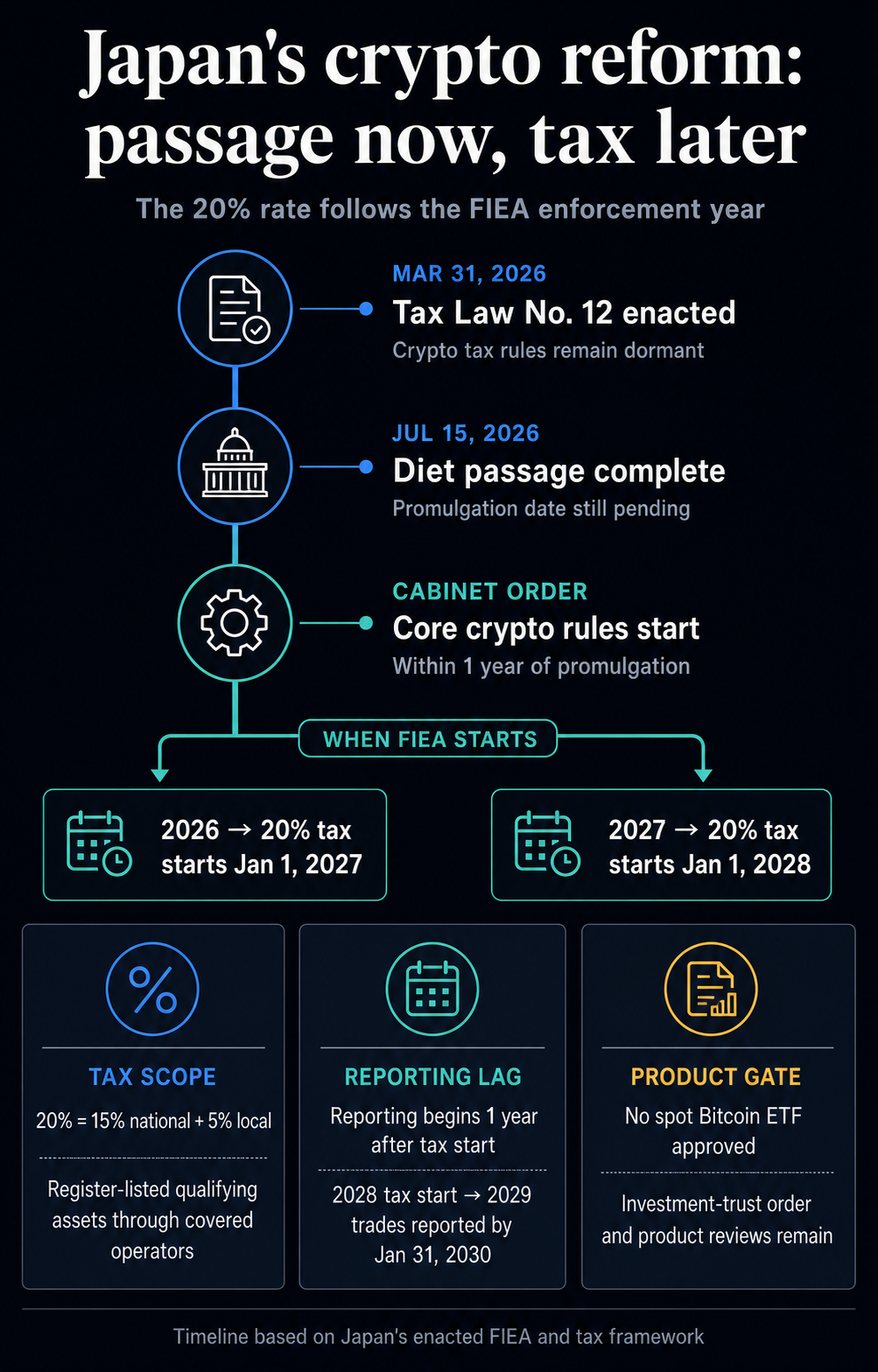
This isn’t happening in a vacuum. Morgan Stanley’s spot Bitcoin ETF just recorded the best first trading day of any ETF in the firm’s history. Japan passed landmark legislation officially recognizing crypto as a financial asset. The US Treasury is now sharing classified cybersecurity threat intel with crypto firms, the same briefings they give JPMorgan and Goldman Sachs. These aren’t coincidences. They’re a pattern.
The noise wants you distracted. The signal is pointing up. $76K is the next level worth watching. A clean close above it opens the door to a run toward $80K before Bitcoin 2026 in Las Vegas. The macro backdrop is constructive: Middle East peace deal momentum, continued ETF inflows, and a market that just posted its longest win streak since October 2025.
We’re heading into the conference with Bitcoin in breakout territory. And three of you are about to walk into The Venetian on a Pro Pass we gave you. That’s what this community is about.
🏆 Bitcoin 2026 Pro Pass — Winners Announced
April 27–29. The Venetian Resort, Las Vegas. 30,000 Bitcoiners from around the world. The Bitcoin for Corporations Symposium. The BMAG gallery featuring the original copy of The Times of London from January 3, 2009 — the actual newspaper Satoshi Nakamoto embedded into the Bitcoin genesis block. Live keynotes. Networking. Side events every night at LIV, Omnia, and TAO.
This is not a crypto meetup. This is the world’s largest Bitcoin conference, and three of you are going on a Pro Pass worth $1,499 each.
Thank you to everyone who subscribed, referred friends, and followed along over the past three editions. The response blew us away.
🥇 Justine J.
🥈 Amy K. (Byrrgis)
🥉 Solve M. (rip.xyz)
Each winner has been contacted directly by email. If that’s you, check your inbox. You have 48 hours to confirm your spot.
Didn’t win this time? We’ll be back with more. Stay subscribed and keep referring.
Bitcoin at $75K changes the mining math. Filip Primec from NiceHash joined us to explain how their marketplace lets anyone buy or sell computing power without owning hardware, why buyers are currently paying a premium to get it, and how one person turned a $70 rental into a $200,000 Bitcoin block. If you’ve ever been curious about the mining side of this market, this is the plain-English version.
Bitcoin is breaking out. $75K has been cleared this morning and price is holding above it. This is the level we’ve been flagging for three editions.
The 4H structure is clean: higher highs, higher lows, and Smart Money positioning that’s been accumulating since the March 30 low. RSI is elevated but not yet overextended. There’s room to run before a meaningful cooldown. The S&P 500’s longest win streak since October 2025 is providing macro tailwind, and institutional ETF inflows are absorbing sell pressure at every retest.
My bias: BULLISH — cautiously aggressive. The macro variable that matters most this week is the Middle East peace deal narrative. Watch Thursday’s close.
What I’m watching: A clean daily close above $75,500 with above-average volume. If we get that, $78K–$80K becomes the next range. If we lose $73K on a daily close, the breakout has failed and we reassess.
ETH is lagging BTC on this move, which is normal in the early stage of a Bitcoin breakout. The question is whether it catches up.
The 4H is showing consolidation rather than distribution, which is a constructive sign. Smart Money signals are neutral-to-bullish, RSI has room to expand, and the Golden Cross on the daily is still intact. ETH tends to follow BTC with a 24–48 hour lag on breakout moves. If BTC holds $75K into Wednesday, expect ETH to start moving.
My bias: BULLISH — waiting for confirmation. ETH needs a daily close above its current range high to turn aggressive.
What I’m watching: ETH holding its current support range and a BTC daily confirmation. When ETH starts outperforming BTC on a percentage basis, that’s when this gets loud.
📌 BMNR just crossed 4% of all ETH
As of April 12, 2026, Bitmine Immersion Technologies (NYSE: BMNR) holds 4,874,858 ETH — 4.04% of the entire ETH supply of 120.7 million tokens. That’s $10.75 billion in ETH, with 3.33 million tokens already staked through their MAVAN validator network generating $212 million in annualized staking revenue. Tom Lee’s firm calls this the “final stages of the mini-crypto winter.” Their stated goal is 5% — what they call the “Alchemy of 5%” — and they’re 81% of the way there in just 9 months. One firm accumulating 4% of the entire supply is not a trade. It is a structural shift in who owns ETH and what that means for price discovery.
The Original DePIN Protocol, Now with Its Own Layer One. 10M+ nodes. A decade of proof-of-work. XYO’s Layer One is built for high-volume data, AI infrastructure, and real-world asset tokenization, with dual tokens $XYO and $XL1.
Filtered for signal, not noise. CCS articles linked where we’ve covered it in depth.
⭐⭐⭐
Bitcoin breaks $75K on institutional inflows and a shifting macro backdrop. This isn’t retail chasing a headline. ETF inflows hit $471 million in a single day last week. Morgan Stanley launched a spot Bitcoin ETF at the lowest fee in the US market and recorded the strongest first-day inflows of any ETF in the firm’s history. The buyers who showed up during Extreme Fear are now sitting on a breakout.
⭐⭐⭐
Strategy buys 13,927 BTC worth $1 billion. Saylor telegraphed it with one post: “Think ₿igger.” He bought while most people were convinced the cycle was over. That’s the entire playbook in two words.
⭐⭐⭐
Japan officially recognizes cryptocurrency as a financial asset. This is landmark legislation from the world’s third largest economy. It doesn’t make the price go up tomorrow. It changes the floor for where this industry is permitted to go.
US Treasury shares classified cybersecurity threat intelligence with crypto firms for the first time. The same briefings quietly given to JPMorgan and Goldman Sachs for years. Washington just decided crypto infrastructure is a national security matter.
Clarity Act gaining real momentum. SEC Chair Paul Atkins, Coinbase CEO Brian Armstrong, and Senator Lummis all called for passage in the same week. Lummis put a deadline on it: “This is our last chance until at least 2030.”
$175 million in shorts liquidated in 60 minutes as Bitcoin pushed toward $74K Monday. That is what a short squeeze looks like in real time.
Circle drops nearly 10%. Compass Point initiates with a Sell rating. Revenue-sharing deals with Binance, Sky, and Ethena are compressing margins even as USDC supply grows. More supply, thinner profits.
Deutsche Börse acquires a $200M stake in Kraken. The German stock exchange is buying into crypto infrastructure. Every institution that follows brings this market further inside the system.
Background reading that hits differently this week
Three weeks ago Bitcoin was at $67K and the Fear and Greed Index was sitting in Extreme Fear. The Iran headlines were ugly. The charts looked broken. Most people were quietly convinced the cycle was over.
Now we’re here.
This isn’t a lucky bounce. The Morgan Stanley ETF launched at the lowest fee in the market. Japan passed a law recognizing crypto as a financial asset. The US Treasury started briefing crypto firms on classified security threats, the same briefings they give Goldman Sachs. Strategy bought another billion dollars in Bitcoin while most people were panicking. None of that happened by accident. That’s accumulation. That’s conviction. That’s the market telling you something if you’re paying attention.
I’ll be in Las Vegas April 27. If you’re going to be there, reply and let me know.
Ashton Addison
CEO, Crypto Coin Show
Are you buying BTC above $75K?
Or waiting for a pullback before your next move? Hit reply and let me know. I read every response.
Our TON price prediction anticipates a high of $4.35 in 2026.
In 2028, it will range between $7.26 and $9.49, with an average price of $7.60.
In 2030, it will range between $17.71 and $20.42, with an average price of $18.27.
TON (The Open Network) is a decentralized protocol designed by Telegram and created by the community. The protocol is a distributed supercomputer, or “super server,” comprising TON Blockchain, TON DNS, TON Storage, and TON Sites. The native token for the TON ecosystem is called Toncoin.
“Will TON ever go up? Can TON reach $10? Where will TON be in five years?” These are the questions traders and investors ask. Let’s answer them and more in our Toncoin price prediction.
Overview
Cryptocurrency
Toncoin
Ticker
TON
Current price
$1.38
Market cap
$3.44B
Trading volume
$118.07M
Circulating supply
2.48B
All-time high
$8.24 on Jun 15, 2024
All-time low
$0.3906 on Sep 20, 2021
24-hour high
$1.44
24-hour low
$1.39
TON price prediction: Technical analysis
Metric
Value
Volatility
4.73% (Medium)
50-day SMA
$1.28
200-day SMA
$1.91
Market sentiment
Bearish
Green days
18/30 (60%)
Fear and Greed Index
21 (Extreme Fear)
TON price analysis
On Apr 14, TON’s price was down 2.62% over 24h but up 6.99% over 30 days. Its trading volume fell by 6.25% to $117M, indicating waning trading interest.
The MACD histogram indicates positive momentum this week, as it trades above the $1.30 support level. The Relative Strength Index (RSI) at 60.74 is in the neutral region.
TON’s negative momentum is rising, limiting further upside. Short term support and resistance levels are at $1.24 and $1.48, respectively. The RSI is neutral (48.35).
TON technical indicators: Levels and action
Daily simple moving average (SMA)
Period
Value ($)
Action
SMA 3
1.59
SELL
SMA 5
1.46
SELL
SMA 10
1.30
BUY
SMA 21
1.25
BUY
SMA 50
1.28
BUY
SMA 100
1.42
SELL
SMA 200
1.91
SELL
Daily exponential moving average (EMA)
Period
Value ($)
Action
EMA 3
1.28
BUY
EMA 5
1.31
BUY
EMA 10
1.39
SELL
EMA 21
1.48
SELL
EMA 50
1.60
SELL
EMA 100
1.84
SELL
EMA 200
2.30
SELL
What to expect from the TON price analysis next?
If TON holds above the $1.30 swing low support, it will continue to trade sideways; a break below would risk a test toward $1.10. Watch for a recovery above the 5-day EMA at $1.31 to signal stabilization.
Is TON a good buy?
According to Cryptopolitan price predictions, TON will trade higher in the years to come. However, factors such as market crashes or stringent regulations could invalidate this bullish theory.
Will TON reach $10?
Yes, TON should rise above $10 in 2029. The move will come as the market recovers to previous highs.
Will TON reach $100?
Per the Cryptopolitan price prediction, TON is unlikely to reach $100 before 2031.
Will TON reach $1,000?
Per the Cryptopolitan price prediction, TON is unlikely to reach $1000 before 2031.
Does Toncoin have a future?
TON has had a bullish run since its inception despite seasonal market corrections. The TON blockchain has a vibrant community of users and developers. Looking ahead, Toncoin has the potential to trade higher in the coming years.
Recent news
TON’s blockchain ecosystem conference, set for May in Dubai, has been canceled amid the escalating conflict in the Middle East.
TON price prediction April 2026
The TON April price prediction ranges from $1.27 to $2.20. It will average at $1.60.
Period
Potential low ($)
Potential average ($)
Potential high ($)
April
1.27
1.60
2.20
TON price prediction 2026
As 2026 unfolds, TON remains bullish, as evidenced by the price registering higher highs. The price will range between $0.97 and $4.35. The average price for the month will be $2.23.
Year
Potential low ($)
Potential average ($)
Potential high ($)
2026
0.97
2.23
4.35
TON price prediction 2027-2032
Year
Potential low ($)
Potential average ($)
Potential high ($)
2027
4.48
4.80
5.71
2028
7.26
7.60
9.49
2029
11.84
12.22
14.29
2030
17.71
18.27
20.42
2031
24.31
25.16
30.81
2032
35.21
37.37
45.12
TON price prediction 2027
The TON token prediction climbs even higher into 2027. According to the prediction, Toncoin’s price will range from $4.48 to $5.71, with an average of $4.80.
Toncoin (TON) price prediction 2028
The analysis suggests a further acceleration in TON’s price. TON will trade between $7.26 and $9.49. It will average at $7.60.
TON price prediction 2029
According to the Toncoin forecast for 2029, the price of TON will range from $11.84 to $14.29, with an average of $12.22.
TON price prediction 2030
The TON price prediction for 2030 is $17.71 to $20.42. The average price of Toncoin will be $18.27.
TON price prediction 2031
The Toncoin price forecast for 2031 has a high of $30.81. However, when the market corrects, TON will reach a minimum price of $24.31 and an average of $25.16.
TON price prediction 2032
The year 2032 will experience more bullish momentum. According to the TON price prediction, it will range between $35.21 and $45.12, with an average trading price of $37.37.
TON price prediction 2026 – 2032
TON market price prediction: Analysts’ TON price forecast
Platform
2026
2027
2028
Coincodex
$2.05
$2.63
$3.41
Gate.com
$1.22
$1.31
$1.53
Cryptopolitan TON price prediction
Our predictions show TON will achieve a high of $4.35 in 2026. In 2028, it will range between $7.26 and $9.49, with an average of $7.60. In 2030, it will range between $17.71 and $20.42, with an average of $18.27. Note that the predictions are not investment advice. Seek independent professional consultation or do your research.
Ton network launched in 2018 as the Telegram Open Network (TON) but was later renamed “The Open Network” and taken over by the TON Foundation.
In June 2020, all Toncoin tokens (98.55% of the total supply) became available for mining.
The tokens were placed in special Giver smart contracts, enabling anyone to mine until 28 June 2022. Users mined around 200,000 TON daily.
All the tokens were mined in two years, marking the completion of the distribution event.
On September 20, 2021, TON registered its all-time low price at $0.3906.
Its first significant break came in November 2021. Over the past few days, the coin has slid from $0.8 to $4.5.
It corrected in 2022, reaching a low of $0.9.
In 2023, it ranged between $1.1 and $2.5.
In 2024, it registered another bull run, rising from $2.11 to its all-time high of $8.24 on Jun 15, 2024.
It corrected later, trading at $5.2 in October and $4.98 in November, when it started recovering.
The recovery saw the coin rise above $6.5 in December.
It then crossed into 2025, trading at $5.5. From there, it entered a bear market, falling below $3.8 in February and $3.0 in May. It crossed into June, trading at $3.20, and it maintained the level into August. In October, it fell to $3.00, and in November to $2.50.
In December, it traded at $1.60 and rose above $1.80 in January 2026. The trend reversed in February, falling below $1.40. In April, it traded at $1.20 mark.
Stablecoin tax treatment in the U.S. is at the center of a new legislative push to exempt qualifying daily transactions involving regulated payment stablecoins from tax.
The latest version of the PARITY Act would stop gain or loss recognition on certain stablecoin sales unless a taxpayer’s basis falls below 99% of the token’s redemption value, marking a direct attempt to treat routine stablecoin spending more like cash payments. The proposal also revises rules on staking rewards and digital asset wash sales, while lawmakers in Washington continue to debate broader crypto legislation.
Stablecoin payments provision removes small transaction tax burden
The bill is grounded on the past discussion drafts issued in December 2025 and on March 26, 2026. The earlier proposal recommended a $200 limit on payments made with regulated payment stablecoins, as in the de minimis section.
That structure was altered in the March 2026 draft. Instead of using a de minimis criterion, the text states that no gain or loss would be recognized on the sale of a regulated payment stablecoin unless the taxpayer’s basis in that stablecoin is less than 99% of its redemption value.
Another standard eliminated by the draft was the previous $200 standard. In addition, it created a deemed basis of $1 for exchanges, which the text treats separately from the stablecoin’s sales. That development solves one of the long-term problems of crypto users. The current tax treatment states that any payment made using USDC or USDT can result in a taxable event, even when the change in value is minimal.
Meanwhile, the bill creates a distinction between passive staking and other activities, such as trading. It would also enable taxpayers to decide when to record staking rewards, upon receipt or after a deferral period of not more than 5 years, as indicated in the material. To qualify under the proposed stablecoin treatment, the asset must be regulated under the GENIUS Act and remain within 1% of its $1 peg.
Stablecoin debate comes alongside ongoing crypto policy pressure
The tax proposal comes following pressure on other digital asset legislation, including the CLARITY Act. Senator Cynthia Lummis recently pointed out that the bill could remain stalled until 2030 if the Senate fails to act before the 2026 election cycle.
At the same time, as reported by Cryptopolitan, the Trump White House has pushed back on concerns over stablecoin yield provisions. A Council of Economic Advisors report dated April 8 said the effect on bank lending would be limited, estimating a 0.02% increase, or about $2.1 billion.
The same report said community banks would face about $500 million in additional obligations, equal to a 0.026% increase over current lending activity. It concluded that banning yield would provide little protection for bank lending while giving up consumer benefits tied to competitive returns on stablecoin holdings.
Your bank is using your money. You’re getting the scraps. Watch our free video on becoming your own bank
A Las Vegas online casino company has struck a deal with Crypto.com to offer prediction market contracts in the U.S., entering what could become a trillion-dollar industry.
High Roller Technologies (NYSE: ROLR) is the company behind the High Roller and Fruta casino brands. It has signed an agreement with Crypto.com’s derivatives arm, known as CDNA. U.S. customers will be able to trade event-based contracts across finance, sports, and entertainment.
It’s the company’s first move into prediction markets, a space that’s been attracting serious money. Analysts have floated projections of $1 trillion or more in annual U.S. trading volume if the market matures, with global figures potentially higher.
Crypto.com co-founder and CEO Kris Marszalek cited High Roller’s existing platform as the draw. “Together, we believe we can expand access to regulated event contracts in the United States through a differentiated and highly scalable offering,” he said. High Roller CEO Seth Young said the company has spent months preparing for the launch.
Partnership creates new revenue channels
The arrangement designates Crypto.com and its affiliates as prediction contract suppliers across High Roller’s U.S. distribution network. High Roller (NYSE: ROLR) plans to operate through the structure, which is expected to generate additional revenue streams for the company.
CDNA is already registered with the CFTC as both a designated contract market and a derivatives clearing organization. High Roller plans to register as a CFTC Introducing Broker and connect with Crypto.com’s CFTC-registered Futures Commission Merchant.
Rivals attracting billions in investment
The news comes during a frenzy of investment in the prediction market space. Rival platform Kalshi just hit a $22 billion valuation after raising roughly $1 billion, led by Coatue Management, double its December valuation, which drew backing from Andreessen Horowitz, Sequoia, Ark Invest, and Paradigm.
The company’s rise accelerated after winning a court fight with the CFTC in May 2025 that cleared it to offer election contracts, taking it from $2 billion to $22 billion in under a year.
Polymarket closed a $1.6 billion investment from Intercontinental Exchange, the NYSE’s parent company, fulfilling a commitment ICE first made in October 2025 when it valued Polymarket at $9 billion. ICE also plans to buy up to $40 million in Polymarket securities from existing holders.
The initial ICE commitment reached as high as $2 billion, with $1 billion deployed upfront. The additional $600 million brings ICE’s total obligation to completion.
High Roller (NYSE: ROLR) raised about $25 million in January through a direct share offering, selling roughly 1.9 million shares at $13.21 apiece. The placement, handled by ThinkEquity, closed on January 21. Proceeds are going toward marketing, expansion, product development, and operations.
On April 1, the NYSE American confirmed the company had resolved a prior stockholders’ equity deficiency, having demonstrated compliance for two consecutive quarters. The compliance indicator on its ticker was removed that morning. The company remains under standard listing oversight going forward.
High Roller’s platform hosts more than 6,000 games from over 90 providers.
If you want a calmer entry point into DeFi crypto without the usual hype, start with this free video.
XYO Layer One Gets Faster, Stronger, and Ready for What’s Next
Protocol Update · XYO Network · Layer One
XYO Layer One Gets Faster, Stronger, and Ready for What’s Next
A throughput jump of up to 5x, dual DataLake support, and tightened validator stability — the latest round of updates from Arie Trouw signals a chain moving from foundation to momentum.
AA
Ashton Addison
Founder & CEO · Crypto Coin Show · Since 2014
11 April 2026
XYO Layer One has been running quietly beneath the surface — and with the latest round of updates shipped directly by co-founder, CEO, and CTO Arie Trouw, that quiet work is starting to show. More throughput, more flexible data architecture, and a more stable validator layer: these are not marketing milestones. They are the kind of changes that make everything built on top of the chain more reliable.
Trouw’s hands-on involvement throughout the build has been consistent since the start. The updates now arriving aren’t the output of a roadmap drafted in a boardroom — they reflect someone who has been shaping the architecture directly. That context matters when reading what has changed.
5x
Throughput improvement (upper range)
2
DataLake modes — private & public
XL1
Float still low — window remains open
I.The Updates
Four Changes That Actually Matter
The headline number is throughput. Chain capacity has been pushed significantly higher — landing in the range of two to five times the previous ceiling. That range isn’t vagueness: it reflects how performance improvements compound differently depending on load. Under pressure, the gains are most visible. Data-heavy use cases that previously hit artificial ceilings now have room to run.
Alongside raw capacity, the team has added both private and public DataLake support directly into the SDK. The significance of this is architectural. Developers can now decide at the implementation level how data is stored, accessed, and shared — permissioned and controlled for sensitive records, open and composable for data that benefits from public availability. Both paths still tie back to verifiable records on XYO Layer One. This is how real systems operate, and now the infrastructure reflects that.
“A chain that handles real-world data has to stay consistent under unpredictable conditions. This is the kind of progress that shows up over time, quietly removing friction.”
XYO Layer One Update · April 2026
The third and fourth updates are less visible but no less important. Producer and validator stability fixes have been worked through — the unglamorous infrastructure work that determines whether everything built on top of a chain is actually reliable. Producers need to produce. Validators need to validate. When those roles hold steady under real-world conditions, the chain earns the credibility that adoption requires.
SDK
Private & Public DataLake Support
Developers choose how data is stored and shared — permissioned or open — while both paths remain anchored to verifiable Layer One records.
Performance
2x–5x Throughput Increase
Chain capacity pushed significantly higher. Data-heavy use cases stop hitting ceilings. The chain behaves differently under pressure — in the right direction.
Infrastructure
Validator Stability Fixes
Producer and validator consistency improved under unpredictable conditions. The work that doesn’t make headlines but determines whether everything above it holds.
Market
KuCoin Spot Trading Competition Live
Active competition bringing fresh participation into the ecosystem — infrastructure progress and market activity beginning to align.
II.The Economics
A Window That Won’t Stay Open
While the technical work continues, the economic picture is shifting alongside it. Float for XL1 remains relatively low — but the conditions that make that true are not permanent. As more participants enter and more XYO is committed to supporting the network, available supply tightens. Access becomes more competitive. The timing of participation starts to carry more weight.
The KuCoin spot trading competition currently live is one marker of that shift — fresh attention and volume entering the ecosystem at a moment when the infrastructure underneath is meaningfully stronger than it was. That combination doesn’t arrive at the same time indefinitely.
Context: XYO Layer One is being built to handle real-world data at real scale. The updates from Arie Trouw reflect a chain that has moved through its foundation phase — better data handling, higher throughput, more stable operation, and increasing participation are all present at once. The balance between availability and demand has begun to shift.
It is still early. Just not as early as it was.
This article is based on the official XYO Layer One development update published 11 April 2026 by Arie Trouw, Co-founder, CEO, and CTO of XYO Network.