Mastercard and Borderless.xyz started testing Crypto Credential on Wednesday for cross-border stablecoin payment flows.
The pilot targets firms moving dollars on-chain that want to know who is on the other side of a transaction.
Infinia, Walapay, and Koywe test Crypto Credential
The trial runs over Borderless.xyz’s payments network. Firms that participate embed Crypto Credential’s assurance signals into their transaction approval, screening, and risk management process.
Infinia, Walapay, and Koywe are the first stablecoin payment operators to run assurance signals at network scale with a single-audit compliance model.
Raj Dhamodharan, Mastercard’s executive vice president for Blockchain and Digital Assets, said the tie-up grew out of Start Path, the company’s startup program.
“Today, we’re excited to take the next step together, exploring how Mastercard Crypto Credential can help bring greater trust and confidence to stablecoin payment flows across a growing network of participants,” he said. Infinia, Walapay, and Koywe are Start Path alumni, too.
Crypto Credential standardizes identity and compliance checks for wallet-to-wallet transactions. It uses shared assurance signals that let one party gauge whether a counterparty met the required standards.
Borderless.xyz operates a stablecoin orchestration and liquidity network, connecting wallet infrastructure to 15+ licensed stablecoin providers in 100+ countries, by its own account.
“One of the biggest friction points for stablecoin payment operators isn’t the payments. It’s that compliance doesn’t scale the same way the network does. Every new provider means starting the verification process over,” said Borderless.xyz CEO and co-founder Kevin Lehtiniitty.
He compared it to correspondent banking, where compliance done at the point of origin is trusted downstream, and reasoned that Mastercard is taking that approach to digital asset payments.
Pilot follows Mastercard’s $1.8 billion BVNK buy
Mastercard acquired BVNK for $1.8 billion, an initial $1.5 billion plus up to $300 million, subject to performance. The acquisition deal cleared regulators five months ahead of the year-end timeline Mastercard set when it announced the purchase on March 17.
BVNK, based in London, runs about $30 billion in annualized stablecoin volume across 130 markets. It holds 25+ regulatory licenses.
Mastercard started regulated settlement for stablecoins, including USDC, PYUSD, and RLUSD, in June. Cryptopolitan reported that the network would process card transactions across eight blockchains with six regulated stablecoins.
Mastercard kicked off a Crypto Partner Program in March with 85+ crypto-native companies, payment providers, and financial institutions for cross-border remittances, settlement, and payouts.
Don’t just read crypto news. Understand it. Subscribe to our newsletter. It’s free.
[PRESS RELEASE – Kingstown, Saint Vincent and the Grenadines, August 5th, 2026]
The former TON executive joins as Director of Strategic Partnerships to form the connections behind ChangeNOW’s next phase.
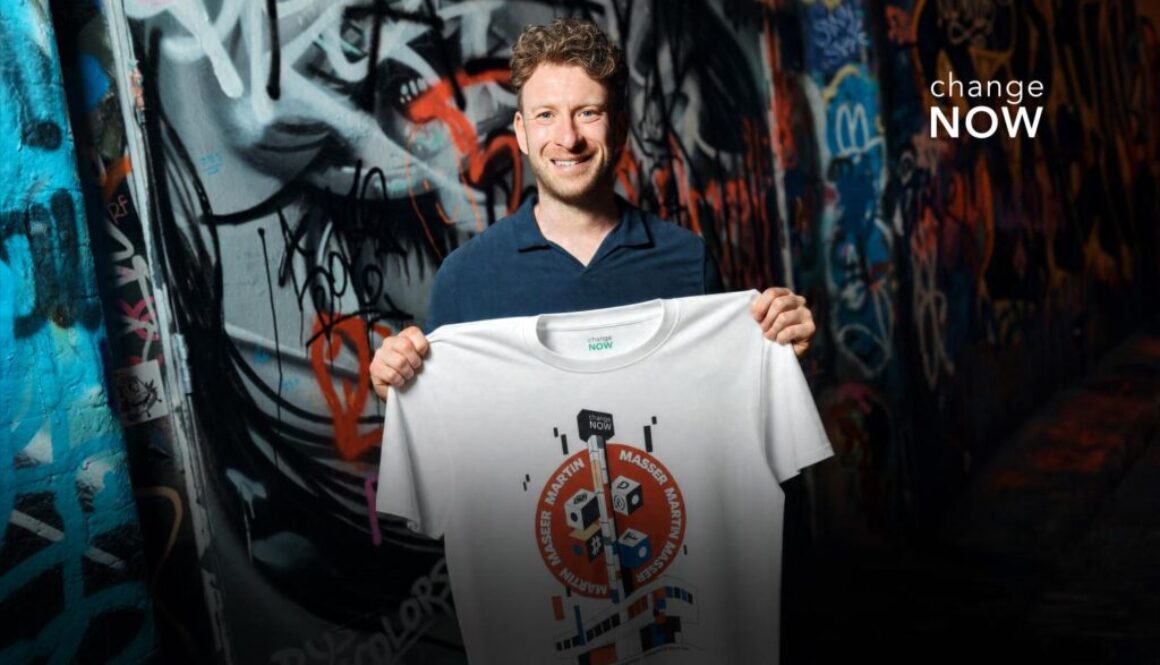
Former TON executive Martin Masser joins ChangeNOW to build strategic partnerships, ecosystem relationships, and media momentum behind its next phase.
Masser comes with experience across traditional banking, Web2 and Web3, including senior growth and business development roles within the TON space. At ChangeNOW, he will lead strategic relationships with blockchain networks, wallets, fintech companies, payment providers and other infrastructure partners.
His appointment comes as ChangeNOW grows beyond standalone crypto services, transitioning to one connected product where users can buy, store, swap, trade, send, receive and grow digital assets. The industry has already built most of the individual components. What it hasn’t solved is the experience of using them together; clients are still expected to switch between platforms, understand different networks and connect the pieces on their own. ChangeNOW’s super app strategy is designed to move that complexity beneath the product.
“Martin brings a rare mix of commercial relationships, product and media understanding,” said Pauline Shangett, Chief Strategy Officer at ChangeNOW. “He knows what the technology can do, what the business needs and how to make the market pay attention. That is exactly the perspective we need as we build the ChangeNOW super app.”
Masser’s role will focus not on accumulating partnership announcements, but on identifying relationships that can make ChangeNOW’s infrastructure more complete and remove unnecessary steps from the сlient experience.
“The best partnerships create access, adoption and attention. My focus is to build relationships that make the product stronger, simpler and more useful, and then help the market understand why they matter. If you are building wallets, networks, payments, stablecoins, fintech infrastructure, consumer crypto or Web3 products, I want to hear from you,” said Masser.
For consumers, ChangeNOW is combining the core activities of managing crypto within one environment. For businesses, it is developing an integrated set of tools for crypto payments, exchange, stablecoin settlement, digital asset management and Web3 integrations.
As ChangeNOW expands into a crypto super app, its next phase is connecting the right networks, wallets and partners. Masser’s role will be central to building those relationships and turning them into product value, adoption and market momentum.
About ChangeNOW
ChangeNOW.io is a crypto super app built for every crypto move, giving newcomers, professionals, and businesses the tools they need to access Web3 finance in a simple and secure way.
Since 2017, ChangeNOW has grown from a fast, secure, and limitless instant exchange into a trusted platform where storage, swaps, trading, staking, and asset management are covered in one simple experience for millions of clients worldwide.
About Martin Masser
Martin Masser is Director of Strategic Partnerships at ChangeNOW, where he is building partnerships around the company’s expansion into a crypto super app. His career covers traditional banking and capital markets in London and Web3, including his previous role as Head of Growth at TON Foundation. Martin works at the intersection of growth, infrastructure, and partnerships, connecting products and industry players to make crypto services work as one seamless user experience.
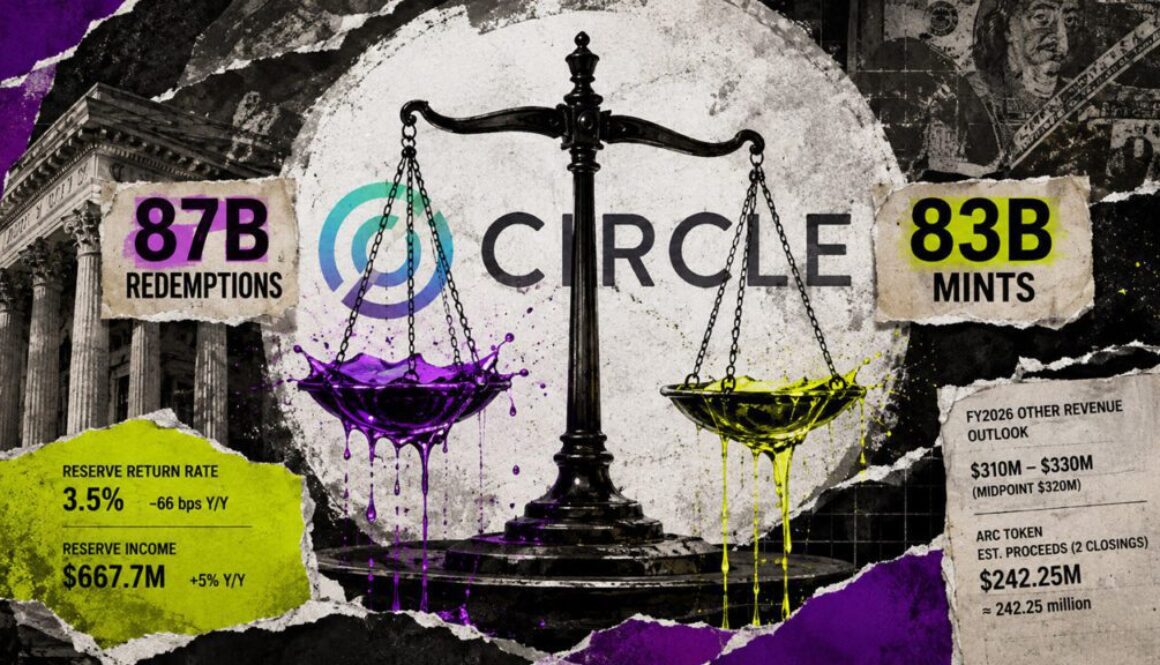
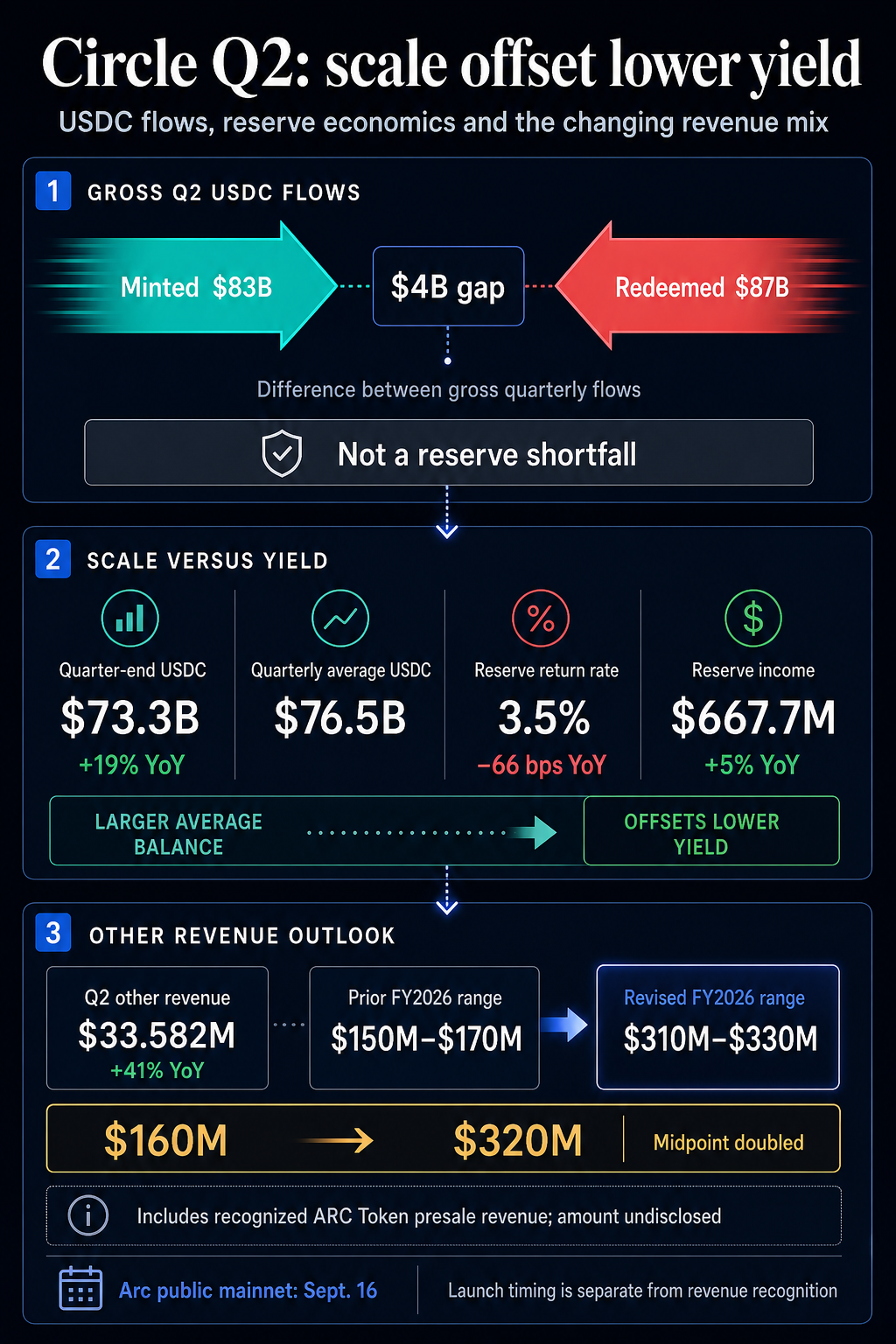
Circle’s reserve engine absorbed a tough second quarter. Gross USDC redemptions exceeded mints by about $4 billion, and reserve yield slipped, while a larger balance base kept reserve income growing.
Its biggest opportunity sits outside its reserves. Circle doubled the midpoint of its full-year other revenue outlook, which includes an undisclosed contribution from the ARC Token presale.
Circle’s Aug. 5 earnings release puts the gross flows at $87 billion redeemed and $83 billion minted. Those rounded figures produce the roughly $4 billion gap.
For Circle Mint customers, minting turns fiat into USDC, and redemption turns USDC back into fiat, according to Circle’s regulatory filing. The $4 billion difference describes customer flow activity, separate from reserve adequacy.
Quarter-end USDC circulation was $73.3 billion, against a $76.5 billion quarterly average. It remained 19% higher than a year earlier.
Circle’s reserve return rate fell 66 basis points year over year to 3.5%. The larger average USDC balance absorbed the rate hit, lifting reserve income 5% to $667.7 million.
The 66-basis-point drop is a year-over-year comparison. The Federal Reserve held its target range at 3.50% to 3.75% in both April and June. Circle’s 3.5% figure measures the return on its reserve portfolio.
Other revenue remained small beside reserve income, though it climbed 41% year over year to $33.582 million. Circle rounded that to $34 million and credited growth in subscription and services revenue.
The outlook changed much faster. Circle raised FY2026 other revenue guidance to $310 million to $330 million from the $150 million to $170 million range issued in May. The midpoint leaped from $160 million to $320 million.
The revised range includes recognized ARC Token presale revenue. Circle provided no breakdown for that contribution, leaving presale revenue mixed with the rest of the outlook.
Arc is Circle’s blockchain network. The company previously disclosed about $222 million in estimated gross proceeds from the initial ARC Token closing, plus another $20.25 million from a second closing. The two closings total about $242.25 million in estimated proceeds. That figure is different from recognized revenue, and the purchase agreements carry repayment rights under specified circumstances.
While founders debate the Clarity Act, crypto lawyer Dave Rodman has been using the same offshore structure since 2023 — and says it works whether Washington acts or not. Here’s exactly how it works.
By Ashton Addison·Crypto Coin Show — Blockchain Interviews·12 min read
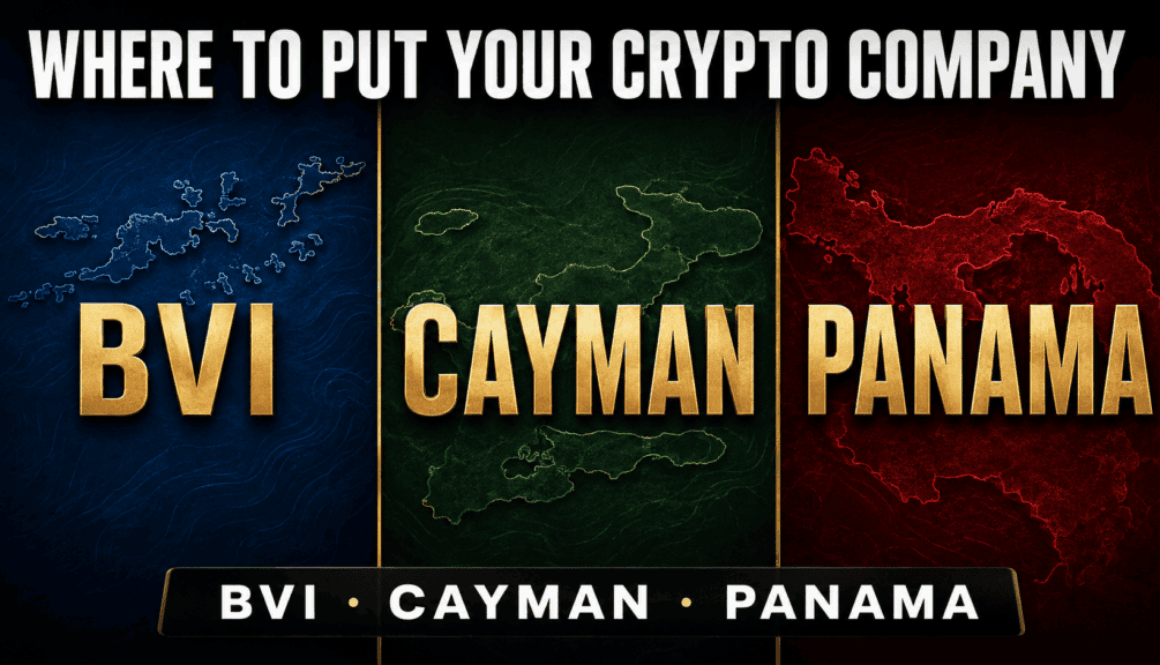
Jurisdiction 01
British Virgin Islands
Token Issuance
The anchor jurisdiction for any project launching a token. The answer has been BVI for years — and still is.
Jurisdiction 02
Cayman Islands
Orphanization & Top Co
Home of the foundation company — an entity with no owners. The cleanest structure for true decentralization.
Jurisdiction 03
Panama
Operations & DeFi
Crypto is legal but unregulated. Anything the US would call “objectionable” has a home here — legally and cost-effectively.
The Interview
Most founders call a lawyer too late. Dave Rodman has seen it a thousand times.
Dave Rodman has spent his entire legal career in the spaces that scare other lawyers off — cannabis, psychedelics, venture capital, and for the last decade, crypto. As Founder and Managing Partner of The Rodman Law Group, he has facilitated over a billion dollars in digital asset transactions and watched the regulatory landscape twist in every direction imaginable. He sat down with Crypto Coin Show to talk about what actually matters for crypto founders right now — and it isn’t the Clarity Act.
“It certainly isn’t boring,” Rodman told us when asked about his career. “It’s been intellectually stimulating and wildly frustrating and rewarding all at the same time.” For a lawyer who chose his specialty long before big law firms had even assigned a practice group to the space, that tension has become familiar territory.
“Move fast and break stuff doesn’t work when the underlying product either is a financial instrument, functions like one, or looks like one.”
— Dave Rodman, Founder, The Rodman Law Group
The single most expensive mistake crypto founders make, according to Rodman, is waiting. Not waiting on legal counsel specifically — waiting on any structured thinking about compliance. The analogy he borrowed from our conversation: it’s like skipping the gym to save time, then paying for it in medical bills later. A lawyer on day one is an investment, not a cost.
Why the Clarity Act doesn’t change Rodman’s playbook
If you’ve been following crypto policy, you know the Clarity Act has been the marquee legislative promise of the current cycle — a framework that would finally resolve whether digital assets are securities or commodities, and who gets to regulate them. Rodman’s take? It won’t pass this year. And even if it does, it won’t matter as much as people think.
“There has never been an example where a thing is regulated by one agency until a nebulous point that no one understands, and then magically regulated by another,” he said. “I think both the SEC and CFTC are going to try to regulate that project at that moment — and there are going to be nasty results.”
The GENIUS Act passed, bringing some clarity to stablecoins. But Rodman points out it was gutted in a critical area: you can’t get yield-bearing stablecoins in the US. His clients’ response? Go offshore and get them permissionlessly anyway.
His broader thesis is more unsettling than any specific piece of legislation: the US is grasping at straws. A country in late-stage capitalism trying to maintain financial dominance over an industry whose entire value proposition is that borders don’t matter. He predicts a well-developed country in the global south — likely in Africa — will eventually take the position that tokens are not securities, allow programmatic revenue distribution, and leapfrog the entire regulatory tangle the way the African continent jumped from landlines directly to smartphones.
The three jurisdictions — and exactly how to use them
This is where the conversation gets practical. Rodman’s firm has refined its offshore structure since 2023, and uses the same three jurisdictions for nearly every client. The stack isn’t arbitrary — each jurisdiction does a specific job, and the combination was engineered to hold up across the scenarios crypto companies actually face.
BVI for token issuance. It’s always been BVI. The British Virgin Islands has the longest track record in the space for this use case, and nothing about the current landscape has changed that calculus. If you’re issuing a token, your issuing entity goes here.
Cayman for orphanization. The Cayman foundation company, introduced around 2020, was a structural breakthrough. It’s an entity with no owners — which makes it the ideal vehicle for decentralization. When you need a top-co that no individual can claim ownership of, Cayman is the answer. Rodman’s standard model: BVI token issuer, Cayman foundation on top.
Panama for everything else. This is the workhorse for operations — especially anything the US would classify as sensitive. Crypto in Panama is legal but unregulated, which gives founders something rare: a jurisdiction where you can operate legitimately while the rest of the world sorts out its rules. Rodman’s firm works with a sister firm on the ground there to produce legal opinions confirming each project is viable.
“If you’re going to have a social media company that needs a token — issue in BVI, orphanize with Cayman, run the social company in the US. It plugs in. And if Facebook wants to acquire you, you unplug the token and sell them a clean US company.”
— Dave Rodman
For founders who want a more regulated path and have the budget for it, Rodman also flagged Bermuda as an underrated option — a jurisdiction where startups can legitimately obtain a financial license, sit with regulators to agree on operating rules, build a compliance track record, and eventually transition to the US when the laws are ready. Rare that clients take him up on it, but the path exists.
Watch the Full Interview
AI agents, liability, and why “code is law” is still wrong
The conversation shifted to an area that’s getting more relevant by the month: AI agents operating autonomously in crypto — managing wallets, executing trades, running DAOs. Who is legally liable when one of them does something wrong?
Rodman’s answer is straightforward, if unsatisfying to founders hoping for a loophole: there are no special AI laws. The liability framework that applies is the same one that’s always applied. Did your product break? Did you disclose its limitations? What did your terms of service say? The existing reasonable-person standard, applied to whoever built the system and whoever deployed it, is the legal reality for now.
He’s also a practitioner of what he preaches. He told us he’s about a month away from having his first AI employee at the firm — built using the same tools available to anyone. If a lawyer can do it, he says, the developers in this space are inches from full agentic operation.
The compliance rule nobody’s talking about: CARF
Before wrapping, Rodman raised something that caught our attention — a framework most DeFi founders have never heard of, called CARF: the Crypto Asset Reporting Framework. It’s a worldwide compliance standard that most major countries have already signed, including the US, Panama, and Cayman. It requires DeFi protocols to report users’ gains and losses to tax agencies.
The mechanism of enforcement is still murky. How do you force a decentralized protocol to comply with a reporting requirement? Rodman doesn’t have a clean answer — nobody does. But the ticking clock is real: the US component takes effect in January. Some other jurisdictions come online in 2028. Projects who get caught in the first enforcement wave won’t be able to say they weren’t warned.
CARF in plain terms: most major countries — including the US, Panama, and Cayman — have signed a framework requiring DeFi protocols to report user gains and losses to tax agencies. America’s component kicks in this January. Most founders in the space have never heard of it.
His closing note on AI and legal risk was pointed: using Claude — his word — to ask whether something is legal is discoverable. If AI advice tells you something is illegal and you do it anyway, a prosecutor can use that. Attorney-client privilege cannot. It’s a distinction worth understanding before the next project launch.
The Rodman Law Group
Building in crypto and haven’t talked to a lawyer yet?
The Rodman Law Group works with crypto founders and Web3 companies on incorporation, token launches, offshore structuring, regulatory compliance, and everything in between. They serve clients across DeFi, DAOs, NFTs, and Web3 globally — and they operate in all three jurisdictions covered in this interview.
Ripple’s cross-border token has plunged by 5% over the past month to the current $1.07.
This is just above the crucial $1.06 zone, which, according to some analysts, can trigger the next decisive breakout.
Bulls vs. Bears
Ali Martinez believes that “everything comes down to $1.06 for XRP.” In his view, holding the line could open the door to a rally to $1.35 and even $1.64, whereas losing it might result in a potential slump to as low as $0.62.
X user ChartNerd has also stressed the importance of that level. The analyst noted that XRP found support at $1.06, but claimed there is heavy resistance remaining above the $1.08-$1.23 range and “prior ascending support was lost.”
“$1.16 remains the main roadblock ahead of the EMAs. Downward pressure remains until otherwise,” they added.
Shortly after, ChartNerd touched upon XRP’s bearish outlook amid the challenging times. They suggested that the asset may sweep even below $1 in the near future and that “would not be utterly surprising” given the market structure. At the same time, the analyst described such a potential downtrend as “another golden ticket entry in disguise.”
“The next few months are setting the stage for the next market repricing. Maybe the biggest yet,” they added.
Additional Forecasts
EGRAG CRYPTO and JAVON MARKS also gave their two cents. The former opined that XRP has lost the 50 MA and is approaching the 100 EMA, a zone that has historically provided strong long-term support.
The analyst labeled a possible retrace to the $1-$0.95 range as a “healthy macro retest while holding the 100 EMA.” They set $0.80 as “maximum downside” if XRP tumbles to the lower boundary of the long-term channel, but said the targets of $15, $27, and $50+ don’t shrink and rise in time.
As of now, it’s hard to imagine an explosion to even $15 since it will require the token’s market capitalization to skyrocket to nearly $1 trillion. But then again, no one really knows what the future holds.
JAVON MARKS was also bullish, albeit presenting a far more modest prediction than EGRAG CRYPTO. They claimed that XRP has shown a clear breakout of a key resistance trend and the price can respond by jumping beyond $3.50.
Our GRAM (prev. TON) price prediction anticipates a high of $3.35 in 2026.
In 2028, it will range between $7.26 and $9.49, with an average price of $7.60.
In 2030, it will range between $17.71 and $20.42, with an average price of $18.27.
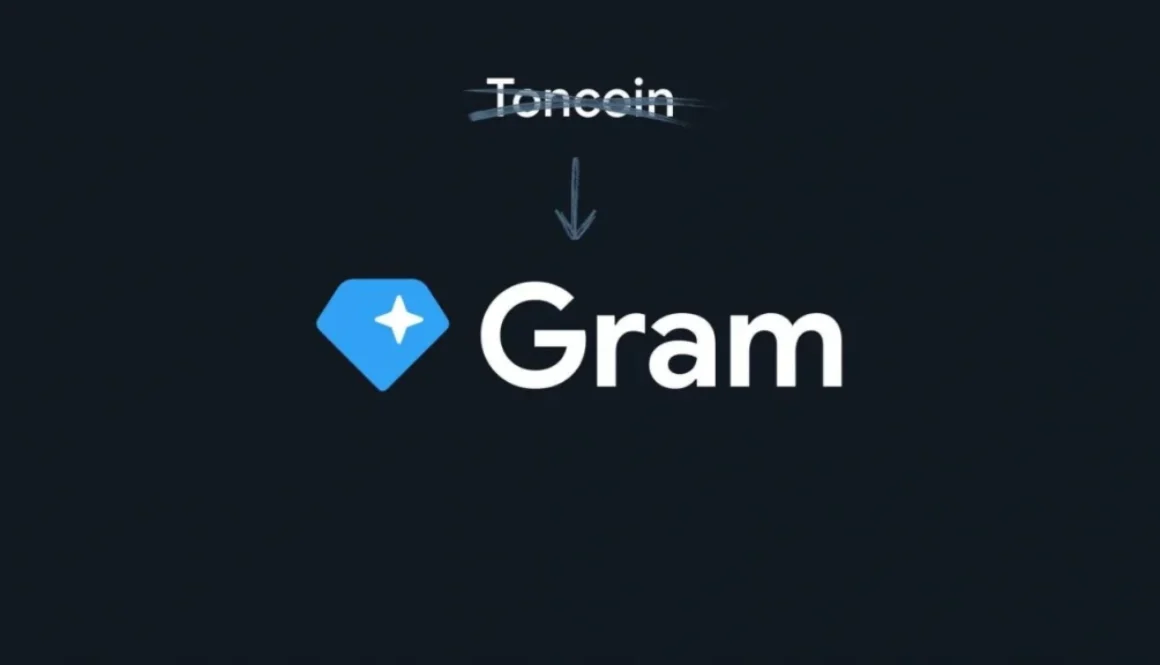
In June, the TON community voted in favor of renaming Gram to Gram, with the ticker changing from GRAM (prev. TON) to GRAM. The change took effect on June 15, 2026. The blockchain itself stays The Open Network. Only the token’s name, ticker, and logo change.
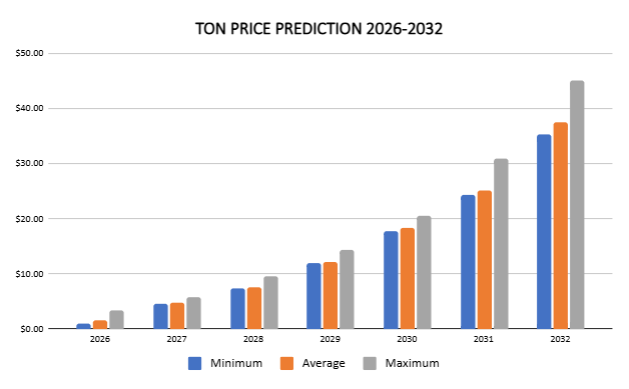
Our GRAM (prev. TON) price prediction expects Gram to reach a high of $3.35 in 2026, move above $10 in 2029, and climb to an average price of $37.37 by 2032. For traders, investors, and crypto enthusiasts tracking Gram, this forecast explains the token’s current price, historical performance, technical analysis, market sentiment, and the price outlook from 2026 through 2032 so readers can make more informed investment decisions.
GRAM (prev. TON) (The Open Network) is a decentralized protocol developed by Telegram for the community. The protocol is a distributed supercomputer, or “super server,” comprising GRAM (prev. TON) Blockchain, GRAM (prev. TON) DNS, GRAM (prev. TON) Storage, and GRAM (prev. TON) Sites. The native token for the GRAM (prev. TON) ecosystem is called Gram (TON).
Gram is the native cryptocurrency of The Open Network and is used for transactions, digital payments, and network-level services, including Telegram Premium and ad purchases. Because Telegram integration gives GRAM access to more than 900 million monthly active users, changes in adoption, sentiment, and utility can materially affect future demand and price growth in a volatile crypto market.
Overview
Cryptocurrency
Gram
Symbol
GRAM
Current price
$1.39
Market cap
$3.81B
Trading volume
$97M
Circulating supply
2.73B
All-time high
$8.24 on Jun 15, 2024
All-time low
$0.3906 on Sep 20, 2021
24-hour high
$1.42
24-hour low
$1.32
GRAM price prediction: Technical analysis
Metric
Value
Volatility (30-day variation)
6.91% (High)
50-day SMA
$1.56
200-day SMA
$1.52
Market sentiment
Bearish
Green days
12/30 (40%)
Fear and Greed Index
25 (Extreme Fear)
GRAM (prev. TON) price analysis
Gram price movements are shaped by supply and demand, and by fundamental factors such as hacks or other market events, while investor sentiment can also affect GRAM price movements and quickly increase price volatility.
Large holders, or whales, can influence short-term price movements, and investors also contribute to short term volatility through financial speculation in the GRAM (formerly TON) market.
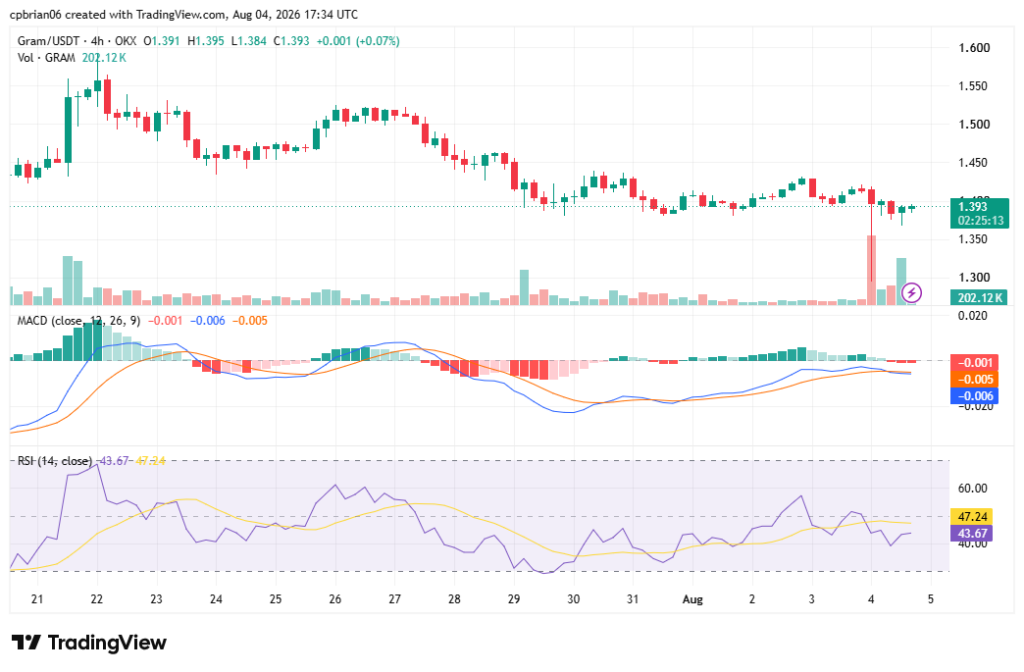
GRAM on Aug 4 was down 1.33% in 24h and down 21.48% in 30 days. Its short-term current forecast is based on technical factors and broader market conditions.
GRAM (prev. TON) turned bearish this month with key support at $1.36. The run was accompanied by rising trading volumes.
Each candle shows the opening, closing, highest, and lowest prices for the session. The latest candlestick pattern on candlestick charts suggests an undecided market – short candles. Traders can use Fibonacci retracement to identify key price levels and spot potential price pullbacks.
Traders use this price action view to predict Gram and to gauge momentum using indicators such as the RSI. The Relative Strength Index (RSI) is a momentum oscillator: readings above 70 can signal overbought conditions, and below 30 can signal oversold conditions, while the current RSI of 40.47 points to a neutral market as traders also watch resistance zones when judging a breakout attempt.
The 4-hour chart shows GRAM producing long candles this week, with negative market momentum. Many traders watch this timeframe for short-term moves and near-term market trends. Traders are now watching to see whether GRAM (prev. TON) breaks below the $1.35 psychological support zone; a recovery above $1.43 could restore upward momentum and increase buying pressure. In the coming days and into next week, direction will likely depend on whether GRAM (prev. TON) can defend that level and reverse from overbought territory. Its RSI is at 47.24.
GRAM (prev. TON) technical indicators: Levels and action
In technical analysis, moving averages use the average closing price over selected periods to help spot support levels and resistance levels.
Daily simple moving average (SMA)
Period
Value ($)
Action
SMA 3
1.41
SELL
SMA 5
1.41
SELL
SMA 10
1.44
SELL
SMA 21
1.47
SELL
SMA 50
1.56
SELL
SMA 100
1.70
SELL
SMA 200
1.52
SELL
Daily exponential moving average (EMA)
Period
Value ($)
Action
EMA 3
1.41
SELL
EMA 5
1.42
SELL
EMA 10
1.43
SELL
EMA 21
1.47
SELL
EMA 50
1.55
SELL
EMA 100
1.59
SELL
EMA 200
1.69
SELL
What to expect from the GRAM (prev. TON) price analysis next?
If GRAM (prev. TON) fails to hold the key support near $1.36, price could slip back toward lower support around $1.30, setting near-term targets in that zone. The relative strength index remains neutral, and broader crypto sentiment could determine whether this setup turns into renewed weakness or a recovery, though the current technical picture does not yet confirm fresh downward momentum. Multiple technical quantitative indicators and moving averages support a neutral GRAM forecast over the short term.
Is GRAM (prev. TON) a good buy?
According to Cryptopolitan price predictions, GRAM (prev. TON) will trade higher in the years to come. However, both technical analysis and fundamental analysis Toncoin can support or invalidate this bullish case for investors deciding whether to buy Gram. Even so, GRAM (prev. TON) remains highly risky, so readers should do their own research before deciding whether GRAM is a good investment.
Will GRAM (prev. TON) reach $10?
Yes, GRAM (prev. TON) should rise above $10 in 2029. Some toncoin price prediction models project a peak near $10 as early as 2027, though this forecast is more conservative. The move will come as the market recovers to previous highs.
Will GRAM (prev. TON) reach $100?
Per the Cryptopolitan price prediction, GRAM (prev. TON) is unlikely to reach $100 before 2031.
Will GRAM (prev. TON) reach $1,000?
According to the Cryptopolitan price prediction, GRAM (prev. TON) is unlikely to reach $ 1,000 before 2031.
Does Gram have a future?
GRAM has been on a bullish run since its inception, despite seasonal market corrections. Future growth will depend in part on the development of more decentralized applications, decentralized storage, and mini apps on the TON network, while future performance will also hinge on user adoption and a growing ecosystem within Telegram, where Gram enables smart contracts for various applications and supports real-world utility. Gram also serves as a fee for cross-chain transactions, and growing demand for toncoin ton as a utility asset across payments and applications could further support its value. The GRAM blockchain has a vibrant community of users and developers, with access to a broad base of Telegram users, and strong network activity, such as transaction volume and on-chain activity, can signal long-term strength. Looking ahead, Gram has the potential to trade higher in the coming years.
Recent news
Russia’s Federal Security Service (FSB) has charged Pavel Durov, founder of Telegram, with facilitating terrorist activity and placed him on an international wanted list, a direct escalation of a criminal case that first surfaced in February 2026.
GRAM (prev. TON) price prediction August 2026
The GRAM (prev. TON) August 2026 GRAM coin price prediction is an expected range of $1.67 to $2.30. It will average at $1.32. Even over a single month, future prices can still be affected by short-term sentiment swings.
Period
Potential low ($)
Potential average ($)
Potential high ($)
August
1.67
1.32
2.30
GRAM price prediction 2026
As 2026 unfolds, GRAM remains bullish within the broader cryptocurrency market, though the outlook will still depend on macroeconomic conditions. The price will range between $0.97 and $4.35, with the average TON price for 2026 projected at $2.23.
Year
Potential low ($)
Potential average ($)
Potential high ($)
2026
0.97
1.63
3.35
GRAM (prev. TON) price prediction 2027-2032
Long-range TON coin price prediction models often combine quantitative and qualitative inputs. Analysts may also use multiple scenarios to estimate future prices over 2027-2032.
Year
Potential low ($)
Potential average ($)
Potential high ($)
2027
4.48
4.80
5.71
2028
7.26
7.60
9.49
2029
11.84
12.22
14.29
2030
17.71
18.27
20.42
2031
24.31
25.16
30.81
2032
35.21
37.37
45.12
GRAM price prediction 2027
The GRAM (prev. TON) token prediction climbs even higher into 2027. According to the prediction, the toncoin price will range from $4.48 to $5.71 in 2027, with an average of $4.80, though regulatory developments and investor sentiment could affect the path toward that range.
GRAM price prediction 2028
The analysis suggests a further acceleration in TON’s price. GRAM (prev. TON) will trade between $7.26 and $9.49. It will average at $7.60.
GRAM price prediction 2029
According to the Gram forecast for 2029, the price of GRAM (prev. TON) will range from $11.84 to $14.29, with an average of $12.22. Even if the longer-term outlook stays bullish, regulatory uncertainty could slow momentum.
GRAM price prediction 2030
The GRAM price prediction for 2030, reflecting the expected toncoin ton price range, is $17.71 to $20.42. The average price of Gram will be $18.27.
GRAM (prev. TON) price prediction 2031
The Gram price forecast for 2031 has a high of $30.81. However, when the market corrects, GRAM (prev. TON) will reach a minimum price of $24.31 and an average of $25.16. Whether it reaches that upper target will also depend on broader market conditions and the adoption of digital assets.
GRAM price prediction 2032
In 2032, there will be more bullish momentum. According to the GRAM (prev. TON) price prediction, it will range between $35.21 and $45.12, with an average trading price of $37.37.
Our predictions indicate that GRAM (prev. TON) will reach a high of $3.35 in 2026. In 2028, it will range between $7.26 and $9.49, with an average of $7.60. In 2030, it will range between $17.71 and $20.42, with an average of $18.27. Note that the predictions are not investment advice. Seek independent professional consultation or do your research before making any investment decision. Crypto assets are highly risky, and there may be limited regulatory recourse for losses from such transactions.
GRAM is the native cryptocurrency of The Open Network, which launched in 2018 as the Telegram Open Network before being renamed and taken over by the TON Foundation. The chain uses proof of stake to support smart contracts and low-cost transactions, and its ties to the Telegram ecosystem provide access to a large user base.
In June 2020, all Gram tokens (98.55% of the total supply) became available for mining, further widening access to that user base.
The tokens were placed in special Giver smart contracts, enabling anyone to mine until 28 June 2022. Users mined around 200,000 GRAM (prev. TON) daily.
All the tokens were mined in two years, marking the completion of the distribution event.
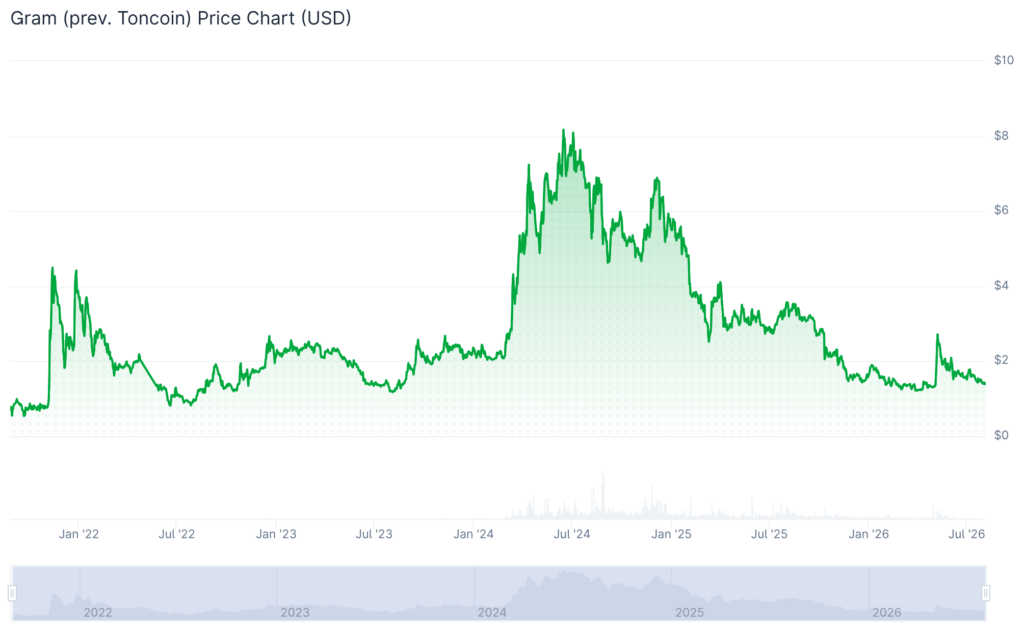
On September 20, 2021, GRAM (prev. TON) reached its all-time low of $0.3906.
Its first significant break came in November 2021. Over the past few days, the coin has slid from $0.8 to $4.5.
It corrected in 2022, reaching a low of $0.9.
In 2023, it ranged between $1.1 and $2.5.
In 2024, it registered another bull run, rising from $2.11 to its all-time high of $8.24 on Jun 15, 2024.
It corrected later, trading at $ 5.20 in October and $4.98 in November, when it began to recover.
The recovery saw the coin rise above $6.5 in December.
It then crossed into 2025, trading at $5.5. From there, it entered a bear market, falling below $3.8 in February and $3.0 in May. It crossed into June at $3.20 and maintained that level into August. In October, it fell to $3.00, and in November to $2.50, with shifts in network activity and user adoption helping shape sentiment through the decline.
In December, it traded at $1.60 and rose above $1.80 in January 2026.
The trend reversed in February, falling below $1.40. In May, at $1.35. In June, it crossed above $1.50, and in July, it crossed above $1.80 as activity improved during the rebound.
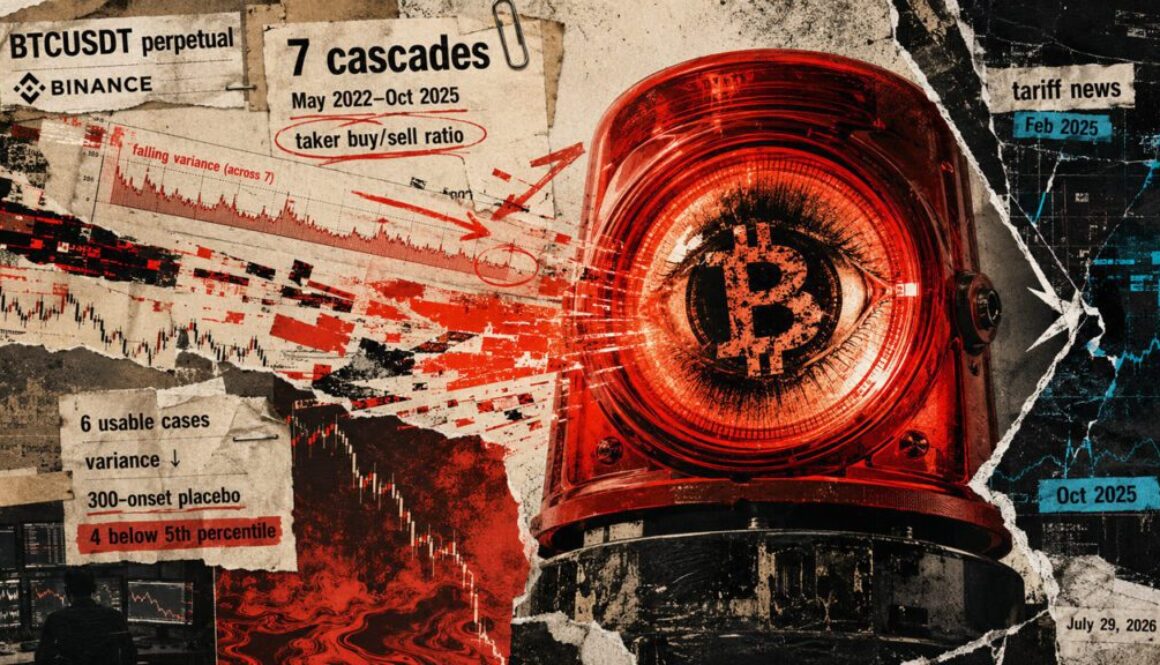
A new arXiv preprint studying seven major Bitcoin crashes found the warning signal shifting among price, leverage, and order flow from one event to the next.
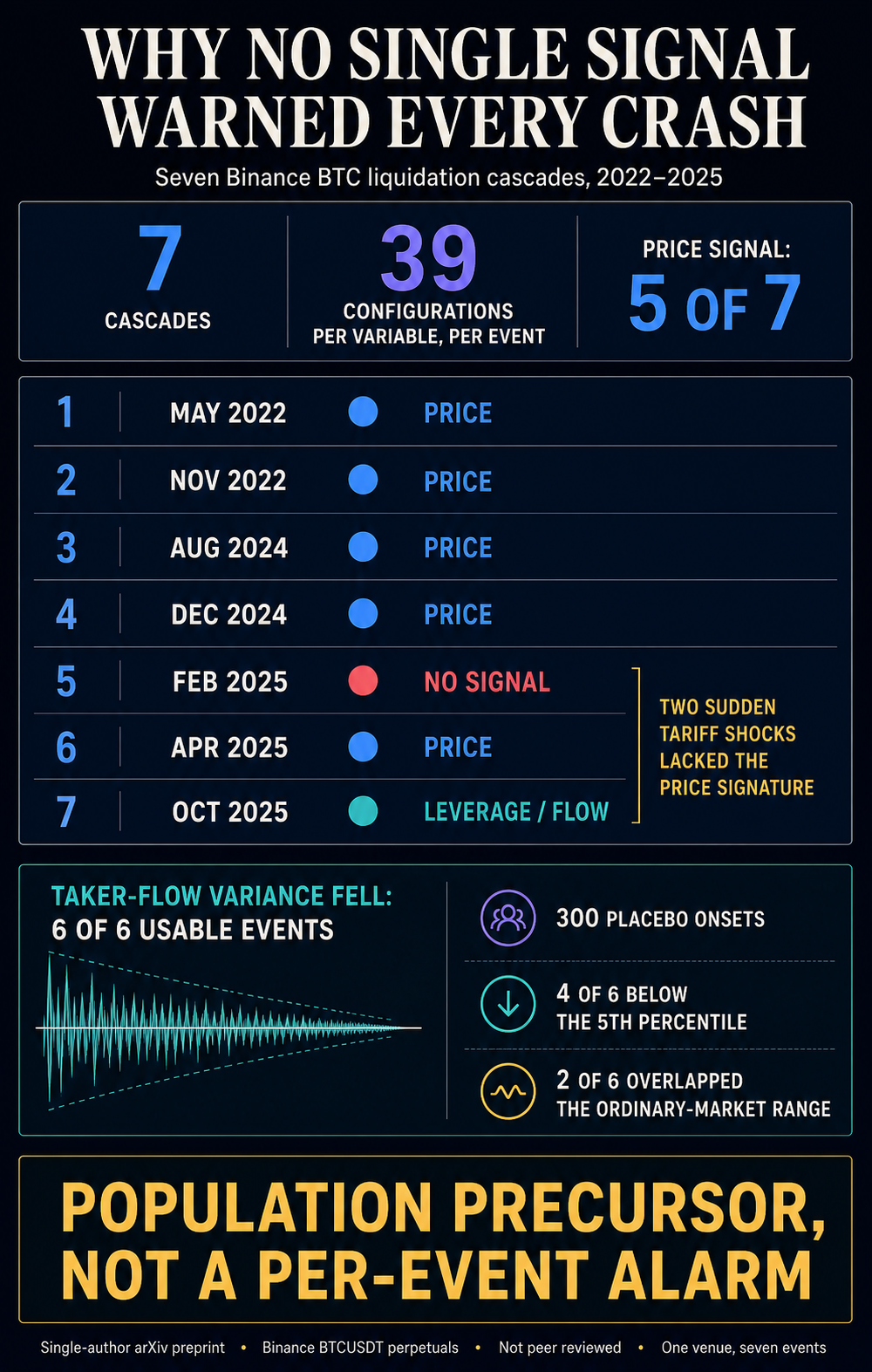
One clue echoed across six usable cases. Taker order-flow variance tightened before each cascade, a faint weather front across the group rather than a siren traders could trust to call the next crash.
Ramon Marc Garcia Seuma submitted the single-author paper on July 29, 2026. The work has not been peer reviewed. It analyzed Binance’s USD-margined BTCUSDT perpetual market across cascades from May 2022 through October 2025, using one-minute price bars and five-minute open interest, trader positioning, and taker buy/sell data over roughly two-month event windows.
In the study’s framework, a market nearing a critical transition should recover more slowly from disturbances, leaving price or market structure with more statistical memory. The author tested rolling variance and lag-1 autocorrelation on detrended residuals across 39 combinations of analysis windows for every variable and event.
Price carried that signature in five of the seven cascades, but not in the February and October 2025 events tied to sudden tariff news. The paper proposes a possible split: cascades that build as markets absorb stress may leave a price signal, while abrupt external shocks may not. With only two events in the sudden-shock group, however, the author describes that pattern as a hypothesis to test, not a validated taxonomy.
The strongest warning against generalizing came from the paper’s out-of-sample test. October 2025 appeared to show the signal in leverage and order flow rather than price. When the same analysis was applied to the August 2024 cascade, the pattern inverted: price carried the signal while most leverage and flow variables did not. No tested variable carried the same positive critical-slowing-down signature across all seven events.
One inverse order-flow pattern did recur, but it did not solve the per-crash warning problem. Falling variance in the taker buy/sell ratio appeared before every cascade with usable data, covering six events.
All six observations fell in the left tail of a 300-onset placebo distribution, and four were below its fifth percentile. Yet two events overlapped the ordinary-market range individually, so the paper classifies the compression as a population-level precursor rather than a reliable alarm for a specific crash.
The sample covers seven events on one exchange, some 2022 series are incomplete, and the public leverage and flow measures are proxies because direct intraday liquidation snapshots were unavailable. Other public gauges previously discussed by CryptoSlate, including basis, ETF flows and collateral settings, were not tested as early-warning candidates.
A later liquidation event shows how much remains outside the evidence. CryptoSlate reported roughly $1 billion in forced derivatives closures during a June 25, 2026 Bitcoin selloff, after the study’s sample ended.
Most leading cryptocurrencies have headed south over the past 24 hours, yet Hyperliquid’s HYPE is among the few to defy the latest red wave.
While it has risen by a mere 1.5%, one analyst assumed it might be gearing up for a staggering 40% pump in the near future.
The Necessary Condition
Currently, HYPE trades at around $54.70, placing it above the lower boundary of an important channel depicted by Ali Martinez. He suggested that if the asset holds the $53 level, a move up to $75 is possible. Also speaking on the matter was Altcoin Sherpa, who claimed that HYPE’s current level is “a good spot for a bounce.”
“Expecting huge tradfi trading volumes to come over the next few days too, which helps,” the analyst added.
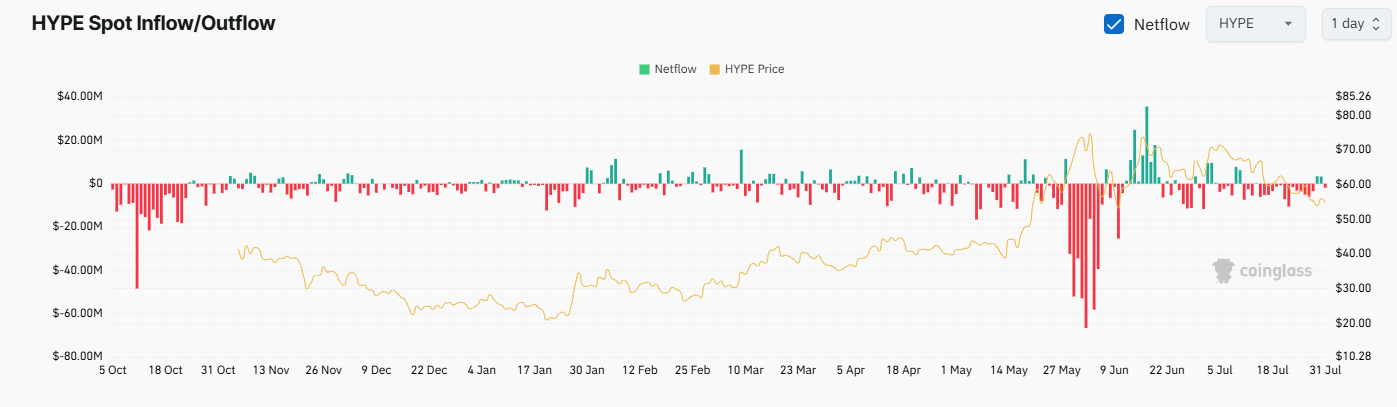
Some on-chain signals also suggest that the asset may post additional gains in the short term. CoinGlass’s data shows that exchange outflows have dominated over inflows in the last several days, meaning that investors have transferred their holdings from centralized platforms to self-custody solutions. This is considered a bullish factor since it reduces the immediate selling pressure.
HYPE Exchange Netflow, Source: CoinGlass
The Bearish Case
The number of pessimists, though, seems even more well-represented. X user Cut recently doubted HYPE’s potential, reminding of its inability to break its all-time high and wondering if its price would make a substantial decline. Ryker joined the discussion, projecting a plunge to $32 “soon.”
Cryptorphic also gave their two cents, arguing that HYPE is showing weakness after losing its long-term trendline and its price has broken below the key ascending support. They believe that if the $57-$58 range turns into resistance, the breakdown could confirm further downside, envisioning a possible crash under $30.
Meanwhile, the whales’ activity reinforces the pessimists’ outlook. Lookonchain disclosed that large investors keep selling HYPE, revealing the case of a market participant who purchased over one million tokens at an average price of $18 17 months ago and unstaked and deposited the stash into FalconX and Coinbase, perhaps with the intention to cash out.
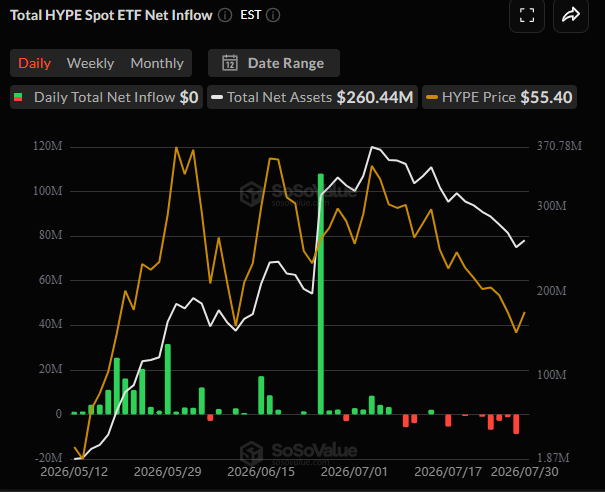
The waning institutional interest adds more weight to the bearish perspective. Spot HYPE ETFs, which attracted substantial capital in June, have not appealed to pension funds, hedge funds, and other conservative investors during most days of July, with outflows significantly dwarfing inflows.
BitMEX settled 35 derivatives today, July 30, closing any remaining positions and canceling open orders as the exchange moved another step toward its September shutdown.
BitMEX’s settlement log shows 33 contracts closing almost on the stroke of noon, at 12:00:05 UTC. EURUSD and USDCHF followed at 12:32:25 and 12:33:25 UTC. With prices now posted for the full 35-contract batch, the early settlement flagged in BitMEX’s July 22 notice is complete.
BitMEX attributed the delistings to insufficient trading interest and its planned exchange shutdown. It described the process as an early settlement, not a margin liquidation.
Before settlement, the contracts traded normally until 04:00 UTC, when BitMEX fixed the final funding rate, known as F0, using prices from the preceding eight hours. It then stopped calculating new funding and set the next funding rate to zero. The checkpoint established the funding input for settlement but did not end trading; that occurred at 12:00 UTC.
The table pairs each contract with the 30-minute reference index from BitMEX’s notice and the settled price now shown in the exchange’s public records.
Contract
Settlement index
Settled price
AAVEUSDT
.BAAVET30M
98.249
APEUSDT
.BAPET30M
0.1369
AUDUSD
.BAUDUSD30M
0.6979
AVAXUSDT
.BAVAXT30M
6.4892
BRENTUSDT
.BBRENTT30M
87.22
COINUSDT
.BCOINT30M
162.74
CRCLUSDT
.BCRCLT30M
62.43
CRVUSDT
.BCRVT30M
0.21052
DOTUSDT
.BDOTT30M
0.7677
EURUSD
.BEURUSD30M
1.1468
FILUSDT
.BFILT30M
0.6955
GBPUSD
.BGBPUSD30M
1.3379
GOOGLUSDT
.BGOOGLT30M
337.83
GRAMUSDT
.BGRAMT30M
1.4325
HOODUSDT
.BHOODT30M
90.55
INTCUSDT
.BINTCT30M
84.03
LINKUSDT
.BLINKT30M
8.4382
LOTUSDT
.BLOTT30M
0.006185
MSFTUSDT
.BMSFTT30M
428.84
MSTRUSDT
.BMSTRT30M
95.64
NATGASUSDT
.BNATGAST30M
2.7052
NVDAUSDT
.BNVDAT30M
193.59
OPNUSDT
.BOPNT30M
0.04626
SEIUSDT
.BSEIT30M
0.042
SHIBUSDT
.BSHIBT30M
0.000004631
TSLAUSDT
.BTSLAT30M
303.91
UNIUSDT
.BUNIT30M
4.1133
USDCAD
.BUSDCAD30M
1.4047
USDCHF
.BUSDCHF30M
0.8133
USDJPY
.BUSDJPY30M
162.97
WTIUSDT
.BWTIT30M
83.56
XBTETH
.BXBTETH30M
33.6603
XMRUSDT
.BXMRT30M
359.41
XPTUSDT
.BXPTT30M
1624.95
ZECUSDT
.BZECT30M
476.04
What settlement changed
The affected contracts expired, trading ended, and open orders were canceled. BitMEX exchanged funding based on F0 before closing remaining positions at the listed settlement prices. The exchange charged no settlement fee, added each contract’s lifetime profit or loss to the user’s Bitcoin or Tether balance, and removed the contracts from the Positions section.
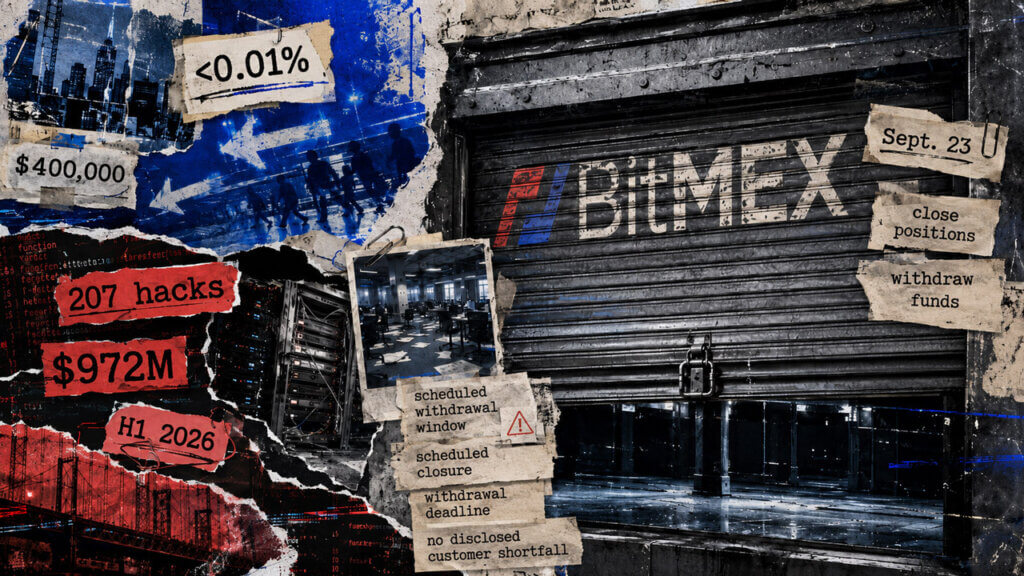
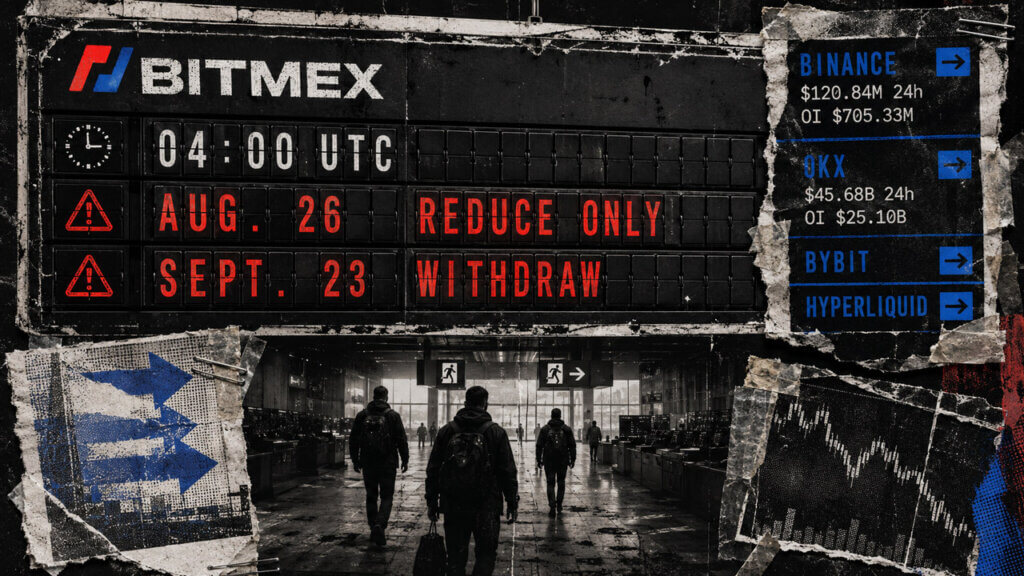
The settlements were one step in a wider wind-down. BitMEX’s July 23 closure notice says new registrations stopped immediately. From 04:00 UTC on Aug. 26, users will only be able to reduce positions, and the venue may force-close positions before exchange services end at 04:00 UTC on Sept. 23. Any position remaining at closure will be force-closed, although users will retain account access to view balances and withdraw funds.
BitMEX said KYC-verified users who leave assets on the platform after closure may face an account fee, billed monthly, equal to the greater of $50 equivalent or 1% per year.
ZIGChain isn’t trying to tokenize equities for Americans who already own equities. It’s building regulated, yield-generating infrastructure for the 70–80% of the world that global finance has never served.
Guest: Abdul Rafay Gadit
Role: Co-Founder, ZIGChain
Host: Ashton Addison
Show: Blockchain Interviews
$5B+
RWA Pipeline
$70M
Tokenized in 3 Months
9–10%
USD Yield for End Users
$10
Minimum Investment
The color of your passport should not determine your future of finance. That’s not a marketing line for ZIGChain — it’s the thesis behind every architecture, compliance, and distribution decision the team has made since 2018.
Most tokenization projects solve the wrong problem. They take institutional-grade assets and make them available to a slightly different set of institutions. The capital stays concentrated, the access stays gated, and the “democratization” story stops at the press release.
ZIGChain, the Layer 1 blockchain built as the next evolution of Zignaly’s 600,000-user platform, is building toward a different outcome. Co-Founder Abdul Rafay Gadit sat down with Ashton Addison on Blockchain Interviews to break down what that actually looks like in practice — and why private credit, not tokenized Treasuries, is the most important real-world asset story nobody is telling.
Four Sides to a Problem Nobody Has Solved
Gadit’s framing is direct: tokenization is a four-sided problem, and the industry keeps treating it like a one-sided one. Technology — the thing everyone leads with — is actually the most commoditized component. “Tokenization is just five lines of code,” he said. The hard parts are the other three.
Framework
The Four-Sided Tokenization Problem
01
Origination
Finding and structuring quality real-world assets worth tokenizing. Most projects skip this entirely and rely on third-party origination they don’t control.
02
Technology
The onchain infrastructure. Commoditized. Battle-tested options exist on Ethereum and elsewhere. Differentiating here is table stakes, not a moat.
03
Regulation & Compliance
Licenses in South Africa, DIFC, and ADGM pending. VCC structure in DVI. Shariah certification. Each jurisdiction requires real operational infrastructure — not paper licenses.
04
Distribution
Getting assets to the right end users — not just institutions. A structuring problem, not a 1-to-1 problem. The same yield product delivered to banks, neobanks, DeFi protocols, and retail at $10 minimum.
ZIGChain’s position: most competitors own one side. ZIGChain is building all four.
Private Credit: The $17 Trillion Opportunity Nobody Is Talking About
When most people think about real-world asset tokenization, they think about tokenized US Treasuries, real estate, or commodities. Gadit thinks they’re looking in the wrong place.
Private credit — a $17 trillion global market — is where ZIGChain sees the biggest structural gap. Euro bonds and sovereign debt have minimum ticket sizes of $200,000 or more. That locks out everyone who isn’t an institutional investor. ZIGChain’s thesis is that the same 10%+ yields those instruments generate can be made accessible to anyone investing even $10.
“The Middle East has a $700 billion SME lending gap. These companies turn to private credit at high rates. We reduce their borrowing costs by 30% for some players.”
Abdul Rafay Gadit — Co-Founder, ZIGChain
In the last three months alone, ZIGChain has tokenized and distributed $70 million in assets. End users are earning 9–10% yield on dollar-denominated positions. The Beehive integration — tokenizing UAE SME private credit loans — is the clearest example of what this looks like in practice: institutional-grade yield, structured and distributed so that anyone can access it.
The Pipeline: Who’s Already In
Partner
Significance
Focus
Apex Group
$3.4T AUM
Fund administration & institutional asset management
Ellington Properties
UAE Real Estate
Dubai-based real estate developer exploring fractional, 24/7 real estate tokenization on ZIGChain
ADI Foundation
$1.5T (IITC)
Receivables financing, PayFi, SME working capital — ZIGChain’s first blockchain partner for ADI
Beehive
Live
UAE SME private credit loan tokenization
Wdora Finance
Live Vault
Yield generation on Zigchain + Zig Markets
Nawa Finance
Live Vault
Yield generation on Zigchain + Zig Markets
The Market Nobody Else Is Touching: Islamic Finance
ZIGChain received Shariah certification in December 2025. For most crypto projects, that would be a footnote. For ZIGChain, it’s a strategic unlock — access to a $5+ trillion Islamic finance market that operates under distinct compliance requirements most blockchain infrastructure simply hasn’t been built to meet.
This isn’t a product feature. It’s a distribution moat. Shariah-compliant DeFi products, combined with ZIGChain’s existing regulatory infrastructure across South Africa, DIFC, and the ADGM pending approval, means the team can operate across jurisdictions that are effectively closed to competitors.
Geographic Expansion: Dense, Not Wide
Region
Role
Rationale
UAE / GCC
Yield Generation
Billions already in pipeline. Regulatory relationships established. Shariah compliance live.
Saudi Arabia
Next Market
Natural extension from UAE regulatory framework.
Egypt / Pakistan
Distribution
Dense populations, dollar-based yield shields against local currency depreciation.
Bangladesh / Indonesia / India
Distribution
Fastest-growing, youngest demographics, highest internet penetration.
South Africa / Argentina / Brazil
Distribution
Existing regulatory footprint (SA). Latin America dollar demand.
Europe / Switzerland
Yield Generation
Institutional origination and compliance layer.
Gadit’s diversification philosophy comes directly from Zignaly’s playbook: at peak, their largest single market concentration was just 9% — Turkey. The geographic expansion strategy reflects the same logic. Crack local regulation in 3–4 dense markets, and $200–300 billion in scale follows quickly.
ZIG 2.0: The Revenue-Backed Token
The tokenomics story for ZIG is deliberately modeled on what Gadit sees as the defining proof of concept for this cycle: Hyperliquid. The thesis is simple — if a token is downstream of real fee revenue rather than a separate speculative layer, it holds value regardless of broader market conditions.
The Problem
Speculative Token
Token price tied to narrative and trading volume, not platform revenue. When sentiment shifts, there’s no fundamental floor. Buybacks funded from treasury, not operations.
vs
ZIGChain’s Approach
Revenue-Tied Token
Zig Markets generates real fee revenue. That revenue funds $ZIG buybacks. 50% of bought-back tokens burn. 50% goes to the ecosystem growth pool. Community governs the split via onchain vote.
The first buyback happened on the day of the Blockchain Interviews recording. The program is discretionary — community-governed via onchain votes rather than a fixed percentage commitment — which Gadit argues is structurally more sustainable than models that locked in fixed burn rates and couldn’t adapt when market conditions shifted.
The $128 Trillion Context
ZIGChain’s stated goal is $100 billion in assets under management. That sounds ambitious until you look at the denominator: the global fund administration market is $128 trillion. ZIGChain’s target is less than 0.1% of that market.
“Crack local regulation in 3–4 dense markets,” Gadit said, “and it scales to $200–$300 billion fast.” The fund administration market doesn’t require ZIGChain to displace anyone. It requires them to serve the massive portion of the world that the existing infrastructure has never reached.
“70–80% of the world’s population. Fastest-growing. Youngest. Highest internet penetration. That’s our distribution market.”
Abdul Rafay Gadit — Co-Founder, ZIGChain
That’s the bet ZIGChain is making. Not that they can out-compete Ethereum or BNB Chain for institutional assets. That they can build the infrastructure layer for the other 80% — the markets that institutional tokenization projects treat as an afterthought, if they think about them at all.
Watch the Full Interview — Blockchain Interviews
Learn More
Explore ZIGChain at zigchain.com and Zig Markets at zigmarkets.com. Follow @ZIGchain on X for updates on the buyback program, new vault launches, and geographic expansion.