CZ Floats Freezing Satoshi’s Bitcoin Over Quantum Risk
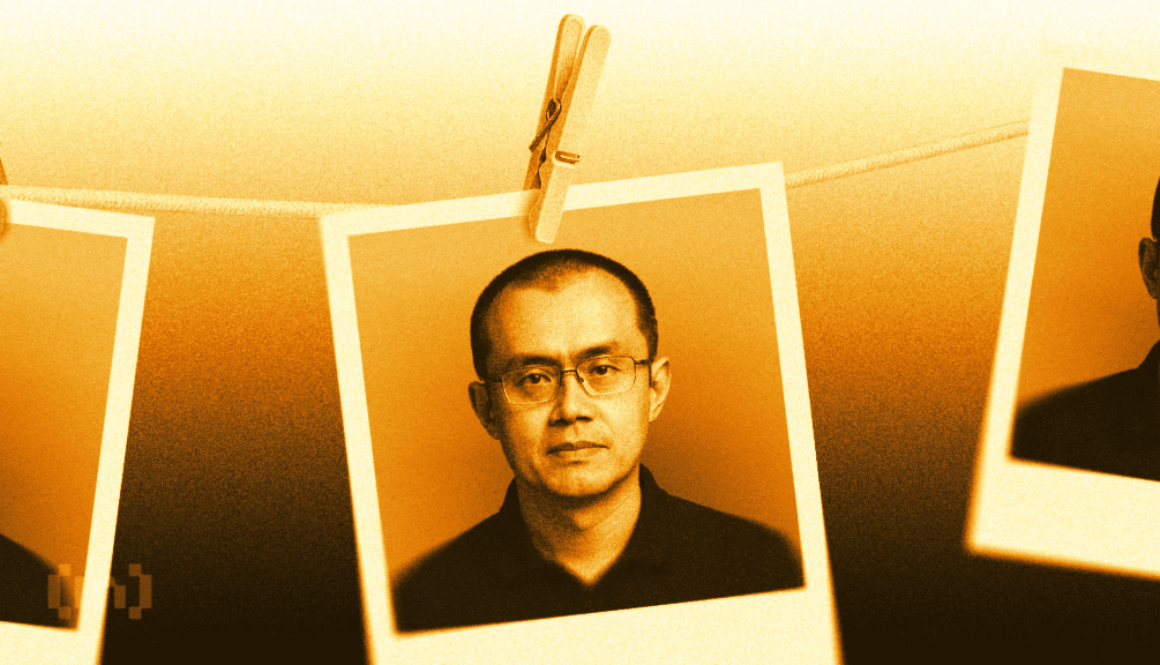
Binance founder Changpeng Zhao has proposed a community-driven mechanism to freeze dormant Bitcoin addresses vulnerable to quantum computing attacks, a debate that highlights the institutional crypto industry’s growing concern over cryptographic security timelines. The proposal, framed as a network-wide decision rather than unilateral action, raises fundamental questions about asset protection, network governance, and the coordination burden of implementing quantum-resistant upgrades across a decentralized system.
- Satoshi Nakamoto’s estimated 1.1 million BTC, worth approximately $70 billion at current prices, remains locked in quantum-vulnerable addresses since 2009-2010.
- Google Quantum AI research published in March estimated a quantum attack could require fewer than 500,000 qubits and run in minutes, well below previous threat assessments.
- More than one-third of all Bitcoin in circulation has exposed public keys on-chain, leaving those addresses theoretically vulnerable to private-key derivation by sufficiently advanced quantum computers.
- 1.1M BTC Satoshi’s estimated holdings compared to Bitcoin’s 21 million total supply.
- 500K qubits Required quantum resource estimate versus earlier projections of millions required.
- 1 year Proposed community timeline before dormant quantum-vulnerable addresses would lock via network fork.
Changpeng Zhao framed the quantum security question on the Galaxy Brains podcast not as a Binance directive but as a thought experiment for Bitcoin’s decentralized governance.
During his conversation with Galaxy Research head Alex Thorn, Zhao suggested the network could implement a community-approved upgrade that would freeze coins left in quantum-vulnerable addresses roughly one year after activation. The proposal would use a blockchain fork to lock these funds irreversibly, preventing either theft by hypothetical quantum attackers or recovery by miners and developers.
Zhao later clarified on social media that reports characterizing him as personally seizing Satoshi’s address were inaccurate, though he acknowledged the challenge of distinguishing Satoshi’s holdings from other early-miner addresses using only on-chain analysis.
Google’s Quantum Threat Estimates Accelerate Defensive Timeline Pressure
The urgency behind Zhao’s proposal stems directly from Google Quantum AI’s March research publication, which substantially compressed the timeline for practical quantum computing threats to Bitcoin’s cryptographic foundation.
The research team estimated that a quantum computer powerful enough to derive private keys from public keys could operate with fewer than 500,000 qubits and complete such attacks within minutes.
This represented a dramatic downward revision from earlier academic projections that had suggested millions of qubits would be necessary, effectively moving the threat from theoretical distant future to credible near-term risk category.
The practical vulnerability exists because Bitcoin transactions reveal public keys on-chain, creating a theoretical vector for private-key extraction. Once a quantum computer obtains the private key, it can spend funds without the legitimate owner’s consent.
Data analyzed in March showed that more than one-third of all Bitcoin ever mined had exposed public keys on-chain at some point, creating an exposed surface area far larger than many institutional investors had previously considered.
Satoshi Nakamoto’s estimated 1.1 million BTC, mined during 2009 and 2010 and never moved, represents the single largest concentration of these quantum-vulnerable coins.
At Bitcoin’s price near $63,244, Satoshi’s dormant hoard carries a market value of roughly $70 billion.
For institutional investors holding Bitcoin or analyzing systemic risk, this figure matters not merely as a notional wealth statistic but as a measure of locked liquidity that could theoretically enter circulation if either quantum theft occurred or if the network implemented recovery mechanisms.
The sheer capital value amplified the urgency of the quantum transition debate among exchanges, miners, and protocol developers.
BIP-361 Draft Proposal Offers Hard Choices on Dormant Coin Recovery
Zhao’s framework aligns substantially with BIP-361, a draft proposal authored by Jameson Lopp and five other researchers currently in community discussion. The BIP proposes a two-phase mechanism: first, blocking all new transactions to quantum-vulnerable addresses roughly three years after upgrade activation; second, invalidating legacy signatures on those addresses two years thereafter.
The approach codifies an uncomfortable binary choice facing the network, either allow a quantum thief to claim exposed coins, permit slow community recovery of dormant funds, or implement permanent lockdown to ensure neither outcome materializes.
The BIP-361 authors frame this as governance pragmatism rather than technical capability. They argue that adopting quantum-resistant cryptography network-wide requires coordination timelines measured in years, not months, and that doing so after a quantum computer has already begun draining addresses would be too late.
The proposal even invokes Satoshi Nakamoto’s own commentary on lost coins to justify the lockdown approach: “Lost coins only make everyone else’s coins worth slightly more.
Think of it as a donation to everyone.” By this logic, permanently freezing dormant quantum-vulnerable coins would distribute their value proportionally across remaining circulating supply rather than allowing either external theft or centralized recovery.
Implementing such a fork requires consensus from miners, node operators, exchanges, and the broader developer community. Unlike a voluntary soft fork that users can ignore, this mechanism would force a hard-fork choice: accept the new quantum-protection rules or fork away from the main chain.
Institutional exchanges like Binance would face operational pressure to adopt the upgraded chain to avoid serving two incompatible assets, creating implicit pressure for consensus even absent formal voting mechanisms.
Competing Legal Claims Cloud the Precedent for Dormant Asset Governance
The quantum security debate exists within a contested legal landscape that complicates any unilateral network action on dormant addresses. An anonymous plaintiff and two Wyoming limited-liability companies have filed suit in New York seeking to claim roughly 39,069 idle Bitcoin addresses under abandoned-property law, including Satoshi’s holdings.
The lawsuit contests whether these coins constitute abandoned property subject to state seizure and transfer rather than permanently lost assets.
Galaxy Research’s analysis of the lawsuit expressed skepticism that the plaintiffs would prevail, but the case itself illustrates an uncomfortable gap in Bitcoin’s governance framework.
No clear consensus exists on whether a dormant address represents abandoned property susceptible to legal claim, a permanent loss subject to network-wide wealth redistribution, or an asset whose owner simply chose not to move funds.
A quantum-protection fork that locked these coins would effectively resolve that question in favor of permanent lockdown, foreclosing any future legal remedy or recovery mechanism.
For institutional investors, the lawsuit risk adds another layer of governance uncertainty atop the quantum timeline question.
Institutional Custody and Exchange Liability Drive Adoption Pressure
Zhao’s framing as a community question masks genuine pressure on institutions to adopt quantum-resistant measures regardless of explicit consensus. Binance and other major exchanges hold customer Bitcoin in custody, creating fiduciary exposure if quantum theft occurred and the exchange had not migrated customer funds to quantum-resistant addresses.
Even if the network did not implement BIP-361 or a similar lockdown mechanism, an exchange holding coins in quantum-vulnerable addresses could face liability claims from customers whose holdings were compromised.
This creates an incentive structure where major exchanges might adopt quantum-resistant practices unilaterally before the network formally implements network-wide protection. A single large exchange migrating customer funds to quantum-safe addresses would signal to competitors and institutional clients that the threat was serious enough to justify action.
Once several major custodians moved, the practical network effect could accelerate adoption even without explicit protocol governance.
The quantum threat thus operates as both a technical protocol question and a business-continuity problem for institutions holding customer assets.
Timeline Uncertainty Remains the Core Unresolved Question for Asset Managers
Zhao’s one-year proposed freezing timeline reflects genuine uncertainty about how quickly the network can execute a quantum-resistant upgrade without fragmenting consensus. Bitcoin’s upgrade process requires sustained discussion, developer work, miner signaling, and node operator deployment, a process that has historically consumed years even for non-controversial changes.
A quantum-protection mechanism would prove far more contentious because it explicitly affects coin ownership and accessibility, raising philosophical objections alongside technical concerns.
The Google research compressed the threat timeline substantially, but even 500,000-qubit quantum computers remain years away from likely deployment. The practical window for coordinating a network