MIT developer proposes three collateral-based defenses against quantum Bitcoin theft
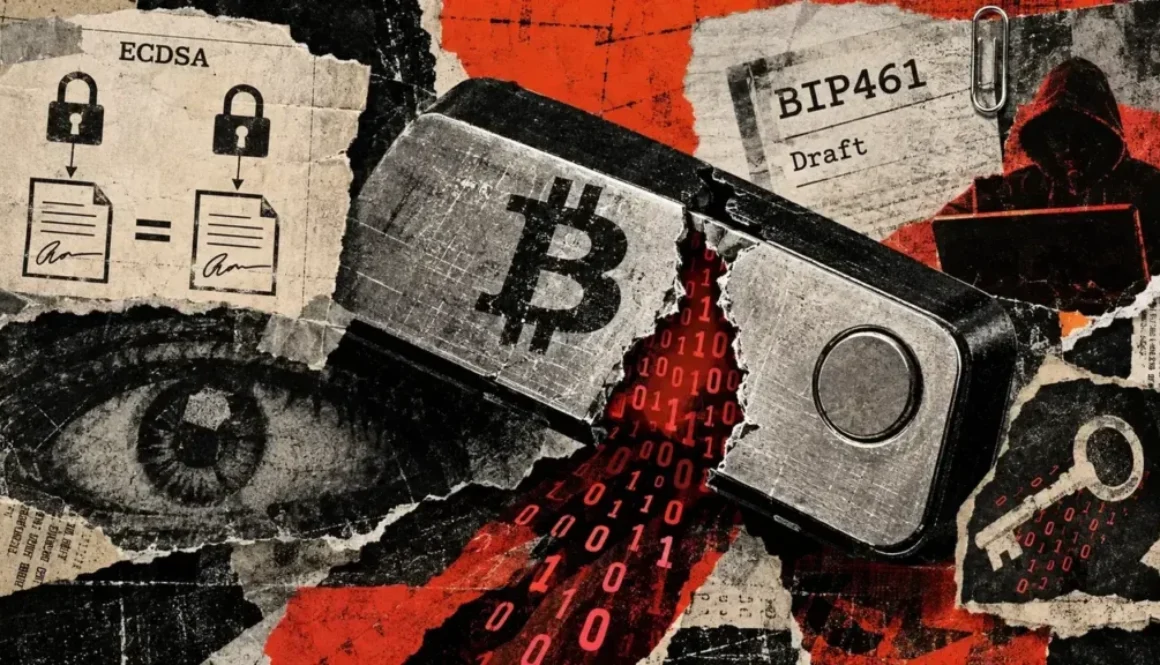
A Bitcoin developer at MIT has proposed three collateral-based mechanisms to penalize quantum attackers by forcing them to forfeit their own coins if they attempt to steal vulnerable Bitcoin. The schemes represent an emerging category of post-quantum defenses that weaponize financial incentives rather than cryptography alone, though critical design questions remain unresolved.
- Cory Fields proposed three mechanisms: Quantum Landmines, Staked Auction, and Sats Auction to deter quantum theft via mandatory collateral requirements.
- Quantum Landmines embed cryptographic proofs in quantum-safe outputs, allowing legitimate owners to claim attacker collateral within a 30-day window after theft.
- The schemes require soft-fork activation and leave open questions about collateral ratios, auction mechanics, and distribution of recovered funds.
- 30 days Time-lock period before legitimate owner can claim attacker’s collateral under Landmine scheme
- 62 minutes Time estimated by Alice & Bob to crack a Bitcoin private key using quantum computer with 29,588 cat qubits
- 3 mechanisms Defense proposals floated by Fields as thought experiments, not finalized specifications
Cory Fields, a Bitcoin developer at MIT’s Digital Currency Initiative, outlined three thought-experiment defenses against quantum-enabled theft in a post to the Bitcoin development mailing list. Rather than prevent quantum attackers from stealing coins, the proposals aim to make theft economically irrational by forcing attackers to forfeit collateral equivalent to the value of stolen outputs. Fields emphasized the concepts remain unfinalized but stated soft-fork implementation may be feasible. The schemes address a narrow but material risk: vulnerable legacy Bitcoin outputs, primarily older unspent coins, remain exposed to private-key extraction once quantum computers reach sufficient computational power.
Quantum Landmines embed hidden proofs to trap attackers and capture their collateral
The first proposal, Quantum Landmines, allows Bitcoin holders to secretly commit a cryptographic proof to a small quantum-safe output before quantum computers threaten existing encryption. When an attacker steals a vulnerable output post-quantum, Fields’ rules require the stolen coins to move alongside equivalent collateral from the attacker’s own quantum-safe Bitcoin.
The combined output then locks for a specified period, Fields used 30 days as an example, unless someone provides proof of prior knowledge of the original private key.
The legitimate owner can then reveal their pre-committed proof and claim the attacker’s collateral, recovering the stolen value.
Staked and Sats Auctions extend defenses to outputs with lost private keys
Quantum Landmines assume the original holder still controls their private key. Staked Auction addresses outputs believed lost or abandoned. Pre-quantum, users stake quantum-safe Bitcoin on specific vulnerable outputs by embedding a secret commitment to a bid amount and new pubkey.
If an attacker later steals that output, they must provide matching collateral. Once an initial waiting period expires, an auction period begins where stakers reveal their bids and claim portions of the attacker’s collateral based on auction rules.
The third scheme, Sats Auction, removes the advance-staking requirement entirely. Every attempted spend of a vulnerable legacy output triggers an auction after an initial time-lock. The highest bidder receives the coins minus their bid; the second-highest bidder loses their bid without compensation.
Fields argued this escalating cost structure could make repeated theft attempts prohibitively expensive and discourage attackers altogether. However, he acknowledged major design questions remain open: collateral ratios, auction settlement rules, treatment of losing bids, and how recovered funds should be distributed.
Critical design gaps leave deployment path uncertain and collateral mechanics unspecified
Fields explicitly framed all three proposals as incomplete thought experiments rather than deployment-ready code. The mailing list post does not specify whether collateral must be 1:1 with stolen coins, how losing auction bids should be treated, or how recovered funds should be distributed.
These are not minor implementation details; they determine whether the schemes function as intended or create new attack surfaces.
The broader quantum threat itself remains contested. Last month, Alice & Bob estimated a quantum computer with 29,588 cat qubits could extract a Bitcoin private key in roughly 62 minutes. Yet on-chain analyst James Check argued earlier this year that even a large-scale theft of Satoshi-era coins would not threaten the network’s survival.
The CCS read. These proposals treat quantum attacks as an economic game rather than a cryptographic inevitability. If adopted, they shift risk from holders of vulnerable coins to attackers via mandatory financial participation. What Fields does not address is whether such soft-fork changes can activate before quantum threats materialize, a multi-year coordination problem that may prove harder than the cryptography itself.
The next phase requires Bitcoin developers to move from thought experiments to specification. Fields did not propose a timeline for drafting concrete rules, nor did he address whether the Bitcoin development community would prioritize quantum defenses over other pending upgrades. The open question is whether these incentive-based mechanisms gain traction in developer discussions, or whether the community pursues a hard fork to quantum-safe cryptography before the schemes mature into testable code.