Report: Bitcoin Could Bottom During the 2026 World Cup
Bitcoin could establish its bear-market bottom during the 2026 FIFA World Cup period, June 11 to July 19, according to analysis from BIT Research, based on technical wave patterns and sentiment metrics that mirror the 2022 cycle low. For institutional investors, this framework matters because it anchors a specific timeline for potential entry points and signals when macro conditions, particularly inflation trajectory, will become critical to validating the recovery thesis.
- BIT Research targets $50,000 to $55,000 as Bitcoin’s likely bottom zone during the 2026 World Cup window
- Bitcoin has fallen 42% year-over-year and 22% in 30 days, breaching the $60,000 support level last Friday
- Greed & Fear Index and stochastic oscillator now match 2022 cycle-low conditions, though macro inflation cooling remains the swing variable
- $50,000, $55,000 BIT Research’s target bottom zone versus current price near $63,000
- 42% Bitcoin decline year-over-year, marking deepest drawdown since late 2024
- June 11, July 19, 2026 FIFA World Cup timeframe identified as likely market reversal window
Bitcoin’s bear market has entered its concluding phase, and a new technical analysis framework suggests the cryptocurrency could find its bottom during the 2026 FIFA World Cup, which runs from June 11 to July 19.
BIT Research, a quantitative crypto analysis firm, published the thesis on June 12, arguing that a convergence of Elliott Wave patterns, historically depressed sentiment indicators, and potential inflation relief could align to create a durable entry point for the next recovery cycle.
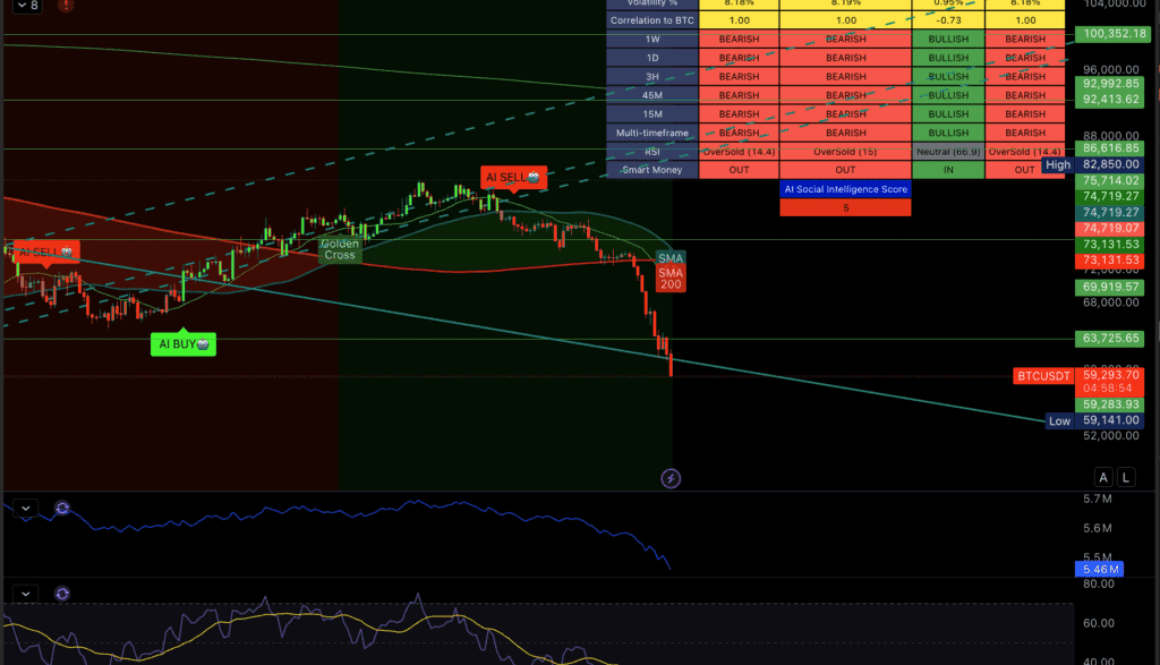
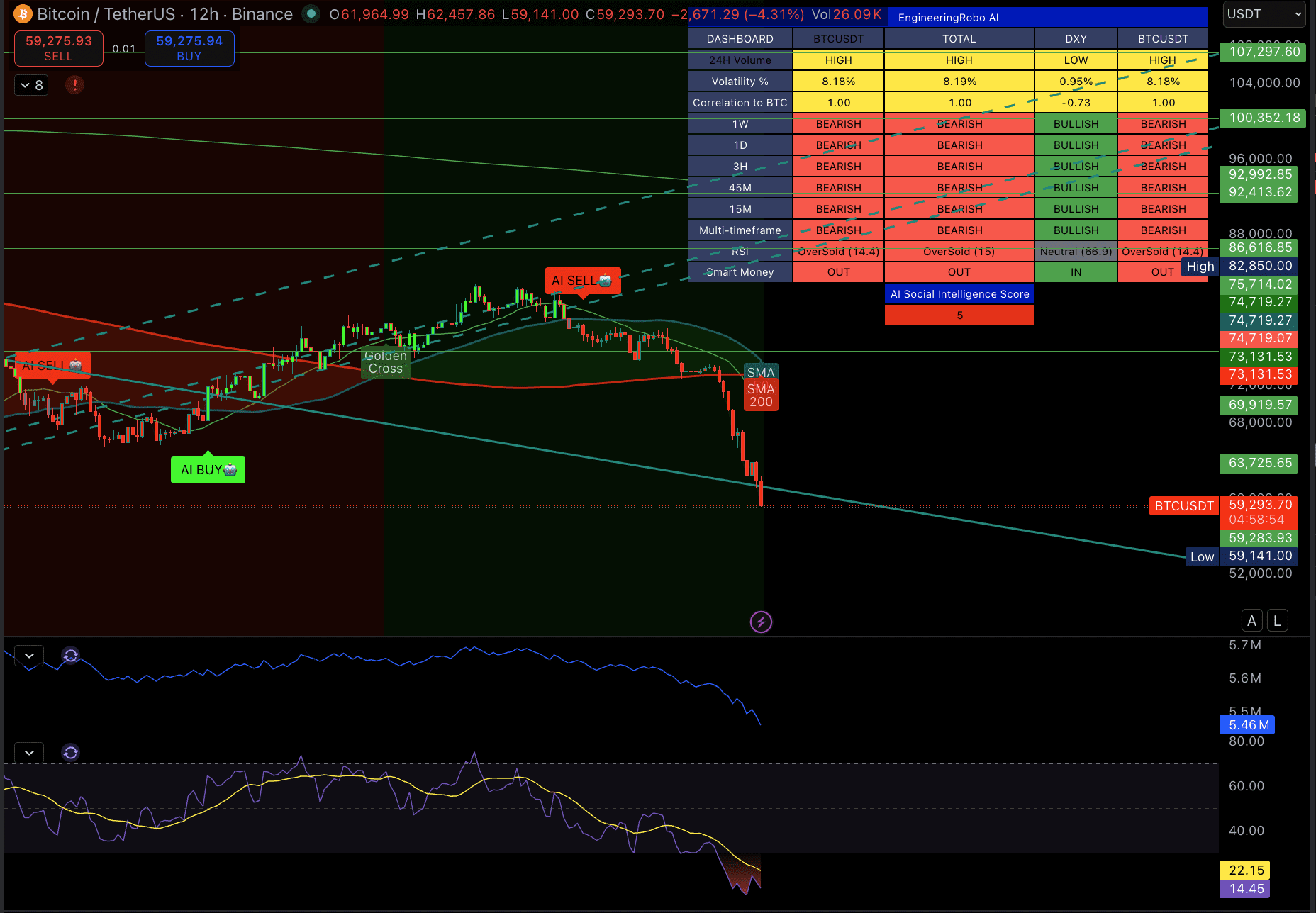
The analysis draws explicit parallels to the 2022 cycle low, when similar conditions preceded Bitcoin’s subsequent gains. Bitcoin currently trades near $63,000 after falling through the $60,000 level last Friday, its lowest point in nearly two years, representing a 42% decline from its price one year ago and a 22% drop over the past 30 days.
Bitcoin’s A-B-C correction pattern targets $50,000 zone by mid-2026
BIT’s core thesis rests on Elliott Wave theory, which segments Bitcoin’s bear market into three discrete phases beginning in October 2025. Wave A carried Bitcoin down to the $60,000 to $69,000 range, establishing the initial downtrend. Wave B then recovered to between $80,000 and $90,000, peaking near $83,000 in mid-May before momentum reversed.
The cryptocurrency has now entered Wave C, the final corrective phase, which BIT projects will bottom between $50,000 and $55,000.
This downside target sits roughly 11 to 21 percent below current levels and represents a loss of approximately 40 percent from the May peak. BIT identified the FIFA World Cup period as the most probable timeframe for this low to form, offering institutional investors a concrete calendar anchor rather than a vague forward guidance.
The firm also flagged $61,576 as a near-term support level and highlighted Bitcoin’s Realized Price, currently $54,591, as a key reference point below which the asset enters deep undervaluation territory.
The Realized Price metric, which measures the average cost basis of all Bitcoin held on-chain at any given time, carries particular weight for cycle-bottom identification.
According to BIT’s analysis, historical precedent suggests Bitcoin prices may briefly dip below the Realized Price but “rarely remain there for long,” implying the level acts as a floor where opportunistic accumulation typically emerges.
Sentiment indicators mirror 2022 cycle low, setting stage for mean reversion
Beyond technical wave counts, BIT’s case for a mid-2026 bottom rests heavily on sentiment and macro conditions. The Greed & Fear Index, a widely tracked measure of market psychology, has retreated to what the firm describes as historically depressed levels, matching the environment that preceded the 2022 cycle low.
Similarly, the stochastic oscillator has dropped into deeply oversold territory, a condition associated with short-term momentum exhaustion and potential reversal zones.
Bitcoin is currently trading at least two standard deviations below its weekly moving average, a statistical threshold that signals extreme deviation from the medium-term trend.
For institutional portfolio managers accustomed to mean-reversion frameworks, this metric represents a quantifiable signal that prices have moved materially disconnected from their underlying trend, creating asymmetric risk-reward dynamics.
BIT’s analysts emphasized that the current sentiment backdrop closely resembles 2022, when fear-driven capitulation preceded Bitcoin’s recovery. However, they added a critical caveat: the macro environment remains the decisive variable.
In 2022, cooling inflation provided the policy tailwind that allowed central banks to pause rate hikes and eventually pivot toward easing, supporting asset class recoveries broadly. BIT argues that similar disinflation or inflation stabilization may be required for Bitcoin to sustain a recovery from the projected $50,000 to $55,000 zone.
Geopolitical volatility and macro timing create one-to-three month uncertainty window
The timing of Bitcoin’s recovery remains contingent on both technical completion and macro conditions, introducing genuine uncertainty into BIT’s otherwise specific bottom projection.
Geopolitical events, particularly the ongoing U.S., Iran tensions, have driven substantial near-term volatility, with Bitcoin seesawing on headlines about military actions, retaliatory strikes, and diplomatic developments. This exogenous risk layer means Bitcoin could bounce sharply on de-escalation or fall further on escalation, obscuring the underlying technical trajectory.
BIT’s researchers believe the market may require one to three additional months before a “confirmed reversal” appears, a qualification that pushes firm conviction into late 2026 or early 2027 rather than anchoring the bottom exactly to the World Cup window.
This timeline extends the bear market deeper into 2026 than many retail-focused narratives have suggested, requiring institutional investors to assume continued pressure through at least the second half of this year.
The critical open question for institutional portfolios is whether inflation will actually cool or stabilize by mid-2026 as BIT’s thesis implicitly assumes.
If central banks are forced to maintain restrictive policy rates due to persistent price pressures, the macro backdrop that powered the 2022 recovery may not materialize, potentially pushing Bitcoin’s true cycle low beyond the World Cup window or lower than BIT’s $50,000 to $55,000 band.
Conversely, if inflation stabilizes and policy expectations shift toward easing by spring 2026, the convergence of technical completion, depleted sentiment, and accommodative macro conditions could validate the World Cup timing.
Institutional investors should monitor the Fed’s inflation guidance and rate-cut expectations through Q4 2025 and early 2026, as those signals will determine whether BIT’s timeframe remains credible or requires revision.
Institutional Adoption Metrics Show Divergence as Price Compresses
While spot price has declined sharply, institutional custody holdings and futures positioning reveal a more mixed picture. Grayscale Bitcoin Trust (BTC) holdings have remained flat at 633,150 BTC since March 2024, suggesting large asset managers are neither capitulating nor aggressively accumulating during the current drawdown.
This contrasts with the 2022 cycle low, when institutional inflows accelerated once Bitcoin touched $18,500, ultimately driving the recovery that gained 150% within 12 months.
Futures markets show elevated short positioning among leveraged traders, but open interest on major venues has compressed to $20.4 billion as of June 12, down 31% from the January 2025 peak of $29.6 billion. This suggests retail capital has already exited, while institutions remain positioned in wait-and-see mode rather than committing to contrarian bets.
The pattern mirrors early June 2022, when open interest fell similarly before the July reversal that marked the true cycle bottom.
The key institutional signal to monitor will be Grayscale’s next quarterly filing, due July 31, which will reveal whether the $50,000, $55,000 zone, if reached, triggered discretionary allocations from the $7.2 trillion in assets under management across the major Bitcoin trust providers. A sharp inflow at that level would validate BIT Research’s thesis and suggest institutional conviction is rebuilding before retail sentiment turns bullish.