
Anthropic IPO Could Come in September, But It Has a Massive Risk Factor
Anthropic is preparing for an IPO as soon as late September with a prospectus expected after Labor Day, planning to allow early investors and employees to sell existing shares alongside newly issued stock, a departure from SpaceX’s June listing that could expose the market to substantial insider selling pressure. For institutional investors, this approach creates both liquidity opportunities and concentrated risk: the company is exploring longer-than-standard lockup periods to manage the stock flood, but the mechanics remain fluid ahead of the filing.
- Anthropic plans IPO prospectus filing after September 7 Labor Day, with listing potentially in late September or early October 2026.
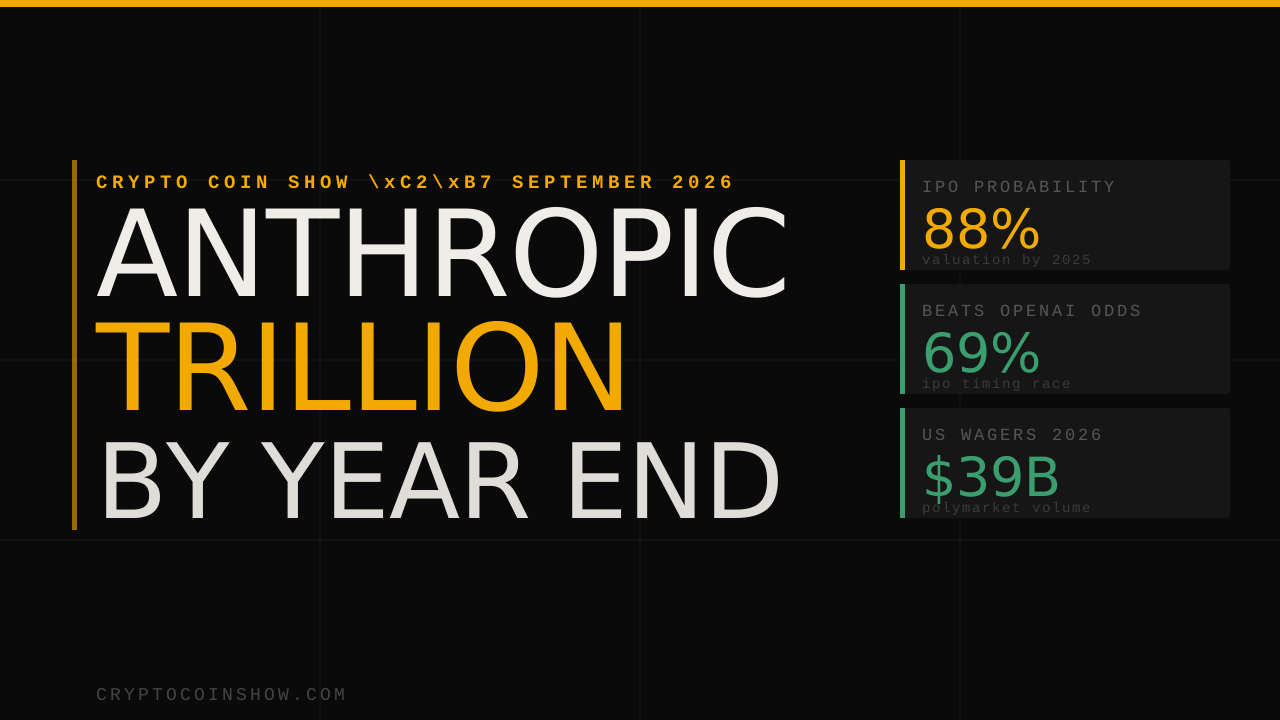
- Company raised $65 billion in May at $965 billion valuation from Altimeter, Dragoneer, Greenoaks, Sequoia and sovereign funds including Singapore’s GIC.
- Anthropic will allow insider stock sales in IPO itself, unlike SpaceX June debut, but is weighing longer-than-standard lockup periods to manage supply.
- $65B Anthropic Series E funding raised in May, valuation benchmark for institutional investor entry.
- 911.5M SpaceX insider shares that became freely tradeable on August 6, more than doubling the liquid float overnight.
- $86B SpaceX June IPO proceeds, largest listing ever, with zero shares from existing shareholders.
Anthropic is preparing to go public as soon as late September following a prospectus filing expected shortly after Labor Day, according to recent reporting.
The AI safety company plans to structure its debut differently from SpaceX’s record-breaking June listing, most significantly by allowing early-stage investors and employees to sell existing shares within the IPO itself rather than reserving the offering purely for newly issued company stock.
That decision carries material implications for how much insider supply will hit the market on day one, and how the stock will perform once trading begins.
The company closed a $65 billion Series E funding round in May at a $965 billion valuation, drawing capital from leading venture firms Altimeter, Dragoneer, Greenoaks and Sequoia alongside sovereign wealth funds including Singapore’s Government Investment Corporation and traditional asset manager Capital Group.
Those institutional backers now hold substantial positions, and the ability to monetize them in the IPO itself has become a key negotiating point.
A secondary offering component, allowing insiders to sell alongside the primary offering that raises new capital for Anthropic, is standard in many mature tech IPOs, but Anthropic’s scale and the concentration of its early backers make the mechanics unusually material.
SpaceX’s June IPO Set Precedent by Blocking All Insider Sales at Debut
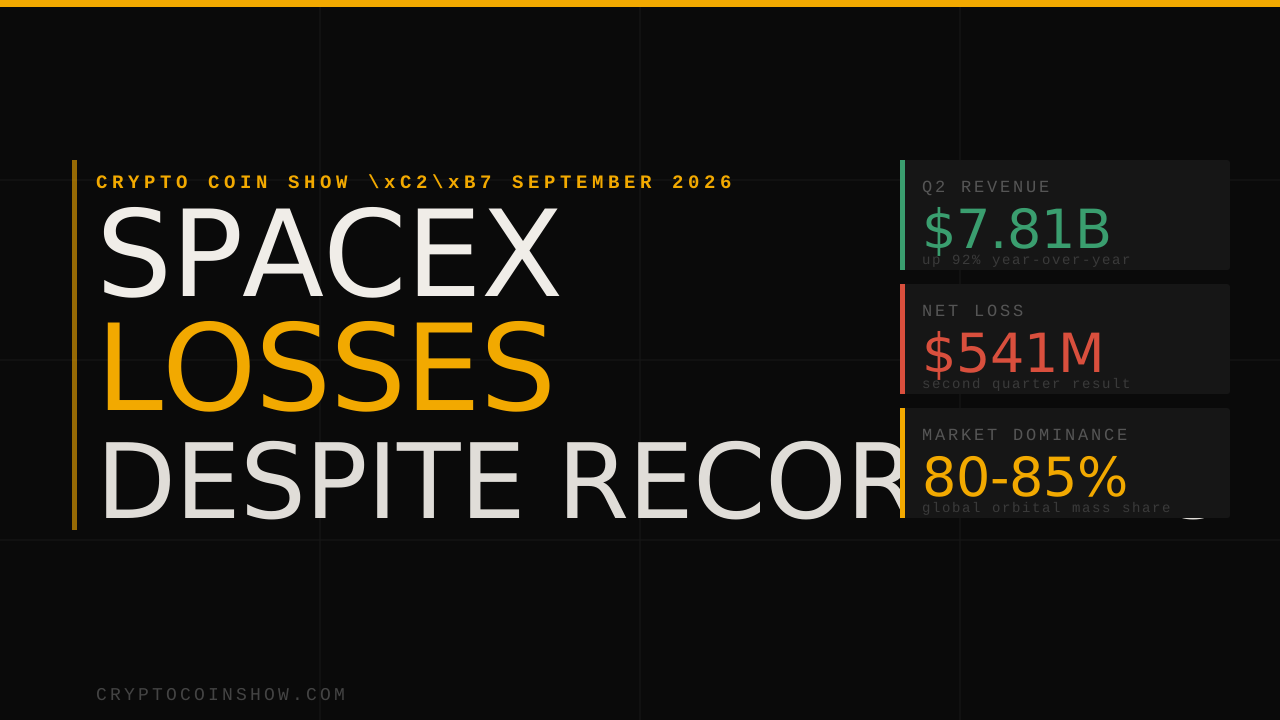
SpaceX’s June listing established a radically different model. Founder Elon Musk and the company’s venture backers conducted no secondary offering whatsoever. The underwriters, led by major investment banks, priced 555.5 million newly issued shares at $135 each, raising roughly $75 billion directly for the company.
The underwriting syndicate then took another 83.3 million shares, bringing total listing volume to 638.9 million shares and approximately $86 billion in proceeds, still the largest IPO in history by dollar value. Every cent went to SpaceX’s balance sheet.
That structure allowed Musk to retain roughly 82.4% of voting power after the listing, safeguarding his control through supervoting shares, a two-tier equity class designed to preserve founder authority despite dilution from the public float. Anthropic has adopted the same supervoting mechanism for its founders, according to recent reports, ensuring similar control preservation.
The difference lies in liquidity for existing shareholders.
The SpaceX approach locked out all early investors from selling on day one. Venture capitalists, sovereign wealth funds and employees held their positions for the standard 180-day lockup period, during which they could not trade shares. On August 6, roughly 911.5 million insider shares, worth approximately $116 billion at then-current valuations, became freely tradeable all at once.
That represented a flood of supply more than double the 638.9 million shares sold in the original offering, causing the liquid float to expand from 4.9% of the company to 11.8% overnight. The stock still gained 6.1% that day, suggesting the market absorbed the supply, but the concentration and timing created acute risk.
Anthropic’s Secondary Component Offers Earlier Cash But Requires Longer Lockups
Anthropic appears to be choosing the opposite path on secondary sales. Rather than forcing all insiders to hold until the standard 180-day window expires, the company is planning to let select early shareholders and employees sell shares directly in the IPO offering itself. That sale would be priced upfront with specific buyers already identified, creating certainty around valuation and volume.
Insiders who opt into this secondary component would receive cash on IPO settlement day.
To offset the supply risk of allowing insider sales at debut, Anthropic is reportedly weighing lockup periods that exceed the standard 180-day norm. The mechanics would work as follows: insiders who sell in the secondary offering receive cash immediately but then face extended restrictions on selling any remaining shares.
Those who do not participate in the secondary would face the conventional lockup timeline. This two-tier approach aims to smooth the supply curve: some insider selling happens immediately but at a controlled, priced volume; the remainder remains locked for longer, preventing a second wave of supply shock like the one SpaceX experienced on August 6.
The institutional investors backing Anthropic, firms like Altimeter, Dragoneer, Greenoaks and Sequoia, are large enough and sophisticated enough to manage both outcomes. But the timing matters. Secondary offerings allow funds to reduce concentrated positions and rebalance portfolios.
A longer lockup forces them to hold longer, tying up capital in a single name and creating duration risk. The prospectus filing after Labor Day will spell out the exact terms, including lockup periods and which insiders are permitted to sell at the IPO.
Prospectus Filing Will Clarify Lockup Terms and Secondary Volume
The prospectus must be filed and reviewed by the SEC before trading can begin. Current timing suggests the document will arrive shortly after September 7, Labor Day, with a likely IPO date in late September or early October.
That filing will disclose Anthropic’s financial performance, risk factors, capital structure and the specific mechanics of its lockup policy and secondary offering eligibility. For institutional investors, the prospectus is the authoritative source, not market rumor or preliminary reports.
Key questions remain open until that filing arrives. How many shares will the secondary component permit existing holders to sell? Will the supervoting structure allow all shareholders equal treatment, or will founders and certain early investors face different restrictions?
What is the exact length of the extended lockup periods, and does it apply uniformly or in tranches? Will the company provide guidance on ongoing capital allocation, profitability, and competitive positioning against OpenAI, Google and other AI leaders? The prospectus answers these questions and establishes the baseline from which the stock will be valued on day one.
Anthropic’s valuation in May at $965 billion already reflects heavy investor confidence. A September IPO at or above that level would make the company one of the largest software debuts in history. But the secondary offering component means more shares will be issued than would occur in a pure primary offering, diluting existing stakeholders unless the company prices accordingly.
The market will price all of this information into the opening quote.
The prospectus filing after Labor Day will be the definitive moment. It will specify the lockup timeline, the volume of secondary shares, the exact supervoting structure, and whether Anthropic management provides forward guidance on revenue, profitability or runway. Institutional investors should plan to file detailed comments during any SEC review period and to model both a bullish scenario (where the secondary is limited and lockups are merely extended) and a bearish scenario (where secondary volume is large and near-term supply remains elevated). The company’s own statements about lockup policy post-filing will signal management confidence in the stock’s ability to absorb insider selling without sharp depreciation.