Wall Street opened higher on Tuesday as stocks looked to extend the positive start to the week, with earnings in focus as investors continued to monitor the macroeconomic environment. The S&P 500 had added 0.1% and Nasdaq Composite was edging…
Our Algorand price prediction indicates a high of $0.3313 in 2025.
In 2026, it will range between $0.5404 and $0.6531, with an average price of $0.5558.
In 2030, it will range between $2.21 and $2.73, with an average price of $2.29.
Algorand’s capabilities make it an interesting prospect for investors and developers interested in smart contracts and blockchain interoperability.
Will ALGO go up? Can it reach $10? Where will ALGO be in 5 years? We explore these and more in our Cryptopolitan price prediction.
Overview
Cryptocurrency
Algorand
Symbol
ALGO
Current Algorand price
$0.2261
Market cap
$1.96B
Trading volume
$96.52M
Circulating supply
8.69B
All-time high
$3.28 on Jun 21, 2019
All-time low
$0.08761 on Sep 11, 2023
24-hour high
$0.2403
24-hour low
$0.224
Algorand price prediction: Technical analysis
Metric
Value
Volatility (30-day variation)
18.25%
50-day SMA
$0.2209
200-day SMA
$0.1856
Sentiment
Neutral
Green days
17/30 (57%)
Fear and Greed Index
55 (Greed)
Algorand price analysis: ALGO faces resistance at $0.3
On Aug 2, ALGO’s price recovered by 23.18% in the last 30 days but dropped 4.57% in the last 24 hours. Its trading volume dropped by 26.43% in 24 hours to $96.18 M, signaling falling interest from traders. Algorand’s total value locked (TVL) dropped by 3.27% in 24 hours to $72.29M.
Algorand broke out upwards in July, a move that was accompanied by rising volatility. On July 15, it crossed into overbought territory. At its highest, it reached $0.34, a level last registered in February. The uptrend reversed into August as technicals pointed to profit-taking following a market overextension. ALGO faced rejection at $0.30 (near the 23.6% Fibonacci retracement level at $0.2959). The MACD histogram points to rising negative momentum.
The 4-hour chart highlights ALGO’s rejection at $0.30. The level remains critical to whether it will continue with the earlier bull run. At current levels, the candles are short, typical of an indecisive market. Its volatility has also risen, but the momentum remains bearish.
Algorand technical indicators: Levels and action
Daily simple moving average (SMA)
Period
Value ($)
Action
SMA 3
0.2232
BUY
SMA 5
0.2440
SELL
SMA 10
0.2563
SELL
SMA 21
0.2731
SELL
SMA 50
0.2209
BUY
SMA 100
0.2188
BUY
SMA 200
0.1856
BUY
Daily exponential moving average (EMA)
Period
Value ($)
Action
EMA 3
0.2492
SELL
EMA 5
0.2352
SELL
EMA 10
0.2186
BUY
EMA 21
0.2071
BUY
EMA 50
0.2162
BUY
EMA 100
0.2408
SELL
EMA 200
0.2452
SELL
What to expect from the Algorand price analysis next?
Per our technical indicators, ALGO isneutral, with the fear and greed index showing a greed sentiment among investors. Price analysis shows a consolidating market after facing resistance at $0.3.
Recent news
Robinhood and Gemini exchanges recently launched tokenized stocks, sparking investor interest in this new type of asset. Against this backdrop, the blockchain chosen by issuers could become a fresh opportunity for investors.
Right now, Algorand commands over 66% of the market share. However, the picture of market share in tokenized stocks could change if this trend keeps gaining momentum.
Why is ALGO up?
Algorand turned bullish last month as altcoins continued to outperform Bitcoin. Algorand, however, faced resistance at $30. Algorand’s rising RWA adoption also contributed to the rise.
Will ALGO reach $1?
Per our Algorand price forecast, ALGO will break above $1 in the period ending in 2028.
Can Algorand reach $10?
Per our Cryptopolitan price prediction, it remains highly unlikely for ALGO to break above $10 in the period ending in 2031.
Can Algorand reach $20?
Per our Cryptopolitan price prediction, it remains highly unlikely for ALGO to break above $20 in the period ending in 2031.
Can ALGO reach 100 dollars?
At $100, Algorand’s market capitalization has to rise above $700 billion from the current $1.2 billion. In comparison, Ethereum’s market capitalization is at $400 billion. Per our price prediction, Algorand is highly unlikely to reach $100.
Is there a future for Algorand?
Like most mega-altcoins, Algorand is trading at its lowest level this year. A break below 30 RSI will be crucial to sending it to previous highs. Looking ahead, ALGO will register new all-time highs in the coming years.
What will Algorand be worth in 2025?
For the last month of 2025, ALGO’s price will range between $0.2960 and $0.3313. The average price for the period will be $0.2500.
Is ALGO a good investment?
Analysis by Intotheblock shows that 97% of holders are at a loss at the current price. The figure will likely drop lower in the short term. However, as our Cryptopolitan price prediction shows, this will change over the long term.
ALGO price prediction August 2025
The Algorand network price forecast for August is a maximum price of $0.2350 and a minimum price of $0.1860. The average price for the month will be $0.1970.
Month
Potential low ($)
Potential average ($)
Potential high ($)
August
0.1860
0.1970
0.2350
Algorand price prediction 2025
For the last month of 2025, ALGO’s price will range between $0.1660 and $0.3313. The average price for the period will be $0.2500.
Year
Potential low ($)
Potential average ($)
Potential high ($)
2025
0.17
0.25
0.33
Algorand price prediction 2026 – 2031
Year
Potential low ($)
Potential average ($)
Potential high ($)
2026
0.23
0.24
0.27
2027
0.31
0.32
0.39
2028
0.46
0.48
0.54
2029
0.70
0.72
0.80
2030
1.04
1.07
1.23
2031
1.47
1.52
1.80
Algorand price prediction 2026
The year 2026 will experience more bullish momentum. Our Algorand price prediction estimates it will range between $0.2304 and $0.2731, with an average price of $0.2418.
Algorand price prediction 2027
Algorand prediction climbs even higher into 2027. According to the prediction, ALGO’s price will range between $0.3058 and $0.3918, with an average price of $0.3176.
Algorand price prediction 2028
Our analysis indicates a further acceleration in ALGO’s price. It will trade between $0.4623 and $0.5385, with an average trading price of $0.4750.
Algorand price prediction 2029
According to the ALGO price prediction for 2029, the price of ALGO will range from $0.7007 to $0.7958, with an average price of $0.7245.
ALGO price prediction 2030
The ALGO price prediction for 2030 indicates the price will range between $1.04 and $1.23. The average price of ALGO will be $1.07.
Algorand ALGO price prediction 2031
The ALGO price forecast for 2031 is a high of $1.80. It will reach a minimum price of $1.47 and average at $1.52.
Our predictions show that ALGO will achieve a high of $0.33 in 2025. In 2027, it will range between $0.31 and $0.39, with an average of $0.32. In 2030, it will range between $1.04 and $1.23, with an average price of $1.07. Note that the predictions are not investment advice. Seek independent professional consultation or do your research.
Algorand historic price sentiment
ALGO price chart by CoinGecko
Algorand held its token sale in June 2019 at $2.40 each.
Union Square Ventures, Lemniscap, and NGC Ventures, among others, held earlier funding rounds. The public sale raised $60.40 million while funding rounds raised $66 million.
Token sale participants who held their tokens since launch are down 90%.
Binance listed ALGO on 21 June 2019. According to CoinMarketCap data, it pumped after the listing to reach its all-time high (ATH) at $3.28.
ALGO later crashed; four months later, it was down 90% from its ATH.
In July 2021, Coinbase listed ALGO. As a result, it gradually recovered and peaked at $0.64 in August.
In retrospect, 2021 was the golden year for the crypto market. The emergence of NFTs, DeFi growth, and institutional interest drove growth.
So, in 2021, it rose from a low of $0.32 in January to $2.30 in October, a 200% gain.
Nothing prepared crypto enthusiasts for the 2023 crypto winter, which worsened with the FTX crash. The year closed with ALGO trading at $0.23.
The decline continued through 2023, registering an all-time low at $0.0876 in September.
The market’s recovery began in October. By the end of the year, it had risen above $0.2.
It began recovering in November from a low of $0.12, rising as high as $0.61 in December.
It then corrected into 2025 below the $0.40 mark in January, $0.35 in February, $0.21 in March, and $0.20 in May and June. It crossed into August, trading at $0.22.
The cumulative market capitalization of public companies that own crypto is now at $160 billion, up from roughly $90 billion to start the year — a new trend in which investors are hungry to get crypto exposure via US equities.
This expansion over the last six months reflects a larger trend in corporate treasury strategies, where firms are beginning to look at digital assets and their role as a balance sheet asset on a more mainstream basis. Some of these firms have seen their share price rise by double-digits following the news of their crypto treasury, with markets reacting to this trend that is just taking off.
mNAV and token-to-equity swaps offer whales strategic exit routes
The mNAV (multiple of Net Asset Value) is key to understanding these treasury operators. It is calculated by multiplying the NAV of the token by a multiple of currency, which is derived by dividing the enterprise value by the NAV of the token.
Although many of these treasury companies are trading above a premium mNAV, it’s not an automatic leveraged trade being put on, as speculative buying may force the price higher. The premium represents a market opinion on professional crypto management and institutional solidity, rather than simply asset backing.
Treasury firms further give large holders of tokens the opportunity for an elegant exit, even when that can avoid liquidity constraints of the traditional market. Instead of dumping directly on exchanges and potentially damaging the value, whales start moving their holding onto treasury vehicles in return for equity shares. They can then sell these equity positions on traditional financial markets, and enjoy better liquidity and stable pricing of their equity, while remaining “diversified treasury” rather than simply having dumped tokens.
This development tackles core liquidity problems in token markets while also inventing new ways to access and invest in the traditional financial world, combined with crypto markets. The durability of these valuations may hinge on thoughtful execution and the uncorrelated tailwinds from underlying crypto assets.
Strategy’s $2.5B STRC raise signals a new era of yield-bearing Bitcoin instruments
Strategy, one of Wall Street’s most prominent corporate holders of Bitcoin, has reinforced its position as a de facto Bitcoin proxy with the launch of a landmark capital raise. The company closed a $2.5 billion offering on Tuesday, making it the largest crypto-linked equity raise of the year. The deal was executed through a newly created class of perpetual preferred stock called STRC, which pays a floating monthly dividend beginning at 9%.
According to the company’s statement, the proceeds from the STRC issuance were used to purchase 21,021 BTC at an average price of $117,256 per coin. This brings Strategy’s total Bitcoin holdings to an astounding 628,791 BTC, valued at over $74 billion at current market prices.
STRC is expected to debut on the Nasdaq on Wednesday. Once listed, it will become the first US exchange-listed perpetual preferred security issued by a Bitcoin treasury company that offers monthly dividend payments, the company said.
The STRC raise also marks Strategy’s largest capital raise to date, eclipsing its $800 million convertible note offering from June 2024. It follows the launch of STRF in March, which Strategy’s executive chairman, Michael Saylor, once described as the firm’s “crown jewel.” The STRF product was backed by a $2.1 billion at-the-market equity program.
However, unlike STRF—which was primarily targeted at institutional investors—the new STRC product is designed with retail income investors in mind. Its floating monthly payouts and lack of maturity make it appealing to those seeking stable yield exposure linked to Bitcoin, without the risk of spot market volatility.
“Yield products such as this offer exposure without direct spot market volatility,” Vincent Liu, chief investment officer at Kronos Research, said. “It represents meaningful progress in structured capital flows that deepen Bitcoin liquidity without pressuring the order book.”
The innovative structure of STRC underscores a broader trend among corporate Bitcoin holders who are seeking to monetize their BTC reserves and attract new classes of investors.
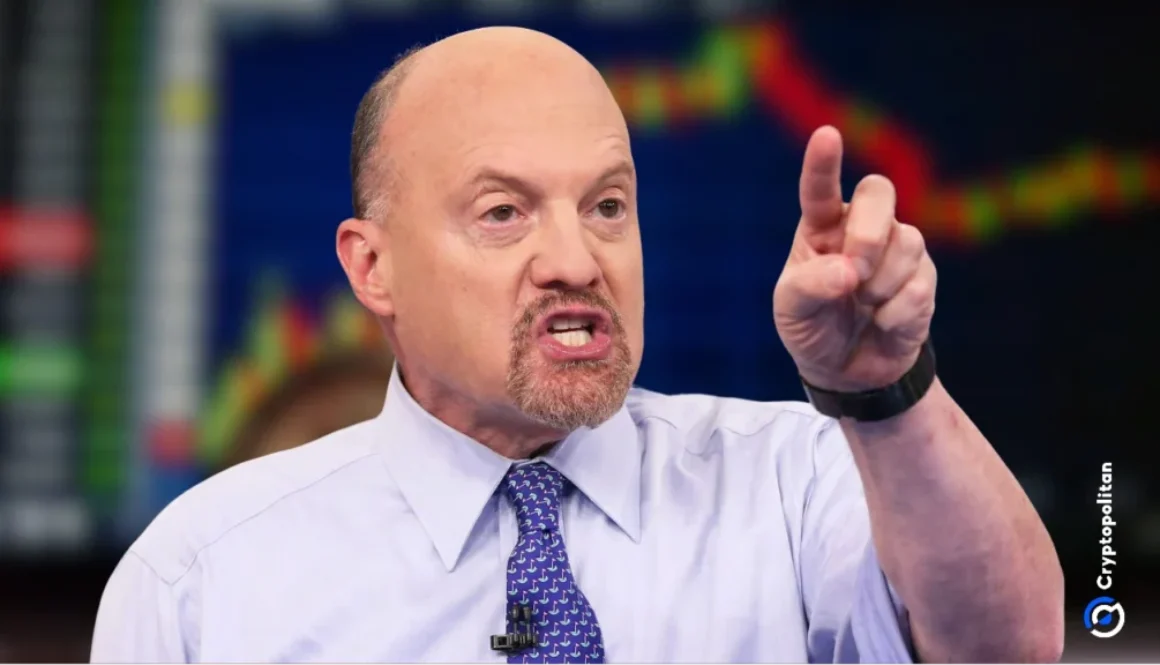
Wall Street’s Jim Cramer just flipped the script after years of bashing meme stocks like GameStop and AMC, by suddenly telling everyone on Tuesday night to stop shorting Kohl’s. Yeah, Kohl’s. The same department store chain that most people forgot even existed.
“The shorts have clearly overstepped their boundaries with Kohl’s. They’ve run into a buzz-saw of their own creation,” Jim said. “Even now, I think they’d be wise to cover their short and move on before they have another GameStop on their hands.”
That statement came right after Kohl’s stock went nuts. Trading was so volatile on Tuesday that it had to be temporarily halted. Once the dust settled, shares ended the day up a massive 37.62%. According to FactSet, roughly 50% of Kohl’s outstanding shares were sold short, making it a prime target for a squeeze.
Cramer calls out short sellers over Kohl’s stock surge
Let’s be clear. Jim wasn’t praising Kohl’s actual business. He straight-up said that the company’s partnerships with Sephora or Amazon weren’t driving the stock’s movement. Instead, he argued that the stock was being bought because of how heavily it was shorted.
According to Jim, this was purely a momentum play built around short interest. He pointed out that Kohl’s had been discussed on the WallStreetBets subreddit, the same place that sparked the infamous 2021 short squeeze. He said the playbook looked identical.
Back in 2021, the GameStop squeeze cost hedge funds close to $20 billion, driven by retail traders banding together online to force short sellers into panic-buying shares to close their positions.
And here’s the weirdest part: Jim used to hate this kind of stuff. He was one of the loudest voices calling out meme stocks as hype machines. He regularly said names like GameStop and AMC were being driven by emotion, not numbers. He dismissed the POTUS’ Trump Media & Technology Group (DJT) as “overvalued” and said the moves weren’t backed by revenue or profits.
Just a few years ago, Jim sided with the short sellers. He tried hard to talk down retail investor excitement during the GameStop frenzy. His 2021 take? Sell GameStop at $400. That got him roasted so badly online that a new meme was born: Inverse Cramer.
Retail traders started doing the exact opposite of what he recommended. It became a whole thing. He was mocked all over Reddit, especially in the r/WallStreetBets community, for being the poster child of outdated investment thinking.
So for him to now say hedge funds should “cover and move on” feels like a full reversal. He believes the short position doesn’t match Kohl’s fundamentals, or retail power. There’s debt, and sales are slipping, but the company isn’t falling apart. And that’s his issue. He doesn’t think the target makes sense if you’re betting on total collapse.
Jim also called out hedge funds directly, saying they should’ve closed their shorts earlier this year when the stock dipped after Wall Street panicked about President Donald Trump’s new tariffs. That spring sell-off, according to him, was the time to exit. Not now.
“In the end, the short sellers have the wrong target,” Jim said. “A company with declining sales and a lot of debt, but not one that’s about to fall apart, which is what you need if you were still shorting Kohl’s down here in the single digits.”
Cryptopolitan Academy: Tired of market swings? Learn how DeFi can help you build steady passive income. Register Now
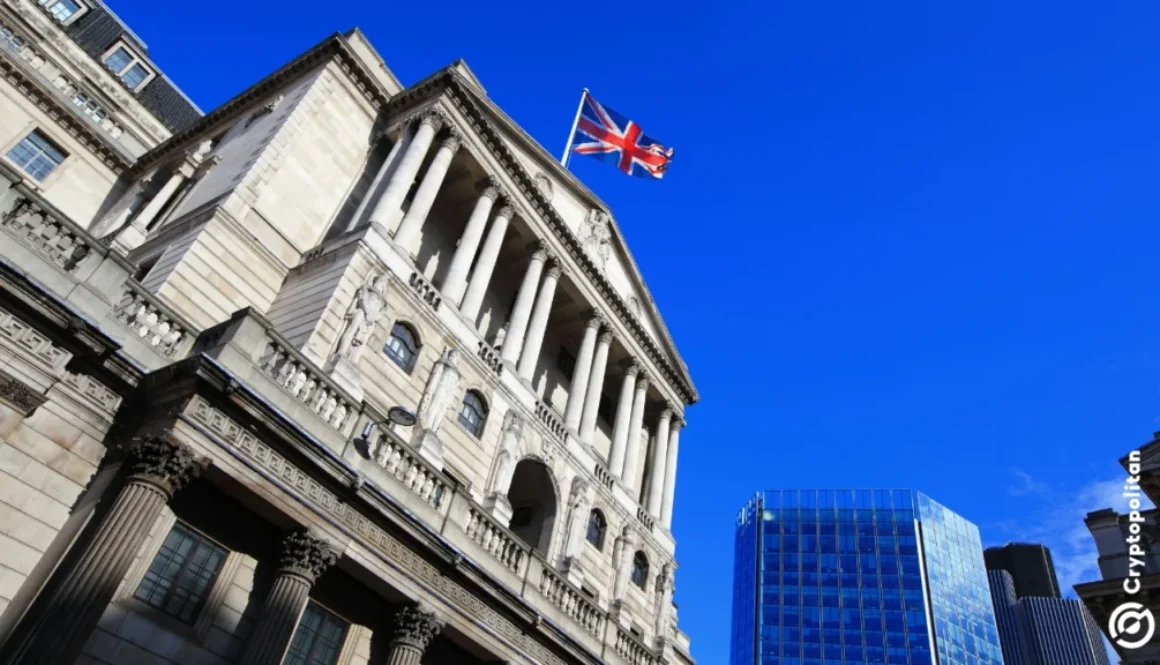
The Bank of England (BoE) has asked several banks to assess their resilience to potential US dollar shocks, as concerns over Trump’s policies on global financial stability grow.
Trump’s departure from long-standing US positions on free trade and defense has rattled confidence in the dollar—the world’s dominant reserve and trade currency—sending shockwaves through global markets.
The uncertainty has also reached lawmakers, who debate whether continued reliance on dollar distribution is sustainable amid rising economic risks.
Uncertainties surround the US dollar as nations rethink their reliance on the country
The US Federal Reserve has asserted that the central bank will continue using dollars in its operations. However, following Trump’s policy shift, the US’s European trading partners are rethinking their reliance on the country.
The European regulators have gone to the extent of triggering the Bank of England, the central bank responsible for maintaining monetary and economic stability for the country, to emphasize to lenders the urgency of assessing their dollar funding approach in their operations. Moreover, according to sources familiar with the situation, it has also requested them to examine their reliance on the currency for short-term needs.
Considering the intense nature of the situation, a Britain-based global bank was recently requested to conduct an internal stress test on the possibility of a shutdown for the US dollar swap market.
Richard Portes, an economics professor at London Business School and a former Chair of the Advisory Scientific Committee for the European Systemic Risk Board, mentioned that in a worldwide dollar funding crisis, the Fed may be reluctant to provide swaps due to concerns about a strong reaction from Trump. Portes explained that the Fed mainly focuses on keeping monetary policy independent.
He further urged the supervisors of foreign banks to encourage their banks to reduce their dollar exposures drastically.
In response to Portes’s statement, the Prudential Regulation Authority, the supervisory part of the Bank of England, requested separate information from several banks concerning the situation, people with knowledge of the matter who wished to remain anonymous due to the confidential nature of the situation said.
When asked to comment, neither the Bank of England’s representative nor the global UK banks ‘ spokespersons that operate in banks such as HSBC, Standard Chartered, and Barclays respond to a request for comments.
Contrastingly, a spokesperson from the White House responded to a request for comment. In a statement, the spokesperson mentioned that during President Trump’s administration, several markets and investors demonstrated strong confidence in the US dollar.
The spokesperson based the argument on the increase in bonds, stocks, and historic investments that have increased to trillions of dollars since Trump’s election day.
Analysts express concerns about the US Fed’s financial stance
Earlier assessment of internal stress test on the US dollar revealed that euro zone banks required approximately one-fifth of the currency in their operations. The assessment also revealed that they highly rely on financial borrowing from short-term markets, which are unreliable in an economic crisis.
For example, European central banks have significantly borrowed funds from the US Federal Reserve. This is where the US dollar comes from, highlighting their reliance on the currency to fill their financial gaps.
Interestingly, the US Fed has several loan programs that apply to the ECB, among other US partners. This aims to address the global US dollar shortage and prevent the effects of financial hardship from hitting the country.
Two reliable sources have highlighted that the US Fed never stopped indicating support for these safety precautions. Despite this, some sources suggest the possibility of the Fed shifting this stance.
Cryptopolitan Academy: Want to grow your money in 2025? Learn how to do it with DeFi in our upcoming webclass. Save Your Spot
Crypto exchange Kraken has officially launched Kraken Derivatives US, a regulated platform offering US clients access to crypto futures trading. This marks a major step forward in Kraken’s effort to provide a fully integrated trading experience.
Through this rollout, clients can trade cryptocurrency futures directly on CME Group’s platform via Kraken Pro. Users will enjoy seamless collateral transfers, enhanced capital efficiency, and a simplified interface that combines spot and derivatives trading in one place.
That means Kraken’s clients can now trade numerous crypto futures—such as Bitcoin and Ethereum contracts—besides traditional spot markets in the Kraken Pro interface, which is the exchange’s advanced trading feature. Combining both offers instantaneous collateral transfers and enables strategies to be carried out faster.
“With this launch, Kraken clients in the US can now trade futures alongside one of the world’s most liquid cryptocurrency spot markets,” said Shannon Kurtas, Head of Exchange at Kraken.
He noted that it’s important to provide traders with broad market access and increased capital efficiency within a regulated, high-performance environment.
In making crypto futures available in a compliant and regulated environment, Kraken caters to the increasing institutional and retail demand for advanced trading instruments in the US. That’s important as US regulators grow more adamant about regulating the cryptocurrency market, putting added focus on regulatory clarity and investor protection.
Kraken develops a unified digital and traditional trading solution
The introduction of Kraken Derivatives US isn’t a once-in-a-while maneuver. It is part of Kraken’s larger plan to develop a holistic multi-asset platform where users can easily trade digital and traditional assets in a single place.
In April 2025, Kraken launched its traditional finance offering, commission-free trading in US equities. Kraken has said it makes more than 11,000 US stocks and ETFs accessible, and that all trades are open 24 hours a day. This was a major step toward breaking the barrier between crypto and traditional investing.
The company also recently introduced tokenized equities, through which customers can purchase fractionalized publicly traded stock shares on a blockchain. That means Kraken users can now manage a diverse investment playbook that features crypto coins and blue chips without leaving the platform.
Kurtas said Kraken Derivatives US is constantly working to build and expand a holistic trading experience that enables seamless trading across digital and traditional assets, all on one platform without compromise in functionality, performance, or liquidity. She said the company is building an ecosystem to serve traders in DeFi, traditional finance, and the spectrum.
We aim to create a trading system where capital can quickly and efficiently move across markets with high confidence using just one high-performance interface.
Kraken expands after acquiring NinjaTrader
This new ability for Kraken was largely facilitated by the acquisition of NinjaTrader, one of the US’s most storied retail futures trading platforms. This acquisition was strategically important for Kraken, as it added regulatory infrastructure, technology, and mastery to its business to move into older derivatives markets.
The debut of Kraken Derivatives US is the largest product to come out of that acquisition. But it’s only the beginning.
Kraken, one of the oldest crypto exchanges, said it would extend its derivatives offering later in the year to include more futures, such as commodities, foreign exchange (FX), stocks, and bonds. That development would put Kraken in direct competition with established institutions rather than those in the crypto market, offering traders a single place for managing risk and trading across all major asset classes.
The move is especially critical when institutional interest in crypto and digital assets is increasing, and hedge funds, family offices, and asset managers seek ways to enter digital markets compliantly.
By providing futures contracts, spot trading, tokenized and traditional equities under one roof, Kraken says it aims to be a power player in global finance, not just crypto.
Cryptopolitan Academy: Coming Soon – A New Way to Earn Passive Income with DeFi in 2025. Learn More
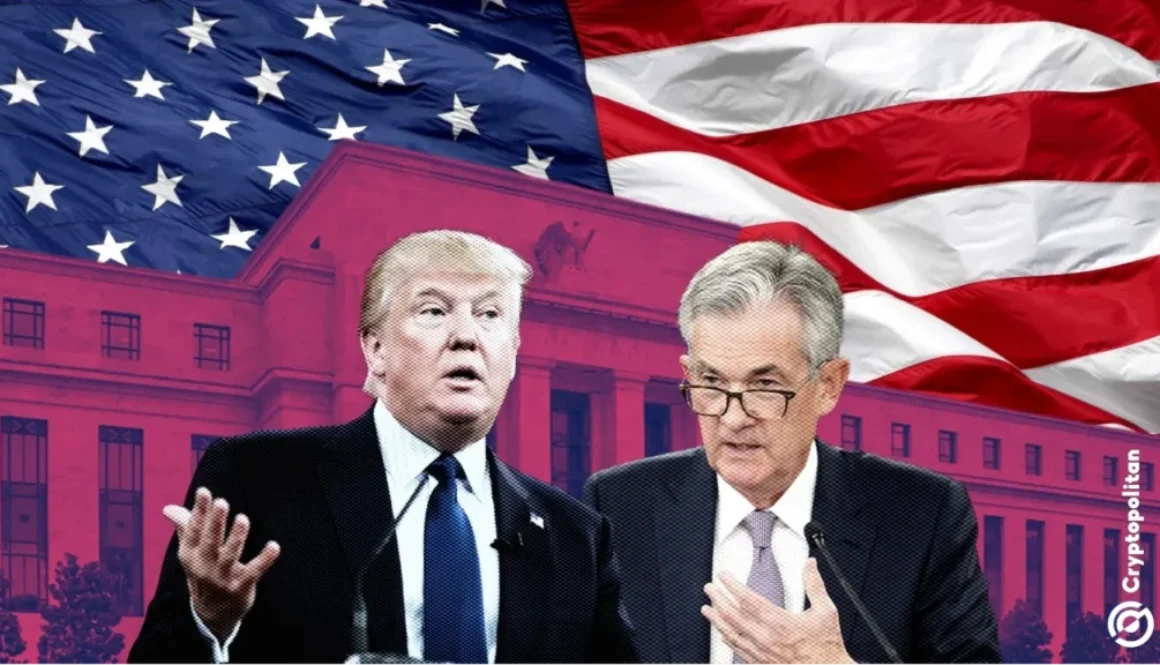
President Donald Trump has reignited efforts to remove Federal Reserve Chair Jerome Powell, triggering fresh anxiety across financial markets.
The renewed push has raised fears that political interference at the US central bank could spark long-term inflation and disrupt the economy.
President Trump has consistently lashed out at Powell for not cutting rates repeatedly since he returned to the White House in January. His recent comments have gone even further, suggesting that Powell should step down and suggesting that he has acted to sabotage the US economy by keeping interest rates too high.
Trump said that Powell’s resignation “would be a great thing” as he expressed frustration with the Fed’s refusal to lower rates, even as signals of weakening global growth are picking up.
And while the president does not have the legal power to remove the Fed chair over policy disputes, his aggressive public pressure campaign has prompted speculation about a more sustained effort to meddle with the traditionally independent institution.
Trump’s repeated attacks have undermined investor confidence and left many worried that a politicized Fed might lose the resolve to fight inflation in favor of providing a temporary economic boost.
Markets hedge against inflation fears
The financial markets have answered with one clear statement: investors are bracing for higher inflation.
The yield on longer-dated US Treasury bonds has risen, indicating expectations that future interest rates will rise as inflation starts to creep up. However, analysts caution that if Trump persuades the central bank to cut rates too soon, it could trigger an overheating economy.
“If markets believe that a politically-captured Fed will lower rates to stimulate growth regardless of economic consequences, long-term inflation expectations will rise, causing the curve to steepen,” said Guy LeBas, chief fixed income strategist at asset manager Janney Capital Management. It was difficult to predict the exact scale of the market reaction. Still, he believed the move could be significant, measured in percentage-point increases in 30-year Treasury yields rather than basis points.
A steepening yield curve is of particular concern to homeowners and businesses when long-term borrowing costs rise more rapidly than short-term borrowing. Rising rates on 30-year mortgages, car loans, and corporate bonds would raise borrowing costs, crimp household budgets, and squeeze corporate profits.
The dollar has also begun to wobble. The greenback fell against most other major currencies as investors anticipated looser monetary policy. Looser money tends to weaken the dollar, making imports more expensive, which throws fuel onto the fire of inflationary pressures that Trump’s trade tariffs have lit.
Wall Street economists rise to the defense of Fed independence
The reaction on Wall Street and across the broader business community to Trump’s campaign has been swift. JPMorgan Chase CEO Jamie Dimon issued a strong warning, emphasizing that central bank independence is essential for economic stability. During a Tuesday investor call, he cautioned that undermining this independence could lead to serious, unintended consequences.
Other economists agree. Most say that the Feds’ credibility lies in their ability to act without being swayed by political pressure. Suppose the markets believe that the Fed is caving to the White House. In that case, the potential for volatility is not limited to bonds, but could ripple through stocks, commodities, and various global currencies.
Minutes of the Fed’s June 17–18 meeting, released last week, provided little support for a rate cut when the central bank meets next on July 29–30. Most policymakers were concerned about inflationary risks, specifically the inflationary risks posed by Trump’s protectionist trade policies. And with tariffs still in effect on tens of billions of dollars’ worth of goods, inflation pressures are already simmering.
However, instead of heeding the warnings, Trump and his aides have doubled down. In recent weeks, top officials have gone on financial news programs and social media, repeating calls for lower interest rates and saying Powell should resign if he won’t bend.
KEY Difference Wire helps crypto brands break through and dominate headlines fast
The S&P 500 is finally catching up to international markets after getting outperformed in the first half of 2025.
While investors with diversified portfolios have been leaning on non-US assets for returns, July is flipping the script. The US index is now outpacing major global ETFs that had previously taken the lead, including those tied to Europe, emerging markets, and ex-US world stocks.
This reversal comes even as trade tensions are ramping up again under President Donald Trump. During a call with Kristen Welker of NBC’s “Meet the Press,” Trump pointed to Wall Street’s record levels as proof the tariffs are being “very well-received.” For US investors locked into the S&P 500, that confidence seems justified… at least for now.
White House targets Brazil and Canada as ETFs slide
US markets may be up, but foreign assets are under pressure. The iShares MSCI Brazil ETF (EWZ), which had been outperforming the S&P 500 earlier this year, is now down 4.6% just in July.
That drop came after Trump slapped a brutal 50% tariff on Brazilian imports this week. The iShares MSCI Canada ETF (EWC) is also falling behind, following a similar pattern. Both countries are now facing direct trade retaliation from Washington, and the market is reacting fast.
Ulrike Hoffmann-Burchardi, Chief Investment Officer for the Americas and Global Head of Equities at UBS Global Wealth Management, said in a note that Trump appears “emboldened to escalate trade actions” after winning some recent policy fights.
Ulrike noted that many of the most heavily weighted stocks in the S&P 500 are largely safe from these tariff shocks. “We think the index can climb to 6,500 by June next year despite periodic volatility,” she wrote. That would represent about a 4% rise from where the index stood last Friday.
The insulation Ulrike is talking about comes from the S&P 500’s heavy exposure to tech and other sectors that aren’t directly tied to the flow of physical goods.
That makes it harder for tariffs to dent the value of many big US companies. It also gives domestic stocks a cushion that international funds just don’t have right now.
US recovers dominance as global bets lose steam
During the first half of 2025, foreign markets had the upper hand—a rare situation, given the last decade of US-led performance. But by July, that dynamic has started to swing back.
Vanguard’s global ETFs excluding the US are now trailing the S&P 500, wiping out earlier gains. Investors who went all-in on diversification at the start of the year are now watching US stocks pull ahead again.
Peter Oppenheimer, Chief Global Equity Strategist at Goldman Sachs International, said US equities are still pricey. “Valuation spreads between the US and the rest of the world are at historical highs,” Peter wrote in a client memo.
Even with that, he admitted that the US has reclaimed its footing faster than expected. “After a decade of US-led dominance, the case for diversification is back,” he said, but current numbers are proving otherwise.
The S&P 500’s comeback puts pressure on global funds that were supposed to be the safe bet in a volatile election year. But that safety looks weaker now that Brazil and Canada are taking direct hits. Trump’s new tariffs are doing more damage abroad than at home, at least in the short term.
Investors with broader exposure might feel the squeeze more than those who stuck with the core US index. And with Ulrike forecasting a 6,500 level by next summer, that bet on the S&P 500 is starting to look more appealing again, even if it comes with occasional swings.
Right now, the American stock market is running hot, tariffs or not. And unless something drastic changes, July could be the point where the US fully reclaims its lead from the rest of the world.
Your crypto news deserves attention – KEY Difference Wire puts you on 250+ top sites
Securitize CEO Carlos Domingo has declared that native tokenization is the only authentic way to represent securities on a blockchain.
Speaking to the media, Domingo said that anything less than native tokenization risks confusing investors and weakening the promise of blockchain technology.
There’s no true on-chain model for securities today—most are confined to walled gardens, Domingo argued in a recent interview. In contrast, native tokenization builds, issues, and records securities directly on the blockchain, with no intermediaries or replicas of traditional assets involved.
Exodus, a crypto software company, is one such example, with its stock trading on the Securitize platform as tokens, for one thing. Investors have a blockchain-based token that is legally the share itself. This would remove counterparty risks, operational friction, and fragmentation, common when a record of value is stored off-chain and on-chain do not tally, Domingo continued.
He also cited BlackRock’s Institutional Digital Liquidity Fund (BUIDL), a $2.8 billion money market fund, as an example of how native tokenization can be done at scale. Rather than using a traditional fund with centralized databases and third-party custodians, Securitize acts as the fund’s on-chain transfer agent, keeping the share register for all shares on its cap table on Ethereum.
Regulators caution against synthetic token offerings
Amid the scramble in tokenization, US regulators grow increasingly weary of how securities are being redesigned on-chain, especially when the technology ostentatiously obscures legal responsibilities.
This week, SEC Commissioner Hester Peirce released a statement reminding the industry and retail investors that tokenized assets are still subject to securities laws. She cautioned that blockchain’s technological properties do not alchemically alter the legal nature of an asset.
“As powerful as blockchain technology is, it does not have magical abilities to transform the nature of the underlying asset,” she wrote. “Tokenized securities are still securities.”
Her remarks come at a time of mounting anxiety that forays by non-native token models, including those recently launched by Robinhood and Kraken, are misguided.
Robinhood’s tokens debuted last month on Ethereum’s Arbitrum network and don’t correspond to direct ownership in stocks like OpenAI or Tesla. Instead, they provide “indirect exposure” to private companies via tokenized contracts. The tokens are not tradeable off the platform, are unavailable to US customers, and are subject to full KYC (Know Your Customer) checks.
Kraken has gone a different direction. It’s xStocks, which are released through the Switzerland-headquartered company Backed, are permissionless and can be traded on decentralized exchanges. But US investors remain locked out again, underscoring the tough compliance maze.
Lawyers such as Anthony Tu-Sekine, head of the blockchain group at law firm Seward & Kissel, pointed out that the legal boundaries remain clear despite technological developments.
Tokenization is the future, but it’s time to learn some hard lessons
Interest in the concept of tokenization has spiked this year as platforms race to bridge the world of traditional finance and that of crypto. However, previous experiments demonstrate that shortcuts or vague models can backfire.
Crypto exchange giants such as Binance and one-time FTX have attempted to launch tokenized stock products in recent years. Such offerings were never realized due to regulatory implications.
Abra, a digital asset platform, launched tokens based on contracts attached to US stocks and ETFs in 2019. However, after the SEC and the CFTC opened an inquiry, the company stopped the program and agreed to pay $150,000 in penalties to each organization for selling unregistered securities and breaking laws governing derivatives.
Still, regulators have been more open lately. In May, the SEC held a roundtable on tokenization that gathered a range of voices from the crypto and financial sectors.
SEC Commissioner Mark Uyeda said the session was part of an effort to understand the evolving market better. He noted that, in recent history, people seemed to have forgotten one of the most basic principles—that investors and issuers possess valuable perspectives and experiences.
Cryptopolitan Academy: Tired of market swings? Learn how DeFi can help you build steady passive income. Register Now
Bitcoin exploded to a record high of $112,052 late Wednesday afternoon, pushed up by a red-hot rally in tech stocks led by Nvidia, whose surge helped carry the rest of the market straight into the close.
The rally broke past the previous all-time high of $111,999, set back in May. At the closing bell, Bitcoin hovered around $110,947.49, up 1.9% on the day, according to Coin Metrics.
This move didn’t come out of nowhere. Bitcoin has been stuck in a tight zone for weeks, even as billions of dollars poured into Bitcoin ETFs. But it wasn’t the funds doing the heavy lifting this time.
Public companies buying Bitcoin directly outpaced the ETFs in the second quarter, giving the market its first real push in a while. Even with all that action, Bitcoin was only up 2% in the last month, until today changed the game.
Nvidia’s market cap touches $4 trillion as tech leads
Wednesday’s rally wasn’t limited to crypto. Over in equities, Nvidia briefly hit a $4 trillion market cap, becoming the first company to reach that number even for a moment.
That triggered a tech-wide boost that lifted the Nasdaq Composite to a new record close, while the S&P 500 and Dow Jones Industrial Average gained 0.6% and 0.5%, respectively. Investors also brushed off the newest tariff moves from President Donald Trump, showing they were more focused on risk assets than White House policy shifts.
The connection is simple: when traders get aggressive and pile into growth stocks, Bitcoin usually joins the ride. Despite being labeled “digital gold” by institutions, it still moves like a high-risk play. It rises and falls with stocks when sentiment turns risk-on. That’s what happened today—tech ripped, and Bitcoin followed.
Expectations for Bitcoin breaking new highs this summer have been building. Corporate treasuries have been loading up, and lawmakers in Washington, D.C. are inching closer to passing long-awaited crypto legislation. The combination of money flowing in and possible regulatory clarity is setting the table for more price jumps in the coming weeks.
Traders expect Bitcoin to run past $120K
With Crypto Week approaching in D.C., traders are getting more aggressive. Ryan Gorman, chief strategy officer at Uranium Digital, said this might just be the beginning. “With crypto week on the horizon next week in DC, and a likely flood of positive momentum heading into the dog days of summer, bullish sentiment and thinner trading volumes could see prices gap up to $120,000 or higher by the end of next week,” Ryan said. He added that open call interest outweighing puts “normally reveals traders are bullish and expect upward price momentum to continue.”
This bullish behavior has been building for a while. But what’s different now is the pace. Corporate buying is ramping up. Retail is waking back up. Options markets are leaning hard toward calls. And for once, everyone’s looking ahead instead of bracing for a sell-off.
Meanwhile, U.S. stock futures stayed mostly flat Wednesday evening. Futures for the S&P 500, Nasdaq 100, and Dow Jones barely moved after recouping some losses from the recent tariff-driven slide earlier in the day. The calm didn’t rattle crypto traders, though. They’re still focused on momentum.
Chris Kline, the chief operating officer and cofounder of BitcoinIRA, pointed out that macroeconomic conditions haven’t changed. “The same fundamentals of a scarce asset are at play amid record-breaking budgets and debt ceilings,” Chris said. He also mentioned that the regulatory environment is becoming more crypto-friendly, and that Bitcoin is finally gaining real traction among institutional players.
But that wasn’t all. Chris also brought up growing speculation about Fed Chair Jerome Powell’s future. “The rumor mill has continued to accelerate speculation that Fed Chair Jerome Powell may either step down or be removed, which has crypto bulls excited about a potential rate cut,” he said. Lower interest rates would make risky assets like Bitcoin even more appealing.
Chris wrapped it up by saying, “This is a perfect storm for even the smallest catalyst to springboard Bitcoin and crypto overall to new price discovery levels and … more volatility.”
Your crypto news deserves attention – KEY Difference Wire puts you on 250+ top sites