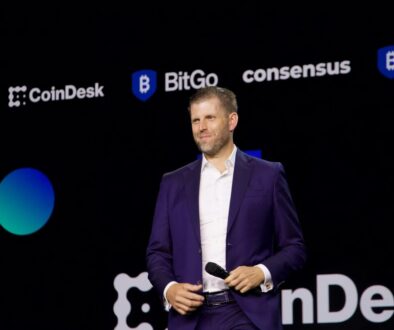
Hoskinson pitches Midnight’s Night Mode on TOKEN2049 main stage
Cardano founder Charles Hoskinson used his Midnight keynote at TOKEN2049 Singapore on October 8 to argue that today’s smart contracts are too limited and too transparent, pitching Midnight’s Night Mode privacy stack as the fix. The talk followed a public complaint from Hoskinson that Midnight was left off the community-funded Cardano booth at the event.

- Hoskinson presented Night Mode, which combines zero-knowledge proofs, multi-party computation and trusted execution environments on Midnight.
- Midnight also showed Midnight Passport, a Collateral Warehouse and Offer Files, and reports cite a Solana wallet integration for private swaps.
- Hoskinson publicly criticized the community-funded Cardano booth for leaving Midnight out of its ecosystem display.
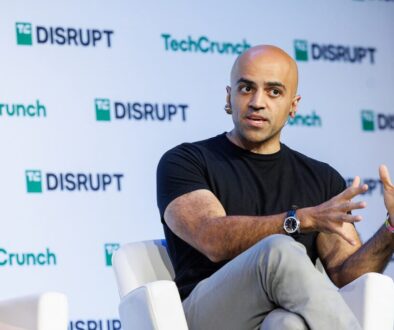
Charles Hoskinson brought a pointed message to the main stage at TOKEN2049 Singapore on Thursday: smart contracts as most chains run them today are not good enough for serious financial or enterprise use. His “Midnight City” keynote, listed on the conference agenda for October 8, came a day after he posted on X that “Midnight has become the where’s waldo of Cardano,” a jab at the Cardano booth on the expo floor that did not feature the privacy network.
Hoskinson says public smart contracts hit a ceiling
According to reports from Crypto Times and Crypto Briefing, Hoskinson argued that current smart contracts are constrained in what they can compute and expose every intermediate step on a public ledger. That combination, in his framing, keeps banks, corporates and identity providers away from on-chain applications that would reveal client data or trading intent.
His answer is what Midnight calls Night Mode, described in some coverage as the Night Frame. It layers three privacy tools: zero-knowledge proofs, multi-party computation and trusted execution environments. The aim is to let applications run sensitive logic privately while still settling on-chain, with selective disclosure written in Midnight’s Compact programming language.
Midnight shows a wider product set
Alongside Night Mode, the Midnight team presented Midnight Passport, a Collateral Warehouse and Offer Files, according to the same reports. Detailed specifications for those products were not published with the keynote, so their scope and launch timing remain unconfirmed. Crypto Briefing and BlockWeeks also reported a Solana wallet integration that supports private swaps, part of a push to pull users from other chains.
Midnight is a partner chain built by Input Output, the Cardano engineering firm Hoskinson leads. Its genesis block went live in March 2026. The network uses NIGHT, a governance and utility token with a fixed supply of 24 billion, and DUST, a shielded resource used to pay transaction fees. Crypto Times reported that Hoskinson said he has put roughly $200 million into Midnight’s development.
The booth dispute exposes Cardano governance friction
In a follow-up post, Hoskinson argued the booth is a public asset paid for with community treasury money and should showcase the largest projects in the ecosystem. The Cardano TOKEN2049 page lists projects such as Minswap, Iagon, Hydra and the Snek Foundation at the shared booth. Public information does not show who decided Midnight’s absence or whether the project applied for a spot, and the Cardano Foundation had not publicly explained the omission at the time of reporting.
The episode lands weeks after Input Output lost a Cardano treasury vote, a sign that funding decisions inside the ecosystem are increasingly contested between Input Output, the Cardano Foundation and token holders.
The CCS read. Privacy is shaping up as one of the main unsolved problems for institutional on-chain finance. The tokenization panels at TOKEN2049 featured BlackRock, Fidelity and Morgan Stanley, and none of those firms will move client positions onto chains where every balance and trade is visible to competitors. Midnight is betting that a mix of cryptography and hardware enclaves can satisfy both compliance teams and confidentiality needs. The pitch is credible on paper, but stacking three complex technologies raises engineering risk, and trusted execution environments depend on specific chip vendors. The public booth spat is also a reminder that Cardano’s decentralized governance can work against coordinated go-to-market efforts at exactly the moments institutions are watching.
Watch for published specifications and developer documentation for Night Mode, Midnight Passport and the Collateral Warehouse, any live institutional pilots, and whether the Cardano Foundation responds on booth selection. Follow all our TOKEN2049 coverage, and read our earlier report on how Input Output lost a Cardano treasury vote.