Aave’s Kulechov sees tokenized stock loans overtaking crypto loans
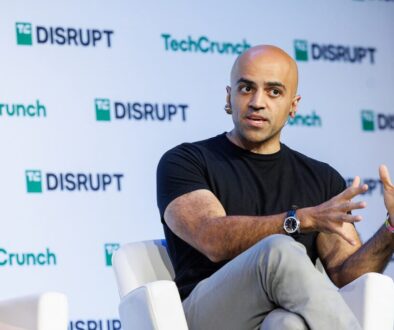
Aave founder Stani Kulechov told a TOKEN2049 Singapore panel on Wednesday that lending against tokenized stocks and other real-world assets could overtake crypto-backed lending on Aave next year. Ethena CEO Guy Young and Synthetix founder Kain Warwick joined him to argue that DeFi rails are becoming the plumbing for traditional assets.

- Kulechov said tokenized stock and RWA lending could pass native crypto lending on Aave as soon as next year, pointing to the new Equities Hub on Base.
- He put borrowing costs against on-chain shares near 5%, which he said undercuts traditional over-the-counter stock lending.
- Ethena’s Guy Young said smart-contract protocols can cut operating costs by about 95% versus banks, while Kain Warwick said regulatory clarity will decide the next wave of token adoption.
The remarks came during the “DeFi’s Institutional Breakthrough” session on day one of TOKEN2049 Singapore at Marina Bay Sands, moderated by a16z crypto’s Robbie Petersen, according to TokenPost’s report from the panel and a separate account from Coinotag. Kulechov used the stage to frame Aave less as a crypto lending app and more as a credit network that can sit underneath stocks, savings and AI-driven payments.
Kulechov points to the Equities Hub as proof
The forecast rests on a product that went live two weeks ago. On September 25, Aave opened an Equities Hub on its V4 deployment on Base that lets eligible non-US users deposit seven Coinbase-issued tokenized stocks, including Apple, Nvidia and Tesla, and borrow USDC against them, The Block reported. Risk provider LlamaRisk set initial collateral caps of roughly $29 million across the seven stocks, with Chainlink feeds handling pricing.
Those caps are small next to Aave’s own history. Kulechov noted the protocol’s liquidity peaked at about $76 billion last year, according to both reports. His argument is that loans near 5% against on-chain shares are already cheaper than the OTC desks wealthy stockholders use today, and that cost gap will pull volume on-chain once supply caps rise. He also said Aave is building a global savings account aimed at people who do not use crypto at all.
Ethena and Synthetix say the yield gap is the pitch
Young described how Ethena pivoted after crypto yields fell close to zero in the bear market while real-world risk-free rates sat near 5%. That pushed the firm toward real-world asset infrastructure, savings products and its Ethena Pay launch. He contrasted bank deposits that pay 0.5% or nothing with DeFi products passing more than 5% to users, and said protocols can run at roughly 95% lower cost than banks carrying compliance, legal and licensing teams across jurisdictions. Coinotag reported he described the business as “packaging trust.” Ethena’s USDe supply sits around $15 billion, per the panel reports.
Warwick, who now runs Infinex, offered a more cautious angle. He said regulatory uncertainty has made many altcoins less attractive than ordinary stocks, which is partly why crypto rails ended up carrying tokenized equities. Infinex controls the user-facing app while keeping its back end neutral, he said, and the next wave of token adoption depends on clearer rules.
AI agents enter the lending conversation
All three touched on software as a future customer. Kulechov said AI agents can open on-chain accounts far more easily than bank accounts and that machine-initiated on-chain transactions could eventually outnumber human ones. Warwick said agents could route idle cash toward protocols with long operating records, which favors incumbents like Aave over newer venues.
The CCS read. This is the clearest statement yet from a top DeFi founder that the next leg of on-chain credit is about equities, not altcoins. For institutions, the pitch is concrete: around-the-clock collateral, transparent liquidation rules and borrowing costs that Kulechov says beat OTC stock lending. The constraint is equally concrete. The Equities Hub is capped near $29 million and closed to US users, so the “overtake” call depends on issuers like Coinbase scaling supply and on regulators letting US holders in. Treat it as a direction of travel from Aave’s founder, not a measured trend yet.
Watch whether Aave governance lifts the Equities Hub collateral and USDC caps in the coming weeks, and whether GHO is added as a borrowable asset against equities, which The Block said remains subject to governance and risk review. For background, see our look at tokenized stocks in DeFi vaults, and follow all our TOKEN2049 coverage.