Franklin’s Jenny Johnson says rival tokenized funds are digital twins
Franklin Templeton CEO Jenny Johnson used her TOKEN2049 Singapore stage time to argue that many rival tokenized funds are “digital twins” that keep ownership records off-chain. She held up the firm’s BENJI platform, which records fund ownership on public blockchains, as the alternative.
- Johnson said many competing tokenized funds mirror traditional products while keeping the real share register in legacy systems.
- She pointed to BENJI, launched in 2021, as a fund whose official ownership record lives on a public blockchain.
- Binance co-CEO Richard Teng, also on the TOKEN2049 program, said demand for tokenized stocks is strong but information flow is holding back private markets.
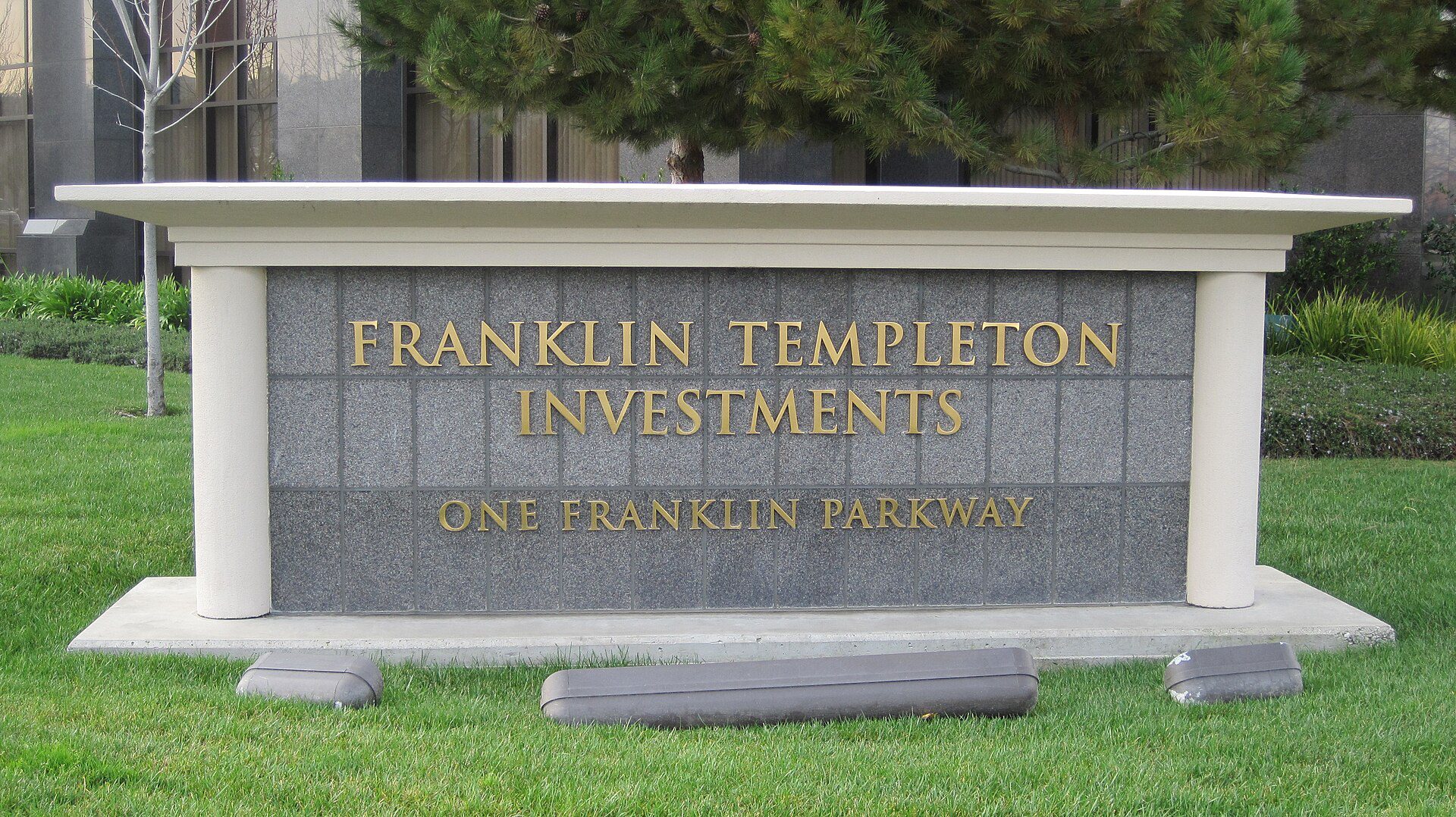
Franklin Templeton chief executive Jenny Johnson took aim at how much of the industry is building tokenized funds, according to reports from Crypto Briefing and crypto.news. Her case rests on the firm’s own product: Franklin says its Franklin OnChain U.S. Government Money Fund (FOBXX) was the first U.S.-registered mutual fund to use a public blockchain as its official system of record when it launched in 2021.
Johnson says a token is not the same as an on-chain fund
Johnson described many competing products as “digital twin” funds. In her framing, a digital twin issues a token that represents a fund share, while the authoritative record of who owns what stays in a transfer agent’s conventional database. The blockchain becomes a distribution wrapper rather than the ledger itself.
BENJI works the other way, she argued, because ownership is written on-chain. Crypto Briefing reported that she put BENJI’s cost at about $1.13 per transaction against roughly $150 through traditional processing. Crypto.news said it could not verify the $150 figure and noted that Johnson framed the legacy comparison differently on Franklin’s January 2026 earnings call, so that number should be treated with caution.
According to crypto.news, the official agenda placed Johnson alongside Binance co-CEO Richard Teng and Canton Network CEO Yuval Rooz in a discussion of tokenized assets, liquidity and on-chain settlement.
BENJI has grown into a multi-chain platform
BENJI started on Stellar and now runs across Polygon, Arbitrum, Avalanche, Aptos, Ethereum, Base, Solana and BNB Smart Chain, per crypto.news. The platform accrues yield every second and distributes it daily, a feature Franklin announced in 2025.
Data from RWA.xyz cited by crypto.news showed about $2.60 billion across four Franklin products on October 8, second among tokenized U.S. Treasury fund platforms. The firm also used BENJI tokens as part of the payment for its acquisition of 250 Digital, which closed on June 22. In August, SEC staff issued a no-action letter allowing affiliated Franklin funds to invest in BENJI. That letter reflects a staff position, not a formal Commission ruling.
Binance’s Teng says information, not demand, is the bottleneck
Teng made a related point about the other side of the tokenization trade. According to Crypto Briefing, he said appetite for tokenized stocks and private market products is high, but poor information flow limits growth in private markets. Public equities, with regular disclosures and price discovery, have an easier path on-chain than private company stakes, he said. Crypto Briefing put tokenized stocks above $3 billion in on-chain value by September 2026.
The CCS read. Johnson is drawing a line that institutional allocators will increasingly have to draw themselves. A token that points to an off-chain register inherits the settlement times, cutoffs and reconciliation costs of the old system, so the efficiency case for tokenization only fully applies when the blockchain is the record. That matters for collateral use: exchanges and lenders that accept tokenized money funds as margin need confidence that an on-chain transfer is a legal transfer of ownership. Expect issuers to be pressed on exactly where their share register lives, and expect that question to shape which products win distribution on crypto venues over the next year.
Watch for whether BlackRock, Ondo and other large issuers respond to the digital twin critique, and for any further SEC staff guidance on tokenized fund records. Follow all our TOKEN2049 coverage, and read our report on Aave’s Stani Kulechov on tokenized stock loans.