Protesters Arrested After Storming OpenAI Lobbying Office
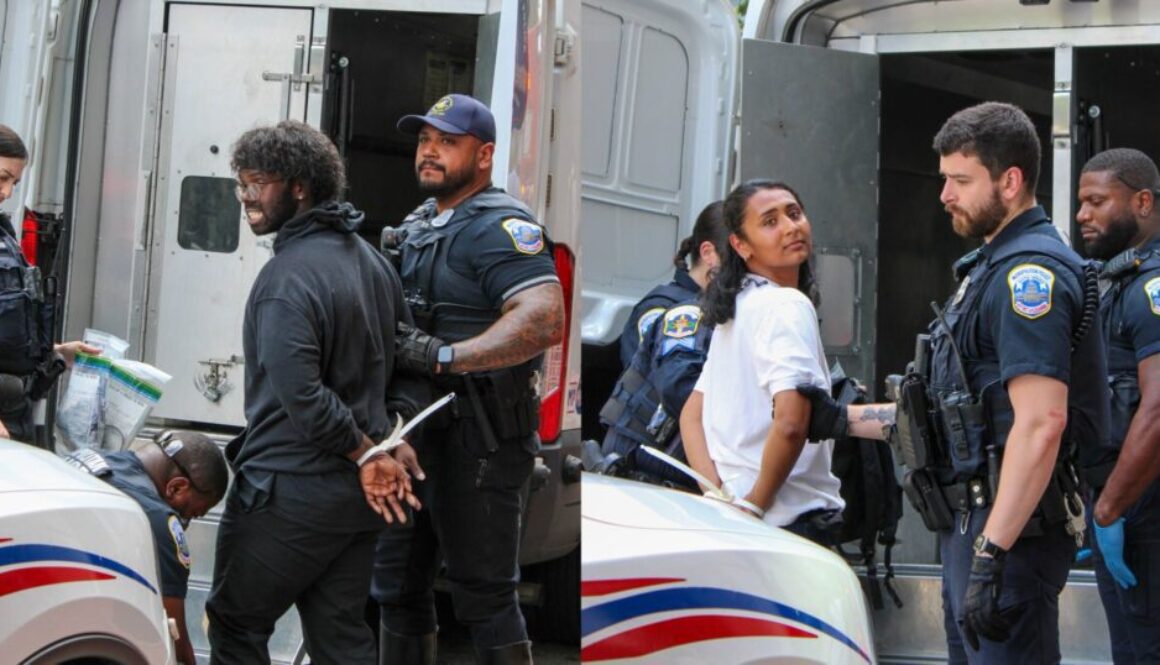
Over 30 student activists occupied OpenAI’s Washington DC lobbying office on Monday, with 13 arrested after a two-hour demonstration, marking an escalation in direct action against AI companies amid broader concerns about corporate influence on regulation. The protest underscores institutional investors’ need to monitor political and reputational risks as AI firms intensify lobbying spending and face mounting public backlash tied to election financing and environmental concerns.
- 13 protesters arrested during two-hour occupation of OpenAI’s Gallup Building lobby in Washington DC on Monday afternoon
- OpenAI super PAC injected over $140 million into midterm elections as the company opened its public-facing DC lobbying office
- Demonstration organized by Sunrise Movement and QuitGPT as part of coordinated “Dump Big Tech” campaign spanning over 20 states
- 30+ student activists occupied OpenAI lobbying office in coordinated protest action
- $140M+ OpenAI super PAC spending on midterm elections versus prior campaign cycles
- 20 states coordinating “Dump Big Tech” protests in August alone
Over 30 student activists forcibly occupied OpenAI’s Washington DC office Monday afternoon, unfurling a banner reading “Stop Stealing Our Future” before police arrested 13 demonstrators after approximately two hours.
The action, organized by climate group Sunrise Movement and anti-AI organization QuitGPT, represents a direct confrontation between activist movements and an AI company’s regulatory infrastructure at a moment when OpenAI is significantly expanding its political presence.
The timing of the demonstration is not incidental: it coincides with OpenAI’s opening of a public-facing lobbying office in the capital, a move that comes as the company’s affiliated super PAC channels over $140 million into midterm election spending, far exceeding typical tech sector political contributions at this scale.
Student Activists Link AI Development to Election Financing and Economic Precarity
Raya Gupta, a student organizer who participated in the occupation, articulated the protest’s core grievance in a joint statement with the organizing groups: generational uncertainty about employment prospects and political power alongside concentrated corporate wealth.
Her framing connects three previously separate activist domains, AI development, climate action, and campaign finance reform, into a unified argument about democratic capture.
Our generation doesn’t have any guarantees about whether we’ll have jobs after college, or whether there will be clean drinking water for all of us or whether people will have any power left in politics since our elections keep getting bought by Big Tech.
Raya Gupta, student organizer
The protest reflects a significant shift in how activist coalitions approach tech regulation: rather than operating within administrative or legislative channels, groups are escalating to direct action targeting corporate offices.
The “Stop Stealing Our Future” framing deliberately connects AI’s labor displacement risk to environmental degradation and democratic dysfunction, positioning OpenAI not as an isolated research entity but as a political actor with outsized influence over regulatory outcomes.
Gupta’s invocation of election financing bought by tech firms directly references OpenAI’s documented lobbying expansion. The company’s entry into Washington DC comes as its super PAC injects capital at a scale that dwarfs traditional tech industry political spending, a move that participants view as an attempt to preempt unfavorable regulation by shaping electoral outcomes across multiple races.
OpenAI’s $140 Million Super PAC Spending Triggers Coordinated Activist Response
OpenAI’s midterm election spending represents a strategic shift for the AI sector beyond conventional lobbying. The $140 million super PAC injection provides the company with direct influence over multiple races simultaneously, enabling it to shape candidate selection and platform positions on AI regulation before formal legislative processes begin.
This spending pattern signals to investors that OpenAI views electoral capture as a primary strategy for managing regulatory risk.
The Monday protest is explicitly framed as one action within a coordinated “Dump Big Tech” campaign spanning over 20 states during August, indicating that OpenAI’s political spending has triggered a matching escalation in organized opposition.
The protest’s geographic specificity, targeting OpenAI’s new DC office rather than San Francisco headquarters, shows activists are meeting the company’s political infrastructure with direct action at the point of regulatory contact.
Institutional investors monitoring OpenAI’s valuation should consider the reputational and operational risks associated with this spending pattern. When a private company with $80 billion valuation deploys $140 million in election spending simultaneously with opening a public lobbying office, it creates concentrated political risk across multiple jurisdictions.
If elected representatives face activist pressure and donor backlash tied to OpenAI funding, the company’s regulatory access could be compromised even as its political spending increases.
AI Protest Movement Expands Across Multiple Activist Domains and Geographic Markets
The Monday occupation represents part of a broader pattern of AI-related civil disobedience that has fragmented across previously separate activist constituencies. Arrests have occurred at town hall meetings opposing data center construction, at federal agency offices housing AI immigration enforcement systems, and now at corporate lobbying offices.
This fragmentation suggests that AI regulation has become what organizers call an “omni-cause”, a touchstone issue that connects climate, labor, immigration, and democratic reform advocates.
The coordinated nature of the “Dump Big Tech” campaign is significant for institutional risk assessment. Sunrise Movement, primarily known for climate activism, and QuitGPT, a newer anti-AI organization, jointly organized this action, suggesting that coalition-building around AI regulation is accelerating.
When activist groups with distinct constituencies and funding bases coordinate on a single company, pressure typically escalates through multiple channels: regulatory complaints, investor campaigns, employee activism, and direct action.
The current status of the 13 arrested protesters remains unclear, with the Metropolitan Police Department and District of Columbia Department of Corrections having not yet responded to requests for custody and charging information.
This administrative lag does not reduce the political signal: the fact of arrests at a corporate lobbying office in the capital, combined with nationwide coordination, indicates that AI companies’ regulatory strategies are now triggering the same protest infrastructure that has historically targeted fossil fuel firms and military contractors.
Institutional investors should monitor whether the arrests lead to charges, as prosecution outcomes will shape whether this becomes an isolated incident or signals sustained escalation of AI-related civil disobedience. OpenAI’s next scheduled lobbying or political spending announcement, and any formal regulatory response from House or Senate committees to the company’s election financing, will clarify whether Monday’s demonstration triggers legislative or enforcement action addressing AI super PAC spending specifically.