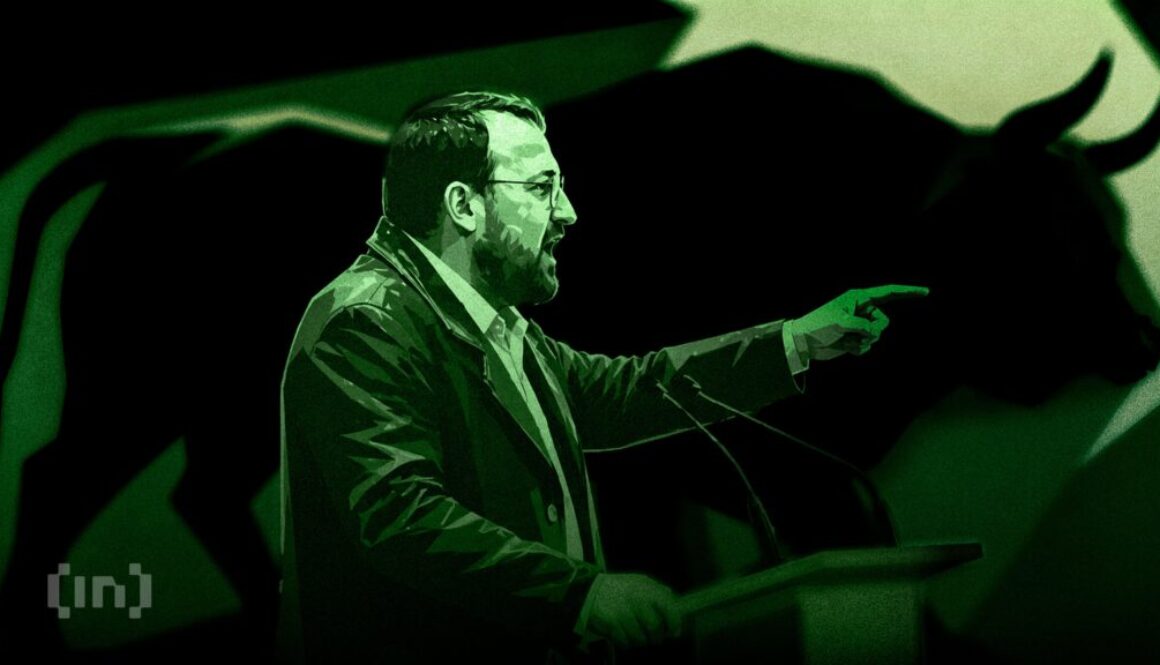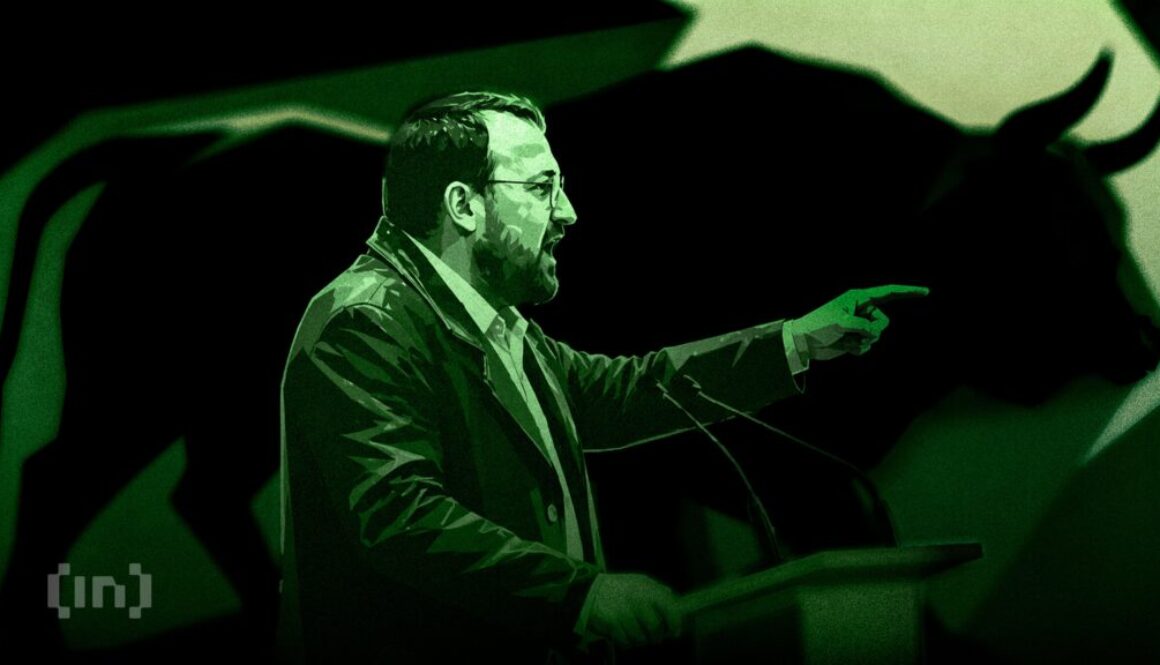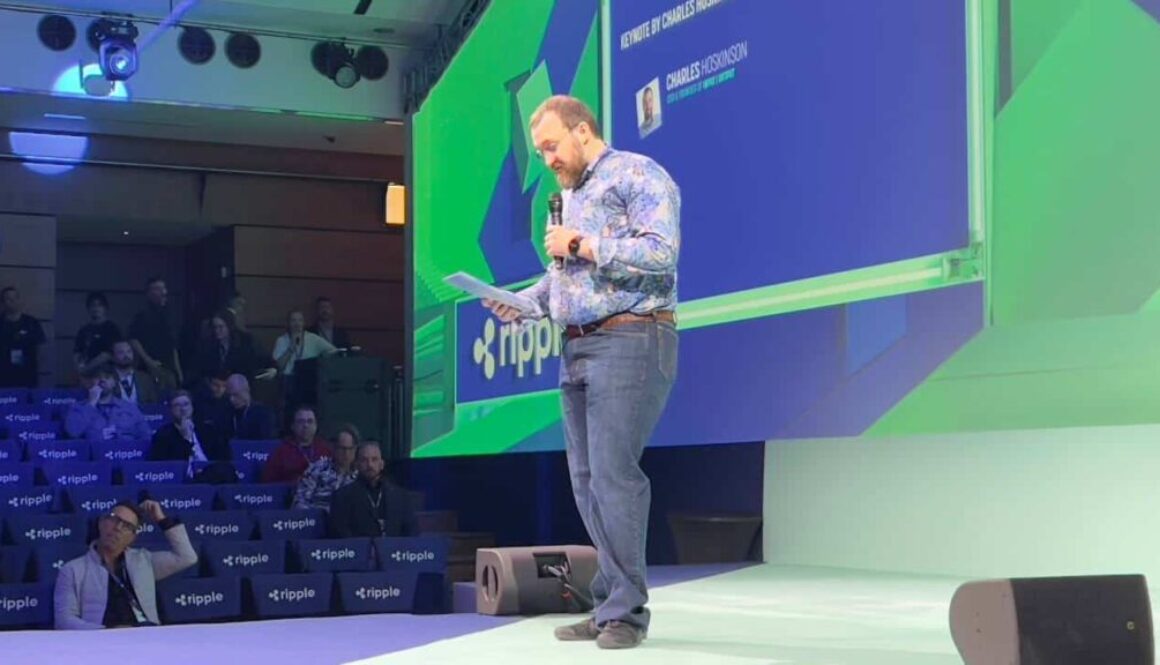
Cardano’s development began just over a decade ago, but it took a couple of years for the actual launch. Arguably, the even more important release of smart contracts, though, came in 2021 after the highly debated Alonzo upgrade.
Its native token has become a fan favorite among many crypto investors, but there are also a substantial number of doubters and critics.
Most Overvalued Network?
Satoshi Flipper, one of the most recognizable names on Crypto X with over 240,000 followers, shared another analyst’s viewpoint on the Charles Hoskinson-founded network with the caption, “Is Cardano the most overvalued blockchain on the planet?”
The underlying analysis questions the performance of the blockchain. It cited a DeFi total value locked (TVL) number of just $128 million, which is exactly what DeFiLlama shows as of press time, as well as 24-hour DEX trading volume of just $1.3 million, $26 million worth of stablecoins on top of it, and approximately 17k active addresses.
Eye Zen Hour described this as an “incredibly small on-chain economy relative to valuation.” The valuation itself is a $9 billion market cap for Cardano’s native token, which, despite its massive decline since its peak (to be discussed later), is still a top 15 altcoin by that metric.
Consequently, Zen Hour concluded that the market will eventually have to make an important decision on Cardano and ADA, whether it’s valuing an ecosystem or “just a memory from prior cycles.”
Cardano has a $9B market cap
I’m not joking when I say I don’t know a single real person active on Cardano. I don’t know many holding $ADA
The chain’s numbers are a bit scary:
> TVL: $128M
> 24H DEX vol: $1.3M
> Stablecoins: $26M
> ~17K active addresses
The aforementioned Alonzo update coincided with ADA’s most impressive price surge in Q3, 2021. At the time, the token was riding high alongside the rest of the market and charted a new all-time high of just over $3. However, it turned out to be a classic sell-the-news event, and ADA has been unable to recapture its former glory.
In fact, it hasn’t even come close. During the 2025 market-wide rally, bitcoin, as well as many altcoins, managed to post new peaks. However, ADA’s high was far from its 2021 record as it couldn’t break past $1.3. It currently struggles below $0.25, which represents a mind-blowing decline of over 92% since its 2021 ATH.
Although almost all crypto assets have slumped since last October, ADA’s crash has been more than just a correction, and being 92% away from its record doesn’t sound too promising for its vast community.
Cardano could lose a core group of scientists if Input Output fails to secure treasury funding for a slate of research and infrastructure proposals that are still awaiting approval.
Last month, Input Output, the development firm behind the Cardano network, revealed that it was seeking $46.8 million to finance its operations for the 2026 development cycle.
However, the funding request has encountered significant resistance as the May 24 voting deadline approaches. A look at the major proposals shows that they face weak support, heavy abstentions, and large blocs of votes left uncast, leaving the network’s technical future hanging in the balance.
The escalating tension prompted a stark warning from Cardano founder Charles Hoskinson, who cautioned that failing to approve the treasury withdrawal could trigger an exodus of top talent and potentially shutter the network’s flagship research laboratory.
Trailing the threshold
The $46.8 million request is fractured across several specialized workstreams, each requiring a 67% ratification threshold from the network’s DReps. As the voting window narrows, almost none are on track for approval.
The largest line item is the Cardano Maintenance Initiative, an ask of more than 62.1 million ADA designed to cover continuous core maintenance from the third quarter of 2026 through the first quarter of 2027.
The proposal covers nine functional areas, including bug fixing, disaster recovery, mainnet monitoring, and incident response.
Despite its critical nature, described by developers as the protective foundation that ensures network uptime and security, the proposal currently holds just 46.58% affirmative votes. A massive 9.25 billion ADA is logged as abstaining, while 45.61% of voting power has yet to weigh in.
Other critical infrastructure proposals are faring even worse. A 10.4 million ADA request to fund Layer 2 scalability solutions, including a data availability solution and the launch of Midgard, the network’s first permissionless optimistic rollup, sits at just 16.08% approval.
Layer 2 architecture is widely considered the only viable path to achieving the 10,000-plus transactions per second and sub-cent fees necessary to attract high-frequency decentralized finance and artificial intelligence micropayments in the current cycle.
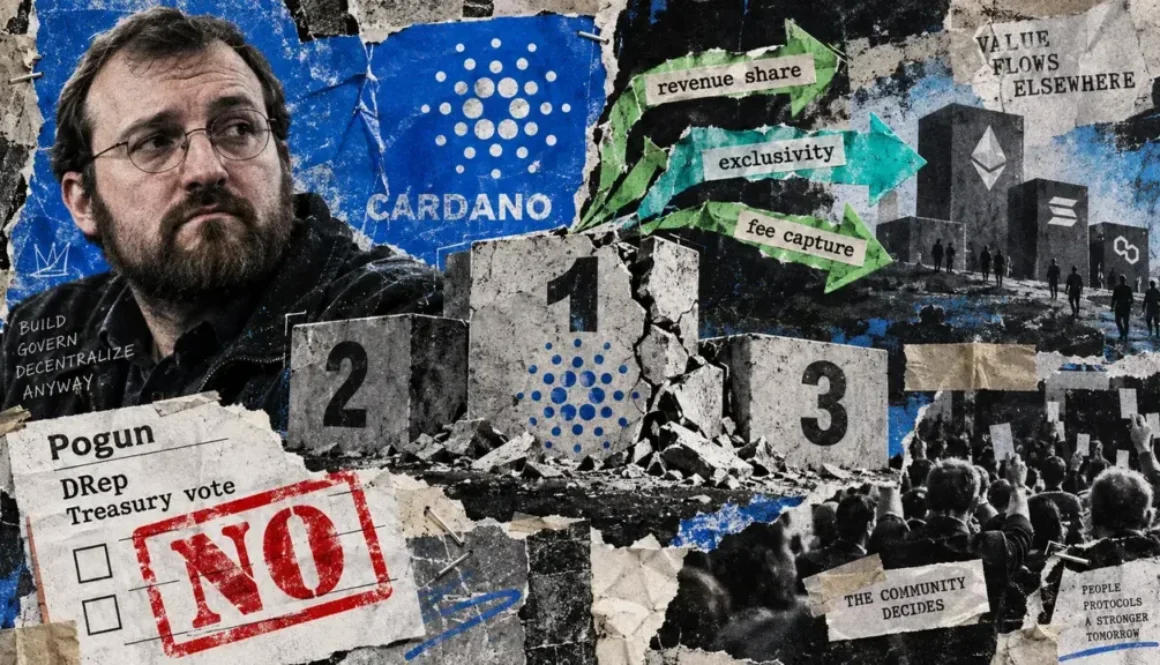
A $2.95 million pitch to build “Pogun,” an end-to-end Bitcoin liquidity and credit engine meant to capture a share of the $1.5 trillion Bitcoin asset class, is polling at 19.04% in favor, weighed down by 24.15% active rejections and overwhelming abstentions.
Cardano’s development and tooling on the brink
The hesitation among DReps extends to proposals that target developer experience and smart contract capabilities, areas where Cardano has historically struggled to gain ground against rivals like Ethereum and Solana.
A 13 million ADA proposal to bring automated formal verification to decentralized applications has performed the best thus far, but still trails the needed supermajority at 57.79%.
The initiative aims to extend the Blaster verification tool across multiple smart contract languages, lowering the barrier for developers to mathematically prove their code’s correctness.
A separate 3.6 million ADA pitch explicitly designed to boost developer growth by 30% over the next year, by streamlining onboarding and documentation, sits below 30%.
Also struggling is Project Cayley, a 7.92 million ADA initiative aimed at decentralizing data indexing. Currently, indexing the entire Cardano blockchain dataset requires massive computational resources, a burden that will only grow as the network scales.
Project Cayley introduces decentralized slice indexing, allowing node operators to index only specific portions of the chain. This lowers the barrier to entry and prevents data-serving infrastructure from centralizing around a few well-funded providers.
Yet, the proposal is languishing at 13.83% approval, with nearly 30% of active voters rejecting it outright.
Finally, a 13.1 million ADA proposal that would introduce Babel Fees, allowing users to pay transaction costs in any native asset, such as stablecoins, rather than holding ADA, has garnered nearly 60% support but remains shy of the 67% hurdle.
The upgrade is widely viewed as essential for removing onboarding friction for new users.
A clash over the “science coin”
For years, Cardano has staked its reputation on rigorous, peer-reviewed academic research and formal methods. This methodical approach has occasionally drawn criticism for moving too slowly, but it has cultivated a fiercely loyal community.
However, the stakes of the treasury vote also appear to be impacting a research-focused proposal called “Cardano Vision 2026: Human Centered, Scalable, Post Quantum Secure – IO Research.”
This proposal seeks nearly 33 million ADA tokens, approximately $8 million, to “preserve Cardano’s evidence-based approach” and “ensure that research outputs translate more reliably into measurable ecosystem growth.”
However, YUTA, a Cardano Drep, stated that the “proposal is a mix of a waste of funds and a potentially excellent proposal for Leios and quantum resistance research.”
“We are deeply saddened that some Japanese dReps voted against our research proposal…If this proposal does not pass, we want the entire Japanese community to fully recognize that Cardano will lose its scientists, and our lab will be forced to close.”
Hoskinson emphasized that building the organization’s research apparatus took more than a decade and hundreds of millions of dollars.
He warned against dismantling the world’s strongest cryptocurrency research group over “piecemeal funding support,” asserting that the organization’s scientists would simply leave for ecosystems offering greater certainty and professional respect.
He added:
“This doesn’t have anything to do with me. This has to do with destroying the entire core of our ecosystem. Cardano is the science coin. That’s our brand. We spent hundreds of millions of dollars and a decade to earn the right to say that. You don’t throw it away.”
As of press time, the proposal has secured only a 13% support, and its voting is expected to close on June 8.
The funding friction is particularly notable given that Input Output explicitly scaled back its financial demands for this cycle.
The 2026 treasury request represents a nearly 50% reduction from the previous year’s budget, signaling an intent to transition the ecosystem toward long-term self-sufficiency.
Yet, even this tightened fiscal belt has failed to win immediate favor from the newly empowered governance body.
The gridlock illustrates the double-edged sword of Cardano’s decentralized governance era. By placing the keys to the treasury directly in the hands of token holders and elected DReps, the ecosystem has achieved a level of financial decentralization rarely seen in major blockchain networks.
However, the current voting impasse highlights the vulnerability of that model. With large swaths of voting power either abstaining or remaining dormant, funding for vital infrastructure is essentially frozen.
For Input Output, the proposals represent a bare-minimum operational baseline to keep the network secure and competitive. For the DReps, the vote is an exercise in budget discipline and accountability, requiring the software laboratory to justify every dollar.
If the proposals fail to cross the 67% threshold by the May 24 deadline, Cardano faces an unprecedented scenario. Without the requested treasury disbursements, key upgrades could be delayed, and essential maintenance operations may be forced to scale back.
More critically, as Hoskinson warned, the talent pipeline that built Cardano’s sophisticated, academically rigorous architecture could begin to fracture, fundamentally altering the ecosystem’s trajectory.
Our Bitcoin price prediction expects BTC’s price to reach $150K by the end of 2026 due to the bullish sentiment following the halving event.
By 2032, BTC might touch $350,548 following increased institutional adoption.
Bitcoin’s outlook for 2026 has become highly debated. The approval of spot Bitcoin ETFs and the rally after the halving were expected to bring more clarity, but instead they’ve brought mixed volatility in Bitcoin price forecast.
However, top analysts are bullish on BTC price prediction this year. Charles Hoskinson, the founder of Cardano, has predicted that Bitcoin could reach about $250,000 by 2026. He bases this view on Bitcoin’s limited supply and the possibility that institutions and major companies will continue to adopt it. Investor and author Robert Kiyosaki has made a similar prediction, arguing that Bitcoin’s scarcity makes it a strong store of value in a world where traditional currencies are becoming less stable.
As Bitcoin’s on-chain activities surge, questions arise, such as: “Does Bitcoin have the potential to hold above the $100K mark?” or “Will Bitcoin go up?” or “Where will Bitcoin be in 5 years?” Let’s answer them using our Bitcoin price prediction 2026 model.
Overview
Cryptocurrency
Bitcoin
Ticker
BTC
Price
$76,650 (-0.1%)
Market capitalization
$1.42 Trillion
Trading volume (24-hour)
$52.53 Billion (+7%)
Circulating supply
20 Million BTC
All-time high
$124,457; August 14, 2025
All-time low
$0.04865; Jul 15, 2010
24-hour high
$77,110
24-hour low
$76,232
Bitcoin price prediction: Technical analysis
Metric
Value
Current Price
$76,650
Price Prediction
$ 80,260 (+1.9%)
Fear & Greed Index
26 (Fear)
Sentiment
Bullish
Volatility
5.10% (High)
Green Days
16/30 (53%)
50-Day SMA
$ 72,206
200-Day SMA
$ 84,231
14-Day RSI
55.65 (Neutral)
Bitcoin price analysis
TL;DR Breakdown:
BTC price analysis shows that sellers are pushing the price toward $76K
Resistance for BTC is at $77,373
Support for BTC/USD is at $76,074
The BTC price analysis for 19 May confirms that BTC faces selling pressure as BTC declines toward $76K. Currently, the Bitcoin price is aiming to hold above $80K.
Analyzing the daily Bitcoin price chart, we see that Bitcoin faces selling pressure as it declines toward $76K. Currently, the BTC price is facing short-liquidation around immediate support channels. The 24-hour volume has dropped to $990 million, showing a decline in trading interest today. BTC is trading at $76,650, declining by over 0.1% in the last 24 hours.
The RSI-14 trend line hovers around 44, hinting that a bearish correction is on the edge. The SMA-14 level suggests volatility in the next few hours.
BTC/USD 4-hour price chart: Buying domination rises around EMA trend lines
The 4-hour Bitcoin price chart suggests that buyers are strengthening their position to hold the price above the EMA trend lines. However, sellers are strongly defending a recovery.
The BoP indicator trades in a positive region at 0.69, showing that short-term buyers are taking a chance to accelerate an upward trend.
Additionally, the MACD indicator has formed green candles above the signal line and the indicator aims for positive momentum, strengthening long-position holders’ confidence.
Bitcoin technical indicators: Levels and action
Daily simple moving average (SMA)
Period
Value
Action
SMA 3
$ 76,184
BUY
SMA 5
$ 76,936
BUY
SMA 10
$ 77,251
SELL
SMA 21
$ 75,724
BUY
SMA 50
$ 72,206
BUY
SMA 100
$ 72,543
BUY
SMA 200
$ 84,231
SELL
Daily exponential moving average (EMA)
Period
Value
Action
EMA 3
$ 76,405
BUY
EMA 5
$ 76,629
BUY
EMA 10
$ 76,602
BUY
EMA 21
$ 75,442
BUY
EMA 50
$ 73,676
BUY
EMA 100
$ 75,645
BUY
EMA 200
$ 81,985
SELL
What to expect from BTC price analysis next?
The hourly price chart confirms that Bitcoin is attempting to drop below the immediate support line; however, bulls are eyeing a recovery rally in the coming hours. If BTC’s price holds momentum above $77,373, it will fuel a bullish rally to $78,709.
If bulls fail to initiate a surge, the BTC price may drop below the immediate support line at $76,074, beginning a bearish trend to $75,257.
Is Bitcoin a good investment?
The rising institutional demand for Bitcoin etfs makes it a good investment option in the crypto market. However, Bitcoin has a short investment history filled with very volatile market value. Whether it is a good investment depends on your financial profile, investment portfolio, risk tolerance, and investment goals. It is suggested to conduct investment advice of the financial markets and understand the financial system risks.
Why is Bitcoin down today?
Bitcoin faced a surge in selling pressure as sellers pushed the price below immediate fib levels around $76K.
Will the BTC price reach $100K?
Bitcoin price broke its much-anticipated mark of $100K, aiming for a new ATH. The price currently prepares to maintain its buying demand above $100K.
Will BTC reach $1 million?
$1 million is a significant milestone for the BTC price. However, it is achievable if Bitcoin continues to attract institutional interest in the coming years.
Is Bitcoin a good long-term investment?
As several institutions continue to accumulate BTC and Bitcoin faces a rise in global recognition, Bitcoin has a solid long-term future.
Recent news/opinions on BTC
As reported by Cryptopolitan, BTC ended April in the green, with 11.87% gain. The leading coin turned green for the second month in a row and completed the most successful month for the year to date.
Bitcoin price prediction May 2026
Bitcoin’s price dropped toward $65K in March. However, it is now facing minor accumulation, which could mean we’ll see a recovery around May 2026.
Bitcoin’s price might attempt to maintain an average price of $85,000 and be pushed further, at least $90,000 if strong downward pressures are not seen. However, we might see a rejection on the bearish side, leading to a consolidation at around $70,000.
Bitcoin Price Prediction
Potential Low
Potential Average
Potential High
Bitcoin Price Prediction May 2026
$70,000
$85,000
$90,000
Bitcoin price prediction 2026
Historically, Bitcoin has been a significant crypto coin in the years following a halving, and it is expected to push up its price after a downturn in 2025. Bitcoin miners might play a crucial role in holding bullish sentiment for future price movements.
Spot Bitcoin ETFs are projected to be a key driver of Bitcoin prices and the broader cryptocurrency market in 2026. As a result, Bitcoin’s trajectory might follow a bullish trend ahead with rising treasury term premium.
Furthermore, there is an increasing bullish sentiment that the base interest rates could be cut in the US, and thus, help to further the upward movement of Bitcoin. An outcome of which the 2026 year could be positive for Bitcoin, with its crypto-price perhaps touching $150,000 at the highest and the low could be around $48,000.
Bitcoin Price Prediction
Potential Low
Potential Average
Potential High
Bitcoin Price Prediction 2026
$48,000
$100,000
$150,000
Bitcoin Price Predictions 2027-2032
Year
Minimum Price
Average Price
Maximum Price
2027
$115,000
$130,000
$185,000
2028
$140,491
$170,100
$216,738
2029
$164,063
$185,068
$244,142
2030
$195,629
$200,312
$255,321
2031
$225,903
$248,568
$270,593
2032
$285,058
$303,555
$350,548
Bitcoin price prediction 2027
Bitcoin might witness slow growth after 2025’s Bitcoin halving surge, resulting in a surge in selling pressure. However, more financial products including a surge in ETF flows might hold BTC prices within a bullish region. The digital assets market sentiment shows bullish signals for Bitcoin hit new highs. As the overall sentiment gives a bullish outlook, one should research more about Bitcoin before investing.
We might see a maximum price of $185,000, with a minimum price of $115,000 and average price of $130,000.
Bitcoin forecast 2028
Based on a detailed technical analysis of past Bitcoin price movements, it is projected that in 2028, Bitcoin could see a minimum price of $140,491. The potential maximum price is estimated to be $216,738, with an average closing price of $170,100.
Bitcoin price prediction 2029
By 2029, Bitcoin’s price is expected to reach a low of $164,063. Maximum price projections are as high as $244,142, averaging about $185,068 for the year.
Bitcoin price forecast 2030
Projections for 2030 suggest that Bitcoin could be valued at a minimum of $195,629. The price may peak at as much as $255,321, with an average throughout the year expected to be around $200,312.
Bitcoin (BTC) price prediction 2031
The forecast for 2031 suggests that Bitcoin’s price could start at a minimum of $225,903 and potentially rise to a maximum of $270,593. The average price is anticipated to stabilize at about $248,568 throughout the year.
Bitcoin price prediction 2032
The forecast for 2032 suggests that Bitcoin’s price could start at a minimum of $285,058 and potentially rise to a maximum of $350,548. The average price is anticipated to stabilize at about $303,555 throughout the year.
A surge in bitcoin adoption and the expansion of the Bitcoin ecosystem might end the controversy of “Bitcoin bubble” in future. This might boost the Bitcoin cost and strengthen the Bitcoin network. At Cryptopolitan, we are bullish on Bitcoin’s future price as the historical market sentiment is extremely impressive. By the end of 2026, Bitcoin might record a maximum of $150,000, with a minimum price of $48,000 and an average price of $100,000.
However, Bitcoin’s future market potential entirely depends on its buying demand, regulation, and investor sentiment regarding long-term holdings. Crypto analysts provide a positive sentiment as macroeconomic trends turn promising.
We expect Bitcoin price to surpass a high of $216,738 by the end of 2028.
Bitcoin historic price sentiment
BTC price history: Coinmarketcap
Satoshi Nakamoto created Bitcoin in 2009, marking the first use of blockchain technology.
Bitcoin was initially of little value, gaining significant traction and hitting over $15,000 during the 2017 boom, with further highs reached in 2019 and 2021.
In 2021, Bitcoin peaked at $68,789.63 but dropped to $15,760 by December 2022 amid economic pressures, including inflation and geopolitical conflicts.
By April 10, 2023, Bitcoin’s price surged 83%, breaking the $30,000 resistance level.
Throughout mid-2023, Bitcoin’s value hovered around $30,000, nearly reaching $32,000 due to positive market sentiments and potential ETF approvals.
Bitcoin experienced a significant price drop in mid-August 2023, falling to $25,000. However, its prices remained volatile, fluctuating between $26,000 and $29,500 in October.
Bitcoin closed 2023 above $42,000, a 155% increase from the year’s start.
In early 2024, Bitcoin rose above $45,000 on ETF anticipation but briefly dipped below $40,000 after approvals. It broke its 2021 all-time high in March, reaching $73,750.07 on March 14, before dropping below $60,000 in April. May saw another surge above $70,000, while June and July brought heavy fluctuations between $70K and $55K.
Bitcoin rallied to $66K in September after a Fed rate cut, climbed to $70K in October’s Uptober rally, and surged toward $108K following Donald Trump’s victory in the November US elections. BTC ended 2024 consolidating below $95K.
At the start of January 2025, BTC was trading between $92,788.13 and $95,824.39. However, it formed an ATH at $109,114 on January 20.
In the weeks of February, the price of BTC dropped heavily as it dropped toward the $78K low.
In March, the price of Bitcoin declined heavily and dropped toward a low of $76.6K. In April, the price of Bitcoin started recovering. By the end of April, it neared the critical $95K zone.
In May, Bitcoin price skyrocketed and it formed a new ATH at $111,970. However, the price declined later, toward $104K.
By the end of June, BTC price reclaimed the $108K level.
In July, BTC price triggered a surge toward $123K; however, it faced strong selling pressure later.
In mid-August, the price of Bitcoin surged above $124K. However, the price failed to maintain its momentum as it dropped below $110K in early-September.
By the end of September, the price of Bitcoin dropped further and touched a low around $108K.
In October, the price of Bitcoin crashed heavily below $110K. The price crashed further toward $84K in November.
Bitcoin ended December 2025 on a bearish note by trading below $90K.
Bitcoin price further dropped in January 2026 as it crashed toward $77K. In February, the price of BTC hit a low at $60K.
BTC price continued to face bearish pressure in March. However, it surged above $70K in early April. By the end of April, BTC price surged toward $80K.
Bitcoin 2026 Begins. BTC Holds $78K. Hoskinson Sounds the Alarm.
90 minutes with the co-founder of Ethereum. Washington descends on Vegas. And BTC tests the most important level of the year.
Lead Story
Charles Hoskinson: The Clarity Act Would Make Ethereum Illegal at Birth
This week I sat down with Charles Hoskinson for ninety minutes. Co-founder of Ethereum, founder of Cardano, architect of Midnight. He’s been in this industry longer than most people have known what a blockchain is — and he did not pull a single punch.
“The incumbents escape because they already got big under ambiguity. Everyone who comes next gets crushed by the law the incumbents helped write. He called it what it is: a ladder being pulled up.”
His argument is surgical: under the current bill’s language, Ethereum would be a security. XRP would be a security. Cardano would be a security. The mature blockchain standard as written gives no viable path for a new project to grow into something decentralized — no exchange listings, no community building, no VC, no liquidity.
What makes the take land harder is that Charles openly admits the Clarity Act is good for him personally. Cardano gets a pass. Midnight gets a pass. He’s arguing against his own financial interest, and that’s rare enough in this industry to be worth paying attention to.
On Midnight Network: the concept most people are still underestimating is what he calls the agent economy. By 2035, the majority of internet commerce won’t be conducted by humans — it will be AI agents transacting on behalf of humans. Agents need a language to talk to each other. That language is proofs. Blockchains are the only trust engine that speaks proofs natively.
Charles Hoskinson — Full Interview · Crypto Coin Show · April 2026
Market Analysis — April 26, 2026
BITCOIN / USD4H
$78,106+5.81% this week
Cautiously Bullish
Bitcoin 4H — April 26, 2026 · Signals powered by EngineeringRobo AI
Bitcoin is trading at $78,106 this morning, up 5.81% on the week and holding above $78K for the second consecutive day — a level it hadn’t opened above since early February before the Iran conflict began. The breakout is real, but it’s contested. BTC hit its highest point since January on Wednesday before sellers stepped in just beneath $80,000. Futures open interest remains at historically elevated levels while funding rates have turned negative — a rare combination that some analysts are calling a “most hated” rally, meaning short pressure could accelerate the move if bears are forced to unwind.
The structure is constructive. Institutional flows remain the floor. BlackRock’s IBIT BTC ETF had inflows of $284M in a single session last week and institutions haven’t blinked. The Iran ceasefire extension on Wednesday gave BTC a clean run to $78,300. The question now is whether the $80K level holds as resistance or becomes support.
What I’m Watching
A confirmed daily close above $80,000 with conviction volume. That’s the line that opens the path to $85K–$90K. Failure to hold $76,500 on any pullback brings $73,800 back into focus.
Support
S1$76,500
S2$73,820
Resistance
R1$80,000
R2$85,000
ETHEREUM / USD4H
$2,352+2.73% this week
Neutral → Bullish, Patient
Ethereum 4H — April 26, 2026 · Signals powered by EngineeringRobo AI
ETH is at $2,352 this morning, up 2.73% on the week but underperforming Bitcoin meaningfully. BTC dominance has climbed to 58.1%, a clear signal that capital is rotating into Bitcoin as the defensive play within crypto while altcoins including ETH face 2–3% headwinds. ETH attempted $2,400 twice this week and was rejected both times. The structure isn’t broken, but ETH is in a wait-and-see posture.
ETH outperforming BTC on a percentage basis is the signal needed before getting more aggressive. Until then, the $2,300 floor is what matters. Hold it and the setup stays intact. Lose it and $2,121 becomes the next conversation.
What I’m Watching
The ETH/BTC ratio for confirmation that alts are ready to participate. A clean hold above $2,400 with volume would change the picture quickly.
Support
S1$2,300
S2$2,121
Targets
Target$2,701
Range High$3,519
Sponsored
XYO Network — The Original DePIN Protocol
10M+ nodes. A decade of proof-of-work. XYO’s Layer One is built for high-volume data, AI infrastructure, and real-world asset tokenization — with dual tokens $XYO and $XL1.
Washington Descends on Vegas. The Lineup Is Unlike Anything We’ve Seen.
The world’s largest Bitcoin conference kicks off today at The Venetian, running April 27–29. The big story this year is Washington showing up in force — Acting AG Todd Blanche and FBI Director Kash Patel are both confirmed, joining SEC Chairman Paul Atkins and CFTC Chairman Mike Selig. Having all four in the same room at a Bitcoin event is without precedent.
Senator Cynthia Lummis returns as the primary legislative voice for the BITCOIN Act. Michael Saylor, Jack Mallers, Adam Back, David Bailey, and Eric Trump are also confirmed. With BTC holding above $78K and the Clarity Act actively debated in Congress, the timing couldn’t be more charged.
Dylan LeClair (Metaplanet) · Brent Johnson (Santiago Capital)
Nakamoto Stage
Weekly Signal Recap
★★★
Bitcoin breaks above $79K for the first time since February. BTC hit its highest level since January, driven by ceasefire optimism and institutional ETF inflows. The $80K level is the next decision point — watch the daily close.
★★★
Hoskinson: The Clarity Act would make Ethereum, XRP, and Cardano securities. The most important regulatory take of the week. If this bill passes as written, there is no viable path for new American crypto projects to achieve liquidity or decentralization. Watch the full interview →
★★★
Senator Lummis confirms bipartisan support for crypto market structure legislation. The Clarity Act now has cross-party backing — the most positive legislative signal the industry has had in years.
US Admiral confirms the military is running a Bitcoin node. “We have a node on the Bitcoin network. We’re doing operational tests to secure and protect networks using the Bitcoin protocol.” — Admiral Paparo.
Treasury Secretary Bessent calls crypto a “very important payment rail.” Institutional legitimacy from the top of US Treasury.
Tesla confirmed it held all $900M in Bitcoin through Q1 2026 — zero sold.
Michael Saylor hints at another Strategy Bitcoin purchase. Posted “The ₿eat Goes On” Sunday morning.
BTC dominance climbs to 58.1% as altcoins underperform. Pattern typically precedes either broad altcoin capitulation or a BTC breakout that pulls alts higher.
Derivatives signal a “most hated” rally. Negative funding rates + historically elevated open interest near 775K BTC. Short squeeze risk elevated.
Fear & Greed Index at 46, third consecutive session in fear territory. Micro-sentiment deteriorating even as BTC holds structure.
Justin Sun sues Trump’s World Liberty Financial, alleging his tokens were frozen and voting rights stripped.
Tether freezes $344M in USDT following US law enforcement requests linked to Iran.
BTC ETF cumulative inflows exceed $56 billion — institutional floor under every dip remains intact.
Bitcoin has now broken above its two-month range. Fear & Greed is at 46. BTC dominance is at 58.1%. And Charles Hoskinson just told us on camera that the Clarity Act, if it passes, would have made Ethereum illegal at birth.
The structure is constructive. The macro overhang is real. The regulatory picture is more complicated than the headlines suggest. All three of those things can be true at the same time — and right now, they are.
The $80,000 level is the decision point. Watch the daily close. Everything else is noise until that resolves.
Charles Hoskinson: The Clarity Act Will Kill American Crypto — CryptoCoinShow
Exclusive · Blockchain Interviews
Charles Hoskinson: “The Clarity Act Will Kill American Crypto”
The Cardano and Midnight Network founder says the landmark crypto legislation — if passed in its current form — doesn’t level the playing field. It pulls the ladder up. A wide-ranging conversation on the 1933 Securities Act, why AI agents live in blockchain land, and what real crypto regulation actually looks like.
By Ashton Addison · Crypto Coin ShowFull Interview AvailableRegulationMidnight Network
From our full Blockchain Interviews conversation — watch below or on YouTube and Refinitiv TV
“Cardano will get a pass. XRP will get a pass. Ethereum will get a pass. We’re already commodities. So it’s good for me. It’s horrible for the industry.”
— Charles Hoskinson, Co-Founder of Ethereum & Cardano
When Charles Hoskinson sat down with Crypto Coin Show’s Ashton Addison earlier this month, the expectation was a conversation about Midnight Network — the privacy infrastructure project he’s been quietly building for years. What emerged was something far more candid: a dissection of why the Clarity Act, the legislation many in the crypto industry are pinning their hopes on, may be the worst outcome crypto could ask for.
Hoskinson has lived through every cycle. He helped build Ethereum before walking away to found Cardano from scratch. He’s testified before regulators, drafted legislation in Wyoming, and watched a decade of Washington promises dissolve into nothing. When he speaks about the Clarity Act, he isn’t doing it as an outsider lobbyist. He’s doing it as someone who would personally benefit from its passage — and who’s still against it.
A Law Built for the Incumbents
The central problem, in Hoskinson’s view, isn’t just that the Clarity Act is flawed. It’s that it was built for the wrong people from the beginning.
“The reason Cardano and Bitcoin and Ethereum got to where they’re at is that ambiguity gave us the freedom to be ourselves.”
Under the bill’s current language, new crypto projects would be classified as securities by default. The path to escaping that designation — what the bill calls the “mature blockchain” standard — requires the kind of community growth, exchange listings, and venture capital backing that is structurally impossible to achieve if you’re already being treated as an unregistered security from day one.
Charles Hoskinson — 33:15
“Under this law, if Ripple was founded today, XRP would be a security. Ethereum would be a security. ADA would be a security. And a Gary Gensler-esque SEC would have the law on their side. They didn’t before. They had ambiguity. So they were losing court cases.”
The irony is sharp: the projects that fought the SEC for years under ambiguous law — and largely won — are now the incumbents who benefit from a “mature blockchain” carve-out. Anyone building behind them inherits a legal framework designed to prevent them from ever reaching the same scale.
Key Risk — As explained by Hoskinson
No VC investment if you’re a security by default. No exchange listings. No community building. No path to decentralization. You can never grow into a mature blockchain because the definition of maturity requires resources you can’t access when you’re pre-classified as a security.
“It’s a bill for the incumbents,” Hoskinson said plainly. “We were allowed to succeed, but then we pulled the ladder up.”
The 93-Year-Old Problem Nobody Wants to Fix
Hoskinson’s critique goes deeper than the current bill. The root of the problem, he argues, is that Congress is trying to regulate 2026 technology using a legal framework built for the Great Depression.
1933Year the Securities Exchange Act was passed
93Years old — and effectively unamendable
$10TReal-world assets that could enter crypto with proper legislation
The definition of a “security” hasn’t been meaningfully updated since FDR was president, JFK’s father was the first SEC chairman, and the United States was clawing its way out of the roaring twenties. The definition cannot be changed because of how deeply embedded it is across regulatory and legal infrastructure — and so every attempt to regulate crypto gets distorted by it.
Charles Hoskinson — 22:02
“The very first thing you need to do is start with the definition of a security and update and modernize it — add an extra category, a concept of a blockchain-based or digital security. Then once you have that, you can use the blockchain as a disclosure mechanism, and that’s a hook you can use for rulemaking to allow ZK disclosure and all these other things.”
The solution, in Hoskinson’s framework, is not a massive omnibus bill trying to do everything at once. It’s a targeted update to securities law that creates a new category for decentralized digital assets — one that allows compliance without requiring a centralized entity that must never dissolve.
Why the Process Was Broken From the Start
Beyond the substance of the bill, Hoskinson is scathing about how it was put together. The process failed on four fronts simultaneously: it was partisan, it was pay-to-play, it excluded technical experts entirely, and it ignored the global dimension of crypto.
Process failure #1 — Partisanship
Democrats were excluded from the drafting process. With no stake in the outcome, they have every incentive to kill the legislation when they return to power — which, Hoskinson argues, they will.
Process failure #2 — Patronage
Participation cost between one and five million dollars in donations. The people in the room were addressing their own business interests, not designing industry-wide infrastructure.
Process failure #3 — No engineers, no scientists
NIST — the National Institute of Standards and Technology — was never invited. Lawyers were left to define blockchain, cryptocurrency, and digital assets without any grounding in how these systems actually work.
Process failure #4 — No global coordination
Not once did US negotiators engage with MiCA architects in Europe, the JFSA in Japan, or Singapore’s MAS. Countries waiting for US leadership to harmonize their own frameworks were left without it.
The Sarbanes-Oxley Act, passed in the wake of Enron in 2003, offers a counterexample. When the US passed it, Australia and dozens of other countries passed equivalent legislation almost immediately — because they wanted to be interoperable with the world’s largest financial market. The US had the same leverage available with crypto. It chose not to use it.
— ✦ —
The Hidden Trap in the Bill’s Language
Even for those who accept the tradeoffs and just want to get something passed, Hoskinson has a warning that has largely gone unheeded. He has identified four distinct attack vectors buried in the current language of the Clarity Act that a future, hostile SEC could use to keep projects classified as securities indefinitely.
Charles Hoskinson — 43:23
“I made a video where I showed four different attack vectors using the existing language of the bill that the Securities Exchange Commission could use to keep things as a forever security under the current language of the Clarity Act they’re trying to pass. Does anybody care? No. Because they’re incompetent.”
The core vulnerability: if the Democrats regain control of the SEC’s rulemaking apparatus — which Hoskinson views as likely after the 2026 midterms — a hostile commission wouldn’t need to pass new legislation. They could simply use the levers already embedded in the bill to structurally prevent any new project from ever graduating out of security status.
What Good Legislation Actually Looks Like
Hoskinson isn’t simply against the Clarity Act. He has a blueprint — one he helped design in Wyoming, where he successfully pushed through over thirty cryptocurrency laws with bipartisan support, including the Stem Cell Freedom Act. His process was methodical: months of preparation, simultaneous engagement with regulators, industry, and technical experts, and a modular bill structure designed to pass section by section.
Charles Hoskinson
“To get Clarity done right, we’ve got to globalize it. We’ve got to get inter-agency alignment. It’s got to represent the non-financial use cases. We’ve got to update our securities law. The carrot for that is ten trillion dollars of real world assets entering our space.”
The SEC Has Already Done Something Right
In an interview full of sharp criticism, Hoskinson offered one note of genuine credit. SEC Chair Paul Atkins has released a framework clarifying what is and isn’t a security, and that framework may be more durable than any legislative outcome Congress is likely to produce this year.
“Once that gets rolling, it’s really hard for a future SEC to turn that back,” Hoskinson said. The implication: passing a deeply flawed Clarity Act may actually make things worse than staying in the current regulatory gray zone, where the SEC’s new posture under Atkins provides practical clarity without locking in language a hostile future administration could weaponize.
— ✦ —
The Bigger Picture
The Clarity Act debate is a proxy for a deeper question: whether the crypto industry wants to replicate the financial system it was built to replace, or build something genuinely different. Hoskinson’s argument is that incumbents — the projects that survived the ambiguous years and emerged as commodities — now have a structural incentive to close the door behind them.
For anyone building a new project in America today, the stakes are clear. If the bill passes as written, you begin as a security, with no path to the resources required to escape that status. If it fails, you wait until 2029, build under the Atkins framework, and fight again from a better position.
“I’d rather fight a court case with ambiguity than fight a court case where the law is not on my side,” Hoskinson said. Coming from the man who co-founded Ethereum and built Cardano through a decade of regulatory hostility, that’s not despair. It’s strategy.
Watch the full interview
Charles Hoskinson on Midnight Network, Crypto Regulation & the Future of Web3 — Blockchain Interviews
AA
Ashton AddisonHost of Crypto Coin Show and Blockchain Interviews. Covering the digital assets industry since 2012 across YouTube, Refinitiv TV (London Stock Exchange), and 10 podcast networks.
Midnight Launches to Make Privacy the Default in Web3
Breaking News — Blockchain Infrastructure
Midnight Launches to Make Privacy the Default in Web3
The world’s first fourth-generation blockchain goes live, aiming to unlock real-world adoption by protecting sensitive data on-chain without sacrificing compliance or transparency.
By Press Release — Midnight Foundation
Published March 30, 2026 — London
Network Now Live — March 30, 2026
“Privacy by Default. Disclosure by Choice.”
Fourth Generation Blockchain
The Midnight Foundation, an independent organisation dedicated to advancing the development, adoption, and real-world impact of the Midnight network, announced on March 30, 2026, that the Midnight network is now live — marking a defining step in the evolution of blockchain infrastructure and the beginning of what Midnight’s founder Charles Hoskinson has described as the fourth generation of blockchain.
The fourth generation addresses the fundamental barriers that have prevented blockchain from supporting the real world at scale — the ability to protect sensitive data, execute compliance logic on-chain, and make blockchain as accessible as any other technology. Most blockchains require users to sacrifice privacy in order to participate. Midnight is built to change that.
4B+Tokens claimed in the Glacier Drop
$1B+Market cap surpassed post-launch
Mar 17Genesis block created, 2026
Key Capabilities
Hybrid Ledger Architecture
Combines public and private data, enabling applications to process sensitive information without exposing it to the network.
Client-Side Proofs
Zero-knowledge proofs generated on the user’s device — identity, eligibility, and compliance verification without data leaving the user’s hands.
Shielded & Unshielded Assets
Developers choose whether information is shared on-chain. Shielded assets keep balances and transaction flows off the public ledger.
Selective Disclosure
Compliance logic is programmed directly into an application — defining exactly when transaction information must be revealed and to whom.
Compact Programming Language
A TypeScript-based smart contract language that abstracts away zero-knowledge cryptography, making privacy-preserving development accessible to millions of developers without specialist expertise.
“Midnight is the first public blockchain that gives the world the infrastructure it needs to come on-chain — without sacrificing privacy or compliance.”
Charles Hoskinson — Founder & CEO, Input Output Global
The launch follows significant early market traction, including the completion of Midnight’s Glacier Drop — one of the largest and fairest token distributions in crypto history — where more than four billion tokens were claimed by users across multiple blockchain ecosystems.
Midnight also introduces an innovative dual-component tokenomics model that addresses one of the most persistent barriers to blockchain adoption: token volatility. By separating the asset used to govern and secure the network (NIGHT) from the resource used to pay for transactions (DUST), Midnight ensures operational costs remain predictable, while creating a path toward a future where users no longer need to hold volatile crypto assets simply to use the network.
Phased Rollout
Midnight’s Genesis block was created on March 17th, with the network opening to the public on March 30th following two weeks of infrastructure testing and validation. The network is launching with a deliberate, phased rollout — an approach designed to ensure stability, security, and long-term resilience as applications launch and the ecosystem expands.
Early development on the network is expected to explore use cases including on-chain multi-trade facilities, confidential vaults, and privacy-preserving financial applications — categories that have historically been constrained by the transparent nature of existing blockchains. Launching alongside partners including Google Cloud and MoneyGram, Hoskinson noted that “for the first time, organisations of this scale have committed not only to running critical infrastructure but also to building and deploying live applications on a public network.”
“When privacy is built into the system itself, it becomes possible to bring real-world activity and assets on-chain without exposing the underlying data — unlocking entirely new forms of economic value.”
Cardano’s price is expected to surpass $1.33 in 2026.
By 2029, ADAUSD could reach $4.72.
By 2032, Cardano might reach a maximum price of $4.46.
Cardano is a third-generation blockchain platform launched in 2017 by Ethereum co-founder Charles Hoskinson. Designed for decentralized applications and smart contracts, it uses Ouroboros—a unique, energy-efficient Proof-of-Stake consensus mechanism.
Cardano’s two-layer architecture separates transactions from smart contracts, enhancing scalability and flexibility. Its native cryptocurrency, ADA, is used for transaction fees, staking, and governance, allowing holders to influence the platform’s future. Emphasizing a research-driven, peer-reviewed development approach, Cardano aims to address challenges in blockchain, such as scalability and sustainability, making it a strong alternative to platforms like Ethereum.
Perhaps you’re wondering: with its innovative technology, can Cardano’s ADA reach new all-time highs soon?
Let’s uncover what the future holds for Cardano.
Overview
Cryptocurrency
Cardano
Token
ADA
Price
$0.2417
Market Cap
$8.71B
Trading Volume (24-hour)
$479.76M
Circulating Supply
44.99B ADA
All-time High
$3.10 on Sept 02, 2021
All-time Low
$0.01735 on Oct 01, 2017
24-hour High
$0.2486
24-hour Low
$0.2361
Cardano price prediction: Technical analysis
Metric
Value
Volatility (30-day Variation)
4.10% (Medium)
50-day SMA
$ 0.2745
14-Day RSI
40.14 (Neutral)
Sentiment
Bearish
Fear & Greed Index
11 (Extreme Fear)
Green Days
13/30 (40%)
200-day SMA
$ 0.4569
Cardano (ADA) price analysis
ADA failed to hold above $0.26 leading to continued selling pressure
Price is forming lower highs showing a clear short term downtrend
Weak momentum and low demand are preventing any strong recovery
Cardano price analysis 1-day chart: Cardano holds near $0.24 as bearish pressure persists
On the daily chart on Mar 31, Cardano (ADA) shows a continued downtrend with weakening bullish attempts. After peaking near $0.29, price faced strong rejection and has since formed lower highs and lower lows, confirming bearish momentum. Currently, ADA is consolidating around the $0.24 level, with small candles indicating reduced volatility and indecision.
While buyers are defending lower levels, repeated rejections near $0.29–$0.30 indicate strong resistance. Momentum remains neutral, with no clear trend dominance. A sustained break above $0.28 could signal bullish continuation, while a drop below $0.25 may resume downside pressure. Overall, ADA is consolidating within a defined range.
ADA price analysis 4-hour chart: Cardano slides toward $0.24 as bearish momentum persists
On the 4H-chart, Cardano (ADA) shows a clear bearish structure with brief recovery attempts failing to hold. After topping near $0.29, price entered a downtrend marked by consistent lower highs and lower lows. Recently, ADA dropped toward the $0.235–$0.240 support zone, where a minor bounce is forming. The rebound lacks strong momentum, suggesting weak buyer conviction.
Resistance is now seen around $0.250–$0.260, while support remains near $0.235. If bulls fail to push above resistance, downside pressure may continue. Overall, ADA remains bearish in the short term with signs of tentative stabilization near support.
ADA technical indicators: Levels and action
Daily simple moving average (SMA)
Period
Value
Action
SMA 3
$0.3076
SELL
SMA 5
$ 0.2769
SELL
SMA 10
$ 0.2626
SELL
SMA 21
$ 0.2677
SELL
SMA 50
$ 0.2745
SELL
SMA 100
$ 0.3222
SELL
SMA 200
$ 0.4569
SELL
Daily exponential moving average (EMA)
Period
Value
Action
EMA 3
$ 0.2660
SELL
EMA 5
$ 0.2776
SELL
EMA 10
$ 0.3042
SELL
EMA 21
$ 0.3349
SELL
EMA 50
$ 0.3878
SELL
EMA 100
$ 0.4737
SELL
EMA 200
$ 0.5700
SELL
What to expect from the Cardano price analysis next?
Cardano (ADA) is likely to remain under short-term bearish pressure while attempting to stabilize near the $0.235–$0.245 support zone. The recent downtrend with lower highs suggests sellers still dominate, but the slowing decline indicates possible consolidation. If buyers defend support and push price above $0.250–$0.260, a recovery toward $0.270 could follow. However, failure to hold current levels may trigger another drop toward $0.220. Momentum remains weak, and volume appears limited, reflecting cautious sentiment. Overall, ADA is expected to trade sideways with a bearish bias until a clear breakout confirms the next directional move.
Why is Cardano down today?
Cardano (ADA) is down today mainly due to continued bearish market structure and weak buying momentum. After failing to hold gains near the $0.26–$0.29 resistance zone, sellers regained control, pushing price lower. The formation of lower highs has reinforced negative sentiment, prompting traders to exit positions. Additionally, low trading volume and lack of strong catalysts have limited any recovery attempts. Broader crypto market softness is also contributing, as capital rotates or remains cautious. Overall, the decline reflects a technical continuation of the downtrend, resistance rejection, and subdued demand, rather than any major fundamental issue.
Is Cardano a good investment?
Cardano (ADA) presents a mixed investment opportunity. It is a third-generation blockchain that aims to solve scalability issues and enhance security through its Proof-of-Stake mechanism. While some analysts predict significant price increases by 2030, others caution that it remains a high-risk investment due to the volatile nature of the crypto market.
Investors should consider their risk tolerance and research before investing, as Cardano’s future performance is uncertain and contingent on market conditions and technological advancements.
Will Cardano recover?
Cardano’s recovery potential depends on market sentiment and adoption. Despite past challenges, its projected price increase in 2026, potentially reaching $1, has significantly bolstered confidence in the coin’s future.
Will Cardano reach $5?
Cardano hitting $5 seems quite achievable given past levels. With its ATH around $3.10, $5 would only need to beat that peak by about 60%. A solid bull run and significant adoption could drive the unit price to $5.
Will Cardano reach $10?
Cardano hitting $10 is a long shot. Its all-time high was around $3.10 back in 2021, so $10 would mean more than tripling that peak. From current prices, that’s over a 13x jump. While crypto can be unpredictable, that would need massive adoption and a bull run far beyond what we saw in 2021.
Will Cardano reach $50?
Cardano hitting $50 is extremely likely. With ADA’s current supply of around 35 billion tokens, a $50 price would require a market cap of approximately $1.75 trillion. Even in crypto’s craziest bull runs, that kind of valuation doesn’t happen for altcoins.
What is the Cardano forecast for 2040?
Predicting Cardano’s (ADA) price in 2040 is highly speculative as it depends on multiple factors, including adoption, regulatory developments, technological advancements, and macroeconomic conditions. However, if Cardano continues its development in smart contracts, decentralized applications (dApps), and blockchain efficiency, it could see widespread adoption, driving its price higher.
Some optimistic projections suggest that ADA could reach double-digit prices, possibly ranging from $10 to $50 or more. However, in a bearish scenario, where regulatory hurdles and competition slow its progress, ADA could struggle to maintain high valuations.
What will be the future price of Cardano in 2050?
Predicting Cardano’s (ADA) price in 2050 is highly speculative, but if blockchain adoption continues to grow and Cardano successfully scales its smart contract ecosystem, its price could see significant appreciation. What that number will be remains to be seen.
Does Cardano have a good long-term future?
Cardano (ADA) has the potential for a positive long-term future, primarily driven by its technological advancements and growing ecosystem. The platform’s unique features, such as its focus on scalability and partnerships with various institutions, position it well for future adoption. However, its success will depend on overcoming regulatory scrutiny and challenges related to developer engagement.
Recent news/opinion on Cardano
Cardano gains retail adoption as $ADA becomes accepted payment at 137 SPAR supermarkets in Switzerland through Cardano Foundation and DFX partnership.
JUST IN: Cardano $ADA is now accepted as payment at 137 SPAR supermarkets across Switzerland. 🇨🇭
Cardano Foundation secured the integration in partnership with @DFX_swiss.
Cardano’s February 2026 forecast is expected to be $0.3134-$0.4006, averaging $0.3513, driven by steady network development, including smart contract enhancements and scaling upgrades. The growing use of Cardano-based DeFi, NFTs, and governance projects supports moderate bullish sentiment. However, cautious market conditions and slow institutional momentum may limit rapid price expansion, maintaining this controlled range.
Cardano Price Prediction
Potential Low
Potential Average
Potential High
Cardano price prediction March 2026
$0.3134
$0.3513
$0.4006
Cardano price prediction 2026
According to the Cardano price prediction, ADA might reach a maximum price of $1.33, with an average trading price of about $1.20 and a minimum price of $1.03
Cardano Price Prediction
Potential Low
Potential Average
Potential High
Cardano price prediction 2026
$1.03
$1.20
$1.33
Cardano price predictions 2027-2032
Year
Minimum Price
Average Price
Maximum Price
2027
$0.4838
$0.5282
$0.5725
2028
$1.19
$1.29
$1.39
2029
$3.71
$4.21
$4.72
2030
$1.73
$1.91
$2.09
2031
$2.33
$2.48
$2.63
2032
$3.81
$4.13
$4.46
Cardano price prediction 2027
Cardano price is forecast to reach a lowest possible level of $0.4838 in 2027. As per analysts, the ADA price could reach a maximum possible level of $0.5725, with the average forecast price of $0.5282. This growth is driven by Cardano’s expanding DeFi ecosystem, Hydra scalability upgrades, and rising institutional adoption.
Cardano price prediction 2028
The Cardano price is forecast to reach a minimum of $1.19 in 2028. As per findings, the ADA price could reach a maximum possible level of $1.39, with the average forecast price of $1.29. This is expected as network upgrades, DeFi expansion, and institutional integration strengthen ADA’s utility and demand, supporting steady long-term growth.
Cardano price prediction 2029
According to detailed market projections and historical trend analysis, Cardano (ADA) could trade at a minimum of $3.71 in 2029, reaching as high as $4.72, with an average price of $4.21. This anticipated rise is fueled by ecosystem expansion, broader institutional adoption, and increasing real-world blockchain implementations.
Cardano price forecast 2030
Based on comprehensive technical evaluation and market trends, Cardano (ADA) could see its price bottom around $1.73 in 2030, with highs near $1.91 and an average of $2.09. This projection stems from expanding real-world utility, growing institutional participation, and continued upgrades enhancing Cardano’s scalability and ecosystem strength.
Cardano price prediction 2031
The price of 1 Cardano (ADA) is expected to reach a minimum level of $2.33 in 2031, with a potential peak of $2.63 and an average of $2.48. This forecast is driven by Cardano’s expanding enterprise adoption, stronger smart contract capabilities, and growing integration in global blockchain infrastructure, supporting steady long-term value growth.
Cardano price prediction 2032
As per the forecast and technical analysis, in 2032, ADA coin price prediction is expected to reach a minimum of $3.81, a maximum of $4.46, and an average of $4.13. This upward outlook is supported by Cardano’s full ecosystem maturity, large-scale enterprise integration, and increasing global adoption of decentralized applications built on its network, driving long-term demand and value appreciation.
Cardano price prediction 2026-2032
Cardano ADA price prediction: Analysts’ ADA price prediction
Firm Name
2026
2027
DigitalCoinPrice
$0.31
$0.31
Coincodex
$ 0.3915
$ 0.6216
Cryptopolitan’s Cardano price prediction
According to Cryptopolitan projections, the price of ADA could reach a maximum of $0.35 in 2026. By 2027, Cardano’s price could trade at a maximum of $0.51.
ACH launched near $0.02 in 2020, surged to $0.1975 in August 2021, then slid below $0.10 by year end.
During 2022 and 2023, it fell to $0.0133, later rebounded toward $0.049, but stayed volatile
In 2024, it dropped to $0.0145, recovered above $0.02, and briefly ranged up to $0.0397 in December.
Early 2025 saw swings between $0.016 and $0.040, before weakening again toward $0.020 by mid-year.
Late 2025 into early 2026 marked heavy losses to $0.0070–$0.0078, followed by stabilization near $0.0082.
In early January 2026, Cardano traded around the $0.36 to $0.38 range as buyers tried to stabilize the price after the December decline and defend support in the mid $0.30 area.
By late January into February 7 price slipped toward roughly $0.33 to $0.34, showing continued corrective pressure and consolidation near a key support zone.
Cardano traded around $0.40 on Jan 7, 2026 but steadily declined through the month, falling to roughly $0.29 by Feb 1 as selling pressure increased across the broader altcoin market.
The price briefly recovered afterward, rising from about $0.25 on Feb 5 to around $0.27 on Feb 7, showing a short-term rebound after the early February dip.
Cardano founder Charles Hoskinson has put to rest persistent questions about whether the network’s treasury would fund exchange listing fees for ecosystem projects. In a statement on X, Hoskinson made clear that neither SNEK, a prominent meme coin within Cardano, nor Midnight, the network’s privacy-focused sidechain, would receive ADA from the treasury to cover costs associated with exchange listings.
The SNEK Listing Request and Treasury Boundaries
SNEK had explored the possibility of requesting 5 million ADA from the Cardano Treasury to fund a listing on a major centralized exchange. The project’s leadership had identified Hyperliquid as a potential target, though securing a position on a top-tier exchange typically carries substantial costs.
Industry data suggests that listing fees on leading platforms range between $100,000 and $500,000. Projects seeking such listings generally raise capital through independent fundraising efforts rather than relying on community treasuries. The SNEK proposal represented a notable departure from this standard practice.
Treasury funds should be used to develop public infrastructure that benefits the entire network, not to cover marketing or commercial expenses for individual projects.
— Cardano Community Principle
Hoskinson’s position applies uniformly across the ecosystem. Even Midnight, despite his personal involvement in its development, must pursue self-funded pathways for exchange listings rather than drawing on public treasury reserves.
Key Point
Listing fees on major centralized exchanges typically range from $100,000 to $500,000, making them substantial commercial expenses that projects are expected to finance independently.
Treasury Allocation Focuses on Core Infrastructure
While rejecting requests for commercial funding, the Cardano community has directed treasury resources toward fundamental network development. Recent approvals allocate significant ADA reserves to Input Output Engineering (IOE), the primary technical team responsible for Cardano’s advancement.
Three major initiatives have received backing through this process. Ouroboros Leios represents an enhancement to Cardano’s proof-of-stake consensus layer, designed to improve overall network performance and operational efficiency. Hydra, the network’s layer 2 scalability solution, continues development to enable faster and lower-cost transactions for users.
Project Acropolis rounds out the funded priorities, targeting improvements to Cardano’s governance structures and architectural modularity. These initiatives represent infrastructure investments that extend benefits across the entire network rather than supporting individual project ambitions.
Infrastructure Focus
Treasury-approved initiatives include Ouroboros Leios (consensus enhancement), Hydra (layer 2 scaling), and Project Acropolis (governance and modularity improvements).
Market Context and Exchange Listing Economics
The rejection of SNEK’s funding request reflects broader trends within the cryptocurrency industry regarding exchange partnerships. Centralized exchange listings have become increasingly valuable as price discovery mechanisms and liquidity providers, but the commercial arrangements governing such relationships have evolved significantly.
Major exchanges including Coinbase, Kraken, and Binance maintain tiered listing frameworks that distinguish between established assets and emerging tokens. Listing requirements now typically involve comprehensive technical audits, regulatory compliance verification, and operational readiness assessments. These requirements exist independently of financial arrangements, creating dual pathways that projects must navigate.
For emerging projects within established ecosystems like Cardano, decentralized exchange (DEX) platforms such as SundaeSwap and MinSwap have become viable alternatives to centralized venues. These platforms operate through automated market maker (AMM) protocols and enable token trading without formal listing fees, though with different liquidity characteristics and user bases compared to centralized exchanges.
The SNEK case demonstrates that ecosystem projects have increasingly diverse options for establishing market presence, reducing the criticality of centralized exchange access as a primary success metric. This structural shift in cryptocurrency markets has reduced pressure on community treasuries to fund what are fundamentally commercial arrangements.
Decentralized Governance and Treasury Management
The distinction between funding commercial expenses and supporting public infrastructure reflects a deliberate philosophy embedded within Cardano’s governance framework. Ricky Rand, general manager at Input Output Engineering, emphasized that securing treasury approval was merely the starting point for demonstrating that decentralized funding mechanisms can function effectively at scale.
Cardano’s decision-making process flows through Project Catalyst, an on-chain voting system where ADA token holders directly determine how treasury resources are deployed. This mechanism has become increasingly sophisticated as the community gains experience managing substantial capital allocation decisions.
The approval process itself validates Cardano’s self-governance approach. Rather than relying on centralized decision-makers, the protocol enables distributed stakeholders to collectively prioritize which initiatives receive funding. This structural approach distinguishes Cardano from networks where development funding flows through more concentrated channels.
Project Catalyst has processed over 1,000 funded proposals across multiple funding rounds, representing an unprecedented experiment in decentralized capital allocation. These voting cycles have informed governance best practices now being studied and adapted by other blockchain networks seeking to establish sustainable treasury management frameworks.
Ecosystem Development and Competitive Positioning
Cardano’s approach to treasury management carries implications for competitive positioning within the broader blockchain landscape. By allocating resources toward infrastructure rather than individual project support, the network prioritizes collective capabilities that enhance its appeal to developers and users across all applications.
Competing networks have adopted different treasury models. Polkadot’s parachain framework allows teams to secure funding through dedicated blockchain slots, creating alignment between network success and individual project prosperity. Ethereum relies primarily on community grants and third-party funding rather than protocol-level treasury mechanisms. These variations reflect different philosophies regarding how networks should support ecosystem development.
Cardano’s infrastructure-focused approach creates a foundation benefiting any project building on the network. Enhanced consensus mechanisms, improved scalability, and refined governance structures provide technical advantages that compound over time. This strategy prioritizes long-term ecosystem strength over immediate support for individual initiatives, potentially accelerating broader adoption as core capabilities improve.
Alternative Funding Models Under Consideration
Hoskinson has proposed exploring alternative frameworks for project funding without direct treasury transfers. A bond-based model has emerged as a potential mechanism whereby projects could access treasury capital on a repayable basis rather than as outright grants.
This approach would allow projects seeking substantial funding to borrow against future revenue or token appreciation, with predetermined repayment schedules. Such mechanisms could potentially support ecosystem development while preserving treasury sustainability and establishing clearer expectations around capital allocation.
The distinction matters significantly. Grants represent permanent allocations intended to benefit the broader network, while loans or bonds create structured relationships with defined repayment obligations. This framework potentially expands treasury utility while maintaining disciplined capital management.
Venture debt models, increasingly common in traditional finance, could translate effectively to blockchain ecosystems. Projects demonstrating clear revenue paths or token economics could access capital through structured instruments that align stakeholder interests while protecting treasury reserves. Such mechanisms would enable Cardano’s treasury to function more like an institutional investment vehicle, potentially enabling greater capital deployment without compromising long-term sustainability.
Securing funds was only the first step. The approval shows that decentralized funding and project delivery could work well at scale.
— Ricky Rand, General Manager, Input Output Engineering
Future Implications for Blockchain Governance
Cardano’s treasury decision establishes a precedent that decentralized networks can maintain disciplined capital allocation despite pressure to support favored projects. This approach requires governance maturity and willingness to enforce boundaries, capabilities that distinguish sophisticated blockchain communities from immature ones.
As blockchain adoption accelerates, questions about treasury management will likely dominate governance discussions. Networks facing pressure to fund increasingly diverse initiatives must establish clear principles distinguishing public infrastructure from private commercial interests. Cardano’s framework provides a case study in maintaining such boundaries while supporting meaningful ecosystem development.
The decision regarding SNEK and Midnight reinforces that individual projects must develop independent financial strategies, even as the network’s public treasury continues supporting shared advancement. This framework ensures that collective resources remain dedicated to initiatives that expand Cardano’s capabilities for all stakeholders, rather than supporting the marketing ambitions of specific tokens or platforms. As decentralized governance continues evolving, such distinctions between public infrastructure and private commercial interests will likely become increasingly important across the blockchain landscape.
Get weekly blockchain insights via the CCS Insider newsletter.
Lightchain AI is quietly drawing attention on influencer podcasts and discussions while Cardano’s roadmap delays cause more questions among the crypto community. The intelligent design and consistent advancement of the project have made it a hot issue among intellectuals looking for the next significant blockchain invention.
Lightchain AI is gaining traction not through hype but rather by real interest in its scalable and utility-driven approach. Its presale raised $20.9 million and tokens are priced consistently at $0.007.
Cardano is under doubt about timelines, but Lightchain AI is gathering support among builders and investors ready for a more quick and intelligent blockchain solution.
Cardano Faces Scrutiny Over Persistent Roadmap Delays
In 2025, Cardano is being watched ever more closely as its roadmap continues to face delays after it previously promised decentralization and scalability. Founder Charles Hoskinson has revealed the end of the original roadmap, which culminated with events such as the Plomin hard fork and the on-chain ratification of the Cardano Constitution, while crucial projects such as Hydra and Leios continue without a commitment to further funding, working “under at risk conditions”. These delays have caused concerns in the community, mainly about the staking function and other functionalities that have been promised.
With the creation of the Constitutional Committee and later DRep election, the present transfer of governance is seen as a chance to solve these problems by acting as mo re transparent and more involved community servant. Still to be seen, though, whether such policies will prove successful in boosting confidence rebuilding and development.
Key Influencer Endorsements Give Lightchain AI Visibility
As important players start supporting the project for its practical use and technical innovation, lightchain artificial intelligence is becoming more and more visible in the crypto scene. Lightchain AI’s AI-integrated Layer 1 design, dynamic pricing model, and optimized gas structure are attracting respected voices unlike fleeting hype tokens.
These sponsorships are helping to hasten demand at a pivotal point as the Bonus Round is under progress at a set $0.007 price. Influencers are stressing Lightchain AI’s distributed validator and contributor nodes, forthcoming public repository launch, and $150,000 grant program meant to support AIVM-powered development.
Lightchain AI keeps growing outside of early adopters as more credible leaders offer their optimistic view gains traction among larger investor audiences who give utility and transparency top priority.
From Podcasts to Portfolio: Lightchain AI Is Changing the Crypto Scene
From buzzing podcasts to investor portfolios, Lightchain AI is generating waves in the crypto space and inspiring enthusiasm everywhere. Its dynamic gas optimization, lightning-fast execution, and modern AI-integrated blockchain architecture help to explain de velopers and investors fl ocking to it.
The Transparent AI Framework guarantees completely verifiable and auditable AI computations, so adding still another layer of trust. Lightchain AI is firmly establishing itself as a game-changer in distributed technology as the countdown to the mainnet launch gets under way. Blockchain’s future just became smarter—and it is happening right now!