Oracle Brings Google Gemini Models to Enterprise Customers
The partnership aims to give users more choice when building AI agents and automating business processes.

The partnership aims to give users more choice when building AI agents and automating business processes.
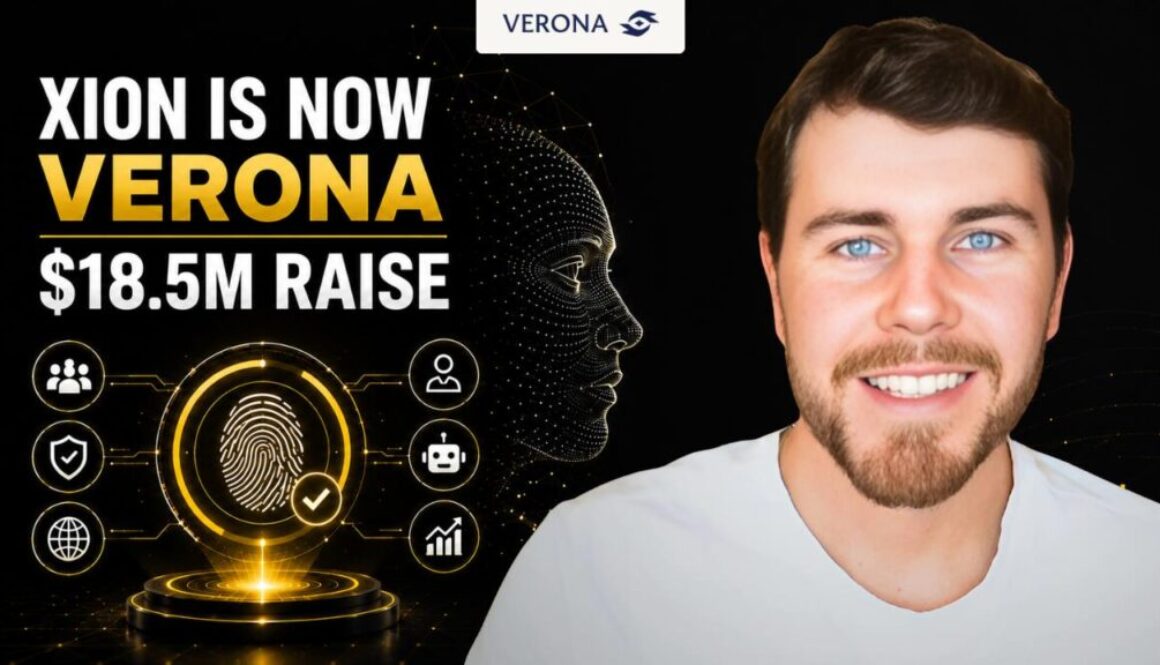
Formerly known as XION, Verona has quietly become one of crypto’s most revenue-generating projects — and with an $18.5M raise, $30M in brand spend, and the launch of EarnOS, it’s now making its biggest bet yet: that verified data is the missing layer the AI internet desperately needs.
There is a version of the blockchain story that ends with wallets, gas fees, and Discord NFT gates. Anthony Anzalone, Founder and CEO of Verona, has been trying to write a different one for years. The rebrand from XION to Verona — announced on June 17, 2026 alongside the launch of consumer app Ero and a combined $48.5M in new capital and brand commitments — is the clearest articulation yet of what that story actually looks like.
It looks like verification. Not the narrow, token-gate version that defined Web3’s early years, but something far more ambitious: a decentralized network capable of generating cryptographic proof for any piece of data on the internet, and making that proof programmable. If you understand why early DeFi mattered — the first time in history that ownership could be proven without a trusted intermediary — you understand why Anzalone believes Verona is building the next version of that same primitive, scaled to everything.
“We saw this with early DeFi: the only thing we could verify for the first time ever was ownership. Look at what happened with that. Now we can verify any arbitrary internet data. Just imagine where that’s going.”
— Anthony Anzalone, Founder & CEO, VeronaThe journey from XION to Verona is not a pivot so much as a clarification. XION was built on a genuine insight: most people would never tolerate the friction of crypto wallets, seed phrases, and gas fees. The solution was to abstract all of it away — gasless, walletless blockchain infrastructure that mainstream developers could build on without asking their users to become crypto-literate.
That thesis held. But as the team pushed further, they kept running into the same wall. Crypto’s benefits are deeply entangled with speculation and financial value. Strip away the token mechanics and you’re left with one genuinely powerful primitive: the ability to prove something is true. Proof of ownership unlocked DeFi. Proof of arbitrary data, Anzalone argues, unlocks everything else.
The technical foundation for that proof already existed in zero-knowledge cryptography. ZK proofs allow one party to demonstrate that a statement is true — you earn above a certain threshold, you are a verified Uber rider, you hold a specific credential — without exposing the underlying data. Verona has been deploying this in enterprise contexts for over a year: income verification, employment verification, insurance, and real estate. The rebrand formalizes what those deployments have been pointing toward. The network is not a blockchain for financial transactions. It is a verification layer for the internet.
Verona’s consumer surface is EarnOS, a platform that turns verified behavioral data into a direct earning mechanism. The first application is Ero, which launched alongside the rebrand announcement. The concept is simple enough to explain in a sentence but structurally significant: brands pay users directly, in real money, for verified proof of their activity — and users choose whether to share that proof at all.
Anzalone walked through the mechanics during our conversation. Take a Lyft user considering a move to Uber. Under the current advertising model, Uber spends broadly, wastes massively, and has no way to verify whether a conversion was real or even reached the right person. Under the Ero model, Uber can offer a direct incentive — say, $100 — to verified Lyft riders. The rider’s Lyft history is proven cryptographically, never exposed as raw data. Uber gets a verified conversion. The user gets paid. No intermediary takes a cut on the data itself.
The $30M in brand spend backing this launch is not a marketing budget in the traditional sense. It is, effectively, a proof of concept at scale — money already committed by brand partners to pay users directly through Ero’s verification rails. That pool includes partnerships with Uber, Amazon, Nike, BMW, and more than 115 other global brands, drawn from a network that already has 69 million verified interactions across three million users.
Timing matters in crypto, and Anzalone is candid that the rebrand is partly a function of where the AI landscape has arrived. For years, the verification use case existed without the demand signal that would make it urgent. AI has provided that signal.
The argument is straightforward: AI agents are becoming the primary interface through which people will interact with digital services — refilling prescriptions, applying for loans, booking travel, managing finances. To operate effectively, these agents need access to sensitive, accurate information. But there is currently no infrastructure that lets an agent access that information without either storing it insecurely, exposing it to third parties, or operating blind. Verona’s network is designed to fill exactly that gap.
The parallel Anzalone draws to early DeFi is instructive. DeFi proved that you could build an entirely new category of financial products the moment ownership became cryptographically verifiable. The bet Verona is making is that AI agents will unlock an equivalent category of services the moment personal data becomes verifiable without being exposed. The agent doesn’t need to see your bank statement to confirm you qualify for a loan. It needs proof that you qualify. Those are very different things.
“There’s no reason an AI agent should see your bank statement. It needs proof that you qualify — not the statement itself. We’re kind of this anti-AI AI play.”
— Anthony AnzaloneThe technical roadmap reflects this. Verona is developing an MCP server — a Model Context Protocol integration — that would allow AI agents to query verified data from the network on demand. A user sets permissions once. The agent accesses only what’s needed, cryptographically, without raw data ever leaving the user’s control. The infrastructure runs on Cosmos SDK, CometBFT, and CosmWasm, the same stack that powered XION, now oriented toward this agentic access layer.
One of the quieter but more significant aspects of the Verona story is its revenue model, which breaks from almost everything else in the crypto space. Most blockchain projects generate revenue through transaction fees — a percentage of economic activity flowing through the network. That works when the network is primarily financial. It does not work cleanly when the network’s primary product is information.
Verona’s answer is a revenue-share structure across all projects building on the network. Twelve projects currently operate under this model. Their combined revenue share is contributed to a token burn, creating a direct link between network activity — the verification of real-world data, the execution of brand campaigns, the onboarding of AI agents — and the value of the $VERONA token. The token itself is unchanged from the XION era; the rebrand is an alias change, not a migration, and existing holders are unaffected.
The significance of this model is that it does not depend on speculation or transaction volume to sustain itself. It depends on enterprises and brands finding value in verified data — a market that, by most estimates, already spends over a trillion dollars annually on advertising with deeply uncertain returns. If even a fraction of that spend migrates toward verified, programmable targeting, the network effects compound quickly.
For those who have followed the XION story from the beginning, the Verona rebrand is the logical conclusion of a thesis that has been consistent since day one: real adoption does not happen when people choose to use crypto. It happens when people get value from systems that use crypto without knowing or caring that they do.
Ero is probably the clearest example of that thesis in practice. A user connects their data, completes a brand mission, earns $50 from Uber, and transfers it directly to their bank, Venmo, Cash App, or a freshly spun-up debit card. No wallet setup. No gas fees. No seed phrase. The entire experience is no different from any other earn-and-redeem app — except that the verification layer underneath it is cryptographic, the data stays with the user, and the brands are paying for something real rather than guessing at impressions.
Anzalone has been saying since 2015 that the moment for crypto would arrive when someone could buy a cup of coffee with it. By his account, and by the evidence of the Ero launch, that moment is now — not because crypto has finally become legible to ordinary people, but because ordinary people are finally getting value from it without being asked to understand it at all.
Whether Verona can scale that thesis to the full breadth of the AI agent economy remains to be seen. But the infrastructure is live, the brand partnerships are real, the revenue is measurable, and the timing — with AI adoption accelerating and verified data becoming a scarce resource — is as favorable as it has ever been. The rebrand from XION to Verona is not a fresh start. It is a declaration that the foundation was always pointing here.
Watch the full interview with Anthony Anzalone on Blockchain Interviews — Ashton Addison goes deep on ZK proofs, Ero, the MCP roadmap, and what’s next for the $VERONA token.
Watch Now
OpenAI, Microsoft, and Anthropic—three of the biggest players in artificial intelligence have launched the nation’s first $23 million AI education initiative, aimed at equipping US educators with the tools and training needed to navigate the growing influence of AI in classrooms.
Announced on Tuesday, the investment will fund the creation of the National Academy for AI Instruction (NAAI), a program designed to train 400,000 K–12 teachers over the next five years. The initiative will offer free in-person workshops, hands-on seminars, and virtual learning modules to help educators effectively integrate AI into their teaching practices.
The training will cover using AI for tasks like lesson planning, grading, communication, and classroom management—enhancing, not replacing, the teacher’s role. The program is being launched in collaboration with the American Federation of Teachers (AFT), one of the largest teachers’ unions in the country, underscoring strong support from within the education sector.
Microsoft is the lead investor in the project, signaling the tech giant’s growing focus on the education space. The initiative aims to empower teachers with the knowledge, skills, and confidence to use AI as a supportive tool, streamlining administrative work, boosting creativity, and freeing up more time for direct student engagement.
The first stationary training location will be in Manhattan, NY, opening in late summer or early fall. The school will eventually grow to other physical locations throughout the country. Alongside in-person instruction, the academy will feature distance-learning sessions to ensure that even teachers in rural or underserved areas can take advantage of the resources.
A training program will introduce the technology and explain how it might be applied in real classroom settings, including the use of AI for tutoring, automating lesson plans, creating tailored assignments for students, and helping students who learn differently from the majority of their class. Sessions will also discuss AI ethics, bias, data privacy, and student safety — all of which are at the top of educators’ and parents’ minds.
“When it comes to AI in schools, the question is whether it is being used to disrupt education for the benefit of students and teachers or at their expense,” Chris Lehane, chief global affairs officer of OpenAI, said in a statement. “We want this technology to be used by teachers for their benefit, by helping them to learn, to think and to create.”
The new academy arrives as demand for AI in education continues to grow across the United States. In April, President Donald Trump signed an executive order to establish a White House Task Force on AI Education that called for public-private partnerships to encourage AI literacy in K–12 education. It has emerged as one of the biggest fruits of that order yet.
Tech companies have been aggressively building up their presence in education. OpenAI has also worked with the California State University system to give AI tools to more than 500,000 students and faculty members.
Anthropic, which developed the Claude AI assistant, released Claude for Education on Wednesday, a customized version of its chatbot for higher education users, almost two months after the company made its official product debut.
Through its competitive Google for Education program, Google is still signing deals with public schools and universities to bring AI-powered tools for administration and learning.
Such moves are happening as there is a dawning realization that AI literacy is as important as digital literacy has become, especially for the next generation of students and workers. However, the speed with which things have changed has also stirred concerns about fairness, access, and misuse.
Dealing with that concern, the academy’s developers say they’re creating the program with teachers in every aspect. Responsible and inclusive use of AI in schools will be a blinkered target to ensure the technology positively impacts learning, not negatively.
KEY Difference Wire: the secret tool crypto projects use to get guaranteed media coverage
Tron (TRX) has earned a reputation as a blockchain project that revolutionized the decentralized content industry, enjoying meteoric growth in the process. Now, crypto experts are turning their attention to a new contender, Ruvi AI (RUVI), an innovative token combining blockchain and artificial intelligence (AI). With its utility-first approach, structured growth model, and significant audit success, analysts suggest Ruvi AI could replicate Tron’s rise and become the next $1 crypto powerhouse.
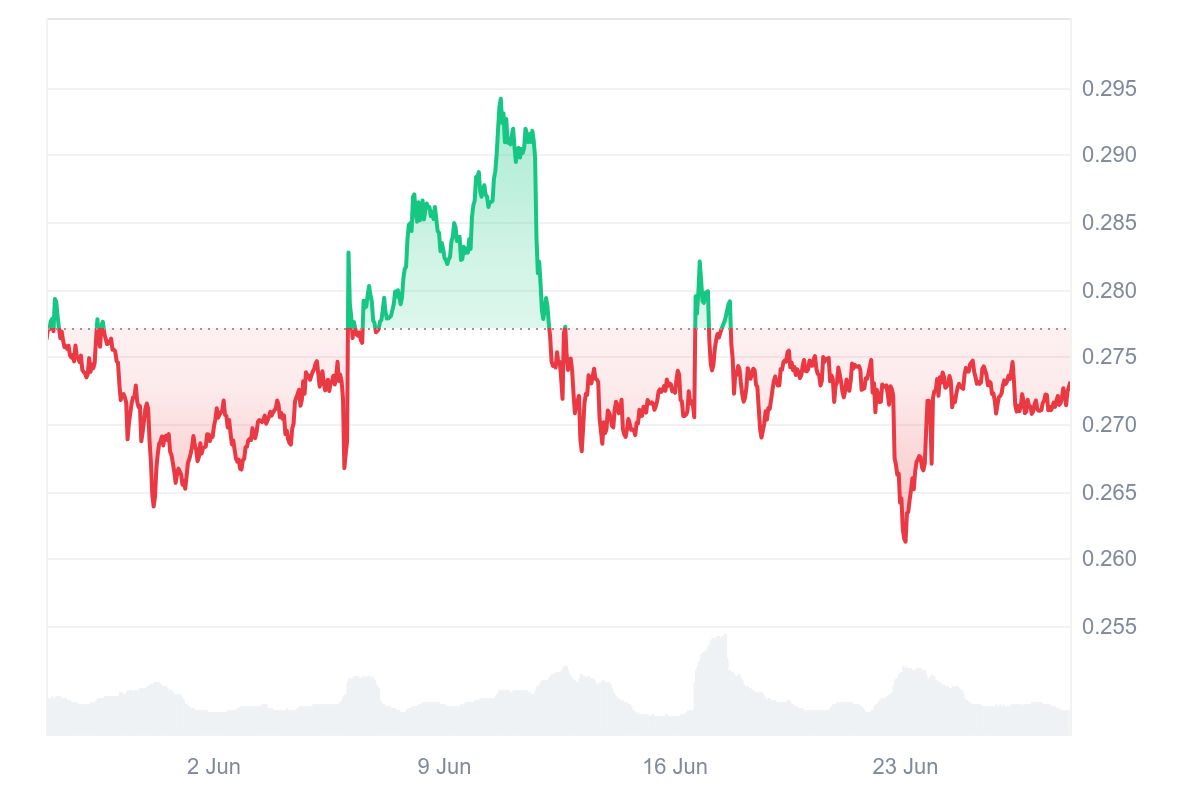
Tron’s success stemmed from its ability to address a clear use case in decentralized media. Similarly, Ruvi AI brings an innovative approach by integrating blockchain technology and AI to tackle challenges in marketing, entertainment, and finance. These high-demand industries rely on scalable, intelligent tools, positioning Ruvi AI as the next big utility-driven crypto token.
Key to Ruvi AI’s appeal is its structured growth plan, offering measurable ROI for early adopters. Currently, during Phase 2 of its presale, RUVI tokens are priced at just $0.015 each, providing an incredibly affordable entry point. After the presale, the token price is guaranteed to jump to $0.07, marking a nearly 5x return before even hitting the public market. Analysts predict even greater gains, forecasting a post-listing value of $1 per token, which equates to an astonishing 66x ROI for early participants.
With such clear potential and utility driving its adoption, Ruvi AI has all the ingredients to replicate the success stories of projects like Tron.
Ruvi AI’s early achievements highlight why the project is quickly becoming a favorite among crypto investors. Key milestones include:
These indicators provide further evidence that Ruvi AI is ready for a breakout performance, positioning itself as the next token to achieve $1 status.
Ruvi AI’s VIP investment tiers further enhance its value proposition. Early investors can unlock significant bonuses, increasing their potential returns exponentially. The tiers are structured as follows:
These tiers are designed to reward early participants and supercharge their profits, making Ruvi AI an enticing opportunity for investors at all levels.

One of the key reasons Ruvi AI has garnered widespread attention is its unwavering focus on security and transparency. The project successfully completed a third-party audit conducted by CyberScope, which confirmed the safety and integrity of the Ruvi AI codebase.
Additionally, Ruvi AI has partnered with the WEEX Exchange to ensure post-presale liquidity, enabling investors to begin trading RUVI tokens immediately after the presale ends. These proactive measures demonstrate Ruvi AI’s commitment to fostering a secure and reliable platform, instilling confidence in its growing base of supporters.
A major factor that sets Ruvi AI apart from other tokens is its real-world utility, which drives consistent demand for RUVI tokens. Below are some of its key applications:
With such a wide range of practical applications, Ruvi AI is positioned to thrive well beyond speculative investments, ensuring its longevity and sustained value.
While Tron has established itself as a blockchain success story, Ruvi AI is making a name for itself with a faster growth trajectory and broader applications. At just $0.015 per token during the presale, with a guaranteed increase to $0.07 and a forecasted $1 valuation, Ruvi AI offers unmatched ROI opportunities for smart investors.
With $2 million raised, over 170 million tokens sold, and partnerships with leading names like CyberScope and WEEX Exchange, Ruvi AI delivers the transparency, security, and utility investors need in a high-growth opportunity.
Learn More
Buy RUVI: https://presale.ruvi.io
Website: https://ruvi.io
Whitepaper: https://docs.ruvi.io
Telegram: https://t.me/ruviofficial
Twitter/X: https://x.com/RuviAI
Try RUVI AI: https://web.ruvi.io/register

Lightchain AI is quietly drawing attention on influencer podcasts and discussions while Cardano’s roadmap delays cause more questions among the crypto community. The intelligent design and consistent advancement of the project have made it a hot issue among intellectuals looking for the next significant blockchain invention.
Lightchain AI is gaining traction not through hype but rather by real interest in its scalable and utility-driven approach. Its presale raised $20.9 million and tokens are priced consistently at $0.007.
Cardano is under doubt about timelines, but Lightchain AI is gathering support among builders and investors ready for a more quick and intelligent blockchain solution.
In 2025, Cardano is being watched ever more closely as its roadmap continues to face delays after it previously promised decentralization and scalability. Founder Charles Hoskinson has revealed the end of the original roadmap, which culminated with events such as the Plomin hard fork and the on-chain ratification of the Cardano Constitution, while crucial projects such as Hydra and Leios continue without a commitment to further funding, working “under at risk conditions”. These delays have caused concerns in the community, mainly about the staking function and other functionalities that have been promised.
With the creation of the Constitutional Committee and later DRep election, the present transfer of governance is seen as a chance to solve these problems by acting as mo re transparent and more involved community servant. Still to be seen, though, whether such policies will prove successful in boosting confidence rebuilding and development.
As important players start supporting the project for its practical use and technical innovation, lightchain artificial intelligence is becoming more and more visible in the crypto scene. Lightchain AI’s AI-integrated Layer 1 design, dynamic pricing model, and optimized gas structure are attracting respected voices unlike fleeting hype tokens.
These sponsorships are helping to hasten demand at a pivotal point as the Bonus Round is under progress at a set $0.007 price. Influencers are stressing Lightchain AI’s distributed validator and contributor nodes, forthcoming public repository launch, and $150,000 grant program meant to support AIVM-powered development.
Lightchain AI keeps growing outside of early adopters as more credible leaders offer their optimistic view gains traction among larger investor audiences who give utility and transparency top priority.

From buzzing podcasts to investor portfolios, Lightchain AI is generating waves in the crypto space and inspiring enthusiasm everywhere. Its dynamic gas optimization, lightning-fast execution, and modern AI-integrated blockchain architecture help to explain de velopers and investors fl ocking to it.
The Transparent AI Framework guarantees completely verifiable and auditable AI computations, so adding still another layer of trust. Lightchain AI is firmly establishing itself as a game-changer in distributed technology as the countdown to the mainnet launch gets under way. Blockchain’s future just became smarter—and it is happening right now!