SEC Delays Plans for Tokenized Stock Trading on Crypto Platforms
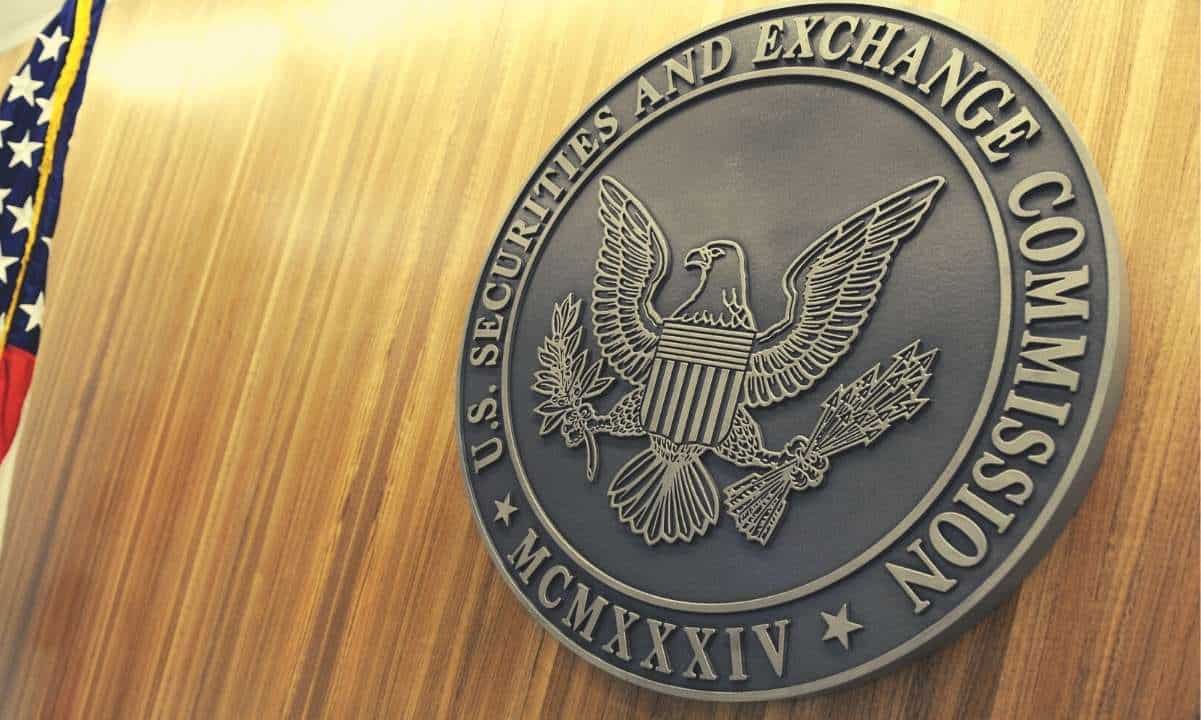
The SEC has delayed releasing an “innovation exemption” for tokenized stock trading on decentralized exchanges, pushing back a plan that was draft-ready and could have launched this week. The postponement reflects deepening regulatory uncertainty over how tokenized equities would handle corporate actions like dividends and shareholder voting, creating a critical test of whether institutional-grade tokenization can clear U.S. securities oversight.
- SEC delayed tokenized stock exemption release despite draft completion, citing concerns from stock exchanges and market participants
- Regulators uncertain how tokenized shares would manage dividends, shareholder votes, and custody across third-party blockchains
- Potential benefits include faster settlement, fractional ownership, and 24/7 trading; risks include offshore revenue leakage and market fragmentation
- This week Original target launch date for SEC’s tokenized stock trading exemption
- Limited in scope SEC Commissioner Hester Peirce’s stated constraint on any approved exemption framework
- Third-party Type of blockchain platforms where tokenized stocks would trade without company consent
The Securities and Exchange Commission has shelved its near-final plan to authorize tokenized equity trading on decentralized exchanges, backing away from a release timetable of as soon as this week. The agency had completed a draft of the “innovation exemption” and circulated it for staff review, according to sources familiar with the decision.
However, feedback from stock-exchange operators and other institutional market participants prompted the regulator to extend its deliberation period, effectively pausing momentum toward what would have been the first major U.S. regulatory blessing for blockchain-native securities trading.
The exemption would have permitted cryptocurrency platforms and decentralized exchanges to list and trade tokenized representations of publicly traded stocks without requiring approval or participation from the underlying companies. This structural separation, allowing third parties to issue and trade digital versions of equities on their own terms, marks the regulatory crux of the debate.
For institutional investors seeking exposure to tokenized markets, the delay signals that U.S. authorities remain uncertain whether such a framework can adequately protect shareholder rights, capital formation integrity, and corporate governance standards.
SEC Raises Dividend and Voting Rights Concerns Over Third-Party Tokenized Equities
The core regulatory friction centers on how tokenized shares would handle the mechanical and legal dimensions of equity ownership. When a company issues a dividend or calls a shareholder vote, the registry of record must be unambiguous and traceable.
Blockchain-based tokens issued and held across decentralized networks complicate that clarity, particularly when the token issuer is a third party with no contractual relationship to the underlying corporation.
Former regulators cited by Bloomberg noted that the mechanics remain murky: how would a company fulfill dividend distribution obligations to token holders scattered across multiple chains and custodial arrangements? How would shareholder voting rights attach to digital representations created and managed entirely outside the company’s normal transfer-agent and voting infrastructure?
These are not theoretical concerns, they touch the legal definition of what constitutes an equity security under U.S. law and the fiduciary duties corporations owe to their shareholders.
Overseas custody also emerged as a regulatory red flag. The SEC flagged the risk that tokenized shares could end up held by foreign bad actors or jurisdictions with weak compliance regimes, creating both counterparty and geopolitical exposure for U.S. capital markets.
SEC Commissioner Hester Peirce, a known advocate for tokenization, moved to narrow the exemption’s scope in advance of the announcement, signaling internal consensus around a stricter interpretation.
She stated that any exemption would be “limited in scope” and would only permit “digital representations of the same underlying equity security that an investor could purchase in the secondary market today.” That language appears designed to rule out speculative derivatives or leverage instruments, keeping the initial framework tightly bound to direct equity representation.
Coinbase and Market Participants Clash Over Timeline and Market Structure
Coinbase chief legal officer Paul Grewal issued a public statement on Saturday backing the SEC’s preparatory work and calling for expedited approval under existing regulatory authority.
“The SEC deserves a lot of credit for preparing diligently for legislation and for moving ahead expeditiously under its existing authority to provide clarity to markets in adopting tokenization in capital markets,” Grewal said, explicitly thanking Commissioner Peirce for her push toward tokenized equity trading.
The SEC deserves a lot of credit for preparing diligently for legislation and for moving ahead expeditiously under its existing authority to provide clarity to markets in adopting tokenization in capital markets.
Paul Grewal, Chief Legal Officer, Coinbase
Coinbase’s position reflects broader crypto-industry interest in breaking into securities settlement and trading, where blockchain settlement could theoretically offer speed and cost advantages over traditional clearance systems. However, the exchange’s backing did not move the SEC’s timeline, suggesting the regulator is weighing concerns from more established institutional infrastructure.
The traditional stock-exchange industry offered a different perspective, citing fragmentation risks that could undermine U.S. market dominance.
Ryan Yoon, director at Tiger Research, outlined the friction plainly: permitting third-party tokenized trading could splinter liquidity across multiple blockchain platforms rather than concentrating it on regulated domestic exchanges. “Price discrepancies across platforms” would emerge as different venues price the same tokenized shares differently, he warned.
Large block orders could face higher slippage costs on smaller decentralized venues, while trading revenues that currently accrue to U.S. exchanges might migrate offshore to cheaper or less-regulated platforms.
These structural concerns align with longstanding exchange-industry objections to fragmentation, but they carry weight in debates over whether tokenization genuinely enhances capital-markets efficiency or simply redistributes existing volume.
Settlement Speed and Fractional Ownership Could Shift Institutional Capital Allocation
Despite regulatory hesitation, the potential benefits of tokenized equity trading remain material for institutional investors. Blockchain settlement operates on 24-hour cycles or faster, compared to the standard two-business-day clearance window (T+2) in traditional markets.
For large asset managers, eliminating that settlement lag could meaningfully reduce counterparty risk and free up capital held in escrow during the clearance process.
Fractional ownership also addresses a practical constraint in traditional markets: tokenization would allow investors to purchase arbitrarily small fractions of high-priced stocks without relying on mutual funds or ETFs as intermediaries.
This could lower barriers to diversification and democratize access to blue-chip equities, particularly in emerging markets where dollar-denominated direct stock purchases carry friction.
Round-the-clock trading represents another potential institutional draw. Traditional U.S. equity markets operate on fixed schedules; tokenized markets on blockchain could theoretically enable trading across time zones and geographies without operational overhead.
Non-U.S. investors would gain direct, native access to popular U.S. stocks without currency-conversion friction or reliance on foreign custodians.
The SEC’s delay does not foreclose these benefits; it signals instead that regulators want to design the framework carefully before opening the door.
The timeline for the exemption’s actual release remains unspecified. Market participants are now watching for SEC feedback loops with stock-exchange executives and any public guidance from Commissioner Peirce or SEC Chair Gary Gensler about the expected resubmission window. Coinbase and other digital-asset platforms are positioning for approval, while traditional exchanges continue building cases against market fragmentation. The next concrete marker will be either a formal SEC announcement of a revised timeline or publication of detailed guidance on how tokenized equities would satisfy shareholder-rights and corporate-governance requirements, a document that could reset market expectations for the entire tokenized-securities sector.
Original reporting: cryptopotato.com