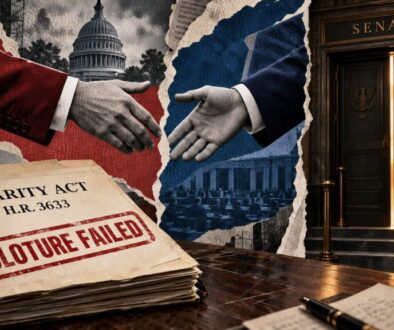
Coinbase CEO Armstrong shifts focus to SEC and CFTC after Senate blocks CLARITY Act
Coinbase co-founder Brian Armstrong said the crypto industry must stop waiting for congressional action after the Digital Asset Market Clarity Act failed a Senate procedural vote, signaling a shift toward regulatory agency rulemaking. The setback forces institutional players to prepare for regulatory clarity defined by the SEC and CFTC rather than by law.
- Senate procedural vote on CLARITY Act fell short of 60 votes needed to advance the bill on Tuesday
- Brian Armstrong said the SEC and CFTC already possess sufficient authority to establish clear crypto rules
- Three Republican senators and procedural concerns from allies blocked consensus, with Democrats citing unresolved ethics issues
- 60 votes required for Senate advancement; procedural vote fell short of this threshold
- ~12 Democrats considered possible supporters before negotiations over ethics rules collapsed
- 4 Republicans and independents opposed or blocked the measure for strategic reasons
The US Senate failed to advance the Digital Asset Market Clarity Act after a procedural vote fell short of the 60 votes needed to move forward, according to reporting by CryptoPotato. The defeat came after last-minute negotiations between Republicans and crypto-friendly Democrats collapsed over ethics rules and concerns about President Trump and his family’s involvement in the crypto industry. The outcome leaves institutional crypto firms and investors without the legislative framework they have pursued for months, forcing a recalibration toward regulatory rather than legislative paths to certainty.
Armstrong Pivots to SEC and CFTC Authority After Congressional Defeat
Coinbase co-founder Brian Armstrong said the industry must abandon its reliance on Congress and instead expect the SEC and CFTC to establish clear rules using their existing authority. Armstrong said that “clarity” will come to crypto regardless of the bill’s fate, framing the legislative failure as a potential advantage because some concessions baked into CLARITY were difficult to accept. His statement reflects a strategic recalibration: if regulators move unilaterally, the industry may avoid compromises it opposed.
Ripple CEO Brad Garlinghouse offered a different tone, calling the loss one that “stings” and describing the missed opportunity as larger than any single company.
Garlinghouse blamed Democratic opposition and what he termed the “anti-crypto army” for the defeat, yet expressed confidence that SEC Chair Atkins and CFTC Chair Selig will continue developing rules to address gaps left by the failed bill.
Both executives signaled that institutional clarity will emerge through regulatory action rather than legislation, though on a timeline and under terms neither company controls.
Three Republican Senators and Procedural Tactics Blocked Consensus
Three Republicans, Susan Collins of Maine, Josh Hawley of Missouri, and Jerry Moran of Kansas, voted against the measure, while North Carolina Senator Thom Tillis voted no on procedural grounds to preserve a motion to reconsider and keep the door open for a future vote.
Democratic support collapsed after negotiations over ethics rules failed to produce an agreement. Around a dozen Democrats had been seen as potential supporters, but concerns about Trump family involvement in crypto and unresolved ethics safeguards led them to withhold their votes. Delaware Democrat Chris Coons did not vote.
Senators Ruben Gallego and Catherine Cortez Masto both suggested that Republican leadership ended talks before a compromise on ethics protections could be reached, framing the failure as a breakdown in bipartisan negotiation rather than outright opposition to crypto regulation itself.
Regulatory Action Likely to Fill the Legislative Void
Both Armstrong and Garlinghouse said they expect the SEC and CFTC to move forward with rulemaking using their existing statutory authority, a shift that removes the need for congressional votes but also removes industry leverage over the final rules.
The failure of CLARITY leaves institutional investors and platforms in legal gray zones that regulators will now fill through enforcement guidance, no-action letters, and formal rulemaking.
Unlike a statutory framework, which would have applied uniformly across agencies, regulatory action may produce divergent rules from the SEC and CFTC or inconsistencies between their approaches and those of state regulators.
Institutions preparing for this environment must now monitor multiple agencies rather than tracking a single congressional process, and face the risk that rules issued unilaterally will be stricter than a negotiated legislative compromise would have been.
The CCS read. We read Armstrong’s pivot as pragmatic rather than optimistic. The industry avoided a bad deal but surrendered leverage over the outcome. Regulatory rules, once issued, cannot be negotiated like bills can; they can only be challenged in court or through the political system after they take effect. Institutional players should prepare for agency action on a faster timeline than Congress was moving, but with less room to influence the final shape of compliance obligations.
Watch for the SEC and CFTC to issue guidance or begin formal rulemaking within the next 90 days, and for any signals from Chair Atkins or Chair Selig on whether they plan to coordinate or issue separate rules addressing digital asset classification, custody, and market conduct standards.