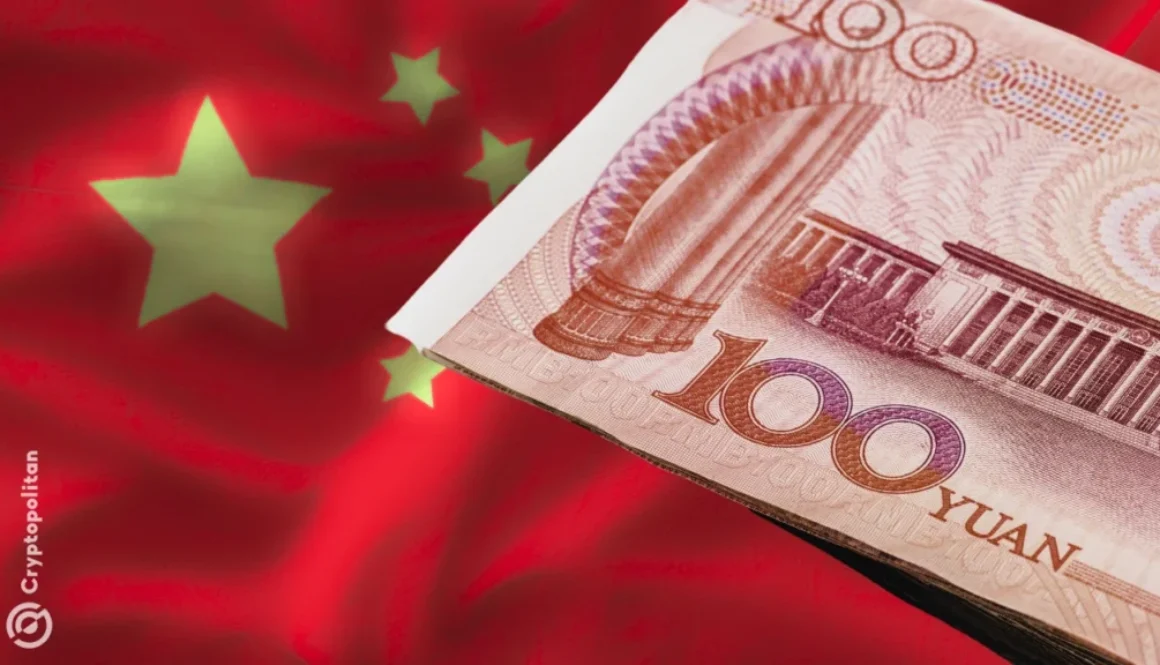
The People’s Bank of China (PBOC) has reportedly reached out to financial institutions in recent days to assess market sentiment surrounding the ongoing weakness of the U.S. dollar.
According to people familiar with the matter cited by Reuters, the PBOC sent out an informal survey last week, probing for opinions on why the dollar has been slipping, how long the trend might last, and what it could mean for the Chinese yuan.
The act signals that Beijing may be growing uneasy about the yuan’s recent gains against the faltering dollar and the potential knock-on effects on Chinese exports.
The yuan has steadied while the dollar slumps
The U.S. dollar has had a bruising 2025. The Dollar Index, which tracks the greenback against six major currencies, has fallen 11% so far this year, its worst start since 1973.
Since early April when President Donald Trump announced a broad freeze on tariffs, the dollar has tumbled 6.6% as markets began pricing in looser U.S. trade and fiscal policies.
In contrast, China’s yuan has held relatively steady, gaining about 1.3% over the same period. That’s good news for consumers and importers, but not so much for Chinese exporters who suddenly find their goods more expensive on the global market, just when they need every edge in a slowing economy.
The dollar’s decline has now put the PBOC in a delicate spot. On the one hand, a stronger yuan helps reduce imported inflation and reinforces Beijing’s image as a steady hand in global finance. On the other, it could squeeze manufacturers and exporters, especially as the country tries to revive growth after a bumpy few years.
The PBOC has long preferred stability over sharp moves, and its governor, Pan Gongsheng said earlier this year that keeping the yuan “reasonably stable” is essential for both domestic and global confidence.
The survey could be a precursor to policy action
The survey alone doesn’t signal immediate policy change, but it could be a first step. In similar situations in the past, the PBOC has used subtle levers to manage the yuan’s value without direct intervention.
In April, the central bank reportedly nudged state-owned banks to curb dollar buying, a move many saw as a quiet way of putting a floor under the yuan.
Most analysts believe the PBOC is unlikely to intervene unless the yuan strengthens dramatically. But the timing of this latest outreach has raised eyebrows. It comes just days before the expiration of Trump’s 90-day global tariff pause, set to end on Wednesday, July 10, and just a month ahead of the expiration of separate U.S. tariffs on Chinese tech imports.
Cryptopolitan Academy: Want to grow your money in 2025? Learn how to do it with DeFi in our upcoming webclass. Save Your Spot
Elon Musk has declared that the America Party, his new political vehicle, will fully support Bitcoin, saying on X that: “Fiat is hopeless.”
This follows the official launch of the America Party two days ago, which came after yet another public escalation of his fight with former best friend President Donald Trump.
Saturday night on Truth Social, Trump called Elon a train wreck and said it makes him sad that he is embarrassing himself publicly.
Elon had accused Trump of abandoning the center and posted a poll asking his followers if he should form a new party to represent “the 80 percent in the middle.” When the poll closed, about 80% voted yes. So he went ahead and launched it unofficially… at least for now.
Elon targets Republican defectors after bill passes
Before the announcement, other players tried to pull Elon into their projects. Andrew Yang, speaking to Politico Magazine, said he had wanted to form a political party with Elon or get his support for the Forward Party.
Elon had endorsed Yang’s presidential run back in 2020, but no deal was made. Steven Nekhaila, chair of the Libertarian National Committee, also reached out last week, but Elon still didn’t engage.
Instead, Elon stayed focused on the One Big Beautiful Bill Act, the same bill that triggered his split from Trump. As the bill neared a vote in the Senate, Elon promised that if it passed, he would not only move forward with forming the America Party, but also back primary challenges against Republican lawmakers who voted in favor of it. When the bill passed the House of Representatives on July 3, he followed through. He dropped another poll on X, then revealed a loose electoral strategy, blasting both major parties as a single “uniparty” failing to offer real policy differences.
Despite Elon’s massive personal fortune, pushing the America Party into the national conversation won’t be easy. The Washington Post pointed out that Elon failed to influence the 2025 Wisconsin Supreme Court election, and his work at the Department of Government Efficiency has damaged his reputation in some circles. Getting ballot access in all states will be a massive legal grind. Public support for him has also dipped, adding more uncertainty to the project.
Adding to the complications, Elon was born in South Africa, which makes him constitutionally ineligible to run for the US presidency. He hasn’t said who will lead the America Party or what its internal structure will look like. As of now, it’s just Elon, Bitcoin, and an audience of people tired of choosing between two parties he no longer wants anything to do with.
Cryptopolitan Academy: Coming Soon – A New Way to Earn Passive Income with DeFi in 2025. Learn More
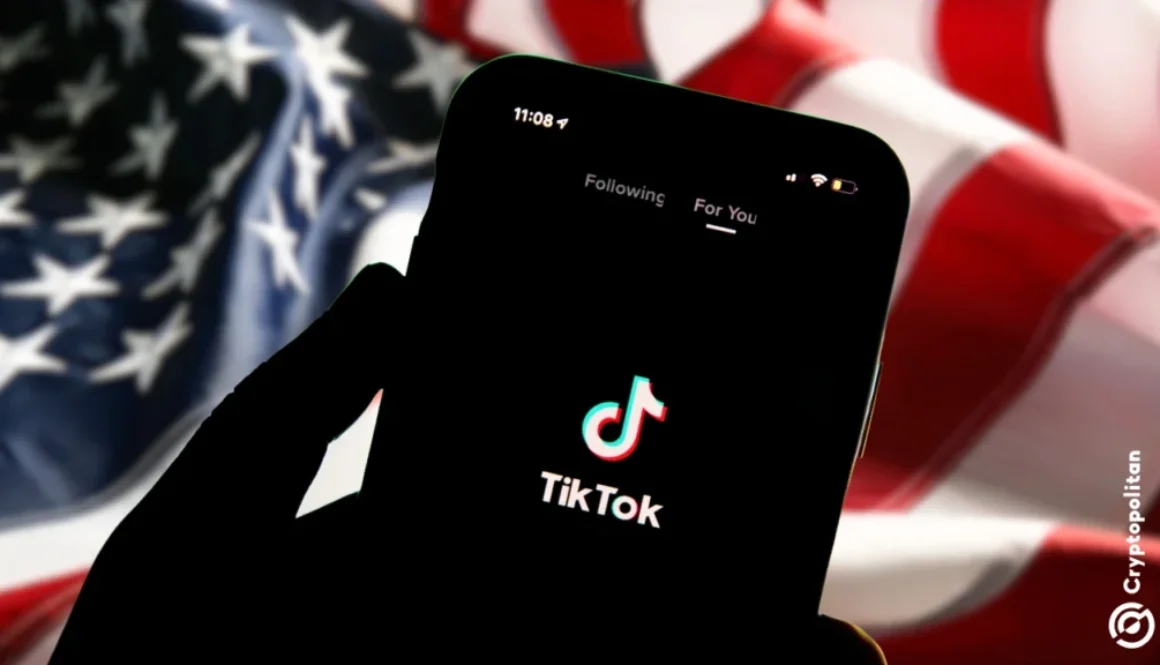
TikTok is building a new version of its app for users in the United States called “M2” before a scheduled sale to a group of investors, according to information reported on Sunday, July 6.
This came after US President Donald Trump said on Friday, July 4, that he plans to speak with China on Monday or Tuesday this week about a potential TikTok agreement.
He mentioned that the United States almost agreed to sell the TikTok short-video app.
TikTok suspended its deal with the US amid Trump’s tariff policies imposed on China
Earlier this year, an agreement was made that involved the creation of a new company in the US to handle TikTok’s operations in America. Moreover, American investors would be the majority owners and have access to the short video app.
According to reports from reliable sources, TikTok formulated a strategy to introduce the new app to the United States app stores as early as September 5.
This followed Trump’s extension of the sales of the US operations of TikTok last month until a deadline of September 17 for China’s ByteDance.
TikTok users will eventually need to download the new app to continue using the service, though the current app will be functional until March of next year. The report added that this timeline could shift.
This new app has piqued the interest of the searchers. Some are curious about whether their followers and posts will transfer over immediately or later or if they should start from scratch once they get to the new accounts. Others ask why it is called “M2” along with other questions.
As for the TikTok deal, Trump said he anticipates “starting a dialogue” with China on Monday or Tuesday, perhaps with President Xi or a representative. They were very close to a deal, he said.
However, TikTok suspended this deal after China said it would not finalize the agreement in light of Trump’s declaration of heavy tariffs on Chinese goods.
In response, Trump mentioned that the United States would likely need to get a deal approved by China. TikTok did not immediately respond to a request for comment.
When asked about his confidence in China’s willingness to agree, Trump responded that he was not completely sure, but anticipated they would. Based on his argument, President Xi and he have a strong relationship; therefore, he believed this deal would benefit both countries.
Trump relaxed export controls on China, creating room for a bigger deal
Time has expired for some of the United States’ trading partners seeking to strike deals before President Trump’s July 9 deadline for tariffs to return to the higher levels originally suggested.
Trump said that letters will start going out to countries to inform them of the tariff rates they will encounter when exporting to the US, which will take force on August 1. Others of like character will succeed in the first 10 or 12 letters sent.
Following the deadline, Trump mentioned they will have complete coverage by the ninth. He further stated that the tariffs will vary, some around 60% or 70%, while others at 10% or 20%.
In the meantime, the Trump team has concentrated on securing trade deals, though it has been able to nail only three deals so far.
Scott Bessent, a United States Secretary of the Treasury, indicated that about 100 partners are on the hook for a minimum “reciprocal rate” of 10% as soon as this week and has said he is expecting a “flurry” of deals to get done between now and the deadline.
For China’s case, the United States has relaxed export controls on China for chip design software and ethane, further indicating that trade tensions are easing between the two countries after they reached an agreement in May on a plan to work towards a bigger deal. This
Restrictions had been put in place only weeks ago. As a result of the relaxed export controls in China, software companies like Synopsys and Cadence said they would resume selling their tools for designing chips to Chinese customers.
This positive outlook signals that Trump might strike a deal with China concerning the sales of TikTok’s US operations.
Cryptopolitan Academy: Coming Soon – A New Way to Earn Passive Income with DeFi in 2025. Learn More
Lei Jun, founder and chairman of Xiaomi Corp., couldn’t resist a jab at Apple as he unveiled the tech giant’s second electric vehicle, a sleek, long-anticipated SUV, during a launch event in Beijing late last month.
“Since Apple stopped developing its car, we’ve given special care to Apple users,” Lei said, noting that iPhone users could seamlessly sync their devices with Xiaomi vehicles.
The comment, a thinly veiled dig at Apple’s failed decade-long, $10 billion Project Titan, was followed by an impressive flex: more than 289,000 orders for the SUV were placed within an hour, surpassing demand for the SU7 sedan introduced in March 2024.
Xiaomi founder jabs Apple while celebrating record-breaking EV orders
Where Apple faltered, Xiaomi has soared, solidifying Lei’s legacy, boosting Xiaomi’s market value, and shaking up the tech and auto sectors. Apple’s abandoned pursuit of a fully autonomous vehicle underscored the missteps of moonshot ambitions. At the same time, Xiaomi’s grounded, pragmatic approach — blending Tesla- and Porsche-inspired designs with its signature affordability — has proved more effective.
China’s mature EV ecosystem gave Xiaomi an edge Apple never had: abundant subsidies, a robust charging infrastructure, and a ready supply chain.
Yale Zhang, managing director of consultancy Automotive Foresight, said Lei and Xiaomi’s charisma, brand recognition, and ecosystem cannot be underestimated. He continued to say that young consumers who are already loyal to Xiaomi naturally consider it when buying EVs.
Still, car manufacturing poses far greater challenges than smartphones or gadgets, from regulatory compliance to geopolitics. Xiaomi is charting new territory as one of the first tech giants to go full-scale into car production.
Unlike Apple’s high-concept, constantly shifting EV goals, Lei took a focused and frugal approach, calling carmaking his “last entrepreneurial project.” Xiaomi’s journey included tapping into China’s automaking talent pool, visiting companies like Geely and Great Wall, and poaching top talent from BAIC, BMW, and SAIC-GM-Wuling. Among the hires was Hu Zhengnan, formerly of Geely, credited as key to the SU7’s development.
Behind the scenes, Xiaomi pursued aggressive recruitment and built deep ties across the EV supply chain. It invested over $1.6 billion in over 100 component manufacturers between 2021 and 2024, from lidar to voltage converters, ensuring control and insulation from the supply chain disruptions that once plagued its smartphone business.
Xiaomi even constructed its own EV plant, bypassing the contract manufacturing route of peers like Nio and Xpeng. The decision reflects lessons from early Xiaomi, where strained supplier relationships — including a near-break with Samsung — forced Lei to negotiate over red wine to mend ties personally.
Can Xiaomi compete with Tesla and BYD?
Yet Xiaomi’s ascent hasn’t been without criticism. The SU7 has been dubbed the “Porsche Mi” for its familiar design, and SAIC’s vice president reportedly slammed Xiaomi’s approach as “shameless.” A fatal March accident involving the SU7 while its assisted-driving system was active led to government scrutiny and a rare period of silence from Lei.
Even so, the SU7 remains a top seller. Xiaomi’s loyal fanbase — known as “Mi Fans” — continues to drive sales. “A significant number of older buyers are purchasing the SU7 for their children,” said Rosalie Chen of Third Bridge, highlighting the model’s trust factor.
For 2025, Xiaomi has raised its delivery target to 350,000 vehicles, fueled by the SUV’s popularity and the newly introduced YU7. Starting at $30,100 for the SU7 and $35,000 for the SUV, Xiaomi’s vehicles are price-competitive with Tesla’s offerings. Its EV unit is projected to become profitable in the second half of 2025.
Yet the scale of Xiaomi’s operation is small when compared with giants such as BYD (with 4.3m EV and hybrid sales in 2023), Tesla (1.78m), or Toyota (10.8m in all markets globally). Having no offering in the mainstay sub-$20,000 market, which firms like BYD currently control, would see Xiaomi become a boutique brand for the rich, much like Tesla
Still, Lei is in an expansionist mood globally. He has recently said that Xiaomi could start overseas car sales as soon as 2027, from an R&D center in Munich with potential launches in Germany, Spain, and France, even as tariffs on Chinese EVs go up in the US, the EU, and Turkey.
Lei has acknowledged that Xiaomi is a late entrant to the auto business. But, he said, there is always potential for latecomers in a technology- and innovation-driven market.
KEY Difference Wire: the secret tool crypto projects use to get guaranteed media coverage
Tesla stock opened the week with a red candle, falling to $315.35, a 0.095% dip that lined up with a broader selloff across US equities and metals.
The drop hit as Bitcoin blew through resistance and ended the June 29 week with its highest weekly close ever. The action split risk markets in two. Stocks went down, crypto went up.
As per usual, the trigger came straight out of Washington after President Donald Trump confirmed on Sunday that new tariffs will begin August 1, not July 9 as markets had priced in.
The news sent US stock futures into a tailspin Sunday night. The Dow Jones Industrial Average dropped 146 points, down 0.32%. S&P 500 futures lost 0.39% and Nasdaq 100 futures fell 0.42%. Trump didn’t make the announcement alone.
Standing beside him was Commerce Secretary Howard Lutnick, who told reporters, “Tariffs go into effect Aug. 1. But the president is setting the rates, and the deals, right now.” Trump nodded in agreement, ending the market’s weekend hopes. The update came after days of guessing by investors and left Wall Street hanging just as they were coming off a strong week.
Bitcoin makes history as ETF inflows build
Bitcoin managed to stay above $108,500 before closing Sunday at over $109,000, according to data from CoinGecko. Over the past month, nearly 50,000 BTC moved into US spot ETFs, signaling strong institutional demand.
Based on their flow-to-price model, the next major target sits at $117,000. That model has tracked closely with price action in previous cycles, especially during aggressive ETF accumulation. Market analysts are calling it “whale games,” as large buyers quietly accumulate while retail watches from the sidelines.
While Bitcoin moved up, metals moved down. Gold, which had gained almost 2% last week, gave back ground and hovered around $3,325 per ounce on Monday. It’s still up over 25% in 2025 and is sitting just under $170 shy of its April record.
ETF inflows and central bank demand have kept gold up this year, but short-term traders pulled back after the White House announcement.
S&P 500 loses steam after tariff delay creates confusion
Treasury Secretary Scott Bessent confirmed the new tariff date during an appearance on CNN’s “State of the Union” earlier Sunday. “If there’s no deal, tariffs go back to April 2 levels on August 1,” he said. That announcement set expectations that major duties could return unless a breakthrough is made in trade talks. Most investors had planned around tariffs starting this week. That now looks wrong.
The original 90-day pause from April’s “reciprocal” tariffs was set to expire Tuesday, with an EU agreement deadline hitting Wednesday. If no deal is struck with the European Union, tariffs up to 50% on EU goods are expected.
Last week’s stock rally came from the belief that Trump wouldn’t actually follow through with the most extreme tariff threats. That optimism collapsed. Still, some traders are holding out hope. They believe US firms will beat weak earnings expectations if they can show they’re ready to handle tariffs.
The US Dollar Index dipped slightly to 96.90, while China’s Renminbi fell 0.07% to 7.1656. The Japanese Yen also slipped to 0.0069, with a minor move of +0.0000090. Other currencies, including the euro, pound, and ruble, are also trading just below neutral.
Silver, unlike gold, ripped to $37.225, the highest price seen in nearly 14 years. That spike stood out in a market dominated by selling pressure.
KEY Difference Wire: the secret tool crypto projects use to get guaranteed media coverage
As Dogecoin makes the latest news as bulls defend the $0.15 support level, attention is shifting toward Mutuum Finance (MUTM), which is sweeping across the crypto market. The 5th presale stage of Mutuum Finance is over 60% sold out already. The project has raised more than $11.8 million and acquired 12,700 investors.
Mutuum Finance has an estimated ROI of 17,820% according to early predictions. This means that it may reach a price of up to $10.7 after its launch. With investors going on a search of the best crypto to invest in now, Mutuum Finance is gaining serious grounds as one of the standout cryptos to invest in.
Dogecoin Holds Strong at $0.17 as Bulls Keep Momentum Alive
Dogecoin (DOGE) has already recovered, losing momentum and price action around the support point of $0.15 and now is trading around $0.17. Although the market volatility has hit DOGE recently, the cryptocurrency has not been mired down by it and the current movement is bullish which could lead to an upcoming short-term rally.
Nevertheless, should the price fall below the $0.15 mark then the support can be sought at the price around the $0.13 mark. Mutuum Finance is a newer utility-oriented project that some investors are considering as they seek the next breakout project in that regard, as Dogecoin takes advantage of the community energy.
Mutuum Finance Presale Phase 5 Now Over 60% Filled
Mutuum Finance presale Phase 5 is underway and gaining strong momentum. Already over 12,700 investors have come aboard the project and raised $11.8 million, which is testimony to its growing hype. With Phase 5 having crossed the 60% mark, price increases are imminent. Buying now guarantees investors the lowest possible price for maximum ROI when the token goes live.
Mutuum Finance Launches 50,000 Bug Bounty
Mutuum Finance in its focus on security and transparency has even initiated its official Bug Bounty Program in collaboration with CertiK with a reward value of 50,000 USDT. The reward is given in four categories, critical, major, minor and low where there is coverage and reward for all types of vulnerabilities. This is another aspect that reflects the proactive approach of Mutuum Finance towards establishment of trust in the form of strong infrastructure and beneficial security.
The Mutuum Finance $100,000 Giveaway
The project has already been audited by CertiK and is leading towards the realization of the huge adoption and those who buy right now will benefit most in the future. On top of that, the platform is hosting an amazing $100,000 giveaway, where 10 lucky people will receive $10 000 each.
Dogecoin is maintaining its position above the 0.15 mark and building toward breakout past $0.20. Having exceeded 12,700+ investors with the raise at more than $11.8 million, and Phase 5 now already over 60% sold out, the numbers speak of themselves.
With a CertiK security audit, a massive $50k bug bounty, and a strong dual lending paradigm Mutuum Finance is not only promising, it is delivering.
Early investors will be looking forward to an estimated 17,820% ROI with the price reaching $10.70. With a dynamic $100,000 giveaway now is the moment to join in. Buy MUTM tokens now before the next lift-off and before the end of Phase 5.
For more information about Mutuum Finance (MUTM) visit the links below
Floki Inu’s price prediction shows an optimistic outlook, projecting FLOKI to increase to $0.0002514 by the end of 2025.
In 2028, Floki Inu is predicted to reach a maximum price of $0.000708.
FLOKI price can reach a maximum level of $0.000381 and an average trading price of $0.0032 in 2031.
Floki Inu is a meme coin driven by its community, the Floki Vikings. Inspired by Shiba Inu, Floki Inu aims to democratize power in the crypto space, pivoting the crypto market away from traditional financial entities.
The Floki ecosystem is diverse. It includes Valhalla, a blockchain combat game that rewards players with Floki tokens, and Floki Places, a store for merchandise and NFTs where purchases can be made using Floki tokens. Additionally, Floki University provides educational resources on the cryptocurrency market and blockchain technology.
The recent launch (June 30, 2025) of the Valhalla mainnet of opBNB, coupled with DeFi partnerships like Chainlink, collectively enhances Floki Inu’s value and future potential by driving demand and expanding its use. Having attained its all-time high of $0.0003462 on June 5, 2024, can FLOKI reach $1?
Overview
Cryptocurrency
Floki Inu
Token
FLOKI
Price
$0.00007424
Market Cap
$714.51M
Trading Volume
$38.9M
Circulating Supply
9.62T FLOKI
All-time High
$0.0003462 (Jun 05, 2024)
All-time Low
$0.00000002 (Aug 08, 2021)
24-hour High
$0.00007618
24-hour Low
$0.00007312
Floki Inu price prediction: Technical analysis
Volatility (30-day Variation)
8.81%
50-Day SMA
$0.00008529
14-Day RSI
46.65
Sentiment
Bearish
Fear & Greed Index
67 (Greed)
Green Days
13/30 (43%)
200-Day SMA
$0.00009696
Floki Inu price analysis
Key Insights:
Floki’s price is down 0.36% today.
Floki Inu is testing crucial support at $0.00007297.
A breakout above $0.00007662 could target $0.00008167.
FLOKI on the daily timeframe: Analysis reveals a potential reversal point for Floki Inu
The daily chart of Floki Inu on July 6 reveals the price is testing support at $0.00007297, with a recent low point near $0.00007000. The price action indicates some accumulation around this level, but a clear breakout is yet to be seen. The MACD, with green histograms and a positive crossover, suggests a possibility of a shift in momentum. Although the price has been trading in a tight range, it remains below the previous resistance at $0.00007662, which could act as a major barrier.
In the event of a push upwards, the price could target $0.00008167, the upper resistance, but this will require a sustained increase in buying pressure. A breach below $0.00007000 would open the door to further downside, potentially testing the $0.00005876 level, which has been a historical support.
FLOKI on the 4-hour timeframe: Market indecision becomes prevalent in the short term
The 4-hour chart for Floki Inu reveals a period of consolidation following a series of fluctuations. The Bollinger Bands indicate a tightening range, with the price hovering near the middle band at $0.00007452. The market is currently indecisive as the price is struggling to break out of this zone.
The volume oscillator shows a significant decline of -25.88%, suggesting decreasing market participation, and the Percentage Price Oscillator (PPO) histogram is revealing diminishing bullish momentum, with the line at -0.35. This implies that unless the price pushes above the middle Bollinger Band at $0.00007605, the trend could remain muted, with further chances of revisiting the lower boundary of $0.00007190.
Floki Inu technical indicators: Levels and action
Daily simple moving average (SMA)
Period
Value
Action
SMA 3
$0.00006883
BUY
SMA 5
$0.00007243
BUY
SMA 10
$0.00007304
BUY
SMA 21
$0.00007340
BUY
SMA 50
$0.00008529
SELL
SMA 100
$0.00008006
SELL
SMA 200
$0.00009696
SELL
Daily exponential moving average (EMA)
Period
Value
Action
EMA 3
$0.00007730
SELL
EMA 5
$0.00007892
SELL
EMA 10
$0.00007663
SELL
EMA 21
$0.00007170
BUY
EMA 50
$0.00007533
SELL
EMA 100
$0.00009508
SELL
EMA 200
$0.000119
SELL
What to expect from FLOKI
Floki Inu is in a tight range, trading near $0.00007452, with neutral-to-bearish momentum. The coin is facing resistance at $0.00007662 while holding support at $0.00007297. The next move will depend on a breakout above resistance or a breakdown below support, with a shift in volume or momentum likely triggering a decisive move.
Is Floki Inu a good investment?
FLOKI could be a big win or a big loss. It’s backed by a strong community and meme buzz, which can drive short-term gains. But it’s risky, with price swings and unclear long-term value. Only invest if you’re comfortable with the risk.
Will FLOKI reach $0.001?
Expert analysis suggests that the $0.001 price point is achievable, provided utility grows and investor interest increases enough to drive FLOKI up ~9x its current market cap.
Will Floki reach $0.01?
FLOKI would need a $100 billion market cap to hit $0.01, over 100x its current value. Only the top six cryptos have surpassed this level, making it a major challenge without massive growth in adoption and demand. While possible, it’s unlikely in the short term.
Does FLOKI have a good long-term future?
According to expert analysis, FLOKI has a promising long-term future with consistent growth potential. The coin could reach up to $0.002 within the decade.
Recent news/opinion on FLOKI
Within several hours of launch, more than 11,000 Veras in-game tokens have been minted on Valhalla, making it the hottest project on opBNB.
Valhalla is dominating opBNB! 🔥
Within 24 hours of launching on @BNBChain‘s opBNB mainnet, over 11,000 Veras were minted in Floki’s flagship metaverse game @ValhallaP2E, making it the most used project on the chain by a far margin!
The FLOKI INU price prediction for July 2025 suggests a range between $0.00006727 and $0.00008526 and an average level of $0.00007528.
Month
Minimum Price
Average Price
Maximum Price
July 2025
$0.00006727
$0.00007528
$0.00008526
Floki Inu price prediction 2025
By the end of 2025, Floki Inu could see a minimum price of $0.0000402, an average price of $0.0001195, and a maximum price of $0.0002514.
Floki Inu Price Prediction
Minimum Price
Average Price
Maximum Price
Floki Inu Price Prediction 2025
$0.0000402
$0.0001195
$0.0002514
Floki Inu price predictions 2026-2031
Year
Minimum Price
Average Price
Maximum Price
2026
$0.000176
$0.000284
$0.000328
2027
$0.000310
$0.000425
$0.000578
2028
$0.000482
$0.000599
$0.000708
2029
$0.000615
$0.000845
$0.0010
2030
$0.00092
$0.00127
$0.00182
2031
$0.0018
$0.0027
$0.0032
Floki Inu price prediction 2026
The Floki Inu price prediction for 2026 suggests a maximum price of $0.000328, a minimum price of $0.000176, and an average price of $0.000284.
Floki Inu price prediction 2027
In 2027, Floki Inu’s price prediction suggests a maximum price of $0.000578, an average price of $0.000425, and a minimum of $0.000310.
Floki Inu price prediction 2028
FLOKI’s price is predicted to trade at a minimum price of $0.000482 in 2028. According to expert opinion, FLOKI could reach a maximum price of $0.000708 and an average forecast price of $0.000599.
Floki Inu price prediction 2029
In 2029, the price of FLOKI is predicted to reach a minimum level of $0.000615. FLOKI can reach a maximum level of $0.0010 and an average trading price of $0.000845.
Floki Inu price prediction 2030 The price of FLOKI is expected to reach a minimum level of $0.00092 in 2030. FLOKI’s price can reach a maximum level of $0.00182 with an average price of $0.00127.
Floki Inu price prediction 2031 In 2031, the price of FLOKI is predicted to reach a minimum level of $0.0018. FLOKI can reach a maximum level of $0.0032 with an average trading price of $0.0027.
Cryptopolitan’s price predictions for Floki Inu (FLOKI) for 2025 suggest a minimum of $0.00004502, an average of $0.0000733, and a maximum of $0.000183. In 2030, FLOKI might peak at $0.00068; by 2031, it could reach up to $0.00092, reflecting a strong long-term growth trajectory.
From late 2021 to 2023, Floki experienced significant volatility. After reaching an all-time high of $0.0003437 in late 2021, prices fluctuated throughout 2022, ranging from $0.0001004 to $0.0005815.
In early 2023, the price surged but corrected by March, stabilizing around $0.0003143 by April and closing the year at $0.0003502.
Floki experienced sharp price swings in 2024, rising significantly in January and February before dropping in March, May, June, and July. By August, it rebounded to $0.000400876 but remained highly volatile. In September, it traded between $0.0001355–$0.0001516; October saw $0.0001313–$0.0001355, November ranged from $0.000141–$0.0001919, and December ended between $0.00014528–$0.00028408.
In 2025, Floki Inu opened trading at $0.000177, peaked at $0.0002069 in January, and dipped to $0.0000529 at the start of March.
Floki Inu regained momentum in the following months, reaching a high of $0.00009495 in April and $0.0001233 in May. The coin maintained a price range of $0.00005973 – $0.00009823 in June.
At the time of writing, July, FLOKI is trading between $0.00006994 – $0.00008141.
As the European Union (EU) pushes ahead with its landmark AI Act, it does so with the highest intentions: to protect citizens, lay down global standards, and create trustworthy technology.
Yet, by rejecting calls for a pause and a phased process, the EU may be sabotaging its own ambitions and handing the future of artificial intelligence to the US and China.
The European Commission formally rejected industry requests to delay the implementation of the AI Act, choosing instead to stick to a rigid legal timeline.
This means general-purpose AI (GPAI) models must comply by August 2025, while high-risk system rules take effect in 2026. There’s no grace period, no transition window, and no exceptions.
This is despite loud protests from both American tech giants and European innovators. From Alphabet and Meta to ASML and Mistral, companies around the world have cautioned that an “over-hasty” introduction of the AI Act risked dampening innovation, adding compliance burdens, and potentially becoming a less appealing place to develop AI products in Europe.
At a press conference, Commission spokesperson Thomas Regnier acknowledged the barrage of feedback — letters, articles, and media criticism — but remained unmoved. “Let me be as clear as possible, there is no stop the clock,” he said. That phrase might sound principled, but it could also spell strategic defeat in today’s breakneck tech environment.
Rushed rules leave EU businesses in the dark
The intention behind the AI Act is commendable. Europe is right to want a robust legal framework for AI, especially as generative models like OpenAI’s ChatGPT or Google’s Gemini are increasingly entwined in business, education, media, and daily life. However, the method and pace of implementation matter just as much as the message.
A recent Amazon Web Services (AWS) survey found that more than two-thirds of European companies are still unsure about their compliance obligations under the AI Act. If even large enterprises are in the dark, what does that mean for startups and small firms lacking the legal and technical resources to decode such a complex law?
The answer is simple: they either pause development, scale down their AI ambitions, or relocate to more flexible jurisdictions.
As the US innovates and China accelerates, Europe risks falling behind
Unlike the bloc’s sweeping rulebook, the United States has adopted a voluntary compliance model focused on sectoral risk assessments and industry-led best practices. While not perfect, it has allowed American firms to innovate without the same immediate regulatory chokehold.
Conversely, China has taken a different route — integrating AI into its state control mechanisms and social stability frameworks. While critics argue this limits free expression, it also shows China is committed to dominating the AI race on its terms.
Europe, meanwhile, sits at a crossroads. It wants to be the ethical leader in AI, where technology is built responsibly. But if it becomes the hardest place to innovate, that leadership will be symbolic at best.
European leaders call for a smarter rollout before innovation suffers
Even some of Europe’s leaders are voicing concern. Swedish Prime Minister Ulf Kristersson recently called the rules “confusing” and urged the bloc to postpone implementation. The tech industry lobby group CCIA Europe — representing Apple, Meta, and Amazon — said the AI Act’s rollout risks becoming a barrier to innovation.
These aren’t fringe complaints. They are early warning signs that the region’s dream of technological sovereignty could collapse under the weight of its own regulatory ambition.
What Europe needs now is not deregulation but calibration. A phased rollout, a temporary grace period, or, at the very least, clearer guidance for smaller businesses would make a difference. It would allow firms to innovate confidently while still preparing for compliance.
The Commission has committed to delivering measures to simplify digital regulation, including easier reporting for SMEs. That’s a start. However, the AI Act requires a more direct and focused response. But we can’t let our sense of right and wrong stand in the way of progress, not when the world is only getting more competitive.
If Europe really wants to be a leader in responsible AI, it needs to strike the right balance between principle and pragmatism. Otherwise, AI in the future will be scripted and run from elsewhere.
As Ethereum (ETH) shows signs of weakening momentum, potentially dipping toward the $2,000 mark amid heightened market volatility and shifting sentiment, investors are wondering what to buy now. While top cryptocurrencies like ETH dominate headlines, smart money is quietly rotating into high-upside altcoins with real utility and strong fundamentals.
Enter Mutuum Finance, a low-price, undervalued DeFi crypto project that’s catching the attention of seasoned analysts. Mutuum Finance (MUTM), a rising DeFi crypto is quietly gaining momentum. The project has sold more than 60% of presale stage 5 at $0.03. MUTM has mobilized in excess of $11.7 million and has attracted over 12,700 investors. Mutuum Finance could be the next crypto to explode while Ethereum consolidates.
Ethereum Shows Signs of Weakness as Market Eyes $2,000 Support
Ethereum (ETH) is currently trading around $2,452, but is showing signs of fading momentum as broader market uncertainty weighs on top assets. Despite recent bullish developments like spot ETF inflows and ongoing ecosystem upgrades, ETH hasn’t been able to maintain a strong uptrend. Analysts are warning of a potential retest of the $2,000 level if bearish pressure continues and buying volume stays low.
While ETH remains a long-term cornerstone of the crypto market, in the short term, traders are increasingly cautious, rotating into smaller, undervalued tokens with higher growth potential. One such project gaining attention during this lull is Mutuum Finance.
Mutuum Finance Stage 5 Presale Sees Growing Traction
Mutuum Finance (MUTM) is picking up some serious traction as it soars in Stage 5 of its presale. With more than 12,700 early adopters and well over $11.7 million in funds raised, the project is taking giant strides as a major player in the DeFi.
USD Stablecoin Launch & $50K Security Bounty
Mutuum Finance, in its plans to build more on its DeFi, is launching a fully collateralized USD-backed stablecoin on the Ethereum blockchain. In contrast to highly risk-exposed algorithmic stablecoins, this token has been designed in such a manner that it will guarantee its value even during market volatility.
The project itself is about integrity and security. Mutuum Finance platform is already audited by CertiK as well, which once again shows team dedication to transparency, reliability, and sustainability.
Mutuum Finance also introduced Bug Bounty Program with CertiK, where a reward of 50,000 USDT is offered. The bounty comes in four categories, namely the critical, major, minor, and low. This will level out all the tiers of vulnerability and reward it alike.
Investor Incentives
In appreciation of the presale mania and as a token of appreciation to early adopters, Mutuum Finance (MUTM) will distribute a $100,000 giveaway. Ten such winners will receive $10,000 worth of MUTM tokens for being part of the early backers of the project. With the community growing exponentially, the early backers are being rewarded, not only with possible future gain, but with real, present-time rewards.
As Ethereum (ETH) flirts with a potential drop toward $2,000, savvy investors are already pivoting toward high-upside opportunities like Mutuum Finance (MUTM). With over $11.7 million raised, more than 12,700 investors onboard, and over 60% of Stage 5 already sold out at just $0.03, Mutuum Finance is proving to be more than hype, it’s becoming a movement.
Backed by a CertiK audit, a $50K bug bounty, and a forthcoming USD-backed stablecoin, the project combines utility, transparency, and momentum. Now’s the time to act, secure your MUTM tokens today and join the next potential DeFi breakout before prices rise again.
For more information about Mutuum Finance (MUTM) visit the links below:
Bitcoin is entering the second half of 2025 with significantly reduced volatility and on-chain activity, even as institutional interest intensifies.
US spot Bitcoin ETFs are nearing $50 billion in cumulative net inflows, underscoring Wall Street’s mounting demand for the cryptocurrency.
BTC’s “at-the-market” implied volatility—a metric tracking expected price swings over timeframes from seven days to six months—has dipped to its lowest level since October 2023, when BTC was trading at about a third of its current price.
Meanwhile, monthly transactions on the Bitcoin network fell by 15% in June compared to May, reaching their lowest point since October 2023. The slowdown has become so pronounced that miners have been forced to dig deep into the mempool to include abnormally low-fee transactions in blocks.
Institutional demand surges as ETFs break records and public firms accumulate Bitcoin
Despite this muted on-chain activity, US spot Bitcoin ETFs are hitting new records. The funds drew over $1 billion in net inflows across just two days last week, pushing the cumulative total near the $50 billion mark. In total, these ETFs now hold approximately $137.6 billion worth of BTC—a record high—according to SoSoValue.
Publicly traded companies also ramped up their BTC purchases in June, adding around 65,000 BTC, valued at roughly $7 billion, according to BitcoinTreasuries. Though on-chain metrics remain subdued, a Glassnode analysis suggests a shift in network dominance toward institutional investors and whales as high-value transactions become more common.
Adding to signs of a summer slowdown, Bitcoin futures volume has declined. Still, the broader trend indicates that institutional demand may be decoupling from retail activity on-chain.
Robert Kiyosaki fires back at Bitcoin crash predictions amid $109K resistance struggle
Amid this backdrop of waning retail activity and growing institutional presence, Rich Dad Poor Dad author Robert Kiyosaki has pushed back against rising bearish sentiment. With BTC struggling to break through the $109,500 resistance level, some traders are bracing for a correction down to $90,000. But Kiyosaki remains unfazed.
According to a message on the X platform, Robert Kiyosaki fired back at Bitcoin skeptics while dismissing crash warnings as fear tactics aimed at shaking out weak hands.
His comments come as the crypto market faces strong selling pressure, with BTC failing to surpass the $109,500 resistance. In his message on the X, Kiyosaki wrote:
“CLICK BAIT Losers keeps warning of a Bitcoin crash. They want to frighten off the speculators. I hope Bitcoin crashes. I will only buy more. Take care”.
Reaffirming his long-term bullish stance, Robert Kiyosaki said any sharp correction in BTC should be seen as a fresh buying opportunity. Kiyosaki, a steadfast BTC supporter, maintains his bold prediction that Bitcoin could reach $1 million by 2030. His latest remarks come amid heightened market volatility and growing uncertainty over Bitcoin’s short-term direction.
However, Kiyosaki is placing his bets on silver in the near term. Among all asset classes, he’s bullish on silver for July, forecasting a potential 3x surge to $105 by year-end. He continued to say that any Bitcoin dip could be an opportunity to buy for the long term. Currently, BTC price faces rejection at $109,500 while macro factors like the falling US Dollar Index support the upside.
Cryptopolitan Academy: Tired of market swings? Learn how DeFi can help you build steady passive income. Register Now