
Polygon validators to vote on hard fork returning 70.49M POL to Binance and Polymarket
Polygon’s validators are set to vote on a hard fork that would return 70.49 million frozen POL tokens to Binance and Polymarket following October’s security breaches. The move raises questions about whether validators will treat this as a one-time exception or establish precedent for future hack recoveries.
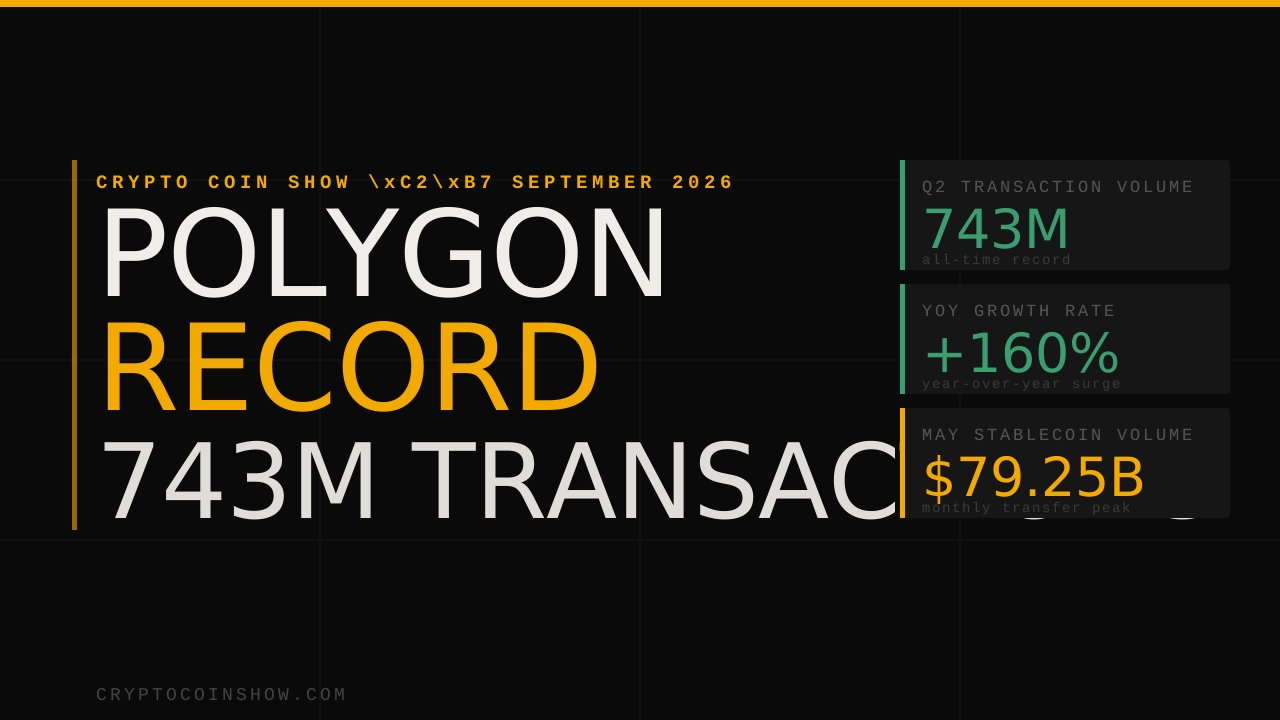
- 70.49 million POL tokens, 46.63 million from Binance’s $6.3 billion hack and 23.86 million from Polymarket’s breach, sit frozen in five attacker wallets worth approximately $6.5 million at October 29 pricing
- Polygon Labs’ validator support team published a formal proposal on the Polygon Community Forum on November 4, with governance approval required before any hard fork activation
- The fork would reset attacker wallet balances to zero at a predetermined block height and credit the same amounts to designated recovery addresses controlled by each victim
- 70.49M POL tokens frozen across five attacker-controlled addresses following two incidents
- $6.5M USD value of frozen POL at spot price recorded on October 29, 2026
- Nov 5 governance call date at 14:30 UTC to present hard fork proposal to validators
According to the formal proposal posted on the Polygon Community Forum, the network’s block producers already added the attacker wallets to a blocklist after both incidents occurred on October 29 and 30. However, that stopgap measure only prevents outbound transfers; it does not return the stolen assets. The blocklist also requires manual restarts whenever entries change, and the attacker has already attempted to move coins by offering validators cash payments to bypass the restrictions. A hard fork, a protocol-level change that rewrites the network’s rules, would permanently transfer all POL from the five frozen addresses to recovery wallets designated and verified by Binance and Polymarket.
Binance’s $6.3 billion hack dwarfs Polymarket breach by volume
The exchange made the incident public and requested an immediate blocklist, establishing the factual basis the proposal now relies on.
Polymarket’s breach, which occurred earlier on October 29, was smaller in absolute terms but no less disruptive for its user base. Attackers exploited a compromised external script to log in as active traders, leaving about 23.86 million POL across four wallets. Polymarket halted trading, then reopened it with order cancellations only before restoring full service.
The exchange has since offered refunds to affected users.
Block-list maintenance exposes limits of interim freeze approaches
Polygon’s validators deployed a blocklist as an emergency measure, but the mechanism reveals why permanent recovery requires a harder intervention. Each block producer must manually restart its software whenever a new address is added to the restricted list, a process that does not scale and leaves room for operator error or lapsed enforcement.
The attacker recognized this weakness: on October 30, just one day after the freeze took effect, the hacker submitted a transaction offering 219,450 POL (about $20,000) in fees as an apparent bribe, and separately approached validators requesting payment to unblock a transfer.
The frozen POL cannot be moved by current rules, but no mechanism exists to return it either without network consensus.
A hard fork eliminates this ambiguity by embedding the recovery directly into the protocol. At a predetermined block height, the new software would remove all POL from each attacker address and credit the identical amount to the respective recovery wallet. The specification preserves total supply and touches no other contracts or bridging infrastructure.
Polygon validators must now weigh precedent against one-time exception claims
The proposal explicitly frames the hard fork as an exceptional measure, stating in its rationale that it “should not be reproduced commonly.” The authors justify this narrow scope by citing five conditions: both incidents are publicly acknowledged by reputable victims with post-mortems, every block producer has already blocked the addresses, the sum involved is material, on-chain transfers trace the stolen funds to known attackers, and neither Binance nor Polymarket contests the legitimacy of the other’s claim.
Validators must decide whether to treat this as a one-off precedent or the first example of a new recovery pathway. The decision carries implications for future protocol governance: validators may face requests to fork for recovery following every major hack, or they may draw a line here and refuse all subsequent pleas.
The proposal does not address how Polygon would handle competing claims to the same frozen address, nor does it specify what happens if the attacker moves portions of their holdings before the fork activation block is chosen.
Polymarket and Binance must now prove control of their designated recovery addresses and confirm in writing that they consent to receive the funds. The team estimates two weeks to build and test the new software on Amoy, Polygon’s testnet, if governance approves the fork.
Activation requires a final affirmative governance vote, and both companies’ post-mortems must remain published and consistent with on-chain evidence at the time of signing off.
The CCS read. Institutional holders of POL face a dilution question: a hard fork erases balances but does not mint new tokens, so it preserves total supply but resets the attacker’s state to zero. For Binance and Polymarket traders, recovery hinges on whether their respective exchanges actually reimburse users from the returned funds or treat the hard fork as capital recovery for the exchange itself. The proposal names no timeline for distributing recovered POL to victims.
Polygon validators will vote on the proposal during the Protocol Governance Call on Thursday (November 5) at 14:30 UTC. Approval requires majority consensus among the validator set, and the proposal authors have indicated they will choose the activation block only after governance passes. Any hard fork would then require at least two weeks of client development and testnet rehearsal before deployment to mainnet, giving markets and ecosystem participants time to prepare for the balance reset.