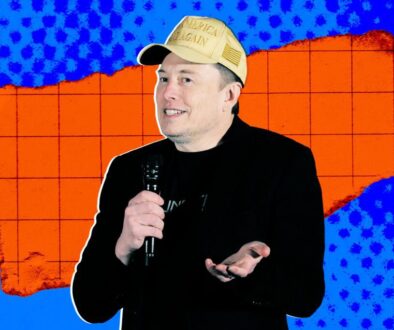
Elon Musk Compares His Work to Miracles Performed by Jesus Christ

# Elon Musk Claims Neuralink Breakthroughs Warrant “Jesus-Level” Comparison, Drawing Skepticism Over Unproven Claims
Elon Musk’s comparison of Neuralink’s brain-interface technology to miracles performed by Jesus Christ highlights a widening gap between his public claims and demonstrated capabilities, a pattern institutional investors should track as they assess the credibility and execution risk of his ventures. The statement underscores ongoing concerns about how Musk positions emerging technologies relative to their actual market readiness and regulatory status.
- Musk told an Israel event audience that Neuralink’s restoration capabilities represent “Jesus-level technologies” worthy of extraordinary recognition.
- Neuralink’s current brain implant functions comparably to existing market alternatives, enabling computing tasks via mental cues only.
- Company has yet to demonstrate breakthrough claims around restoring vision to the blind or movement to the severely paralyzed.
- Jesus-level Musk’s stated benchmark for Neuralink technology versus demonstrated Biblical miracles
- Tetraplegic Patient population Musk highlighted as proof point for Neuralink’s transformative potential
- Current State of brain implant capability: mental computing tasks, not sensory restoration
Elon Musk, speaking via video link at an event in Israel this week, invoked religious hyperbole to defend his brain-computer interface company Neuralink, claiming its technology deserves credit equivalent to divine intervention. “Restoring control of people who are tetraplegics and restoring sight I think are pretty big deals,” Musk said.
“They’re sort of what I might call Jesus-level technologies.” The remark crystallizes a recurring pattern across Musk’s ventures: the elevation of speculative roadmaps into reality-based narratives, and the conflation of future possibility with present achievement, a distinction institutional investors have grown increasingly critical of as they weigh exposure to his companies.
Neuralink’s Actual Capability Gap Between Marketing and Demonstrated Function
Neuralink’s current implant operates as a brain-computer interface that translates neural signals into digital commands, enabling users to perform routine computing tasks such as typing and moving a mouse cursor using only mental attention. The technology is functional and represents meaningful progress in brain-interface engineering.
However, it sits within a competitive landscape of existing alternatives offering comparable functionality, not a revolutionary singleton justifying the theological framing Musk applied to it.
The distinction matters sharply for investors evaluating Musk’s track record of technical claims. Musk has publicly discussed Neuralink’s theoretical future capacity to restore vision to the blind and restore voluntary motor control to paralyzed individuals.
To date, the company has produced no peer-reviewed evidence of either capability in human subjects or animal models, and has not published a clear technical timeline or clinical protocol for achieving them.
This mirrors a broader pattern: Musk’s statements about his ventures frequently position emerging or speculative technologies as mature breakthroughs, compressing the distance between engineering prototypes and market-ready products in public narrative.
For institutional allocators assessing Neuralink’s runway, regulatory risk, and capital efficiency, the gap between Musk’s framing and demonstrated milestones represents a material credibility concern.
Regulatory and Clinical Reality Check on Neuralink’s Path to Market Approval
Neuralink received FDA approval for human trials in May 2023, a regulatory milestone that validated the safety and engineering sufficiency of the implant for initial human testing. The company subsequently implanted its first device in a human patient in January 2024, marking genuine clinical progress.
However, FDA approval for early-stage human trials differs fundamentally from market clearance or proof of the transformative outcomes Musk publicly invokes.
The company operates under strict post-market surveillance protocols and will require substantial additional clinical data, typically years of follow-up study, before making claims about restoring sight, restoring motor control in paralyzed patients, or expanding indications beyond the narrow scope of initial trial protocols. Religious metaphor does not accelerate this timeline.
The comparison to Jesus-level miracles also elides the fact that miraculous healing, in traditional theological framing, occurs instantaneously and without apparatus or training; Neuralink’s technology requires surgical implantation, ongoing calibration, training for users, and hardware maintenance.
Institutional investors in Musk-led ventures have learned to distinguish between his personal conviction in long-term vision and the regulatory, commercial, and technical milestones required to realize it.
His historical tendency to compress timelines and overstate near-term capability, evident across Tesla’s full-self-driving claims, Starship development projections, and now Neuralink’s medical impact, creates risk for capital allocation decisions and can affect market pricing of both private equity rounds and public equity exposure.
Pattern of Inflated Claims Raising Questions About Due Diligence Standards Across Musk Holdings
This is not the first instance of Musk employing religious or mythic framing to describe his work. The pattern is consistent across decades of public statements: the tendency to cast technological development in apocalyptic or salvific terms, to position his personal role as singular and indispensable, and to describe near-term achievements in language reserved for transformational breakthroughs.
For institutional investors with exposure to Tesla, SpaceX, or Neuralink via direct equity, venture capital funds, or cross-holdings, the Neuralink comparison raises a procedural question: what internal governance or board-level friction exists to fact-check or constrain Musk’s public claims before they are made?
Does independent board oversight flag material misstatements about technology readiness or clinical capability? Do investor relations teams flag reputational risk from religious hyperbole in contexts where regulatory bodies and clinical trial participants are evaluating the company’s actual credibility and scientific integrity?
The absence of visible internal resistance to these statements, or transparency about it if it exists, suggests either weak board independence or a calculated decision that Musk’s personal brand and media dominance are valuable enough to tolerate credibility wear across his portfolio.
Neither conclusion provides comfort to institutional allocators seeking predictable, grounded corporate leadership in high-stakes ventures like human medical implants.
Neuralink’s Clinical Trial Path and Investor Attention to Regulatory Milestones
Neuralink has begun enrolling patients in its pivotal clinical trial, with initial implant recipients participating in ongoing assessment protocols. The company has publicly committed to publishing peer-reviewed data on safety and functional outcomes, a critical step toward credibility with both the medical community and potential commercial partners.
This timeline, likely 2 to 3 years for meaningful efficacy data, is markedly longer than Musk’s theological framing suggests.
Institutional investors tracking the Neuralink path should monitor for specific, measurable trial outcomes: the durability of implants over time, rates of infection or neural rejection, the stability of neural signal recording quality, and user satisfaction with the interface.
These are the metrics that will determine whether Neuralink can scale beyond boutique medical cases and eventually compete in broader markets like restoration of motor control or sensory function.
The central question for investors remains whether Neuralink can translate regulatory approval and early clinical success into independently validated medical breakthroughs, or whether Musk’s public statements will continue to position speculative futures as imminent realities. The company’s next critical milestone is publication of peer-reviewed safety and efficacy data from its ongoing human trials, likely in 2025 or 2026, which will either substantiate or further undermine Musk’s claims about the technology’s transformative potential.
Original reporting: futurism.com