DOJ Criminal Division reviews Binance’s compliance with $4.3 billion settlement
The US Department of Justice is examining whether Binance violated the terms of the $4.3 billion settlement it signed in 2023, a review disclosed by the Criminal Division’s own chief rather than by Binance. For institutional investors weighing counterparty exposure to the exchange, the inquiry raises the prospect that sanctions-related laundering allegations could trigger fresh penalties on top of the largest crypto enforcement settlement on record.
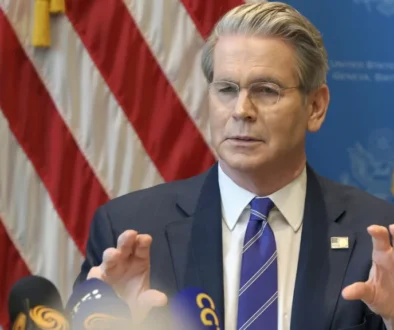
- Tysen Duva, head of DOJ’s Criminal Division, confirmed to Bloomberg on October 9 that officials are reviewing Binance’s compliance with its 2023 deal.
- Prosecutors in Manhattan filed a civil forfeiture complaint in September seeking $61 million in crypto tied to Binance accounts.
- The Southern District of New York alleges a Chinese-linked network moved more than $1.5 billion in Iranian oil proceeds through those accounts.
- $4.3B penalty Binance agreed to pay in its 2023 guilty plea
- $61M in crypto SDNY now seeks to forfeit from the oil network
- $1.5B total allegedly laundered through the accounts DOJ cites
Tysen Duva, head of the Justice Department’s Criminal Division, said in an interview this week that officials are reviewing whether Binance Holdings Ltd. breached its 2023 settlement, according to Bloomberg Law. Duva declined to detail specifics and did not say Binance is in violation of the agreement, under which the exchange pleaded guilty to violating US banking rules, paid $4.3 billion and accepted expanded compliance controls.
The review follows a Manhattan prosecution last month that put Binance accounts at the center of an Iran sanctions-evasion case.
Sean Buckley’s SDNY Office Moves to Forfeit $61 Million From Iran Oil Network
The US Attorney’s Office for the Southern District of New York filed a civil forfeiture complaint in September 2026 seeking roughly $61 million in cryptocurrency, a type of lawsuit that lets the government seize assets tied to alleged crimes without a criminal conviction. The complaint names two Chinese companies, Blessed Trust and Hexa Whale, that allegedly used trading accounts at Binance to launder proceeds from black-market sales of sanctioned Iranian crude oil.
As alleged in the complaint filed today, the Government of Iran used a network of cryptocurrency actors in China and elsewhere to launder more than $1.5 billion in illicit oil money intended to benefit the Iranian military and the terror-designated IRGC.
U.S. Attorney’s Office for the Southern District of New York
Blessed Trust presented itself as a wealth-management firm and Hexa Whale as a commodities broker, but prosecutors say both converted fiat into crypto for clients in China’s petroleum sector and routed funds toward the Iranian government and its Islamic Revolutionary Guard Corps.
Binance has said it investigated and removed both companies, and no wrongdoing is alleged against Binance or its employees in the SDNY complaint.
A separate case, first detailed by BeInCrypto, involves financier Babak Zanjani, whose accounts the Wall Street Journal reported processed roughly $850 million through Binance.
Ericsson’s $206.7 Million Fine Shows What a Breached Deal Can Cost
Companies that violated US settlement terms have faced outcomes ranging from added fines to extended monitorships. Telecoms firm Ericsson admitted breaching its deferred-prosecution agreement in 2023, pleaded guilty, paid an additional $206.7 million on top of its original penalty, and had its compliance monitor’s term extended.
Standard Chartered agreed to more than $1 billion in global penalties in 2019 over historical Iran sanctions violations alongside an extended prosecution agreement, a sum nearly five times Ericsson’s follow-on fine.
Boeing presents a contrasting outcome: DOJ found in 2024 that the manufacturer breached its agreement, yet Boeing later secured a new non-prosecution deal and had its criminal charge dismissed in 2025.
Binance’s situation differs from all three in one respect, since it already pleaded guilty in 2023 rather than operating under a deferred-prosecution agreement, which narrows the menu of outcomes prosecutors could pursue.
What DOJ Has Not Said About Which Cases Count
DOJ has not identified which of the three episodes, if any, fall within the scope of its settlement review, and the forfeiture complaint itself alleges no misconduct by Binance. Broader reporting has suggested prosecutors are also examining whether the exchange knowingly permitted prohibited trades, a question that overlaps with both the Zanjani accounts and the Blessed Trust network described in the Bloomberg Law coverage of the broader probe.
The outcome will likely turn on what Binance knew about the suspicious activity and how fast it acted once flagged, the same standard that shaped the Ericsson and Boeing precedents.
The CCS read. We read this as a counterparty-risk event more than a political one. Institutional desks that treat Binance as a liquidity venue will now have to price in a live settlement-compliance review alongside existing sanctions exposure, a different calculus than pricing in a closed $4.3 billion case. Expect custody and prime-broker due diligence teams to ask for compliance-monitor updates before renewing exchange credit lines.
DOJ has given no timeline for concluding the review, and Duva declined to say whether any findings would trigger renegotiation of the 2023 agreement, additional penalties, or a referral for criminal charges. The next concrete marker will be whether prosecutors tie the SDNY forfeiture case or the Zanjani accounts explicitly to the settlement review, a step they have not yet taken.