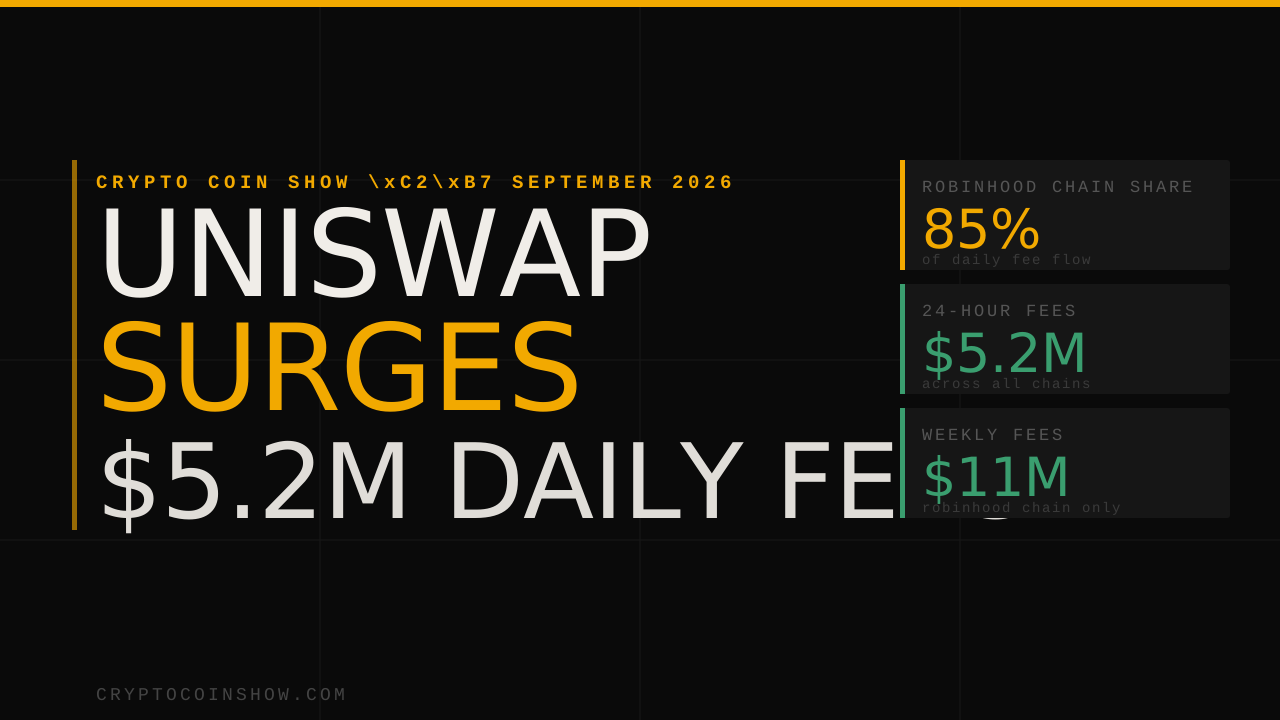
Uniswap’s founder, Hayden Adams, has shared that the company collects roughly $5.2 million in fees per day. Data from DefiLlama backs the figure at $5.16 million over the past 24 hours.
The surge is largely thanks to Robinhood’s two-week-old blockchain, which now accounts for most of that fee flow. Meanwhile, a key governance vote is underway that could extend UNI token burns to v4 pools.
Why is Robinhood Chain so important for Uniswap?
Uniswap’s CEO, Hayden Adams, has revealed through a post on X that it is raking in over $5 million in fees every day, with Robinhood’s new blockchain, which launched on July 1, accounting for most of that money.
Of the $5.16 million in fees Uniswap collected over 24 hours, DefiLlama attributes $4.38 million to Robinhood Chain. In comparison, Ethereum, which used to be the protocol’s core market, contributed only about $296,000. Base was close behind at roughly $288,000.
Robinhood Chain, built on Arbitrum’s technology, went live on July 1. The trading activity on the blockchain has exploded since then, with more than 220,000 daily traders and cumulative volume hitting $1 billion in just nine days.
For UNI token holders, this could mean more token burns if a current “snapshot” vote regarding extending its fee-and-burn mechanism to v4 pools passes.
Uniswap was integrated as the main automated market maker from day one. Its v2, v3, v4, and UniswapX products were all deployed at launch. Over seven days, Robinhood Chain accounts for $10.98 million of Uniswap’s $20.1 million total weekly fees.
UNI is trading around $3.62, up roughly 35% from its early-July low of about $2.70. However, it remains about 92% below its all-time high of $44.97 reached in May 2021.
Across all 47 chains it operates on, Uniswap logged $2.112 billion in 24-hour DEX volume, more than five times the next-largest exchange, PancakeSwap.
The company’s CEO, Hayden Adams, posted on X that the protocol was out-earning every crypto project except the stablecoin issuers behind USDC and USDT.
However, it is important to note that these “fees” are not the same as protocol income. DefiLlama shows Uniswap’s 24-hour revenue at just $73,454. The bulk of the $5.2 million flows to liquidity providers, not to the treasury or token holders directly.
How will the snapshot vote affect users?
Cryptopolitan previously reported that Uniswap Labs is running a “Snapshot” vote from July 7th to the 12th. The vote is regarding whether or not to extend its fee-and-burn mechanism to v4 pools.
This mechanism is part of the UNIfication program approved in December 2025 that requires anyone who wants to claim fees from the protocol to first burn an equivalent value of UNI tokens. The burned tokens are permanently removed from circulation.
Early Snapshot results indicate over 93% approval, with about 13.9 million UNI votes in favor. If passed, binding on-chain votes are expected the week of July 13.
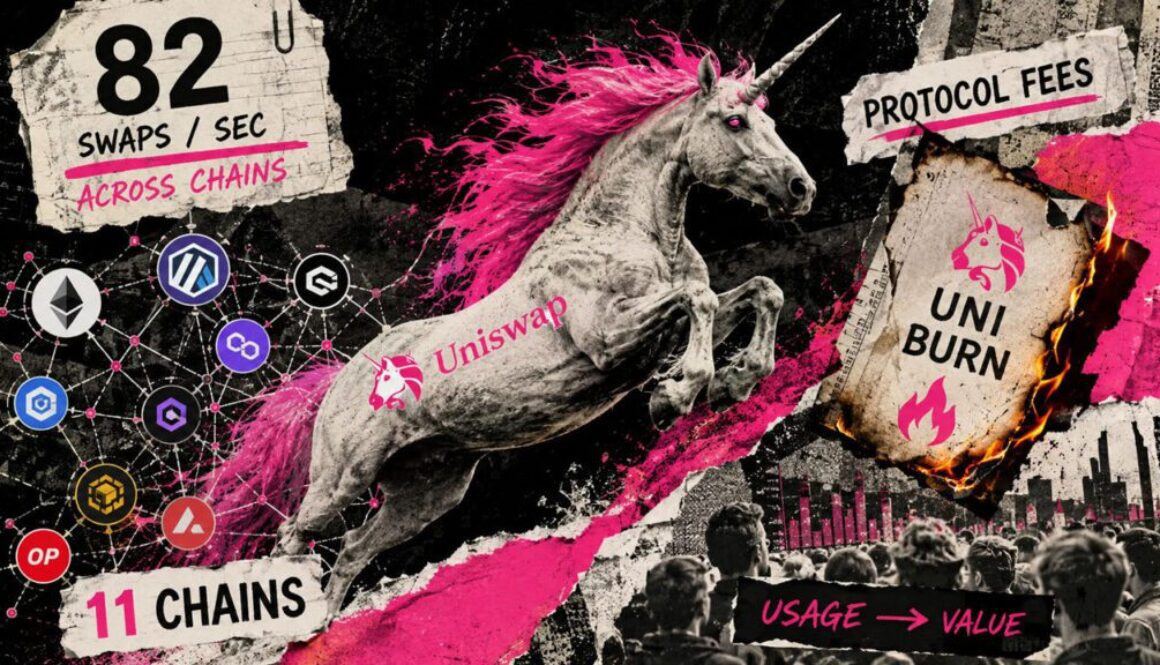
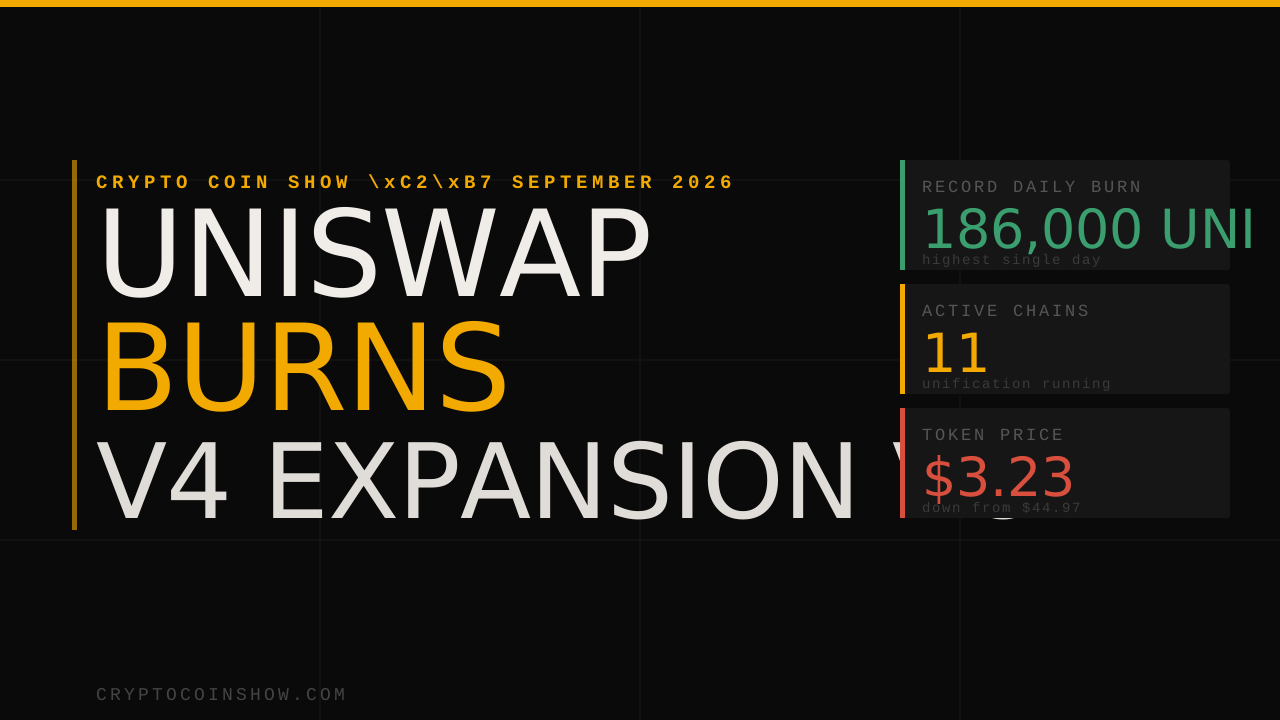
The proposal would activate fees on three families of v4 pools across 11 different blockchain networks, including Ethereum, Arbitrum, and Polygon. This expansion would broaden the burn engine to its largest scope yet.
Uniswap holds a record of burning 186,000 UNI in a single day last month, surpassing the previous daily high of 134,000.
However, liquidity providers have warned that the v4 fee switch could drive them away. Protocol fees are taken from the amount that LPs earn, so fee-enabled pools will offer slightly lower returns than those with zero fees.
Don’t just read crypto news. Understand it. Subscribe to our newsletter. It’s free.
Uniswap Labs asked holders of the UNI token to approve protocol fees on a portion of Uniswap v4 pools for the next stage of the UNIfication burn program that already runs on 11 chains.
The company will hold a snapshot vote that will run for five days beginning July 7 and closing July 12, with a binding on-chain vote to follow the week of July 13.
How will Uniswap add v4 to UNIfication?
Uniswap Labs opened a snapshot vote today, July 7, asking holders of the UNI token to add v4 pools to its fee and burn program that already runs on 11 chains, namely Ethereum, Arbitrum, Base, Celo, OP Mainnet, Soneium, X Layer, Worldchain, Zora, BNB Chain, and Polygon.
The vote will run for five days, until July 12, with on-chain votes starting the week of July 13.
When traders use Uniswap, they pay fees— some of which go to the protocol. To claim those fees, a searcher has to burn an equal value of UNI, and the burned tokens are bridged to Ethereum and sent to the `0xdead` address, gone for good.
With the UNI burned and the total supply reduced, the token goes up in value.
UNI token holders enjoy this setup, but liquidity providers, the people who actually supply the capital pools that trade against, do not. Since they supply the money that traders use, when the fee switch turns on, they lose a part of their earnings.
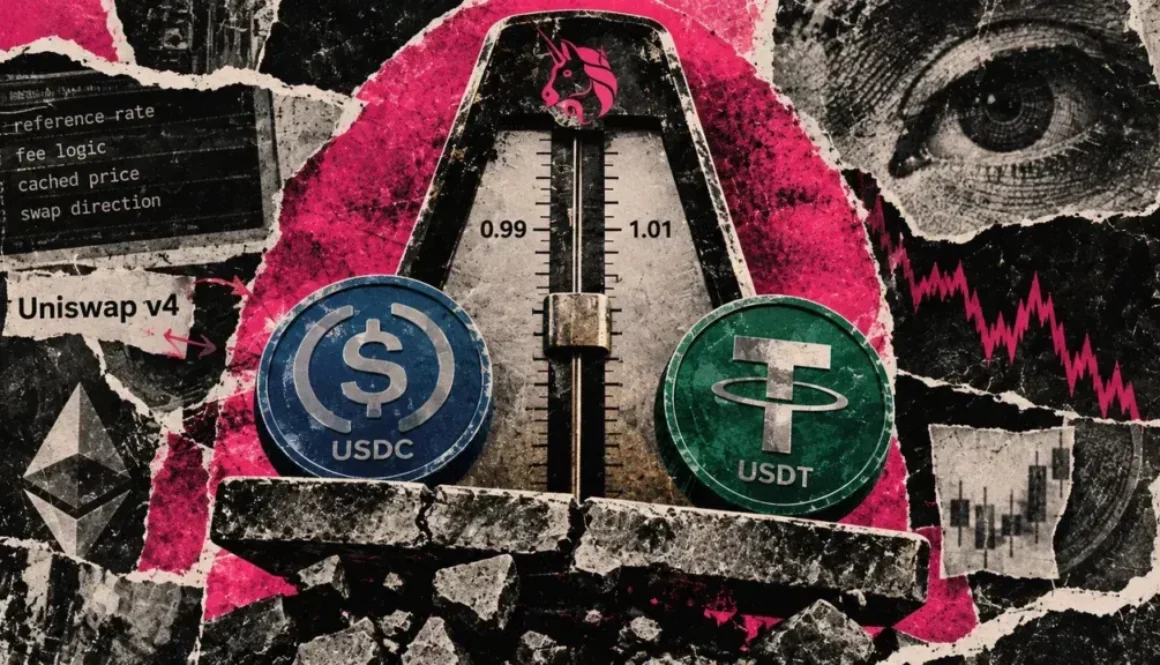
Because v4 pools work differently, the v4 version is harder to add than older versions. They can change their fees block by block, so the proposal uses a new system with two contracts. One contract figures out the fee while the other collects it and sends it to the right place.
The snapshot vote would affect three types of v4 pools: pools without hooks, pools made through auctions, and pools using aggregator hooks (pools that bring in outside money) The fee is 25 times higher for aggregator hooks, letting the protocol charge more than the normal 10 basis point limit. On the Base network, the fee is 3 basis points. On other networks, it is 10.
Guillaume Lambert, who runs an options protocol called Panoptic, said taxing v4 could push liquidity providers away. He added that they would have nowhere left for them to go, since v2 and v3 are also taxed, and that could kill the protocol. In his view, the v4 fee puts token holders above the LPs who keep the pools working.
Uniswap burned a record 186,000 UNI in one day last month, above the 134,000 daily high Cryptopolitan reported on June 5.
UNI traded at $3.23 on July 7 with a market cap of about $2 billion, far below its peak of $44.97 from May 2021. However, Uniswap keeps growing. It launched on Robinhood Chain, a new layer 2 network, around July 1. Uniswap put v2, v3, v4, and UniswapX on it from day one and did over $250 million in volume there in less than a week.
Why is v4 different from older versions?
v2 and v3 pools have simple fixed fees, so Uniswap can just set one rate for each pool and collect fees the same way every time, but V4 has a “hook” system. Hooks let developers add extra features to pools, such as changing fees. A pool can have many different fee tiers. It can even change its fee from one block to the next.
However, the proposal includes the provision of a V4 Fee Controller to ease operations. This fee controller system has two parts. The first part is the V4FeePolicy contract, which decides the fee for any pool. It uses rules that Uniswap governance sets.
The second part is the V4FeeAdapter contract that makes sure the rules are followed. It can also change the fee for specific pools if needed, and then it sends the fees to the TokenJar contract.
The system is set up so that governance can change the rules later without having to rebuild everything. They can just swap out the policy contract for a new one.
Don’t just read crypto news. Understand it. Subscribe to our newsletter. It’s free.
Uniswap (UNI) might reach as high as $3.51 in 2026.
Estimates for Uniswap’s average price in 2028 range from $5.10 to $5.87.
UNI’s average price in 2032 will be $11.64, with a maximum price of $12.4.
Uniswap, a DeFi protocol founded in 2018 by former mechanical engineer Hayden Adams. The Uniswap exchange is a 100% on-chain automated market maker (AMM) protocol on the Ethereum blockchain. The AMM allows DeFi users to swap ether (ETH) for any ERC-20 token without intermediaries, solving many liquidity problems most exchanges face. Uniswap’s unique features and utility make its governance token, UNI, attractive to traders and investors.
Will UNI reach $100? How high can UNI go in five years? Let’s take a look at Uniswap’s technical analysis and price prediction to provide answers to these queries.
Overview
Cryptocurrency
Uniswap
Abbreviation
UNI
Current Price
$2.43 (-0.95%)
Market Cap
$1.51B
Trading Volume (24-hour)
$140.38M
Circulating Supply
622.67M UNI
All-time High
$44.97 May 03, 2021
All-time Low
$1.03 Sep 17, 2020
24-hour High
$2.49
24-hour Low
$2.33
Uniswap price prediction: Technical analysis
Metric
Value
Price Prediction
$2.20 (-7.77%)
Fear & Greed Index
12 (Extreme Fear)
Market Sentiment
Bearish
Volatility
10.61%
Green Days
9/30 (30%)
50-Day SMA
$3.32
200-Day SMA
$4.26
14-Day RSI
21.10
Uniswap price analysis: UNI price plunges toward $2.43
TL;DR Breakdown:
Uniswap price analysis shows a downward trend toward $2.43.
The altcoin market is correcting today and UNI token has remained down 0.95% for the past 24 hours.
UNI coin has support around the $2.28 level.
On June 6, 2026, Uniswap (UNI) price analysis reveals a bearish daily trend. The altcoin’s price decreased to $2.43, reporting an 0.95% loss over the past 24 hours. From a macro perspective, the token is facing overhead selling pressure even around local lows, which aligns with a larger bearish structure. No support from the buyers’ side has been observed yet, but immediate support for UNI is present at $2.28.
Uniswap price analysis on the daily time frame
The one-day price chart for Uniswap confirms a downward trend in the market. The UNI/USD pair is hovering near the $2.43 level as the selling pressure resurges. The bearish push has significantly decreased the price, as red candlesticks on the chart signify the intraday selling momentum.
The distance between the Bollinger Bands highlights the intensity of volatility. This distance is considerable, leading to high volatility. Moreover, the upper limit of the Bollinger Bands indicator, indicating resistance, has shifted to $3.82, whereby its lower limit, indicating a broken support, has moved to $2.41.
While many view it as a simple momentum gauge, the RSI acts as a critical price prediction tool when identifying bullish/bearish divergences that precede a trend reversal. The Relative Strength Index (RSI) is trending in the oversold region. The indicator’s value was recorded at 20 today. The downward curve on the RSI signifies a bearish trend, and more instability can be expected if the selling momentum intensifies and the indicator’s score decreases further. However, the indicator can give a buy call any time, as the token is already undervalued.
Uniswap price analysis on the 4-hour chart
The four-hour technical analysis of Uniswap shows that the price slippage has stopped, and it is now sustaining above the support of $2.28. This is evidenced by its price hovering near $2.43 over the past four hours. UNI may decrease further in the coming hours if traders continue selling more, as the likelihood remains high. Moreover, high volatility signifies a higher chance of a reversal or further price depreciation.
The Bollinger Bands are covering more area, leading to increased volatility levels. This high volatility signals greater market unpredictability. The upper Bollinger Band has shifted to $2.92, indicating the resistance point. Conversely, the lower Bollinger Band has moved to $2.28, establishing the support point.
The Relative Strength Index (RSI) indicator’s value has slightly increased to 28 over the past few hours, with its curve pointing upwards, as the indicator is still trending in the oversold region. This condition suggests an imbalanced trading setup on the four-hour chart. However, further depreciation in the coin’s value is possible only if sellers keep crushing support zones in the next few hours.
Uniswap technical indicators: Levels and action
Daily simple moving average
Period
Value ($)
Action
SMA 3
2.63
SELL
SMA 5
2.73
SELL
SMA 10
2.88
SELL
SMA 21
3.18
SELL
SMA 50
3.32
SELL
SMA 100
3.44
SELL
SMA 200
4.26
SELL
Daily exponential moving average
Period
Value ($)
Action
EMA 3
2.60
SELL
EMA 5
2.69
SELL
EMA 10
2.86
SELL
EMA 21
3.08
SELL
EMA 50
3.27
SELL
EMA 100
3.55
SELL
EMA 200
4.28
SELL
What to expect from Uniswap price analysis next?
Uniswap price analysis suggests a bearish outlook for current market trends. The coin’s price is decreasing in the current session, as the coin shows 0.95% losses over the past 24 hours, following a bearish streak. If sellers maintain their momentum, UNI’s price could decrease toward the $2.3 range.
Is Uniswap a good investment?
Uniswap is a decentralized cryptocurrency exchange (DEX) with massive potential. Unlike traditional exchanges, Uniswap uses an automated market-matching (AMM) system. Uniswap has shown good performance over time and is expected to reach the $4.77 level by 2027 and above $12.4 by 2032.
Why is UNI down?
The broader crypto market is experiencing negative market sentiment today. Most of the top cryptocurrencies are shedding value, and so is the Uniswap token.
How much will Uniswap be worth in 2026?
The maximum UNI can reach in 2026 is $3.51, while the average price is expected to be around $2.56.
Will UNI reach $10?
Uniswap is trading just above the $2 range, down from $18.59, which it achieved in December last year. The current resistance levels are $3.16 and $3.82; a break above them can lead to $11. If UNI gets more support, $10 can be achieved by the year 2031.
Will UNI reach $50?
In May 2021, UNI touched $44.9, its all-time high, which is not much below $50. This possibility can arise again if the broader cryptocurrency market turns bullish on political and economic factors. However, this is not investment advice, and one should seek independent professional consultation before making any investment decision.
Can Uniswap reach $100 dollars?
According to the Uniswap price prediction, UNI is not expected to reach near $100 after 2032. Though this is a five-year time frame, it’s worth waiting, as the coin’s value will increase but may not reach $100.
Does UNI have a good long-term Future?
UNI is the token of the famous Uniswap decentralized exchange. It has a wide user base and good liquidity, so the coin has good prospects. Market analysts expect UNI’s price to reach $12.4 by the end of 2032, substantially higher than its current price.
Recent news/opinions on Uniswap Network
Uniswap Labs announced that an in-app wallet is now live on the Uniswap web app. Users can now sign up for a new account with TouchID, FaceID, or a passkey without any password or seed phrase.
In-App Wallet is now live on Uniswap Web App
Spin up a new account in seconds with FaceID, TouchID, or a passkey
For June 2026, UNI shows an ability to swing wildly; the anticipated minimum value of Uniswap is $2.01. The price may jump to $3.12, but the average trading price of $2.45 is expected throughout the month.
Month
Potential Low ($)
Average Price ($)
Potential High ($)
June 2026
$2.01
$2.45
$3.12
Uniswap price prediction 2026
For 2026, UNI’s price might reach a maximum of $3.51. The minimum price is expected to be $1.91, with the year’s average trading price estimated at around $2.56.
Year
Potential Low ($)
Average Price ($)
Potential High ($)
2026
$1.91
$2.56
$3.51
Uniswap price predictions for 2027-2032
Year
Potential Low
Average Price
Potential High
2027
$3.87
$4.12
$4.77
2028
$5.10
$5.46
$5.87
2029
$6.34
$6.89
$7.38
2030
$7.96
$8.61
$9.30
2031
$9.55
$9.85
$10.70
2032
$11.14
$11.64
$12.4
UNI price prediction 2027
For 2027, Uniswap’s price is projected to have a minimum value of $3.87. The price could soar up to $4.77, with an average of $4.12.
Uniswap (UNI) price prediction 2028
In 2028, the price of UNI is anticipated to hit a minimum of $5.10. The maximum price might reach $5.87, with an average trading value of $5.46.
Uniswap price prediction 2029
The 2029 forecast for Uniswap predicts a minimum price of Uniswap to be $6.34 and a maximum of $7.38, with an average price of $6.89, many folds higher than the current Uniswap price.
Uniswap price forecast 2030
The Uniswap price forecast for 2030 shows that the coin is expected to start at a minimum UNI price of $7.96 and climb to $9.30 while averaging $8.61.
Uniswap (UNI) price prediction 2031
For the 2031 Uniswap coin price prediction, the minimum projected price for Uniswap is $9.55. Traders can expect a maximum price of $10.70 and an average price of $9.85, considering the future price movements.
Uniswap price prediction 2032
For the 2032 Uniswap forecast, it is projected to have a minimum price of $11.14. The price could soar up to $12.4, with an average of $11.64.
UNI market price prediction: Analysts’ UNI price forecast
Firm Name
2026
2027
DigitalCoinPrice
$3.81
$4.23
Coincodex
$1.94
$2.42
Cryptopolitan’s Uniswap price prediction
Our price prediction for Uniswap shows that UNI will reach a high of $3.51 near the end of 2026. In 2027, it will trade between an expected range of $3.87 and $4.77. In 2032, UNI will range between $11.14 and $12.4, with an average price of $11.64. It is important to consider that the predictions are not investment advice. Professional consultation is suggested, or you can carry out your own research.
Uniswap historic price sentiment
Uniswap price history. Source: Coinmarketcap
Uniswap (UNI) token launched on September 17, 2020, starting at $3.00. It quickly rose to $7.00 before reaching an all-time low of $1.03 (CoinGecko) or $0.4190 (CoinMarketCap) on the same day. UNI ended the year at $5.00 after a gradual recovery during the 2020 bull run.
In 2021, UNI surged 400% in January to $20. By March, it hit $28; on May 3, it reached an all-time high (ATH) of $44.93, skyrocketing its market capitalization. It ended the year near $18 after a significant decline.
Throughout 2022, UNI continued to decline as the cryptocurrency prices kept falling, dropping to around $5.5 by June as the bearish trend persisted.
The crypto market rebounded in 2023, and UNI saw bullish momentum, peaking at $7.77 on December 28.
UNI began 2024 on a downtrend, briefly recovering to $15 by March 6. After mid-May, it faced selling pressure, falling to $0.14 by July 31, as UNI holders kept selling assets.
It stabilized in August at around $5 and traded above $6 at the start of September.
In October, UNI reached a peak of $8, and November saw a peak price of $13.58. In December, UNI soared to $18.60.
In February 2025, Uniswap was trading near $12, which was below January price levels of $15.
In March, it dipped further down, reaching the $7.4 range, and the descent continued into April with a price of $4.7. However, some bullish price action was observed in May, when UNI jumped to $7.5 and finally peaked at $11.74 in July.
August proved a bullish month as UNI/USD reached a yearly high price of $12.31, while it remained in a downtrend in September and October.
UNI traded near the $5.7 mark in early November. After surging toward $10 in mid-November, the price of UNI declined again toward $5.5 in early December.
At the start of January 2026, UNI was trending near the $5.8 level, but in March its price decreased to $3.79.
In April, UNI was trading just above the $3 level, and it was maintaining that level until the end of May, but it decreased to $2.3 in June, as the current market sentiment is bearish.
Aragon debuts a new framework and live dashboard that make token ownership verifiable, launching with Uniswap, Curve, Lido, Aerodrome, and other leading protocols as the first cohort to set a new standard for onchain transparency and accountability.
Tuesday 04 February, Zug, Switzerland — Aragon today announced the public launch of the Ownership Token Framework, a new evidence-based standard for evaluating crypto tokens on fundamentals rather than narrative. Alongside the framework, Aragon launched the Ownership Token Dashboard, a public product designed to make token ownership auditable in practice.
Addressing a Market-Wide Problem
The launch addresses one of the crypto industry’s most persistent problems: tokens are widely traded and invested in, yet there is no shared standard for assessing what a token actually owns or can credibly claim. As a result, many tokens trade on assumptions about governance influence, future fee capture, or alignment with a protocol’s success, without clear evidence that tokenholders have enforceable rights over the assets and value flows that determine economic outcomes.
Where those rights are weak, discretionary, or bypassable, markets typically discount tokens accordingly. According to a recent CoinGecko study, 11.6 million crypto tokens failed in 2025 alone, accounting for roughly 86% of all recorded project failures between 2021 and 2025—a clear signal that many tokens in the market aren’t sustaining long-term viability.
The Ownership Token Framework is designed to make those realities transparent. Rather than treating “governance” as a proxy for ownership, the framework evaluates whether tokenholders have programmatic, enforceable control over economically material decisions and value flows. It relies on primary evidence, including deployed contracts, execution and upgrade paths, value routing mechanisms, and verifiable offchain dependencies that may reinforce or undermine tokenholder rights.
Framework Overview
“Smart contracts make it possible to encode and enforce economic rights directly in code, but those rights only exist where systems actually implement that control plane,” said Anthony Leutenegger, CEO at Aragon. “When ownership is discretionary or unverifiable, tokenholder exposure becomes a matter of trust. The framework is built to educate market participants on the hard power a token has, and furthermore, point out offchain dependencies that may create misaligned incentives that could negatively impact a token’s value.”
The framework evaluates tokens across five core dimensions:
Onchain Control: Whether tokenholders are the ultimate authority over economically material actions, including upgrades, parameter changes, emergency controls, and supply modification.
Value Accrual: Whether a live, rule-based mechanism produces observable value flows or token-scarcity effects that accrue to tokenholders.
Verifiability: Whether economically material code and deployments can be independently verified from primary onchain evidence.
Token Distribution: Whether ownership and effective voting power are meaningfully distributed rather than concentrated in common-control blocs.
Offchain Dependencies: Whether incentives are aligned or misaligned offchain to ensure value and security isn’t leaked away from the token.
The Ownership Token Dashboard
Alongside the framework, Aragon launched the Ownership Token Dashboard, a live product that operationalizes the methodology and presents structured ownership profiles for real protocols. The dashboard applies the framework using continuously updated, publicly verifiable onchain and offchain data, allowing users to inspect how ownership claims map to deployed systems in practice.
The initial launch includes profiles for UNI, CRV, LDO, AERO, and AAVE, with more tokens set to be released soon. These profiles were developed in collaboration with the listed token’s respective protocols, with each project engaging directly on scope, evidence, and accuracy of representation. This collaborative process ensures that listings reflect validated deployments and governance structures rather than third-party interpretation or speculation.
Each dashboard profile links directly to the underlying evidence supporting its assessment, including deployed contracts, governance execution paths, and relevant offchain structures where applicable. New token listings will be added on a rolling basis, with the dashboard designed to evolve into a living reference for token fundamentals as the standard expands.
Industry Validation
The Ownership Token Framework and dashboard were developed in collaboration with participating protocol teams and reviewed by governance, legal, and policy experts focused on onchain systems and digital asset structures.
“Aragon’s framework provides much needed transparency for network tokens. It shows who still has power over a token after it launches, what that means for users and investors, and what risks come with those hidden dependencies,” said Miles Jennings, General Counsel at a16z crypto.
About Aragon
Aragon creates the systems that help networks run securely at scale, from how they allocate capital to how they make decisions and manage ownership. Founded in 2017, Aragon is a leading onchain infrastructure provider powering governance, capital allocation, and protocol ownership for some of the largest networks in crypto. Its modular frameworks are used to manage tens of billions of dollars in assets and support high-profile implementations including Lido, Curve, Polygon, Taiko, Morpho, Katana, and others.
At the core of the Aragon stack is Aragon OSx, a modular execution and permissions layer that separates decision-making from execution, allowing governance and ownership systems to evolve without risky migrations. On top of this foundation, Aragon provides products and services for tokenomics design, incentive and capital distribution, treasury management, and secure, upgradeable governance.
Aragon emphasizes security, modularity, and long-term resilience. Its infrastructure has operated for more than eight years without security incidents and is designed to help networks coordinate value, adapt over time, and build systems worth owning.