PerpetualCow pledges refunds after $13.51M XMR1 token collapse on Hyperliquid
Bitquery’s on-chain investigation found that 420 buyers paid $13.51 million for a Hyperliquid token called XMR1 as its price collapsed from roughly $500 to $1 in thirty minutes on Friday (November 20, 2026). The collapse has raised the stakes for Wagyu operator PerpetualCow’s pledge to personally refund everyone who lost money.
- Bitquery found the attacker’s address received its first ETH from the mixer Tornado Cash eight minutes before setup.
- The deployer account moved 5.2 million XMR1 tokens out in three transfers between 04:46 and 05:16 UTC.
- Wagyu’s bridge remains offline and PerpetualCow has given no timetable or proof of a single completed refund.
- $13.51M raised from 420 buyers during the XMR1 sell-off
- 99.8% price drop from about $500 to $1 inside half an hour
- 7,348 ETH still sitting unmoved in three wallets as of Bitquery’s last check
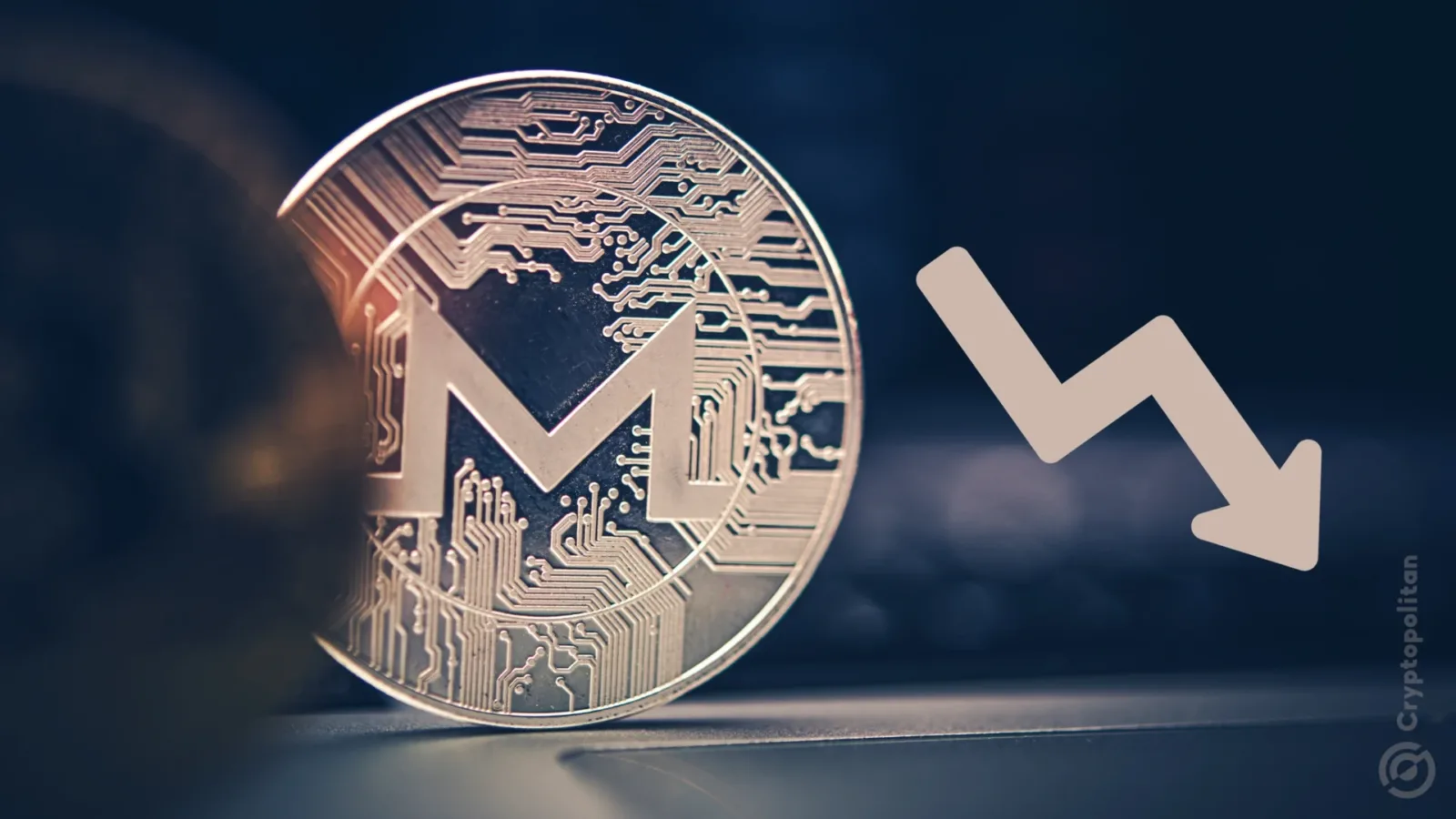
XMR1 is a token that stands in for Monero on Hyperliquid, minted and redeemed through Wagyu’s one-for-one bridge, which lets users swap real XMR into a tradable token without creating an exchange account. According to Bitquery’s investigation, the account that originally deployed XMR1 sent 5.2 million tokens to a freshly created wallet in three transfers between 04:46 and 05:16 UTC on Friday. That wallet then sold 369,623 tokens to 420 buyers between 04:49 and 10:28 UTC, pulling in $13.51 million while the price fell from roughly $500 to $1, a 99.8% decline Bitquery says happened faster than the token’s typical full day of trading volume, about $6.9 million, normally takes to change hands.
Wagyu operator PerpetualCow pledged on Friday to personally cover losses for everyone affected, a commitment first reported by Cryptopolitan. He initially said market makers, firms that post standing buy and sell quotes to keep order books liquid, absorbed most of the damage, then broadened the promise to cover every lost dollar. No payment plan or verified transfer to any affected buyer has been published.
Bitquery Traces Attacker’s Wallet to Tornado Cash, Eight Minutes Before the Dump
Bitquery’s data shows the attacker’s address got its first funding from Tornado Cash at 03:30 UTC, then appeared on Hyperliquid eight minutes later at 03:38 UTC. The first large sale followed at 04:49 UTC. Three-quarters of the $13.51 million came from buy orders already resting on the book, meaning the attacker did not need to hunt for counterparties; it simply hit existing bids as the price fell.
After the sales, the proceeds moved to Arbitrum, were swapped into ETH and largely bridged to Ethereum. Bitquery’s last check found 7,348 ETH parked across three wallets. By 13:16 UTC, none of the ten largest buyers had received a transfer back from the attacker or from Wagyu.
PerpetualCow Blames Hacked Web Host 1984, Promises a Relaunch
PerpetualCow said the deployer key was stolen from files on a deleted server at 1984, an Icelandic web host.
Post-mortem of the $13m XMR hack: It’s WORSE than I thought. Turns out that the entire hosting provider of [Wagyu] got hacked with everyone’s data + internal server files today. The XMR1 deployer key was held on an OLD server on there that I DELETED, but…
PerpetualCow, Wagyu operator
1984 and Iceland’s CERT-IS confirmed a sophisticated cyberattack on November 20, 2026, and the host suspended its services.
Neither 1984 nor CERT-IS has confirmed the breach is connected to the XMR1 incident, and Bitquery’s chain analysis cannot verify how a private key was obtained, only where the resulting funds moved. The Block separately clarified that the incident affected the wrapped XMR1 token, not native Monero itself, a distinction that matters for anyone holding XMR outside Wagyu’s bridge.
Thin Order Books Expose the Cost of Wrapping Monero for a Perp Exchange
The sell-off also exposed how little liquidity backs Hyperliquid’s smaller markets. HyperIndex data cited by Cryptopolitan found median order-book depth on those markets fell 82%, compared with a 61% drop on Binance and 78% on OKX over the same period, meaning fewer resting orders were available to absorb the attacker’s sales without the price collapsing.
That thinness is precisely why 75% of the $13.51 million came from buyers already quoting on the book rather than new demand.
A Bank for International Settlements bulletin from July warned that cross-chain bridges simplify transfers but add fresh security and operational risk, a warning that lands squarely on services like Wagyu if PerpetualCow’s account of a stolen deployer key holds up.
Industry-wide, security losses have already reached $9.54 billion in 2026, with $7.73 billion from exploits and $3.40 billion later classified as frozen or returned, per CertiK, though frozen funds do not automatically reach the people who lost them. A comparable NEAR Intents incident ended with an attacker returning the full $3.8 million after negotiations, a resolution Wagyu has not yet matched; cases involving stolen funds have ranged from full restitution to multi-year prison sentences, as in a Scottish hacker’s six-year sentence for an 11.6 million crypto theft.
The CCS read. A pledge from one operator is not a recovery fund, and Wagyu has offered no proof of reserves, no escrow and no deadline. Until PerpetualCow publishes a funded payment schedule, XMR1 holders are unsecured creditors of a founder’s personal balance sheet, not of a protocol with assets set aside to cover the $13.51 million already extracted.
Wagyu’s bridge remains offline as of this writing, and PerpetualCow has not said when it will reopen or when the first verified refund will go out. Bitquery says it will keep tracking the 7,348 ETH sitting idle in the attacker’s wallets, funds that have not moved since the dump, which may prove the clearest signal of whether any money comes back before Wagyu relaunches.
From the CCS interview archive
All 1,000+ interviews Cap founder on bringing private credit markets onchainBenjamin Sarquis Peillard, Cap · May 2026
- Optimum CEO on why data propagation is blockchain's real scaling limitMuriel Médard, Optimum · Mar 2026
- Jerry Fragiskatos on Apex Fusion's vision for blockchain interoperabilityJerry Fragiskatos, Apex Fusion · Dec 2025