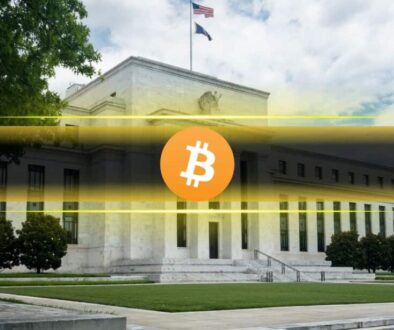
Bitcoin Reacts As Fed Minutes Reveal Split on Rate Hikes
The Federal Reserve’s June meeting minutes reveal internal disagreement over whether rate hikes remain necessary, a split outcome that directly influences institutional crypto portfolios through expectations of continued monetary tightness. Bitcoin’s immediate 2.7% decline signals that digital asset markets remain acutely sensitive to Fed rate-path uncertainty, making the July 28-29 FOMC decision a critical catalyst for institutional positioning.
- Nine of 19 Fed officials now project at least one rate hike before end of 2026, reversing prior expectations of no hikes this year.
- Core inflation remains at 3.3% to 3.4%, well above the Fed’s 2% target, driven partly by AI infrastructure spending surge.
- Bitcoin fell 2.7% in 24 hours following the minutes release, underscoring crypto markets’ direct exposure to rate-path revisions.
- 3.50%-3.75% Federal funds rate held steady by unanimous FOMC vote in June meeting
- 3.3%-3.4% Core inflation running above Fed’s 2% target through May 2024
- 9 of 19 Fed officials now penciling in at least one rate hike before end of 2026
The Federal Reserve released minutes from its June 16-17 policy meeting on July 8, exposing a committee fractured on the case for further monetary tightening.
While all 12 voting members unanimously held the federal funds rate at 3.50% to 3.75%, the published record revealed that a minority of participants had argued for a rate increase even in June, and nine of the 19 policymakers now project at least one hike before the close of 2026.
This marks a notable reversal from earlier projections that anticipated no hikes this cycle, signaling a recalibration of near-term rate expectations at a moment when institutional crypto investors are already parsing every word from Chair Kevin Warsh, who took the helm of the central bank only weeks before this meeting.
Minority Fed Officials Pressed for June Rate Hike Despite Committee Consensus
The minutes disclosed that a small but vocal group of participants had advocated for tightening at the June meeting itself, even as the broader consensus held firm.
These officials pointed to persistent inflation risks stemming from three sources: tariff pass-through into consumer prices, geopolitical energy shocks in the Middle East, and an unexpected surge in artificial intelligence infrastructure spending that has turbocharged demand for semiconductors, data centers, and electricity.
The fact that some policymakers reached for the hawkish case in June, only to acquiesce to the hold, suggests a committee closer to the tightening threshold than headline statements typically convey.
Core inflation has remained stubbornly above target, running at 3.3% in April and an estimated 3.4% in May, against the Fed’s 2% goal. Fed staff subsequently raised inflation forecasts for 2026 and 2027, reflecting their assessment that tariff dynamics, supply-side shocks, and AI-driven capex would continue to push prices higher in the near term.
Several participants acknowledged that AI investment could eventually deliver productivity gains and lower costs, but only after a lag of several years; the immediate effect remains upward pressure on demand and prices.
Warsh’s own description of the debate was notably candid. At his post-meeting press conference, the chair stated, “We had a good family fight on it for a couple of days, and we ended up, I think, in a better place,” signaling that internal disagreement was both real and, in his view, productive.
Warsh’s Refusal to Project His Own Rate Path Adds to Policy Uncertainty
A detail that attracted particular attention from markets was Warsh’s decision not to submit his own interest-rate projection to the Summary of Economic Projections, the quarterly dot plot that guides investor expectations.
His silence on his personal rate view introduced an interpretive gap: markets could not directly discern whether the new chair leaned toward the hawkish minority or the dovish mainstream. This ambiguity proved costly for risk assets, particularly cryptocurrencies, which have historically underperformed during phases of rising rate-hike probability.
The timing of Warsh’s elevation to the Fed chair role compounds the significance of this information void. Unlike his predecessor, Powell, whose communication patterns and preferences are well-established in market memory, Warsh operates with minimal track record as a central bank communicator.
His first FOMC meeting and first post-meeting press conference thus became a blank slate onto which investors projected their own assumptions. The market’s immediate reaction to the minutes preview, which flagged Warsh’s missing projection as a key uncertainty, suggested that institutional traders had been positioning for clarity that never arrived.
The nine officials now forecasting at least one hike by end of 2026 represent a meaningful shift in modal expectations within the Fed itself, even though no rate increase was delivered in June.
Bitcoin Slides 2.7% as Crypto Markets Reprice Rate-Hike Odds
Bitcoin traded near $62,240 following the minutes release, representing a 2.7% decline over the preceding 24 hours. The move occurred against a backdrop in which Bitcoin had recently rebounded toward $64,000 on the strength of bullish spot ETF inflows, suggesting that the mood swing from the Fed minutes was sufficient to reverse near-term momentum.
Options activity had turned call-heavy in the days before the release, indicating that traders had been positioning for a dovish outcome; the split revealed by the minutes punished that bet.
The episode underscores a persistent structural sensitivity of digital asset markets to Federal Reserve communication and rate-path expectations. During periods of rising rate hikes or extended monetary tightness, crypto valuations face headwinds due to higher opportunity costs for yield and reduced risk-asset demand.
This relationship held even during the 2023-2024 period in which rate cuts were eventually delivered; any surprise hawkish signal from the Fed immediately triggered sell-offs in Bitcoin and other risk assets.
For institutional portfolios that carry significant crypto allocations, the Fed minutes thus function as a direct input to trading and positioning decisions, much as they do for equities or bonds.
The broader sensitivity of crypto to Fed communications has its roots in the asset class’s behavior during the monetary expansion of 2020-2021 and the subsequent tightening cycle of 2022-2023.
Bitcoin and Ethereum rallied sharply during the zero-rate era and declined sharply during the hiking cycle, establishing a pattern that remains embedded in market behavior even as rate cuts and potential easing loom.
Inflation, AI Capex, and the Path to July 28-29 FOMC Decision
The July 28-29 FOMC meeting looms as the next critical date for rate-path determination. Between now and that decision, two major data releases will inform the committee’s deliberations: the June and July employment reports and the June and July inflation readings.
The June jobs report had already been published before the minutes release; July jobs and inflation data will arrive in early August, just before the July 28-29 meeting concludes.
If core inflation remains elevated or re-accelerates, the case for at least one hike in the second half of 2024 or early 2025 would strengthen, bolstering the position of the nine officials who now project tightening. Conversely, if inflation rolls over and employment cools, the median committee view would likely shift back toward a patient, on-hold stance.
The role of AI infrastructure spending in the inflation picture adds an unusual twist: Fed staff and several policymakers have flagged AI investment as a source of near-term price pressure, yet none can say with confidence how long that effect will persist or whether it might eventually be overwhelmed by productivity gains.
For institutional crypto investors, the key question is whether Warsh’s next communication, his prepared remarks ahead of the July 28-29 meeting or the post-meeting press conference itself, will clarify his own rate bias.
Warsh’s silence on his dot-plot projection and his somewhat cryptic description of the Fed’s internal debate have left markets searching for signals of his leanings. The crypto sell-off following the minutes release suggests that institutional traders are braced for a more
Original reporting: beincrypto.com