
Treasury Secretary Bessent claims US can seize $1 billion in Iran-linked crypto within a week
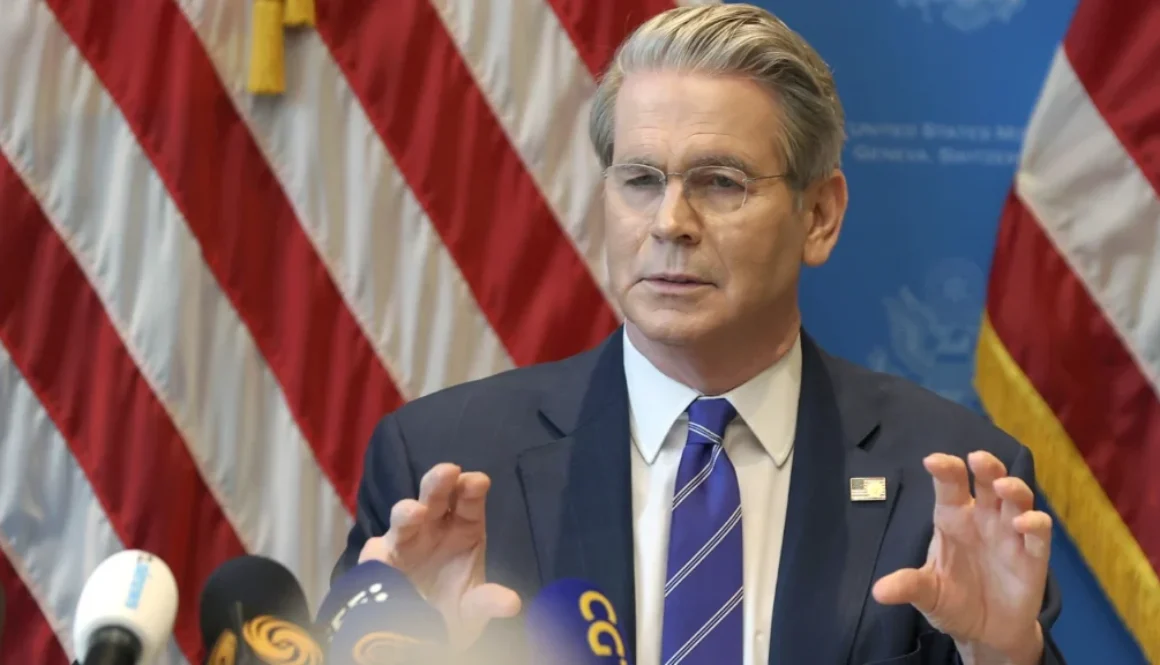
Treasury Secretary Scott Bessent says Washington could seize roughly $1 billion in Iranian-linked cryptocurrency within a week, a sum nearly double the $550 million Tether has already frozen in Iran-linked USDT this year. For institutional investors, the claim signals that sanctions enforcement is moving faster on-chain than through traditional banking channels, raising compliance stakes for anyone touching stablecoin rails tied to Tehran.
- Bessent told reporters the US already knows where roughly $1 billion in Iranian-linked crypto sits and could act within a week.
- Tether has frozen about $550 million in Iran-linked USDT in 2026, including $344 million in April and $130 million in July.
- FinCEN has proposed a rule to cut Banque Misr UAE off from US correspondent banking, widening pressure on Tehran’s financial channels.
- $1B Bessent’s claimed Iran crypto seizure target, nearly double Tether’s freezes
- $550M USDT Tether has frozen in Iran-linked wallets across 2026
- 84% of 846 Iran-linked wallets reviewed that transacted almost entirely in USDT
Treasury Secretary Scott Bessent said the United States could seize about $1 billion in Iranian-linked cryptocurrency within a week, according to Cryptopolitan’s reporting. He gave no details on which wallets are involved, what legal process would be used, or whether any action has already begun.
Frozen funds stay under the control of Iranian-held addresses but cannot be transferred or redeemed. Bessent’s figure, if accurate, would run nearly double the roughly $550 million in Iran-linked USDT that Tether says it has helped US authorities freeze so far this year.
Bessent Already Delivered on a Similar Deadline in August
Bessent has a track record of following through on Iran-related timelines. He told Newsmax on August 13 to expect new measures within days.
Watch this space for more announcements coming next week because we are going to apply measures like have never been seen in the history of the economic isolation of a country.
Scott Bessent, US Treasury Secretary
Eleven days later, on August 24, Treasury launched Operation Economic Outcast, naming digital assets as one of five sanctioned Iranian economic sectors alongside technology, gold, aviation and shipping. The campaign designated nearly 60 entities, individuals and vessels, based on a sanctions analysis by law firm Pillsbury Winthrop Shaw Pittman.
FinCEN Moves to Cut Off Banque Misr UAE’s US Banking Access
The Treasury’s Financial Crimes Enforcement Network has proposed a rule that would strip Banque Misr UAE of correspondent banking access to US financial institutions, extending the pressure beyond crypto wallets into traditional banking relationships. On Thursday, Treasury said the operation had also moved against the remnants of Iran’s shadow fleet of oil tankers.
Federal prosecutors separately filed a civil forfeiture case in September seeking about $61 million in crypto tied to Iranian oil sales.
Elliptic Traced $507 Million in USDT to Iran’s Central Bank
Tether’s 2026 freezes have come in multiple tranches, including more than $344 million from two addresses in April and over $130 million from four TRON wallets in July, totaling roughly $550 million for the year. Blockchain analytics firm Elliptic separately linked $507 million in USDT directly to the Central Bank of Iran, saying the bank used the stablecoin to prop up a collapsing rial.
A Senate Permanent Subcommittee on Investigations review led by Richard Blumenthal found that 84% of 846 Iran-linked wallets examined transacted almost entirely in USDT. That concentration gives Tether, and by extension US authorities, significant lever