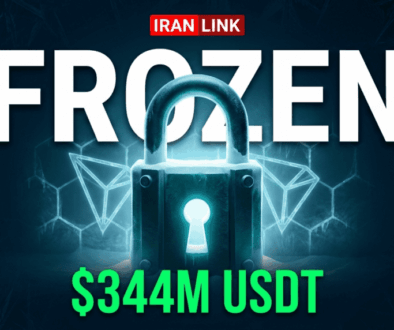
Tether froze $550M in Iran-linked USDT during 2026
Tether disclosed that roughly $550 million in USD₮ has been frozen in 2026 across wallets that U.S. authorities linked to the Central Bank of Iran and IRGC-connected sanctions networks. The disclosure lands as Treasury Secretary Scott Bessent’s Operation Economic Outcast names digital assets as one of five sectors facing expanded sanctions scrutiny.
- April 2026: $344 million in USD₮ frozen across two addresses on OFAC and law enforcement information
- July 2026: $130 million in USD₮ frozen across four wallets after Treasury added four TRON addresses to the Central Bank of Iran designation
- Tether works with more than 340+ law enforcement agencies across 67 countries and says it has frozen more than $4.9 billion globally
- $550M Iran-linked USD₮ frozen by Tether in 2026 alone
- $4.9B total assets frozen across Tether’s global law enforcement cooperation
- $2.4B of that total tied specifically to U.S. authorities
In a release published September 28, 2026, Tether said it froze approximately $550 million in USD₮ tied to Iran’s Central Bank and sanctions networks during 2026. The company frames the disclosure as evidence of cooperation as Treasury’s expanded sanctions campaign against IRGC-linked financial networks intensifies.
Two Freezes, One Designation Chain
In April 2026, Tether froze more than $344 million across two addresses on information from OFAC and U.S. law enforcement. The next day, OFAC formally listed those same addresses as digital currency identifiers for the Central Bank of Iran, an entry linked to the IRGC-Qods Force and Hizballah.
In July 2026, Treasury expanded that designation to four additional TRON addresses, and Tether froze more than $130 million across them. The document does not say whether the frozen funds have since been forfeited, returned, or remain frozen pending further action.
A Broader Enforcement Ledger
Tether lists several 2025-2026 U.S. cases in which it says it assisted DOJ, FBI, Secret Service or HSI, including a $52 million scam-marketplace action in September 2026 and a $225.3 million seizure the document says the Secret Service called the largest cryptocurrency seizure in its history.
It also cites a $61 million fraud seizure in February 2026, an $8.5 million recovery in December 2025, and the Garantex exchange disruption, which froze roughly $23 million.
On several of these, the release quotes DOJ saying it “thanks Tether for its proactive assistance in this investigation.” None of these matters involve charges against Tether itself; the company is cited as a cooperating party, not a target.
Israel’s NBCTF and the SDN Alignment
Tether says it has worked with Israel’s National Bureau for Counter Terror Financing for several years, freezing more than 22 million USDT across 40-plus cases and 640 addresses. After the NBCTF published a list of 187 IRGC-linked addresses in September 2025, blockchain analytics firm Elliptic reported 39 had been blacklisted by Tether, freezing about $1.5 million.
Tether also says it has aligned its freezing policy with the OFAC Specially Designated Nationals List, extending controls to secondary-market wallets that appear on the SDN List. The release does not specify how it screens secondary-market wallets or how often that list is updated against its own blacklist.
What Changes For USDT Users
Nothing changes operationally for ordinary USD₮ holders or TRON and Ethereum network users; freezing remains targeted at specific wallets named by law enforcement, not blanket restrictions.
Exchanges and custodians handling USD₮ deposits from counterparties later designated by OFAC face the same exposure they always have: funds can be frozen retroactively once an address is added to a sanctions list.
The Compliance Calculus For Stablecoin Issuers
Tether’s disclosure functions as a compliance record ahead of an enforcement campaign that Treasury has publicly said will target digital assets alongside four other sectors. For a company that has faced years of scrutiny over reserve transparency, publicizing freeze totals shifts the conversation toward operational cooperation rather than balance-sheet questions.
It also sets a benchmark other stablecoin issuers now face pressure to match. If USD₮ freezing becomes the reference point for “responsive” issuer behavior, competitors will be measured against Tether’s response times and dollar totals, not just their own audits.
“Tether has consistently demonstrated that USD₮ is not a haven for sanctioned actors, terrorist organizations or criminal networks.”
Paolo Ardoino, CEO, Tether, in the release
The CCS read. Publicizing freeze totals is good PR timing but bad substitute for detail. Tether names dollar figures and dates, not the criteria that trigger a freeze or how contested addresses get resolved. Expect other issuers to start publishing similar tallies once Treasury’s campaign widens.
Watch for OFAC’s next Central Bank of Iran designation update, which expanded within a day of a Tether freeze in April 2026, and for whether Treasury names additional TRON or Ethereum addresses under Operation Economic Outcast.