
US Reaches $1 Billion Seized Iran Crypto to Date: Bessent’s Big Update
The U.S. Treasury has now seized approximately $1 billion in Iranian cryptocurrency assets through an escalating sanctions enforcement operation, marking a material shift in how Washington weaponizes blockchain traceability against state-level sanctions evasion. For institutional investors, this signals that cryptocurrency holdings tied to geopolitical actors face unprecedented seizure risk, and that stablecoin infrastructure, particularly Tron-based USDT, is no longer a reliable channel for moving value at scale without regulatory exposure.
- U.S. Treasury seized cumulative $1 billion in Iranian crypto assets as of today’s announcement by Secretary Bessent.
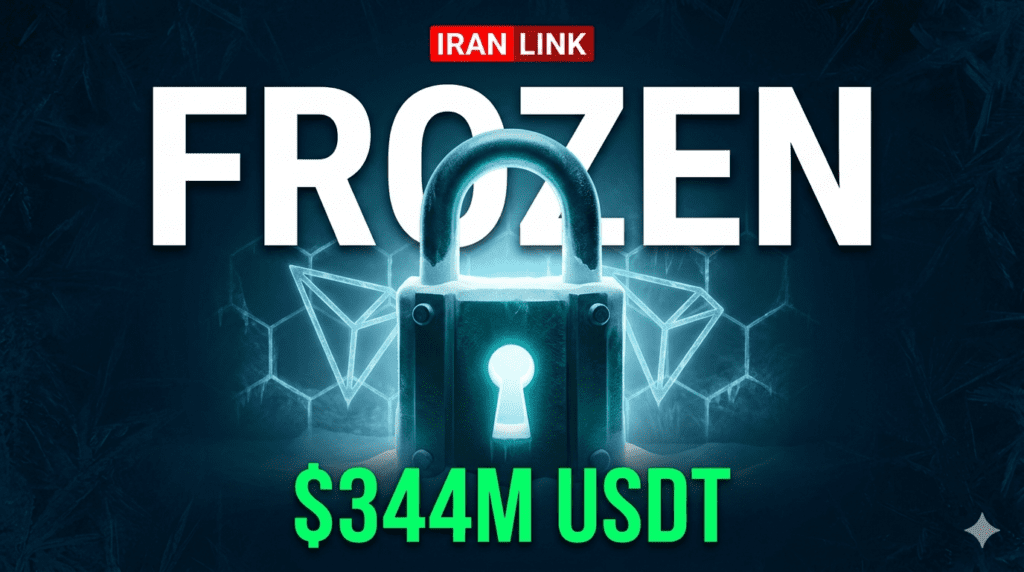
- April 2026 single action froze $344 million in USDT on Tron blockchain targeting Iran sanctions evasion.
- Iran previously moved $400-500 million monthly through crypto before intensified U.S. pressure under Operation Economic Fury.
- $1 billion Cumulative Iranian crypto seizures to date under U.S. sanctions campaign.
- $344 million USDT frozen on Tron in April 2026 single enforcement action.
- $400-500M/mo Monthly Iranian crypto flow volume before escalated U.S. pressure intensified.
Treasury Secretary Scott Bessent announced today that the United States has seized approximately $1 billion in Iranian cryptocurrency assets in the course of an accelerating sanctions enforcement campaign.
The milestone reflects cumulative freezes and forfeitures accumulated since March 2025, when the Treasury launched Operation Economic Fury, a coordinated effort to dismantle Iran’s cryptocurrency-based sanctions evasion infrastructure.
The announcement underscores a fundamental shift in how the U.S. government uses blockchain analysis and stablecoin issuer cooperation to immobilize state-level assets with greater speed and precision than traditional banking channels permit.
April USDT Freeze of $344 Million Shows Scale of Single Tron Enforcement Actions
The largest single seizure in the campaign occurred in April 2026, when U.S. authorities froze $344 million in USDT on the Tron blockchain. That action alone accounted for one-third of the cumulative total announced today and demonstrates the concentration of Iranian sanctions-evasion activity on a single stablecoin and blockchain pair.
Tron’s USDT became the primary conduit for Iranian funds moving oil sale proceeds and operational funding for the Islamic Revolutionary Guard Corps (IRGC) because of its speed, low fees, and perceived anonymity, factors that proved insufficient against coordinated U.S.-led blockchain analysis and issuer pressure.
Bessent had reported nearly $500 million in total seizures in late April, meaning additional freezes of roughly $500 million have accumulated in the months since. This acceleration suggests Operation Economic Fury is not decelerating; the Treasury continues to identify and designate new wallets at a pace sufficient to double the reported total in a matter of months.
Institutional investors and compliance officers should note that even assets held on Layer 1 blockchains with transparent transaction history can be identified and frozen within weeks, once issuers like Tether receive regulatory or law enforcement guidance.
The Treasury’s cooperation with Tether and other stablecoin issuers has proven operationally decisive. Unlike banking seizures, which require frozen court orders and months of diplomatic wrangling, blockchain-based freezes execute instantaneously once an issuer blacklists a wallet address. This technical advantage has compressed the enforcement timeline from quarters to days.
Iran’s Crypto Pipeline Handled $400-500 Million Monthly Before U.S. Crackdown Intensified
Before Operation Economic Fury escalated pressure on Iranian cryptocurrency networks, U.S. intelligence and Treasury analysts estimated that Iran was moving between $400 million and $500 million per month through stablecoin channels.
That annualized run rate of roughly $5-6 billion represents a material portion of Iran’s external funding mechanisms, second only to illicit oil sales and cash smuggling. The concentration of flow through crypto suggests both the desperation driving Iran’s sanctions evasion and the limitations of traditional banking channels, which remain under heavy U.S. regulatory scrutiny.
The imposition of Operation Economic Fury has visibly disrupted that pipeline. If Iran was moving $500 million monthly at the time of Bessent’s April announcement, and has now had $1 billion seized cumulatively, the Treasury has effectively captured two months’ worth of Iran’s typical monthly crypto throughput.
More critically, the psychological and operational impact of high-profile seizures may have forced Iran to find alternative channels, slower, less efficient, and potentially more expensive methods involving peer-to-peer transfers, cash smuggling networks, or informal value transfer systems.
Iran’s economic position has deteriorated in parallel with the crypto crackdown. The rial has lost substantial value, banking sector strains have mounted, and oil revenue has contracted, leaving fewer legitimate funding sources.
The timing of the Treasury’s escalation has compounded these pressures, forcing Iran’s financial planners to choose between accepting reduced external funding or adopting far riskier alternative payment methods.
Treasury to Continue Wallet Designations and Pursue Forfeitures Through Terrorism Victim Claims
The Treasury has signaled that today’s announcement is not a capstone but an inflection point. Bessent indicated that the U.S. expects continued OFAC (Office of Foreign Assets Control) wallet designations and potential forfeitures in the coming months.
This language suggests the Treasury has not exhausted its target list and has confidence in its blockchain analysis capacity to identify additional Iranian-controlled wallets at regular intervals.
A significant portion of seized assets are being held “on behalf of the Iranian people”, a formulation that signals potential long-term custody and possible eventual repatriation to a future Iranian government. More immediately, however, some seized crypto faces competing claims from victims of Iranian terrorism and their families.
U.S. law permits terrorism victims to file judgments against seized foreign assets, and the high visibility and liquidity of cryptocurrency make it an attractive target for claimants seeking to satisfy court awards. This complicates the Treasury’s asset management and may accelerate the conversion of seized crypto to dollars or other assets for distribution.
The Treasury’s confidence in identifying additional wallets reflects the maturation of blockchain forensics. Unlike dark web mixers or privacy coins, USDT on Tron leaves a public ledger trail. Once an initial wallet is identified, through banking partnerships, human intelligence, or defectors, analysts can follow the transaction graph backward and forward to map entire funding networks.
Iran’s reliance on stablecoins for speed and efficiency has made it vulnerable to precisely this kind of systematic mapping.
Institutional Investors Face New Custody and Counterparty Risk From Stablecoin Issuer Cooperation
For institutional crypto investors, the $1 billion milestone carries direct implications for portfolio construction and counterparty risk assessment. Stablecoin issuers have now demonstrated willingness to freeze wallets on regulatory instruction without requiring a court order or advance notice to the asset holder.
This creates a new category of custodial risk: an issuer’s compliance decision can render a position illiquid within hours, regardless of the investor’s own legal status or jurisdiction.
Large institutions holding USDT on Tron should now factor issuer freeze risk into their operational risk frameworks. The Treasury’s targeting of Iranian wallets establishes the legal and technical precedent for freezing any wallet, on any blockchain, if an issuer receives direction that the address is linked to sanctions evasion, terrorism financing, or other OFAC violations.
While the Iran operation specifically targets state actors, the infrastructure for rapid issuer-level freezes now exists and could be applied to private investors if their addresses are flagged through banking data leaks, regulatory referrals, or blockchain analytics false positives.
Diversification across stablecoin issuers and blockchains has become a prudent institutional practice. Circle’s USDC on Ethereum and Solana, Paxos’s USDP, and other alternatives reduce single-issuer freeze risk. Institutions that centralize USDT holdings, particularly on Tron, now carry measurable counterparty risk that was not present two years ago.
Operation Economic Fury’s Success Creates Template for U.S. Enforcement Against Other Sanctioned States
The Treasury’s public celebration of the $1 billion