
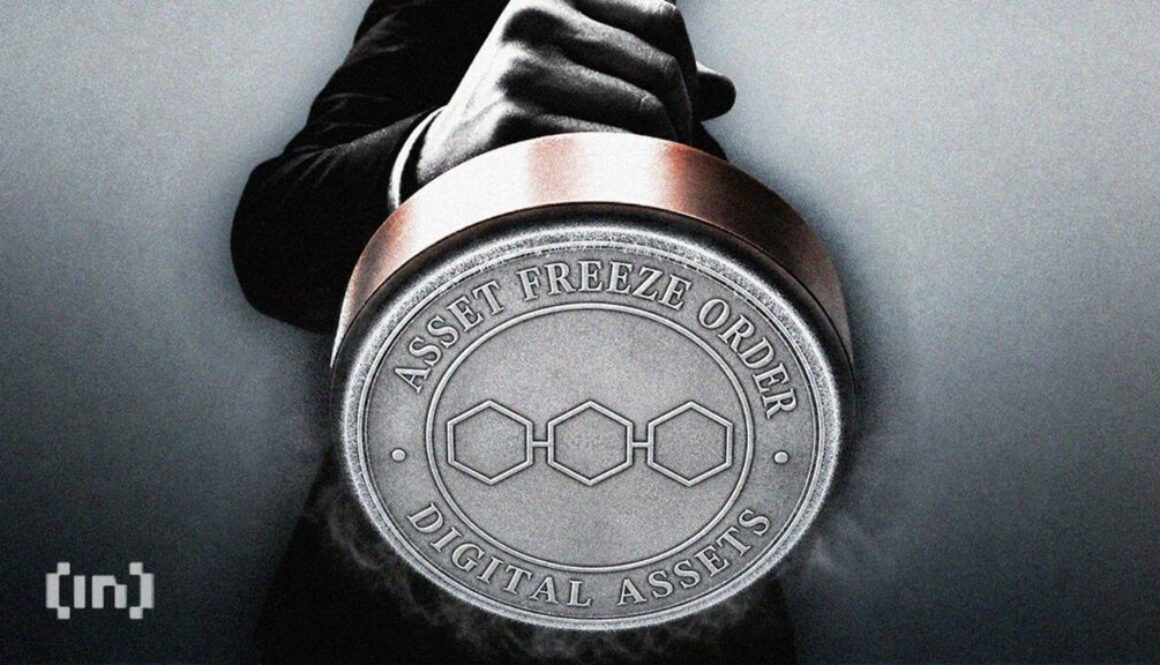
Colorado court extends freeze on 27,304 crypto wallets with no accused wrongdoing
A federal court in Colorado has pushed back the deadline for resolving a multibillion-dollar crypto asset freeze that has already locked funds belonging to Binance and OKX users who are not accused of any wrongdoing. The extension, confirmed in a court order posted Friday, November 20, 2026, gives plaintiffs until November 27, 2026, to prove their case or release the frozen wallets.
- The U.S. District Court for the District of Colorado extended its temporary restraining order (TRO) on crypto assets until December 17, 2026.
- The order covers accounts at Binance and OKX tied to 27,304 TRON blockchain addresses, far more than the 52 addresses the Treasury named in its sanctions filing.
- The U.S. Treasury’s Office of Foreign Assets Control (OFAC) designated the Xinbi marketplace on September 9, 2026, alleging it processed more than $24 billion, according to TRM Labs, compared with the $4 billion Treasury attributes to the related Huione network.
- $36B Xinbi’s total processed volume since 2022, per Treasury
- $4B Huione’s alleged laundered proceeds from 2021 to 2025
- 27,304 TRON addresses frozen, versus 52 named in the OFAC filing
The freeze traces back to a temporary restraining order (TRO), a court order that blocks access to assets before a judge rules on the underlying claims. A Colorado judge first signed it on October 29, 2026, targeting Huione Group and Xinbi, two Southeast Asian networks accused of laundering criminal proceeds mostly in Tether’s USDT stablecoin on the TRON blockchain. According to the court order, the restraint now runs through December 17, 2026, after plaintiffs told the court that service on some defendants is still in progress.
Colorado Court Sets December 17 Hearing on Frozen Wallets
The order instructs Binance and OKX to freeze accounts linked to specified deposit addresses, 27,304 of them on TRON. Plaintiffs’ counsel can be reached to object or claim an interest in the assets.
A preliminary injunction hearing is scheduled for 8:30 a.m. MT on December 17, 2026. Any defendant wishing to oppose a permanent injunction must file a response by December 10, 2026, a week before the hearing, or risk having the injunction imposed without their objection under Federal Rule of Civil Procedure 65. Because blockchain address lists can sweep in wallets that merely transacted with sanctioned counterparties, the order’s reach extends well past the 27,304 flagged addresses to anyone whose funds passed through them, a gap first reported by BeInCrypto, which documented a trader claiming roughly 400,000 USDT locked with no visibility into the underlying case.
Treasury Ties Xinbi to $36 Billion and North Korean Hackers
OFAC’s designation named Xinbi Guarantee a significant transnational criminal organization. The agency also sanctioned two supporting developers: Cambodia-based Anwen Technology, which built the no-KYC XinbiPay wallet, and Singapore-based SafeW Technology, which built the encrypted messaging app Xinbi’s networks migrated to as scrutiny grew. The Treasury statement says Xinbi’s platform has also been used by North Korean hackers and entities tied to the Prince Group, placing the marketplace inside a national-security case that reaches beyond regional scam financing.
Scam centers in Southeast Asia steal billions of dollars from American victims each year. Treasury will continue using its tools to disrupt the networks behind this egregious fraud and protect Americans.
Scott Bessent, Secretary of the Treasury
Xinbi absorbed volume as rivals collapsed. After Telegram banned Xinbi and competing marketplaces in spring 2025, TRM Labs found Xinbi’s daily inflows nearly doubled between May and December 2025 even as Huione and Haowang volumes fell close to zero. The pattern mirrors cases like the Mexican nationals who pleaded guilty to laundering drug proceeds through crypto and wire transfers, where enforcement against one channel simply redirects volume to the next.
Why Compliant Exchanges Still Can’t Unfreeze Innocent Wallets
The gap between how fast crypto moves and how slowly courts resolve disputes is the real story for institutional holders. Tether blacklisted 971 million USDT within 57 minutes of a separate Binance hack the same night the Colorado order was signed, and issuers froze $2.84 billion within roughly 12 hours, according to Recoveris, all before any court ruling. Binance itself later obtained a $6.5 billion worldwide freezing order from an Abu Dhabi court covering roughly 26,000 wallets, including parties it does not accuse of wrongdoing, a scale of unilateral freezing power that echoes concerns raised around Kalshi’s own race against a New York order that threatened to shut it down entirely.
What changes in practice is the burden on exchanges: Binance has acknowledged that unrelated accounts can be caught in court-ordered freezes and said it cannot independently release funds even when it believes a customer is uninvolved. That is a departure from how traditional banks handle disputed holds, where a domestic court typically has direct jurisdiction over the account holder; here, an English court previously lifted a freezing order after the applicant failed to disclose that a targeted wallet held pooled customer funds, showing judges can and do reverse course once facts surface. The open question the Colorado order leaves unresolved is whether the December 17, 2026 hearing will produce a mechanism for unrelated wallet holders to exit the freeze before the case against Huione and Xinbi concludes, rather than after.
The CCS read. For custodians and institutional desks, the lesson is procedural, not political: counterparty screening against sanctioned infrastructure now has to extend past direct wallets to anything that has ever touched a flagged address, because courts are treating address lists as sufficient grounds to freeze first and sort out innocence later. Exchanges that cannot distinguish the two in real time will keep absorbing reputational risk that properly belongs to the plaintiffs’ tracing methodology.
Defendants and any third party claiming an interest in the frozen assets must file objections with the Colorado court by December 10, 2026, ahead of the preliminary injunction hearing set for December 17, 2026 in Denver, where the judge will decide whether the freeze becomes permanent or the wallets are released.