Exchange NewsJuly 10, 2026·5 min read
AscendEX’s abrupt shutdown on July 1 and subsequent disclosure of MiCA non-compliance marks the first major exchange collapse triggered by the EU’s crypto licensing regime, creating acute withdrawal risk for customers as manual processing replaces automated systems. Institutional investors holding exposure through AscendEX face potential creditor claims if the platform enters formal insolvency, underscoring the operational and counterparty risks embedded in offshore exchange structures navigating European regulation.
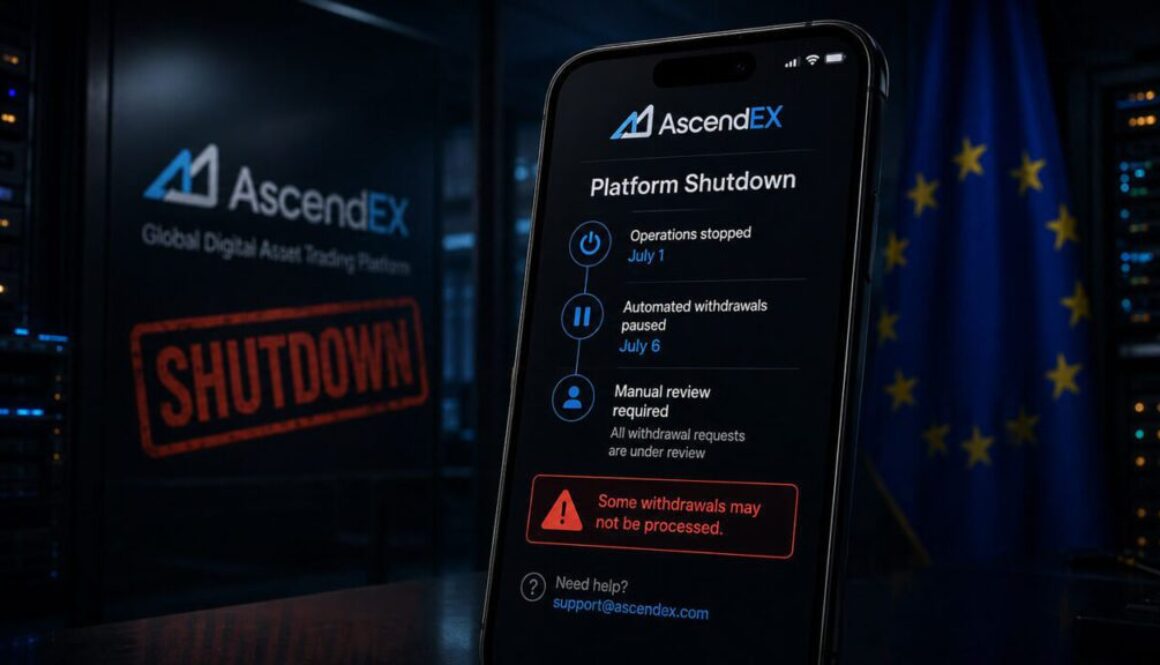
- AscendEX ceased operations July 1 and lacks authorization under EU’s Markets in Crypto-Assets regulatory framework as of July 6.
- Automated withdrawals halted July 6; all requests now require manual compliance review with no guaranteed timelines or full-balance recovery assurance.
- Failed strategic transaction meant to provide liquidity triggered shutdown; exchange warns unresolved balances may face formal insolvency proceedings.
AscendEX, once a mid-tier venue serving retail and institutional traders across Asia and Europe, has shut down entirely following its failure to secure authorization under the EU’s Markets in Crypto-Assets Regulation (MiCA). The exchange halted all trading, deposits, account creation and yield services on July 1, coinciding with MiCA’s enforcement deadline across the bloc.
In a notice published five days later, AscendEX disclosed that it does not hold the required license and cited financial and operational strain, including a collapsed strategic transaction that was supposed to inject liquidity.
The shutdown leaves thousands of users uncertain whether they will retrieve their holdings as the platform transitions from automated operations to a manual, compliance-heavy exit process overseen by an exchange offering no firm payment timelines.
AscendEX’s MiCA authorization gap and the liquidity crunch behind the shutdown
The exchange’s inability to secure MiCA authorization before the July 1 deadline reflects both the strictness of the EU framework and internal financial dysfunction. MiCA requires all crypto service providers offering services to EU residents to hold explicit authorization from their national regulator or lose market access.
AscendEX appears not to have pursued or obtained such approval, leaving it unable to legally serve the bloc’s users after the transition period ended.
The timing aligns with what market analysts describe as an industry-wide reckoning: approximately three in four crypto companies registered across Europe are projected to lose their license under MiCA this summer, marking an unprecedented enforcement wave in the sector.
More immediately damaging than regulatory failure, however, is the liquidity crisis AscendEX disclosed. The exchange cited a “failed strategic transaction expected to provide liquidity” as a material factor in the decision to shut down. No details have been released about the counterparty, the proposed deal structure or the size of the capital injection that collapsed.
The lack of transparency complicates assessment of whether AscendEX faces a temporary cash squeeze or deeper insolvency. This ambiguity has left customers and counterparties operating in a fog of uncertainty about the platform’s actual financial health.
Manual withdrawal reviews replace automation as cash-out risk materializes
The most immediate threat to customers is the shift from automated to manually reviewed withdrawals. AscendEX suspended automatic payouts on July 6 and announced that every withdrawal request would now require manual processing involving identity verification, sanctions screening, fraud checks, asset reconciliation, network verification and legal or insolvency compliance assessments.
The exchange provided no timeline for reviews and explicitly warned that some withdrawals may be delayed, rejected or face further scrutiny. Customers have no firm payment date and no guarantee they will recover their full balances.
This structure creates acute creditor risk. By routing all outflows through manual review gates, AscendEX has introduced friction that may reflect routine compliance diligence or may signal liquidity rationing. The exchange has released no data on how many withdrawal requests are pending, the dollar volume tied up or the average processing time.
Customers cannot distinguish between a standard compliance hold and a sign that the platform lacks sufficient assets to meet redemptions. This information gap leaves users vulnerable to losses if AscendEX enters formal insolvency proceedings before their withdrawal clears.
The creditor risk is compounded by AscendEX’s failure to disclose which legal entity holds customer assets and where any insolvency case would be litigated. These details are critical because they determine whether customer funds enjoy segregation protections under national law and which court system would oversee asset recovery.
Without this clarity, users face uncertainty not only about timing but about their legal standing in any wind-down scenario.
Insolvency looms as counterparty default strips away strategic options
AscendEX has warned explicitly that unresolved customer balances could become subject to “formal insolvency or similar process” if one is initiated. The language suggests the exchange is reserving the option to enter receivership or restructuring rather than continuing a protracted manual withdrawal process.
Such a move would likely trigger statutory creditor procedures in whichever jurisdiction holds the company’s legal seat and customer assets, potentially subordinating retail and institutional account holders to claims by operational creditors and secured lenders.
The failed strategic transaction appears to have been the platform’s last lever to avoid such proceedings. With that option gone and MiCA authorization off the table, AscendEX faces a binary choice: process withdrawals manually until assets are depleted, or declare insolvency and subject customer claims to formal restructuring. Neither path offers certainty to creditors.
The exchange has disclosed too little financial data for external parties to model its solvency position or estimate recovery rates under either scenario.
Regulatory authorities have offered limited guidance on managing this transition. The European Securities and Markets Authority (ESMA) instructed unauthorized providers to cease onboarding EU clients after July 1 while permitting only services necessary for orderly exit.
AscendEX’s disclosure goes further by tying withdrawal processing to liquidity constraints and potential insolvency proceedings, signaling that exit-only status is contingent on its ability to meet requests and satisfy legal requirements, a condition that may not hold.
The immediate focal point for customers and institutional counterparties is whether AscendEX will initiate formal insolvency proceedings in the coming weeks or attempt to clear withdrawals through manual processing. The exchange has set no deadline for either decision and has committed to no minimum recovery guarantee. Users holding material positions should prioritize withdrawal requests immediately and monitor for any court filings or regulatory announcements that would signal entry into formal restructuring. The broader institutional question remains unresolved: whether MiCA’s licensing regime will force other unlicensed offshore venues to shut down via similar liquidity events or whether competitive alternatives will absorb that market share before other platforms face the same capital crunch that triggered AscendEX’s collapse.
Get this in your inboxThe Crypto Coin Show newsletter covers the policy and market moves institutional crypto investors are pricing in.
Subscribe