
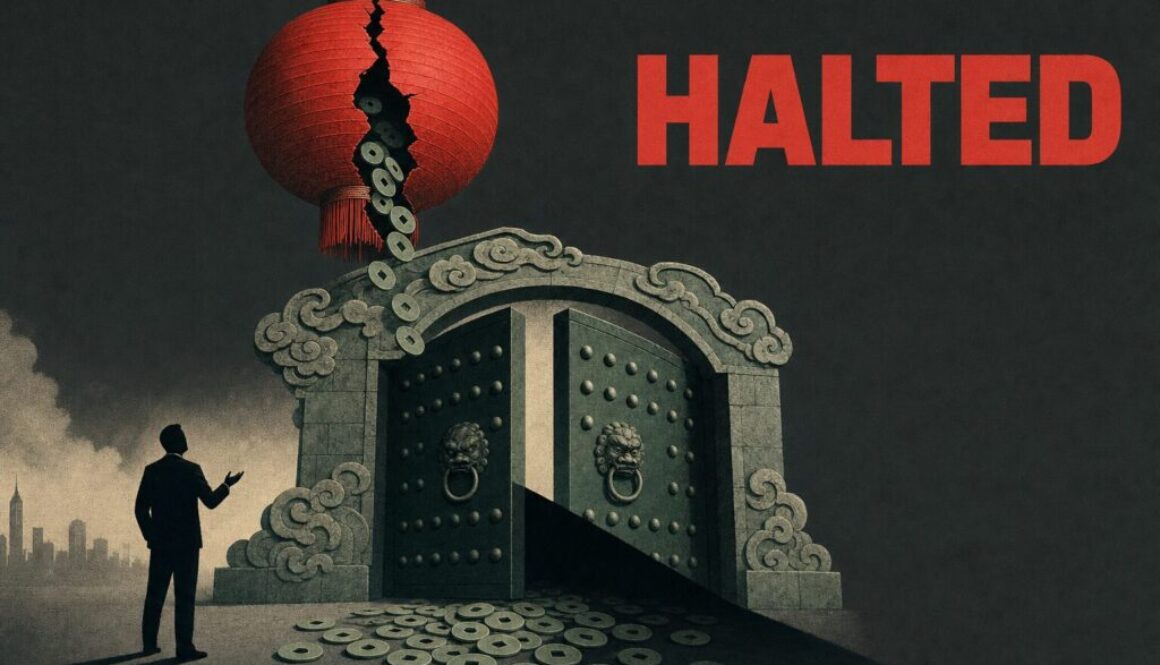
CZ questions whether Solana understood China’s regulatory environment after Shanghai event halted
Solana’s second disrupted China event in less than a year signals that the blockchain platform may be operating without proper regulatory clarity in a jurisdiction where crypto trading remains banned since 2021. For institutional investors betting on Asia expansion, the pattern raises questions about due diligence and the enforceability of what appears to be selective tolerance for blockchain technology events.
- Solana Shanghai event halted Friday morning after law enforcement officers blocked hotel entrance, with organizers citing only venue logistics in official communications.
- This marks the second Solana gathering disrupted by Chinese authorities within twelve months, following October 2025 Shenzhen event cut short by police inquiry.
- Binance founder CZ questioned whether Solana organizers genuinely understood local policies, suggesting systemic governance gaps in international crypto roadshows.
- 2 Solana events in China halted by authorities within one year
- 2021 Year mainland China banned all cryptocurrency trading outright
- October 2025 Date of first disrupted Shenzhen Solana Accelerate APAC event
Law enforcement officers prevented attendees from entering the Shangri-La Hotel in Shanghai on Friday morning (October 16, 2026), according to first reporting, forcing organizers to postpone the morning program. The Solana Accelerate China team sent an email to registered guests citing only “venue logistics” without mentioning the officers or any regulatory contact. The delay came two days after the Solana Foundation announced a new Shanghai office, framing the move as validation of the blockchain’s footprint in Asia. China has maintained a blanket prohibition on crypto trading since 2021, though blockchain infrastructure development itself remains permitted, a distinction that has created ongoing ambiguity for foreign projects seeking to operate or host events there.
Second Shanghai Shutdown Follows Shenzhen Disruption Within Twelve Months
The Shanghai event was not an isolated incident. In October 2025, the Solana Accelerate APAC event in Shenzhen was cut short after local police conducted an on-site inquiry, prompting organizers to cancel a final hackathon session and cite overcrowding for public safety reasons. That event drew unexpectedly high attendance, and the police inquiry, details of which were never disclosed, led to an immediate operational halt. The Shenzhen community’s account acknowledged that attendees who were denied entry had reported the event to authorities.
CZ’s observation on X on Thursday carries weight because Binance itself has avoided replicating Solana’s approach, choosing not to announce a comparable Shanghai office despite earlier celebrating Solana’s decision as “a win for the whole industry.”
The repetition signals a pattern rather than a one-off enforcement action, raising institutional questions about how Solana Foundation conducts risk assessment before committing resources to geographies with opaque regulatory boundaries.
Beijing’s Stablecoin Ban Narrows the Gray Zone for Crypto Gatherings
The timing of the Shanghai disruption coincides with hardening policy. In February 2026, Beijing issued a joint notice banning unauthorized yuan-pegged stablecoins and reaffirmed the blanket cryptocurrency trading prohibition. Simultaneously, China has advanced its own national blockchain network, which has no role for tokens or decentralized governance. That infrastructure plays places foreign crypto platforms in a structural gray zone: blockchain development is encouraged as industrial policy, but organized gatherings promoting decentralized finance or token projects operate without explicit authorization or predictable enforcement thresholds.
Solana’s Shanghai roadshow, slated to include stops in Hangzhou, Shenzhen, and Beijing, now sits in legal limbo.
The organizers’ reliance on “venue logistics” language in official communications appears designed to avoid admitting regulatory contact, yet the pattern of disruptions and the public questioning by CZ suggest that simply avoiding direct mention does not inoculate the foundation or its partners from future interference.
Coinbase has reported similar friction after expanding access for mainland users, indicating this is not unique to Solana but symptomatic of how Western crypto infrastructure companies navigate China’s tolerance-without-permission framework.
Unclear Enforcement Thresholds Complicate Asia Strategy for Institutional Players
The core institutional question is whether Solana Foundation and its partners conducted adequate regulatory due diligence before committing to a public Shanghai office and a multi-city roadshow. CZ’s remark, “Looks like they really didn’t know the local policies?”, cuts to a governance failure rather than a temporary setback.
For institutional investors evaluating exposure to Asia-focused blockchain platforms or considering participation in similar events, the repeated disruptions suggest that event risk in China is structural and will recur until organizers either obtain explicit written authorization or pivot strategy.
No material crypto institution in mainland China has publicly disclosed operating under a formal regulatory framework that permits token-focused events or outreach, leaving organizers to infer permissibility from silence.
The CCS read. We read this as a failure of institutional risk management, not a temporary venue problem. If Solana Foundation had conducted proper pre-event regulatory consultation, either it would have obtained written clearance or it would not have announced the office and roadshow so prominently. The repeated disruptions suggest Solana is operating on assumption rather than authorization, a model that institutional LPs and Asia-focused funds should factor into position sizing and counterparty risk assessments.
The Solana Shanghai roadshow’s next confirmed stops are Hangzhou, Shenzhen, and Beijing. No new dates have been announced, and no statement from Solana Foundation addresses whether it has sought regulatory pre-approval for the remaining events. CZ’s public questioning may intensify institutional pressure on Solana to disclose either that approval or cancel the series.