Pundit Predicts What Will Happen To XRP When Exchanges Run Out Of Supply
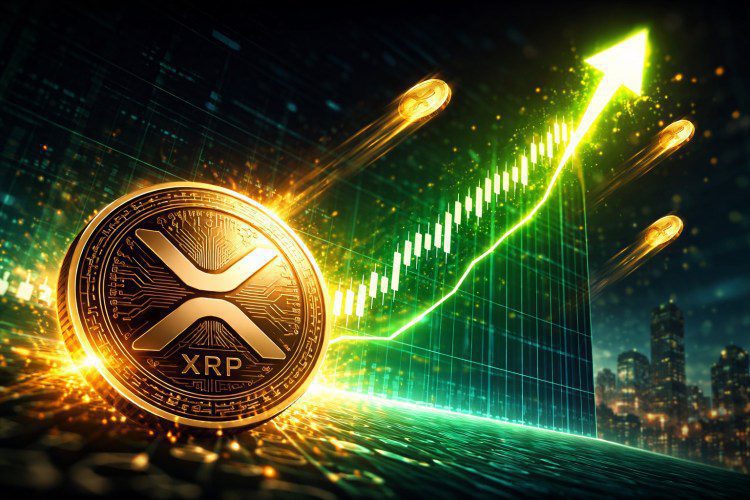
Exchange XRP reserves have fallen to multi-year lows while large holder accumulation accelerates, creating a potential supply squeeze that could force Ripple and exchanges to restructure how XRP liquidity is sourced and priced. Institutional investors monitoring crypto market structure should track whether this tightening supply translates into the derivative markets and yield mechanisms that analysts predict will emerge.
- Binance XRP reserves fell from 3.05 billion to below 2.75 billion tokens in less than one year, reaching multi-year lows
- Whale 30-day cumulative inflow to exchanges dropped below 736 million XRP, the lowest level since November 2021
- Addresses holding at least 10,000 XRP reached an all-time high of 332,000 wallets despite price volatility
- 2.75B Binance XRP reserves versus 3.05 billion one year prior
- 332,000 Wallets holding minimum 10,000 XRP tokens, a new all-time peak
- 736M XRP whale 30-day inflow versus prior baseline in November 2021
On-chain data tracking XRP exchange reserves has revealed a structural tightening in available supply that market participants say could eventually force exchanges and Ripple to deploy new liquidity mechanisms.
Binance, the largest crypto exchange by volume, has seen its XRP holdings decline from approximately 3.05 billion tokens to below 2.75 billion in less than a year, marking a retreat to levels not seen in several years. Simultaneously, the rate at which major XRP holders, known as whales, are depositing tokens onto exchanges has slowed dramatically.
The 30-day cumulative whale inflow metric, which measures how much XRP large holders are moving to trading venues, has fallen below 736 million tokens, the lowest reading since November 2021.
Against this backdrop of tightening exchange inventory, the number of wallet addresses accumulating substantial XRP positions has reached an unprecedented level, with 332,000 addresses now holding at least 10,000 tokens each.
The divergence between falling exchange reserves and rising holder concentration suggests demand for XRP is outpacing the rate at which new supply reaches trading venues.
Binance XRP reserves drop to multi-year lows as whale deposits slow
The decline in Binance’s XRP holdings carries outsized weight in the supply debate because Binance commands roughly 40-50% of spot XRP volume on centralized exchanges. When the largest venue’s reserves contract while trading interest remains robust, the ratio of available inventory to active demand tightens.
The drop from 3.05 billion to 2.75 billion tokens represents a loss of 300 million XRP in less than twelve months, a rate of depletion that, if sustained, could materially reduce Binance’s ability to fulfill large market orders without moving price significantly.
Exchange reserve depletion is particularly significant in crypto markets because exchanges typically maintain inventory to facilitate both retail and institutional trading without requiring counterparties to wait for new deposits.
When reserves fall, the cost to execute large trades rises, and venues must either restrict order size, widen bid-ask spreads, or source fresh supply from external liquidity providers. For institutional investors accustomed to executing multi-million dollar XRP orders with minimal slippage, shrinking exchange reserves signal a potential friction point ahead.
The tightening is not confined to Binance. Whale monitoring services tracking cumulative deposits from large holders to all major exchanges have recorded a sharp slowdown. The 30-day inflow indicator, which aggregates token movements from known whale addresses, has fallen to its lowest level in more than three years.
This suggests that major XRP holders are choosing to hold rather than liquidate, a behavioral shift that typically precedes price strength when combined with steady or rising demand.
Record wallet accumulation signals long-term holders building positions
The growth in wallet addresses holding at least 10,000 XRP to an all-time high of 332,000 demonstrates that mid-to-large accumulation is occurring even amid XRP’s price volatility. This metric is often cited by on-chain analysts as a proxy for conviction among holders willing to maintain non-trivial positions.
The combination of record wallet count and declining whale deposits to exchanges creates a structural imbalance: holders are building positions away from trading venues at the same time major institutional holders are reducing their inflow to those venues.
For institutional investors, this pattern matters because it inverts the typical supply dynamic seen in most crypto assets. Rather than falling prices triggering holder capitulation and increased exchange deposits, XRP appears to be accumulating in off-exchange wallets while exchange reserves themselves decline.
This behavior is more commonly associated with assets in the early stages of a supply constraint or redistribution toward longer-term holders.
The structural shift could eventually force exchanges and market makers to source XRP through alternative channels if spot reserve depletion continues.
Derivative markets and Ripple reserve deployment could fill supply gap
Market commentators, including crypto analysts monitoring XRP on-chain metrics, have begun modeling scenarios in which accelerating demand collides with constrained exchange spot supply. The most widely discussed outcome involves Ripple tapping its own XRP reserve, held in escrow and gradually unlocked each month, to establish liquidity pools on major exchanges.
Under this scenario, Ripple would not sell directly to the market, but instead would partner with exchanges to issue XRP derivative contracts backed by reserve holdings. Exchanges would then sell these contracts at market-clearing prices, and Ripple would earn yield on the reserve capital deployed.
Such a mechanism would preserve Ripple’s long-term strategic holding while providing exchanges with a liquidity backstop and creating a new revenue stream for both parties. Derivative markets have grown substantially in crypto, with perpetual futures, options, and synthetic instruments now representing a meaningful portion of total XRP trading volume.
If exchange spot reserves cannot keep pace with demand, shifting volume toward derivatives backed by Ripple reserves would be a logical institutional-grade solution.
The model also aligns with how major commodities and financial markets operate during supply tightness. When physical inventory cannot meet demand, derivatives markets expand to provide price discovery and hedging. For XRP, this would represent a maturation of the market structure and a potential expansion of Ripple’s role from issuer to liquidity provider and yield generator.
Institutional investors considering long-term XRP holdings should monitor whether Ripple signals any formal intention to establish such partnerships or begins moving reserve holdings into liquidity pools.
The key variable investors should track is Ripple’s next quarterly or annual disclosure on reserve deployment strategy and whether any of the major exchanges, Binance, Coinbase, Kraken, announce formal partnerships with Ripple around liquidity provisioning or derivative contract issuance. The current reserve depletion trend is observable but not yet acute; the timing of any policy response or partnership announcement will determine whether the theoretical supply squeeze materializes or resolves through market adaptation.
Original reporting: newsbtc.com