Payward launches onchain perpetuals for US clients via Hyperliquid HIP-3
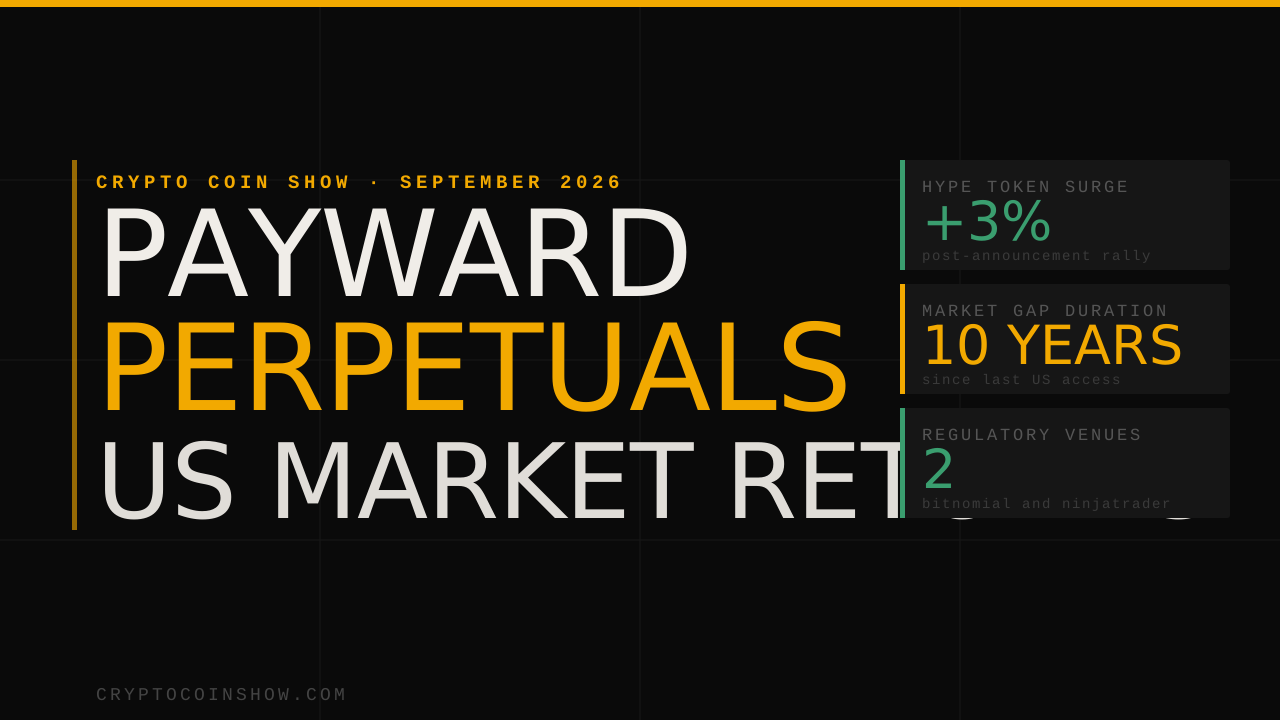
Payward plans to launch onchain perpetual futures for U.S. clients via Hyperliquid’s new HIP-3 contracts, positioning Kraken’s parent as the first regulated U.S. venue to offer the product after a decade-long gap in market access. The move signals institutional appetite for decentralized derivatives infrastructure and confidence in regulatory compliance through registered brokers and clearinghouses.
- Payward will divide operations between Bitnomial, its CFTC-regulated exchange, and NinjaTrader Clearing, a registered futures commission merchant, to launch HIP-3 perpetuals for U.S. clients.
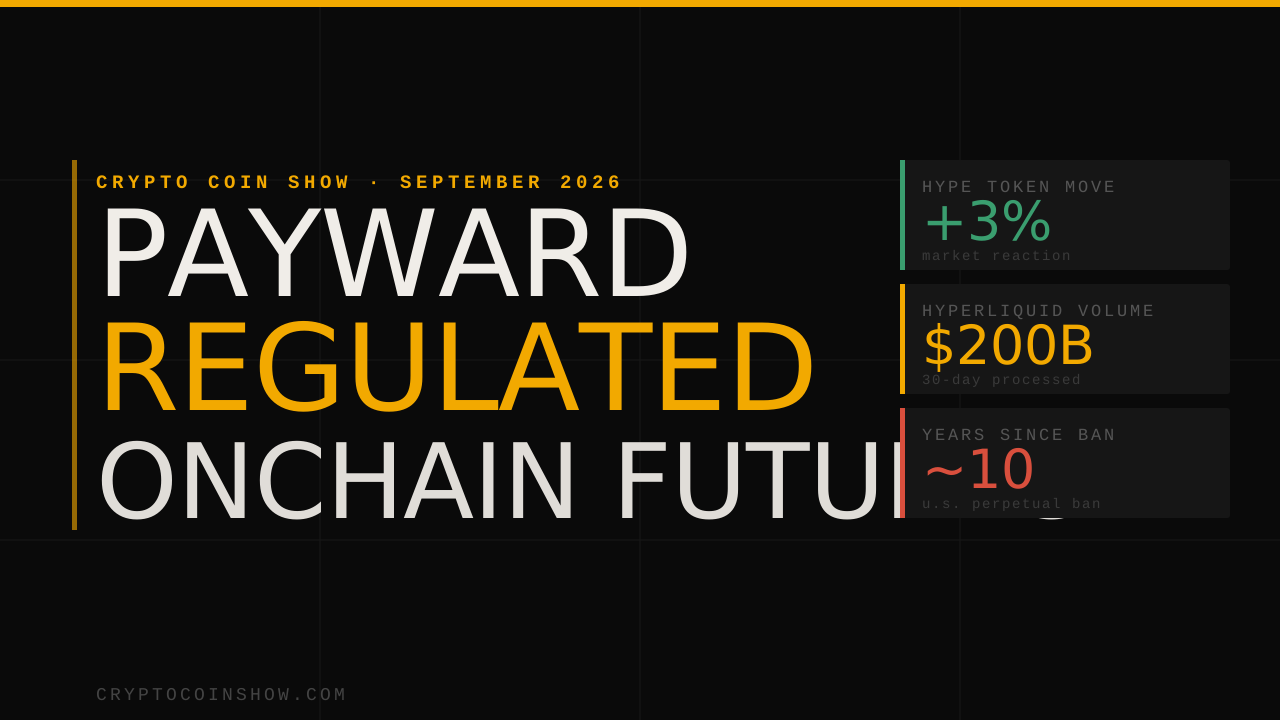
- HYPE, Hyperliquid’s native token, surged more than 3% within hours of the announcement, while HYPE futures open interest on Binance rose 7% over the same period.
- Hyperliquid processed over $200 billion in trading volume in the past 30 days and ranked as the most active onchain perpetuals venue in 2023 despite being unavailable to U.S. traders.
- $200B Trading volume on Hyperliquid over the past 30 days, via DefiLlama data
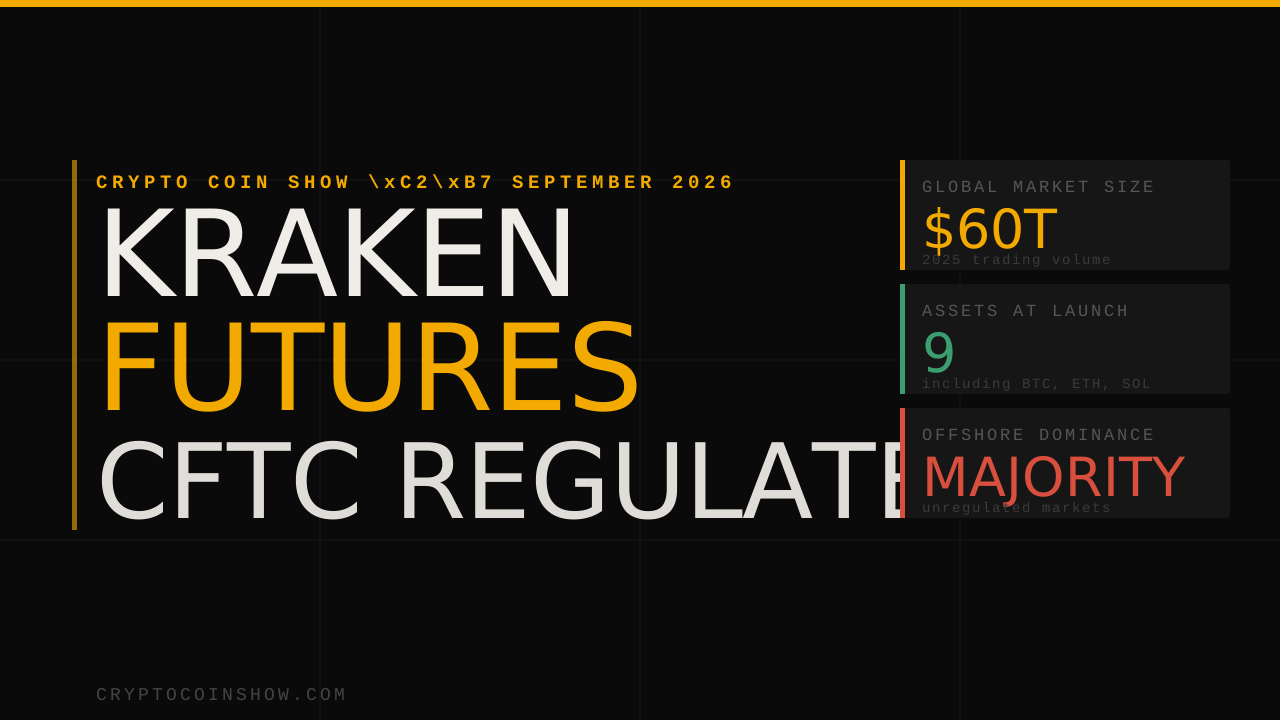
- $85T Global perpetual futures trading volume in 2025, per CoinGecko’s 2026 report
- 3% HYPE token gain within hours of the Payward announcement on September 16
Payward, the parent company of cryptocurrency exchange Kraken, intends to launch perpetual futures markets on Hyperliquid for U.S. clients through a regulatory structure that divides responsibility between two of its subsidiaries, according to reporting from Cryptopolitan. The move would make Payward the first U.S.-regulated venue to offer onchain perpetuals, ending roughly a decade in which American traders have lacked legal access to the market. Each trade would be matched and recorded on Hyperliquid’s public blockchain via its onchain order book, combining decentralized settlement with centralized regulatory oversight.
Bitnomial and NinjaTrader divide custody and trading oversight under CFTC rules
Bitnomial, Payward’s CFTC-regulated exchange and clearinghouse, will run the HIP-3 markets and handle clearing and settlement of the contracts. NinjaTrader Clearing, a CFTC-registered futures commission merchant and National Futures Association member, will manage client accounts. Only accounts onboarded through NinjaTrader and approved by both NinjaTrader and Bitnomial will be able to access the markets, according to Payward’s press release.
The same clearinghouse already supports the crypto perpetual contracts Payward currently offers to U.S. clients.
A U.S. client would open a futures account with Payward’s registered broker and use this account to trade new perpetual futures contracts on Hyperliquid.
Jon Pham, Payward’s head of U.S. derivatives
HIP-3 allows permissioned markets on Hyperliquid’s public blockchain
Hyperliquid co-founder Jeffrey Yan announced HIP-3 earlier in September, a feature that gives deployers the option to create permissioned markets using onchain allowlists. This addition keeps existing markets unchanged while enabling regulated venues like Payward to add access controls required by U.S. law.
Payward intends to be the first registered U.S. exchange to offer builder-deployed perpetuals, controlling the markets while handling the regulatory obligations.
Hyperliquid launched in 2023 and was ranked by CoinGecko as the most active onchain perpetuals venue that year. The platform has processed more than $200 billion in trading volume over the past 30 days, according to DefiLlama, despite being inaccessible to U.S. traders until now.
HYPE token surges as market reacts to first regulated U.S. perpetuals product
Traders moved quickly after the announcement, with HYPE, Hyperliquid’s native token, gaining more than 3% within hours.
HYPE futures open interest on Binance also saw a 7% increase over the same period. Global perpetual futures trading volume topped $85 trillion in 2025, according to CoinGecko’s 2026 “State of Crypto Perpetuals Report,” illustrating the scale of the market Payward now aims to capture for regulated U.S. clients.
As of June 30, 2026, Payward had 6.6 million funded accounts, while an independent third-party accountant’s review of its Proof of Reserves showed that client assets were backed by more than 100%. Payward has stated that additional onchain products are expected to follow HIP-3 perpetuals if the launch wins regulatory approval.
The CCS read. We see this as validation that institutional regulators now accept onchain derivatives infrastructure under proper broker and clearinghouse oversight. The question is not whether decentralized order books work, Hyperliquid proves they do, but whether regulated intermediaries can profitably slot themselves into the flow without killing the speed advantage traders expect. Payward’s two-entity structure lets it preserve that advantage while satisfying CFTC settlement rules.
Regulatory approval remains the outstanding step. Payward has filed with the CFTC and must receive final written approval before launching trading. Watch for competing applications from other major exchanges, and monitor whether the HIP-3 feature becomes industry standard for regulated venue access to Hyperliquid and other decentralized platforms.