OCC finds all nine largest U.S. banks restricted crypto services since 2020
The Office of the Comptroller of the Currency found that all nine largest U.S. banks restricted services to crypto firms and other lawful businesses between 2020 and September 2025, even as the regulator itself has approved five national trust bank charters for crypto companies since December. The contradiction exposes a fundamental tension: traditional banks are debanking digital assets while federal chartering opens a parallel financial system for the sector.
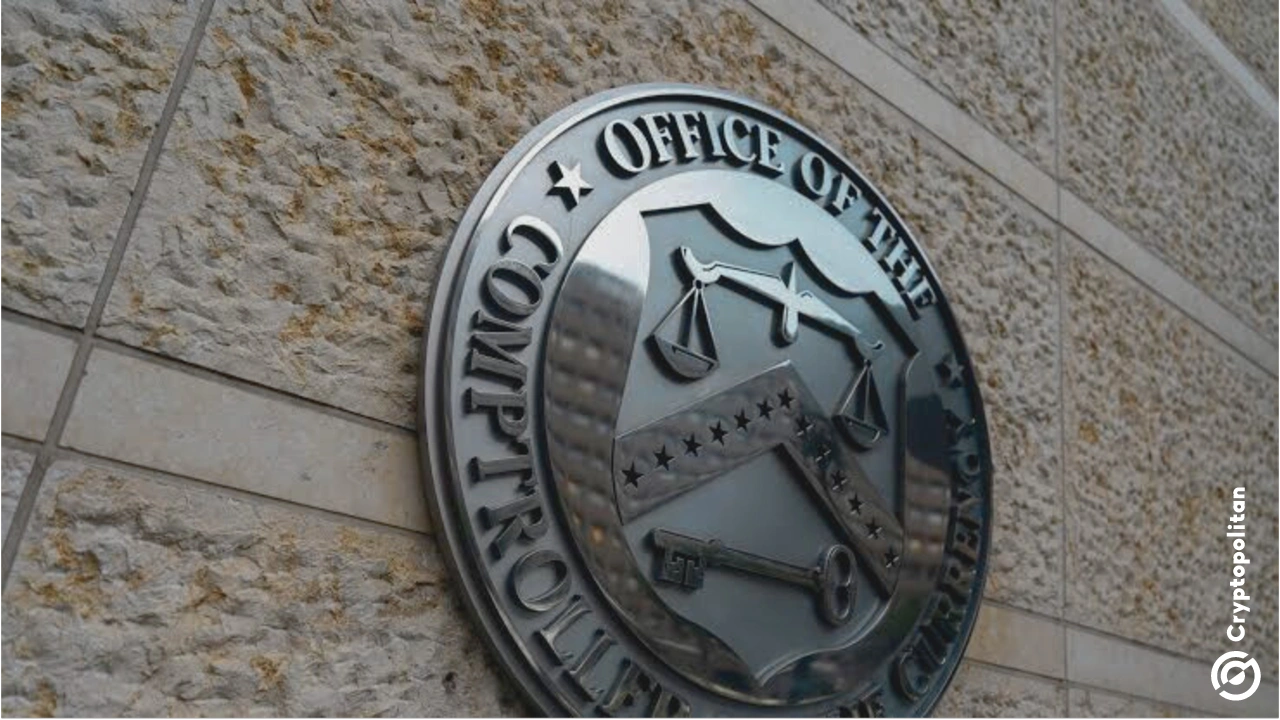
- All nine largest U.S. banks maintained policies restricting digital asset services between 2020 and September 2025, per OCC supervisory review.
- OCC approved five national trust bank charters for crypto firms in December 2025, including Ripple, BitGo, Fidelity Digital Assets, and Paxos.
- 9 largest U.S. banks reviewed for debanking practices since 2020
- 5 crypto trust bank charters conditionally approved in December 2025
- 100,000 complaints and 420,000 pages of bank documents examined
The OCC released its report Wednesday finding that JPMorgan Chase, Bank of America, Citibank, Wells Fargo, U.S. Bank, Capital One, PNC, TD Bank and BMO all operated broad reputation risk policies without clear, objective, risk-based standards. These policies resulted in denying or limiting services to customers based on political or religious beliefs and lawful business activities, including digital assets. The review examined nearly 100,000 complaints and roughly 420,000 pages of internal documents pulled from the nine banks. Comptroller Jonathan Gould called the findings “irrefutable evidence” that the nation’s largest banks had “denied, debanked and discriminated against customers and lawful businesses.”
OCC report names digital assets but lacks specific crypto cases
The 47-page report lists digital assets as a restricted sector alongside oil and gas, coal, firearms, tobacco, and private prisons, but provides no detailed crypto cases or metrics on the prevalence of debanking in that sector. The OCC states that banks limited services to crypto “issuers, exchanges, or administrators” and often cited financial crime concerns, yet the agency acknowledged it could not measure how widespread the practice actually was. Cases of banks restricting service to companies do exist: PNC declined a credit line to a conservative media company in 2021, Capital One rejected a gun rights group, and JPMorgan repeatedly refused a conservative retailer between 2021 and 2023 before destroying internal records of the political rationales.
The report’s silence on specific digital asset cases leaves a material question open: whether crypto firms faced systematic, documented debanking comparable to the political discrimination documented in firearms and energy sectors, or whether “digital assets” was included more as a category of concern than a category of proven harm.
OCC approving crypto charters while banks close accounts creates a regulatory fork
The comptroller’s office has simultaneously been granting national trust bank charters to crypto firms at an accelerating pace. In December 2025 alone, the OCC conditionally approved five charters, including applications from Ripple, BitGo, Fidelity Digital Assets, Paxos and First National Digital Currency Bank.
These trust charters permit a firm to hold and manage client assets and settle payments, but not to take deposits, make loans or access FDIC insurance or automatic Federal Reserve funding. Gould disclosed that the OCC responded to 40 new-bank charter applications over roughly 18 months, with 23 tied to digital assets, eight times the volume of the prior four years.
This chartering surge followed the enactment of the GENIUS Act on July 18, 2025, which clarified the OCC’s authority to grant specialized charters. Yet the shift has drawn legal and political fire.
The Independent Community Bankers of America sued the OCC in October, arguing that the regulator overstepped its authority by granting crypto firms bank-like legitimacy without the full regulatory obligations of traditional banks.
Senator Elizabeth Warren raised the same concern in a May 18 letter, noting that the OCC had cleared at least nine crypto trust charters since December and calling the recipients “effectively crypto banks” that were dodging real bank obligations.
The OCC counters that its rules neither expanded nor narrowed its chartering powers, only clarified and applied existing authority.
OCC says it will assess further changes to curb discriminatory debanking
Comptroller Gould said the OCC will assess further changes to the regulatory and supervisory framework to reduce the likelihood of discriminatory debanking practices recurring.
For institutional crypto investors, the dynamic cuts two ways. Traditional banks face incoming scrutiny and possible new rules that could make serving crypto-adjacent clients easier within the legacy system.
Simultaneously, the OCC’s charter approvals create regulated custodians and settlement entities, a significant institutional infrastructure development that sidesteps traditional banking relationships altogether.
Firms like BitGo and Fidelity Digital Assets gain formal federal recognition and client protections that crypto-native platforms have lacked, reducing custodial and counterparty risk for large holders. However, the absence of FDIC insurance and automatic Federal Reserve access means these trust charters remain a separate, parallel tier with explicit limitations.
The CCS read. We see an intentional pivot, not a bug fix. The OCC is not forcing traditional banks to serve crypto; it is building a federally chartered alternative. This sidesteps the debanking problem by creating institutions designed for the job, removing crypto from the traditional banking system’s reputational calculus. Institutional adoption accelerates when friction disappears, and parallel infrastructure removes friction faster than forcing legacy banks to change culture.
The open question is whether the Federal Reserve will grant these trust charters automatic Fed access, or whether they remain permanently cut off from the discount window and payment system privileges that define a full national bank. Comptroller Gould’s statement that the OCC will assess further regulatory changes also signals incoming rules on debanking, but the text does not specify whether new restrictions will apply to banks’ right to decline crypto clients on risk grounds, or only to political discrimination. That distinction will determine whether institutional custody truly migrates to OCC-chartered shops or whether traditional banks can simply invoke financial crime and AML standards to preserve the same de facto restrictions under new rubric.
Original reporting: cryptopolitan.com